
…All these woeful days of ours require Thy merciful protection,
O Most Holy Virgin! Cover us, then, all the days of our life,
and especially on the dreadful day when the soul shall be parted from the body.
Stand by us with Thy help and shelter us from the airy
spirits of wickedness under heaven, and on the day of the Dread Judgment
hide us in the secret places of Thy Protection!
Amen.
The History of the Building of the Church
The Protection of the Mother of God
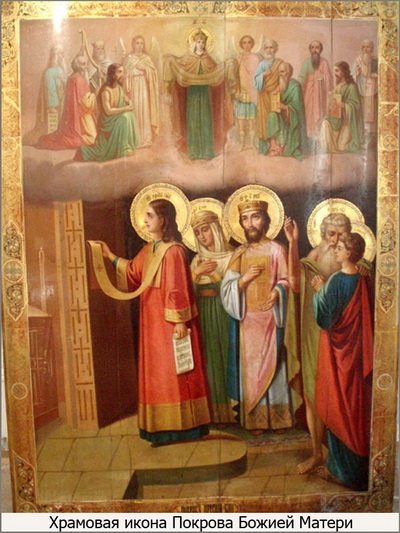
The history of the Samarkand churches is inseparably linked with the history of the city and helps us to understand the spirit of the time more clearly. From the very first days of the founding of the European part of Samarkand, work began in earnest on planning it. In 1870 the Governor-General of Turkestan, K. P. von — Kaufman, approved the plan for the development of the future city. At the same time a decree was issued permitting the purchase of plots of land for building from the local population. To the south-west of the citadel and the old city, where there were mostly gardens and wasteland, the new administration began to buy up land. To encourage people to stay and settle in Turkestan, and since the newcomers were chiefly military men, special plots of land on special terms were allotted to soldiers who had retired from service. Thus, in the area of today’s Covered Market, on both sides of the Katta-Kurgan road (Mirzo Ulugbek Street), the first houses began to appear and, as they grew, formed what was known as the Soldiers’ or Artillery Settlement. By 1872 there were already 110 dwelling houses in this area. The first street names in this district were Barbetnaya, Dzhamskaya, Esplanadnaya and Kladbishchenskaya. The construction of the new city was carried out in stages and with careful thought. In 1875 a General Plan for the construction of the city of Samarkand was drawn up and approved. According to this plan, the main administrative and military buildings were concentrated near Abramov Boulevard, while the northern side was built up mainly with blocks of residential and tenement houses.
The Soldiers’ Settlement district grew quickly and, as was quite natural for that time, an urgent need arose for a church. Almost all the diocesan reports to the Holy Synod after 1900 were full of complaints from the Turkestan Diocese about the military, in whose charge all the Orthodox churches then were, and of requests for the opening of new churches for the civilian population. And although more than 30 years had already passed since Samarkand began to live in peace, there was still not a single church in the city for the civilian population. The Bishop of Turkestan at that time was Vladyka Paisy (Vinogradov). During 1904 — 1905, at the intersection of Barbetnaya (Vozrozhdeniya) and Nikolaevskaya (Sovetskaya) streets, a church was built in honour of the feast of the Protection of the Mother of God [i] (according to some accounts, a wooden church built as early as 1898 had formerly stood on the site of this church, but it was soon destroyed by fire).
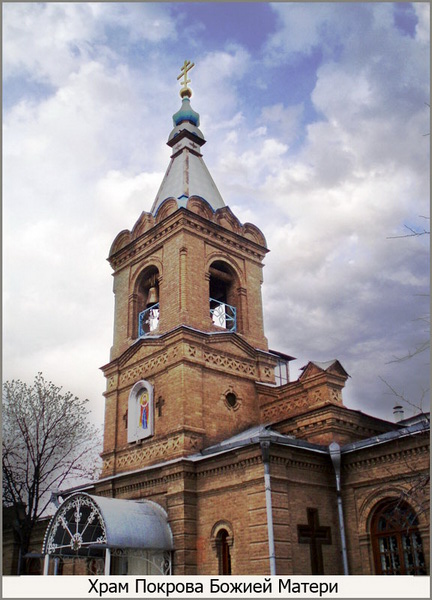
This was the first, and at that time the only, non-military church in the city. Almost an entire city block was set aside for its site. In its original form the grounds of the Church of the Protection were three times larger than they are now and had a different outline. Besides the church building itself, quarters were built next to it for the clergy and church staff; a large watchman’s lodge and a small house for the cleaning woman, as well as storerooms for firewood and a stable. The author of this project was the Samarkand Regional Architect, Ivan Petrovich Lebedev. To the east of the grounds of the Cathedral of the Protection lay the small Pokrovskaya Square.
A tradition has survived in the Cathedral of the Protection to this day that the main donors for the building of this church were a childless married couple of nobles, Konstantin and Ekaterina. Unable to have children of their own, they decided in this way to show care for the children who would study in this church school.
From the very beginning the cathedral building was conceived as a complex, a church-school, and had two separate entrances on the western side, one of which led to the church and the other to the school. It was built entirely of fired brick on a foundation of large cobblestones. Moreover, the brick was laid in such a way that it was itself a decorative adornment of the facade of the building. Above its western entrance rose a bell tower with a four-sided tent roof and a small onion dome, which was crowned with a cross.
In 1901 a reform of the secondary school was begun in Russia, meant to change radically the former system of classical education, which had been worked out as early as 1871. On 1 April 1901 Pyotr Semyonovich Vannovsky, the Minister of War of Russia, was appointed to the post of Minister of Public Education. By 19 June 1901 the Commission for the Reform of the Secondary School had completed its work, and P. S. Vannovsky presented the new project to the Sovereign Emperor NICHOLAS II. On the report submitted by the Minister of Public Education the Sovereign wrote in his own hand: “I hope that serious attention will likewise be paid to strengthening the religious and moral upbringing of our youth.” The Sovereign’s wish expressed the thought that the School must be joined to the Church. The Commission was meant to read in the Sovereign’s resolution a reminder that the most important thing had been forgotten.
At the origin of this reform stood a man known throughout Russia, Konstantin Petrovich Pobedonostsev, who held the post of Over-Procurator of the Holy Synod and was a member of the Committee of Ministers of Russia. He was not only the author but also an active promoter of the reform of church-parish education. Thanks to his initiative and efforts, parish schools were opened everywhere in the Russian Empire. Konstantin Petrovich was married; his wife was called Ekaterina, and they had no children of their own. It is also known that K. P. Pobedonostsev himself repeatedly donated and collected funds for the building of churches in Turkestan. With his active support, between 1880 and 1905 the number of parish schools in the empire increased more than 150-fold. We do not yet have documents, but from a whole series of coincidences we have come to suppose that the Pobedonostsev couple, Konstantin and Ekaterina, may have been those very principal donors for the building of the Samarkand Cathedral of the Protection.
At that time it was said and written everywhere that the founding of such schools was the best path to universal, compulsory education, the necessity of which was already recognized by both the government and society. The school was to merge with the church into one whole, where, both in spirit and in place, education is inseparable from upbringing. Under the new programme, new subjects such as history and geography were added to the generally accepted subjects of instruction. The Samarkand Cathedral of the Protection was built in order to carry out these ideas. Two parallel classes of a mixed type were taught in it, that is, boys and girls studied together. The course of instruction for the children lasted three years.
On the morning of 8 October 1907 a fairly strong earthquake occurred in Samarkand, during which a great many buildings and ancient architectural monuments in the city suffered damage. The shaking of the ground was accompanied by a terrible rumble and the faint ringing of church bells. In the old part of Samarkand the minaret of the Bibi-Khanym Mosque collapsed, and the dome of the Gur-Emir mausoleum cracked deeply. The building of the Cathedral of the Protection withstood it then, but the iron cross fell from the bell tower, breaking off at its base. Yet the ball on which the cross had been fixed remained standing in its place.[2] A crack formed between the bell tower and the main body of the church, and it had to be repaired by the efforts and at the expense of the parishioners.
In the 1920s persecution of believers began, and one after another the churches in Uzbekistan, and in particular in Samarkand, were closed. When, in the end, all the city’s churches had been stripped of their domes and closed, the Cathedral of the Protection alone survived, but two thirds of its grounds, together with the buildings belonging to it, were taken away from it and given over to residential housing. That is, people in need of housing were settled on the cathedral grounds, and they turned into a large communal yard. Samarkand in those years was the capital of Uzbekistan and, apparently, this was the reason why the Cathedral of the Protection was not closed. In Turkestan, as throughout the country, mock religious “processions of the cross” were staged, with the aim of mocking the believers. In 1922, in Samarkand, shortly before Pascha it became known that Komsomol members were planning to break into the Cathedral of the Protection. But the believers decided to put up resistance to the “uninvited guests”. Passions ran so high that the city executive committee was obliged to post a guard at the building of the Cathedral of the Protection in order to prevent clashes.
After the Great Patriotic War church life in the city slowly began to revive. But the dependence of the Church on the state was so great that for any insignificant kind of work, even for whitewashing the fence, permission had to be obtained from the city authorities. In 1947 the roof of the Cathedral of the Protection was opened up and two light-and-ventilation lanterns (glass pavilions) were added, as additional sources of light above the ambo and above the choir loft for the singers. In 1949 Archimandrite Hermogenes obtained official permission to erect a permanent fence around the cathedral building, which was completed by 1953.
During 1953–1954, in order to create living quarters for the family of the deacon, the church building was reconstructed. On the northern side of the cathedral the earth under the floor was excavated to a depth of three metres, door and window openings were cut through, and the foundation under the building was underpinned. As a result of this work a semi-basement room was obtained, in which the deacon’s family lived for some time, later the prosphora bakery was there, and now the refectory is housed in it. In 1955 electric power was brought to the cathedral.
Until 12 August 1957 the church building was listed at the address 9 Sovetskaya Street, and after the alienation of a part of the land and the replanning, it was set apart as an independent unit and given a new number, at the address 18 Vozrozhdeniya Street. Until 1957 the Cathedral of the Protection shared a common yard with its neighbours, which was a rather inconvenient factor for both sides. In addition, the neighbours used their own storerooms, which stood on the cathedral grounds. In 1957 the Church Council raised the question on this subject and the City Council gave permission to separate from the neighbours on the northern side with a wall and to build the necessary outbuildings on its own plot. With the blessing of Vladyka Hermogenes, new storerooms were built for the neighbours first, and after that the fence and the buildings for the cathedral were erected.
In the clergy records of the Cathedral of the Protection for 1957 there is an interesting entry, which reports that the clergy together with their families had been obliged for a number of years to live in the church building itself: “Besides the area for services, the cathedral has nine more rooms: 1. a room for the Father Rector, 2. a room for the second priest, 3. a room for the sacristan, 4. a room for baptisms, 5. an office, 6. a kitchen, 7. a semi-basement room for the prosphora bakery, 8. a room for the altar woman, 9. a storeroom for keeping candles”[3]. But in that same year the situation began to change. After numerous appeals, the authorities gave permission to build auxiliary premises in the church yard: storerooms, lavatories, a laundry, a cellar for storing coal, a room for the deacon’s family and a garage for a car (in that same year, 1957, with the permission of the authorities and the blessing of Vladyka Hermogenes, the community of the Cathedral of the Protection acquired a car of the make “Moskvich”). In 1958 the Church Council and the rector raised the question of building on the cathedral grounds a house for the priests to live in with their families and a room for baptisms. The authorities at first gave permission, but later, interrupting it, forbade this construction.
After this the community of the Cathedral of the Protection acquired a house with a plot on the outskirts of the city, at 37 Zheleznodorozhnaya Street, consisting of four rooms and outbuildings. It was purchased on 25 August 1964, and from the very moment of purchase two priests with their families began to live in it. Father Innokenty Matafonov occupied two rooms, and Father Alexander Kerimov the other two. In 1970 the priest Georgy Khorunzhy, who had just arrived, settled in this dwelling with his wife and six children.
It was precisely at that time that the layout of the grounds of the Cathedral of the Protection took shape, which exists to this day. As for the church building itself, having stood for 110 years, it has survived to our day practically in its original form.
The Rectors and Clergy of the Cathedral of the Protection
And now it is necessary to tell about the people who served in this church in various years. Studying the documents on the history of the Cathedral of the Protection, we counted 47 priests who served in it, and this is far from a complete list. As yet we have no data on those who served in the cathedral from 1914 to 1928.
1905–1912. The first rector of the new Samarkand church-school was appointed in 1905: a 35-year-old priest, Viktor Sergievich Motalev — a graduate of the St. Petersburg Theological Seminary in 1893, in the second category. He responded to the call of Bishop Gregory (Poletaev) to serve in the distant Turkestan Diocese, and was first sent to the city of Verny (Alma-Ata), where from 1893 to 1896 he served as a military priest, rector of the Cathedral of St. Sophia. After Verny he was sent to Przhevalsk, as rector of the local Przhevalsk garrison unit. Then, in 1905, Vladyka Paisy (Vinogradov) sent him to the Samarkand Cathedral of the Protection. It seems that the bishop’s choice was not accidental, since Father Viktor already had experience in organizing a church-school and, moreover, had a capital-city education.
Father Viktor served in this parish until 1912, being also dean of the Samarkand and Fergana regions. According to surviving information, he was also the Head of the Church-Parish School of the Protection. And the teacher of religion — the teacher of the Law of God — was the second priest, Nikita Nikanorovich Burov.
Besides him, there were three more teachers in the church school: Evdokia Vladimirovna Igoshina, Anna Mikhailovna Ankirskaya and the singing teacher, Alexei Evfimievich Tolmachev. In 1914 there were 55 boys and 16 girls studying in this school[4].
In 1912 the new bishop, Schema-Archbishop Anthony (Abashidze), transferred Father Viktor to serve in the city of Tashkent, where six years later, in 1918, he was arrested and then shot.
1912–1914. The second rector of the Church-School of the Protection, appointed in 1912, was Archpriest Mikhail Petrovich Kaplun-Omelyusty, who lived with his wife and five children nearby on Nikolaevskaya Street, house 54. He was also dean of the churches of the Samarkand region[5]. The son of a Cossack, Father Mikhail was born in the Poltava Governorate and graduated there from the Theological Seminary. In 1871 he married, and until 1897 he served in Ukraine. In 1895 he was transferred to Turkestan and first served as a regimental priest in Geok-Tepe and Kushka, and then in Semirechye. From 1902 he served in the Hospital Church in Tashkent, and at the start of the Russo-Japanese War he went to the front as a priest. Returning from the war in 1905, he became rector of the Church of St. Sergius in Tashkent. Before his appointment to Samarkand, Father Mikhail served in the Hospital Church in Tashkent.
After the revolution of 1917 radical changes began to take place in the country. One of the first decrees of the new authorities was the decree of 1918 on the separation of the Church from the state and the school. And in 1922 all church-parish schools were abolished, including the Samarkand one at the Church of the Protection. Since then it has been called simply a church or cathedral.
In March 1922 the Presidium of the Regional-City Executive Committee of Samarkand approved a resolution by which all houses in the city valued at over 10,000 roubles, at pre-war prices, were wholesale municipalized. All the buildings of the Samarkand churches automatically fell onto this list. After this resolution all the property and the church buildings themselves became the property of the city, and they now began to be leased for use to the church councils. To become acquainted with the said decree, on 25 May 1923 representatives of the city’s church councils were summoned to the Regional Executive Committee, and all were given copies of the decree and of the agreement that was to be filled in, with an inventory of church property attached. In addition, all the parishes were issued a new church statute. These measures severely restricted the activity of the Church and placed it in a position of dependence on the state.[6] From then on it depended on the decision of the Regional Executive Committee whether or not to approve the statute of this or that church — that is, whether it was to exist or not.
After this, churches in the diocese were closed en masse under various pretexts, and the clergy became unemployed and without rights. Unable to withstand the pressure of the authorities, Archbishop Innokenty of Tashkent and Central Asia left the diocese, and thus the enormous territory embracing the whole of Turkestan was left without administration.
As a result, by 1930 only one church remained functioning in the territory of Uzbekistan, the Samarkand church in honour of the feast of the “Protection of the Mother of God”. In parallel with these events a fairly strong wave of Renovationism swept across the whole country. This was a heretical movement that penetrated Samarkand in 1923; its members cooperated with the new authorities and enjoyed their support. They seized the few surviving churches and houses of prayer, driving out the priests who did not agree with them. The Samarkand Cathedral of the Protection was also seized by the Renovationists. A clergy document for 1937 contains an entry reporting that the Cathedral of the Protection sent money to Moscow to “Metropolitan” Vitaly (Vvedensky) and to Tashkent to “Metropolitan” Ioann Zvezdkin (Renovationist metropolitans), and also for the rent of the St. Nicholas house of prayer. In those years only one small community of faithful Orthodox existed in the city — the St. George community, but it was in a semi-legal position and huddled in various private houses.
1928–1932. Archpriest Alexy Ilyich Kilyachkov served as the second priest in the Cathedral of the Protection. From 1933 to 1938 he was rector of the Samarkand St. Nicholas house of prayer. He came from the Samara Governorate, from the village of Shlamki. From 1923 he was in the Renovationist schism. In 1938 he was convicted under Article 235 and served his sentence in camps until 1943. In 1939–1940 he was rector of the Cathedral of the Protection, and from 1943 to 1957 he again served as rector of the Samarkand St. Nicholas house of prayer. Father Alexy lived 99 years and is buried in the Samarkand Railway Station Cemetery.
1937. Deacon Zhukov.
1939–1940. Archpriest Alexy Kilyachkov, rector of the Cathedral of the Protection.
1941–1944. Protodeacon, later priest Pavel Korolev. He was in the Renovationist schism but repented in 1944. Later he was transferred to Kyrgyzstan.
1943–1944. Archpriest Trofim Andreevich Moroz. In 1914 he was rector of the Church of the Protection near Samarkand, in the village of Feodorovskoe (Narimanovo)[7]. The last Renovationist rector of the Samarkand Cathedral of the Protection. At the end of 1943 he submitted a petition addressed to the Patriarch of Moscow to be received into the bosom of the Orthodox Church.
The Samarkand cathedral and the railway-station community of St. Nicholas were held by the Renovationists right up to the Great Patriotic War. Throughout the war years the Church collected funds for the defence fund, for arming the Red Army and for the restoration of ruined cities. Towards the end of the war Stalin suspended the persecution of the Church. Clergy and monastics began to be released from camps and prisons. In March 1944 Archbishop Alexy (Palitsyn) of Kuibyshev arrived in Samarkand, sent to Central Asia by Patriarch Sergius with the purpose of receiving the repentance of the Renovationists and re-consecrating the churches. On 31 March, in the sanctuary of the Church of St. George, in the presence of three faithful Orthodox priests and a group of believers, the Renovationist clergy repented and, stripped of their awards, were received back into the Orthodox Church. That day three Samarkand priests and a protodeacon offered repentance. In the evening of the same day Vladyka Alexy performed the full consecration of the Cathedral of the Protection and of the St. Nicholas house of prayer by the railway station. On 2 April he celebrated the Divine Liturgy in the newly consecrated Cathedral of the Protection. The church was filled with praying people. After the Liturgy a moleben was served for the granting of victory over the enemy in the Great Patriotic War.[8]
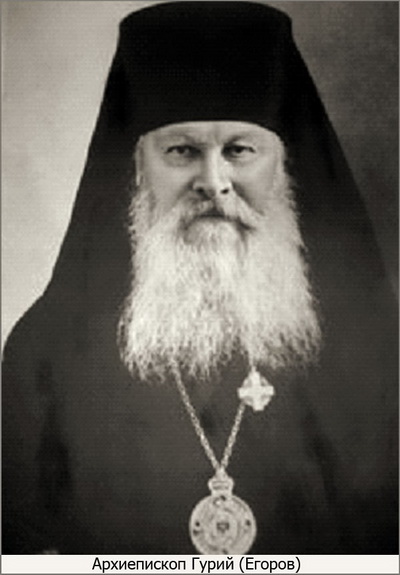
From that moment a new life began in the history of the Samarkand Cathedral of the Protection. Its new rector became Archimandrite Gury (Egorov), a true pastor with a remarkable biography. In 1915 he was tonsured in St. Petersburg and became a hieromonk. Until 1922 he served in the Cross Church of the Metropolitan, and until December 1928 in the Cenobitic Church of Leningrad. Upon graduating from the Leningrad Theological Academy, in 1917, immediately after the revolution, he together with his brother Lev (Egorov) and Father Innokenty (Tikhonov) founded the well-known “Alexander Nevsky Brotherhood”. For his active missionary work he was sentenced in 1928 to four years in camps, but was released early. Living as a dependent on account of illness in Fergana from 1933, he organized a secret monastic community. And in May 1944, when at last the priests and monastics were given the opportunity to emerge into open ministry, Vladyka Gury was sent to the Samarkand Cathedral of the Protection, where he served until the spring of 1945. From Samarkand he was transferred as superior of the newly reopened Trinity-St. Sergius Lavra, to bring about its revival. After this, from August 1946, he became Bishop of Tashkent and Central Asia. A tireless pastor, the bishop laboured to revive spiritual life in the ruined diocese. He called Father Seraphim (Sutorikhin), Archimandrite Boris Kholchev, Archimandrite Hermogenes (Golubev) and other priests to come to Uzbekistan. From the personal files of the clergy of those years it is evident that practically all of them had passed through camps and exile. Under Vladyka Gury, in 1947, the monthly publication of a periodical, “Information on the Central Asian Diocese”, was launched. Following the example of other dioceses, a candle workshop and a church warehouse were opened in Tashkent, with the task of supplying the churches and houses of prayer of the diocese with everything necessary for divine services (wax candles, vestments, incense, icons, liturgical books, etc.).
1945–1947. Protodeacon Dmitry Illarionovich Sergeev. A native of the Saratov Region. In 1921 he was ordained deacon by Bishop Dositheus of Saratov.
1946 — 1947. Rector, priest Nikolai Vasilievich Uvarov. Until 1944 he was in the Renovationist schism, but repented.
1947–1948, until March. Rector, Father Stefan Andreevich Popovich. Under him, in August 1947, the roof of the Cathedral of the Protection was opened up and, according to a design by the city architect, additional sources of light were built: two light-and-ventilation lanterns. The left and right kliros were rebuilt and a platform was built for arranging a second altar.
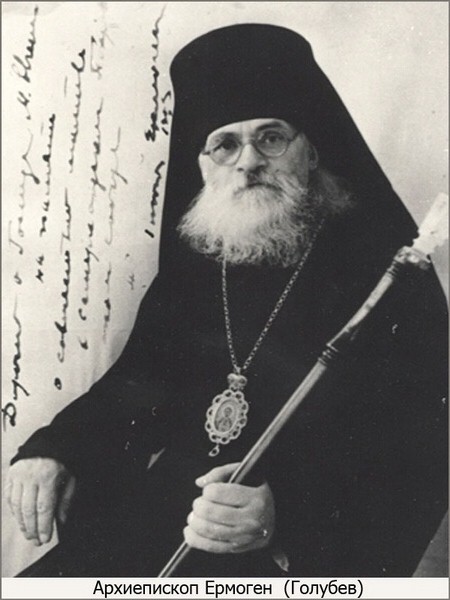
From 1948 to 1953 Archimandrite Hermogenes (Golubev) was appointed rector of the Cathedral of the Protection. Later he would succeed Vladyka Gury as Bishop of Tashkent and Central Asia. Archimandrite Hermogenes, a remarkable and energetic clergyman, was a native of Kiev and the son of a well-known doctor of theology; he graduated first from the Kiev Seminary and afterwards, in 1919, from the Moscow Theological Academy as a candidate of theology. His Holiness Patriarch Tikhon himself ordained him hieromonk in 1921. At a fairly young age he was appointed superior of the Kiev Caves Lavra. In 1931 he was arrested and sentenced to 10 years in camps. In the camp the archimandrite fell gravely ill and was released early, two years before the appointed term. But trials and illness did not break Father Hermogenes. Vladyka Gury sent him to Samarkand. For all five years of his service in the Cathedral of the Protection, Archimandrite Hermogenes lived in the church building itself. Because the grounds of the Cathedral of the Protection were not fenced, a place of rubbish and filth had formed in the immediate vicinity of the church building. In 1949 Archimandrite Hermogenes decided, in order to tidy up the adjoining territory of the street and to eliminate the dumping place, to build a church fence, at first temporary and then permanent. This fence still surrounds the church grounds on the southern and western sides of the cathedral. Under him a storeroom for the sacristan was built and the church yard was paved with fired brick. In the church the right kliros was arranged and the solea was extended.
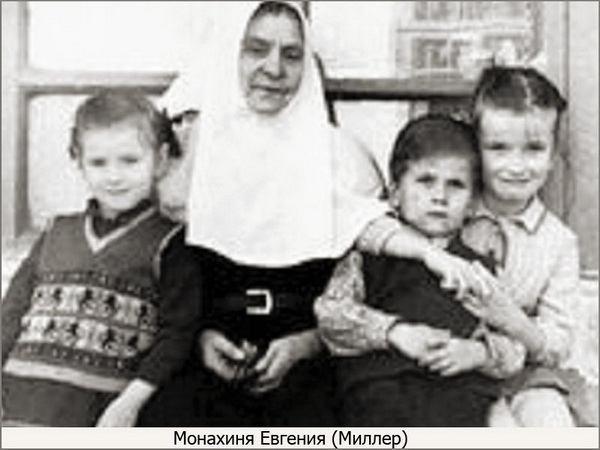
Together with Archimandrite Hermogenes, there served in the Cathedral of the Protection the second priest, Anthony Strekulistov, and the deacon Alexander Andreevich Karamyshev, who lived in private apartments rented by the church not far from the church. He was also attended by two nuns, Evgenia (Miller) and Apollonia (Dolenkova). Both of them, while still in St. Petersburg, had lived in the same cell in a convent. Together they joined the Alexander Nevsky Brotherhood. Mother Evgenia had graduated from the Sorbonne and knew the ancient languages well, as well as German, English and French. She taught Latin and English at Samarkand University. Mother Evgenia was always surrounded by a flock of girls. Some were interested in questions of spiritual life, others in foreign languages. She was responsive and gladly received all whom she could help. Her daily routine was strict, with not a minute in idleness. At five in the morning she got up and doused herself with cold water from head to foot, in any season of the year. Then she performed her monastic rule, tidied up, prepared food and left for the university. During the day she received visitors and worked in the church. At night she liked to read books, spiritual works and the classics, often in the original language. Mother Apollonia, on the contrary, could scarcely read and was very simple. Mother served as altar woman in the Cathedral of the Protection and baked prosphora. Archimandrite Hermogenes respected his altar woman for her meek disposition. She never judged other people, was silent, answered in monosyllables and always prayed. She did not take offence at reproofs and tried to serve everyone. She had lived in a convent from early youth, and this way of life influenced her whole appearance. Tall, she was slender and upright. The habit of prostrations made her supple even in deep old age. She walked and bent down easily while tidying the altar. Father Hermogenes watched over order and was always pleased with the cleanliness of the altar. Archimandrite Hermogenes celebrated services in the cathedral every day, and this tradition, established by him, was preserved in the Cathedral of the Protection for many years. At Sunday services 350–400 people gathered in the church. Every Sunday after Vespers an akathist was served. After the akathist a talk was always held. Attendance at these evening talks was 100–200 people. In his sermons he spoke openly of the fact that the Russian Orthodox Church was experiencing oppression, and called on the faithful to patience and unity. According to the recollections of his contemporaries, Father Hermogenes was a very strict pastor[9]. He knew the law excellently and more than once used this knowledge, boldly arguing with the authorities and proving to them that he was right.
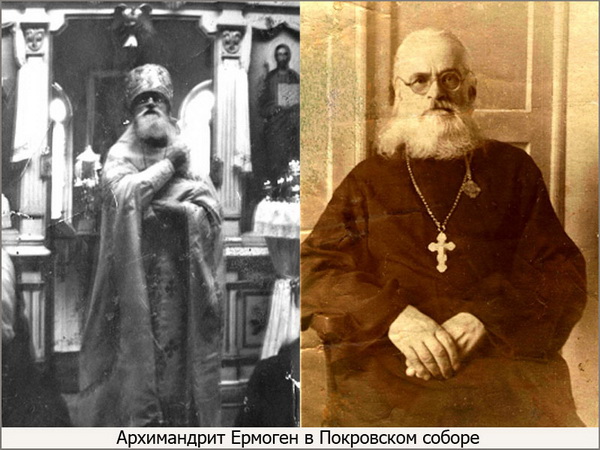
In 1953 he became Bishop of Tashkent and Central Asia, inviting his faithful nuns to follow him. To strengthen the diocese, Vladyka Hermogenes organized a fund that supported poor parishes, needy priests, widows and simply believing people. There in Tashkent, knowing that the authorities would not give permission for the construction of a new church, he took from them permission to restore the old, dilapidated one. So as not to be left without a cathedral at all, Vladyka Hermogenes decided to build a new church directly over the old one, which was still in use. For all the days that this construction went on, services were held without interruption. And when the new cathedral building was finished, the old one, standing inside it, was taken apart and carried out piece by piece. The authorities took such construction as a brazen challenge; moreover, this time coincided with a sharpening of church-state relations in the USSR, which by the end of the 1950s turned into open persecution. Naturally, this activity of the bishop did not escape the attention of the authorities, and a campaign of harassment was mounted against him. In the end, through their efforts, Vladyka Hermogenes was removed from the Central Asian Diocese.
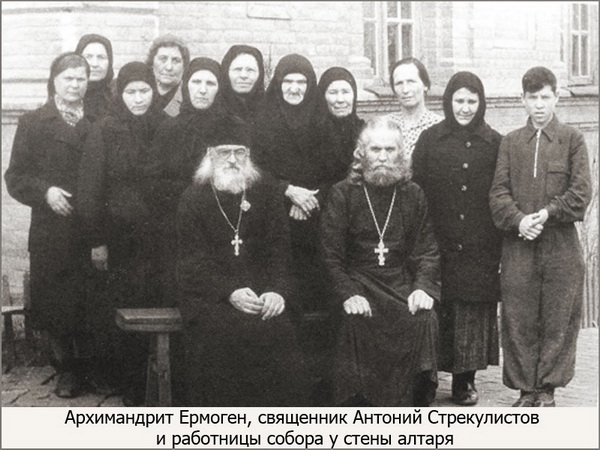
4 November 1949 — 15 May 1953 – second priest Anthony Alexeevich Strekulistov, unmarried, a graduate of a church-parish school.
1952. Deacon Alexander Andreevich Karamyshev.
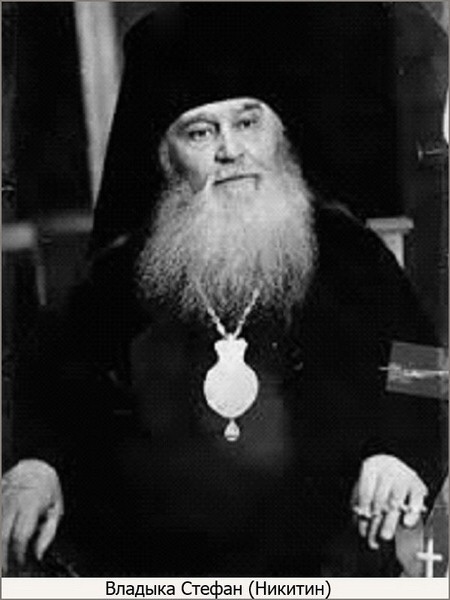
On 24 March 1953, by decree of Hermogenes, Bishop of Tashkent and Central Asia, the priest Sergy Alexeevich Nikitin was appointed rector of the Samarkand Cathedral of the Protection. Later he would become Bishop Stefan of Kaluga and Borovsk. In 1922 he graduated from the Medical Faculty of Moscow University. In those years he became a parishioner of the church of St. Nicholas on Maroseika, where the well-known pastor Sergy Mechev was the priest. In the years of repression and persecution that were then beginning, he himself helped to gather parcels for priests held in prisons and camps. In 1927 he was ordained priest by St. Athanasius (Sakharov) and combined his ministry in the church with work in the public health system. On 16 February 1931 he was arrested as an active Christian under Article 58, paragraph 2, and sentenced to 3 years of forced labour in camps.
An incident occurred to Vladyka Stefan which he wrote down himself and which was later described by the priest Father Georgy Ivakin-Trevogin in the book “Unfabricated Tales”. While serving his term in the camp, Vladyka Stefan, being a doctor, ran the medical post there.
“Most of the prisoners were in such a grievous state that my heart could not bear it, and I excused many from work in order to help them at least somehow, and the weakest I sent to the hospital. And so one day during the reception hours the nurse who worked with me (also a camp prisoner) said to me: — Doctor, I have heard that a denunciation has been made against you, you are accused of excessive leniency towards the prisoners, and you are threatened with an extension of your camp term to fifteen years. The nurse was a serious person, well informed about camp affairs, and therefore I was horrified by her words. I had been sentenced to three years, which were already drawing to a close, and I was counting the months and weeks that separated me from long-awaited freedom, and suddenly – fifteen years! I did not sleep all night, and when I went out to work in the morning, the nurse shook her head ruefully on seeing my haggard face. After seeing the patients she said to me hesitantly: — I want to give you a piece of advice, doctor, but I am afraid you will laugh at me.
– Speak, — I said.
In the city where I come from there lives a woman; her name is Matronushka. The Lord has given her a special power of prayer, and if she begins to pray for someone, she is sure to obtain it by her prayer. Many people turn to her, and she refuses no one; so ask her too.
I smiled sadly:
— By the time my letter reaches her, they will have had time to sentence me to fifteen years.
– But you needn’t write to her, just call out… — said the nurse, embarrassed.
– Call out?! From here? She lives hundreds of kilometres from us!
— I knew you would laugh at me, but she hears from everywhere, and she will hear you. Do this: when you go out for a walk in the evening, lag a little behind the others and shout three times: “Matronushka, help me, I am in trouble!”
She will hear and deliver you.
It all seemed very strange to me, but nevertheless, going out for the evening walk, I did as my assistant had taught me. A day passed, a week, a month. No one summoned me. Meanwhile changes took place among the camp administration: one was removed, another appointed. Another half a year passed, and the day of my release came. When receiving my papers at the commandant’s office, I asked them to write me a travel order to the town where Matronushka lived, since even before calling out to her I had made a promise that if she helped me, I would commemorate her daily in prayer, and on leaving the camp I would first of all go and thank her. As I was putting my papers into my pocket, I heard that two lads who were also being released were going to that town. I joined them, and we set off together. On the way I began to ask the lads whether they knew Matronushka. We know her very well; everyone knows her, both in the town and in the whole district. We would take you to her if you need it, but we do not live in the town but in a village, and we are very eager to get home. But you do this: when you arrive, ask the first person you meet where Matronushka lives, and they will show you. On arriving I did just that: I asked the first boy I met.
Go along this street, — he said, — and then turn by the post office into a side street; there, in the third house on the left, Matronushka lives. With emotion I approached her house and was about to knock at the door, but it was not locked and opened easily. Standing on the threshold, I looked over the almost empty room, in the middle of which stood a table, and on it – a rather large box.May I come in? – I asked loudly.Come in, Seryozhenka, — a voice sounded from the box. I started with surprise and hesitantly went toward the voice. Looking into the box, I saw in it a small blind woman lying motionless on her back. Her face was wonderfully bright and gentle. After greeting her, I asked:
— How do you know my name?
How could I not know! – her weak but clear voice rang out.
– You called me, and I prayed to God for you, and that is why I know.
I sat a long time with Matronushka …[10]”
Incidentally, Matronushka predicted to Father Sergy that he would become a bishop. In 1951 he received monastic tonsure.
21 October 1953 Priest Maxim Mikhailovich Chushev. Married, a native of Kuibyshev, ordained priest in 1922. After 1922 he ended up in the far North; from 1935 he worked as a school teacher and then as an agronomist. From 1947 to 1953 he served a sentence and was released under an amnesty.
1953 Deacon Pyotr Andreevich Tishinsky.
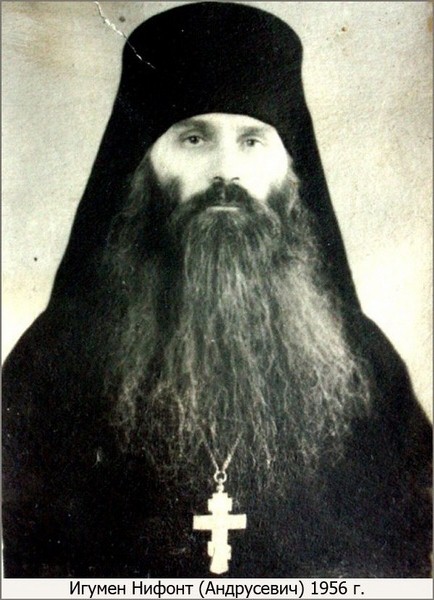
11 October 1954 – 1961.
Rector — Hegumen Nifont (Narkis Porfirievich Andrusevich).
Hegumen Nifont was born on 31 October 1905 in the village of Belousovka, Vinnytsia Region, in the family of a psalm-reader of that same village. In 1919 he graduated from the Tulchyn Theological School (then in the Kamianets-Podilskyi Governorate, now in Vinnytsia Region). In 1922, at the age of seventeen, he entered the Granov Monastery in Vinnytsia Region. But in 1924 this monastery was closed, and the young novice moved to the Uman Monastery in Kyiv Region. In 1927 the authorities closed the Uman Monastery and he moved to the “Tserkovshchina” monastery near Kyiv, and after its closure in 1930 he joined the brotherhood of the Kiev Caves Lavra. On 7 April 1933, with the blessing of the Superior of the Lavra, Archimandrite Boniface, he was tonsured a monk with the name Parmen in the Kitaev Hermitage of the Lavra. In May 1934 in Kyiv he was ordained hieromonk by Archbishop Philaret. From 1935 he served as a priest in the village of Usloma in Vologda Region, and from August 1937 in the town of Kadom in Ryazan Region. In September 1937 he was sentenced by the NKVD organs to 10 years under Article 58-10-2, and served his terms on the White Sea Canal and on the shore of the Kara Sea. There he barely survived. After his release, in 1947 he served as a priest in the Karlashevka convent in Chisinau Region, and in 1949 he was exiled again — to permanent settlement in Siberia. But on 27 August 1954, after Stalin’s death, Father Nifont was freed under an amnesty. In all he had to serve 16 years.
Having gained his freedom, he corresponded with Vladyka Hermogenes, whom he had known since the Kiev Caves Lavra, and the latter promised to give him a parish. Thus, by decree of Bishop Hermogenes of 2 October 1954, Hieromonk Nifont became first the second priest and then the rector of the Samarkand Cathedral of the Protection.
Here he served and accomplished a great deal; Father Nifont was a very active clergyman. Under him, besides the daily church services, an akathist was read regularly on Sundays, Wednesdays and Fridays (in the evening). He regularly preached on Sundays and feast days three times: at the All-Night Vigil, at the Liturgy and in the evening. During Great Lent the “Catechetical Instructions of St. Theodore the Studite” were read in the cathedral almost daily.
The members of the church “twenty” also took an active part in the life of the church. Father Nifont particularly singled out seven widows who had taken upon themselves the care of keeping the church clean and in order and who helped with baking the prosphora. In recognition of their zeal and care for the House of God, Vladyka Hermogenes blessed them to wear white kerchiefs with blue crosses on the forehead during services. In 1957 Father Nifont fell ill with brucellosis, as a result of which his right hand was numb for a long time, but in spite of this he continued to serve. The number of communicants in 1958 exceeded 4,000 people, and the number of baptized was 749. According to the recollections of elderly people, at the feast of Pascha so many people gathered near the cathedral building that it was impossible to squeeze into the church.
Besides his ministry, Father Nifont managed to do much in the way of improvements as well. Under him work was carried out to enclose the cathedral with a permanent fence on all sides, electricity was brought into the church, and the church yard was covered with asphalt. In 1957 living quarters for the deacon’s family were built on the cathedral grounds, as well as a prosphora bakery, a bathhouse, a garage and a lavatory. In 1958 Father Nifont and the Church Council of the Church of the Protection decided to begin the construction of a two-apartment house for the clergy of the cathedral in the south-eastern corner of the church plot, with a basement, and also to build a building for a baptistery with a watchman’s lodge. This was dictated by necessity, so as not to have to rent private apartments for the clergy constantly and not to huddle behind plywood partitions in the rooms available in the cathedral. The parishioners of the cathedral also supported this idea, and then by common efforts money and the necessary materials for the construction were collected. Father Nifont personally drew up the plan of the new buildings and commissioned a design from the city architect. Permission for this construction was obtained from the City Council. Work began: the foundation was laid, water pipes were laid on, building materials were brought in. But then, in the very midst of the construction, a new order came from the City Executive Committee, which stated that the building of new structures on the cathedral grounds was forbidden.
In that same year, 1958, Father Nifont’s younger brother Leonid came to Samarkand, a cultured and literate man, a widower; and the community began to ask Father Nifont for permission to appoint Leonid Church Warden. But those who had had their eye on this place did not like the appointment. From then on denunciations and slander began. Seeing all this and wishing to shield Father Nifont from all unpleasantness, Leonid submitted a request to be dismissed from the post of Church Warden. At that time a complaint was also written against Father Nifont. One of the accusers (a church worker) wrote, under pressure, that Father Nifont had struck him during a service. But soon his conscience tormented him for having slandered the Father Rector, and he began to look for an opportunity to ask his forgiveness for what he had done. Having resolved to repent of the false accusation, he chose the moment when Father Nifont came out onto the ambo during the Liturgy and fell on his knees before him in front of all the people, asking the priest’s forgiveness. Father Nifont was pleasantly surprised and gladdened by this repentance, forgave him, blessed and kissed him, saying: “So be it, then – let there be peace in our parish!” Peace was restored.
At the beginning of June 1960 the Samarkand newspaper “Leninsky Put” published yet another article of slanderous content, entitled – “How Fathers Lose Their Flock”. In this article Father Nifont was accused of keeping all the cathedral’s money himself, of building a monastery on the church grounds, of imposing monastic order in the church and of luring young people into the church. Together with Father Nifont, Archimandrite Seraphim of the Church of St. George was also accused. The Church Council of the Cathedral of the Protection wrote a reply letter to the editors of the newspaper, asking for a retraction of this article and a recheck of the facts accusing Father Nifont. The community of the Cathedral of the Protection tried to defend its rector, describing him as a conscientious, balanced and just clergyman, but without result. It was a time of yet another persecution of the Church, and moreover Father Nifont was a protege of Vladyka Hermogenes.
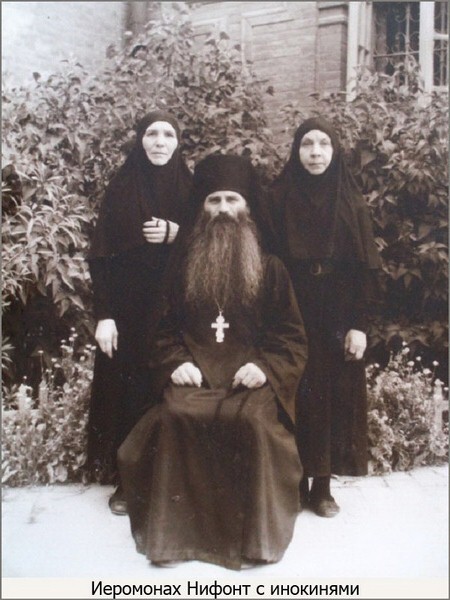
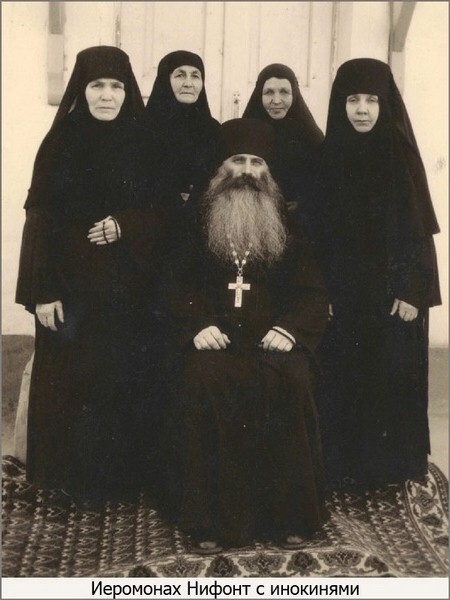
All this ended with the fact that in March 1961, during Great Lent, three weeks before Pascha, the commissioner summoned Father Nifont and took away his certificate of registration. At about the same time the Regional Commissioner took the certificates of registration from the rectors of the Church of St. George and of the St. Nicholas house of prayer by the railway station.
Under Hegumen Nifont two nuns served in the cathedral: the altar woman, Nun Apollinaria (Guseva), and the candle-seller, Nun Alexandra (Davydova-Zyrina). Vladyka Hermogenes gave him a blessing to tonsure into monasticism. Having served in the cathedral until 14 March 1961, he found himself without a post and lived in Samarkand until 1971. In 1965 a time came that was favourable for returning to ministry. The bishop approached him with a proposal to take a parish, but Father Nifont, giving no reasons, declined. He agreed only to help the priests of the Samarkand Church of St. George, without pay, for half a year. In February 1970 he was again summoned to the diocese on the same matter, and this time too he evaded the bishop’s offer. At the same time the parishioners and the church council began to ask him insistently to return as rector to the Cathedral of the Protection. After which Father Nifont himself wrote to Vladyka Gabriel that he gave his consent to return to the cathedral. In giving his consent Father Nifont stipulated that he still preferred to remain without a post, as he would take no remuneration for serving in the cathedral. It is evident from the letter that he was waiting and hoping to be reinstated in ministry. In September 1970, in correspondence with Vladyka Gabriel, Father Nifont reported that he agreed to serve in the Cathedral of the Protection without payment for his labours, but he never received an appointment. Having understood that there was nothing more to wait for, Hegumen Nifont expressed the wish to die in Russia. He received the schema with the name Parthenius and decided to prepare for the journey.
While still in Samarkand, Father Parthenius began to write a book on questions of spiritual life. He conceived a work that could help monks and laypeople who seek salvation but have no spiritual guides. He devoted 25 years of his life to this work, and in the end the book was published under the title – “The Path to the One Thing Needful — to Communion with God”.
Living in Samarkand, Father Parthenius corresponded with nuns he knew, asking them to help him settle in Maloyaroslavets. To do this was quite difficult at that time, since the authorities did not permit the registration of residence for priests and monks. But after petitions and requests they nevertheless managed to arrange permission to buy a small house in Maloyaroslavets. Father Parthenius registered there together with one nun, tonsured her into the schema, and she lived with him as his cell attendant. Having settled in Maloyaroslavets, he no longer served in a parish. Father Parthenius wished to live in a monastery. In time his wish was fulfilled: he began to serve on an antimension in the house church in Karizh, at the Protection Monastery, and there he reposed in the Lord in 1993. Father Nifont gave spiritual guidance to a large number of people and continued to tonsure monks and nuns. Nuns who knew Schemahegumen Parthenius personally remembered him as a monk who was very strict and demanding toward himself.
1954–1958. Nikolai Pakhomovich Masyutenko. From October 1954 he helped at the church. In December 1957 he was ordained priest.
1954. Deacon Valery Alexeevich Antonov.
1955. Hieromonk Seraphim (Semyon Ivanovich Grigoriev) was appointed second priest of the Cathedral of the Protection. From 1941 to 1949 he served a sentence under Article 58, paragraph 10, in the Norilsk and Taishet camps.
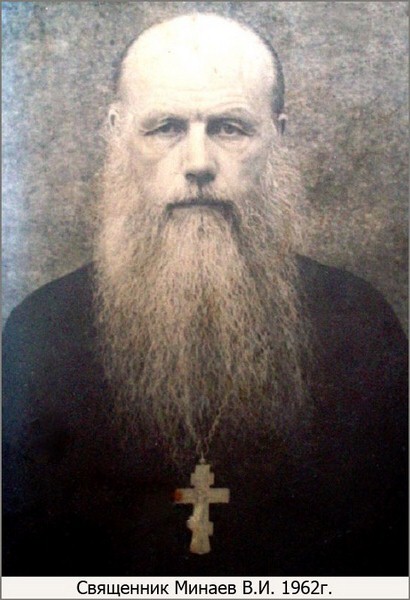
1955. Deacon, and from 1956 to 1965 priest, Vasily Ivanovich Minaev. A participant in the Great Patriotic War, from 1941 to 1944 he was a prisoner of war in Finland. From 1945 he was sentenced to 10 years in camps under Article 58, paragraph b. He lived at 60 Angarskaya Street.
1955 — 1967. Nun Apollinaria (Anna Ivanovna Guseva). She died on 9 June 1975 and is buried in the Samarkand central cemetery.
1955 – 1972. Nun Agnia (Alexandra Davydova-Zyrina). She served as altar woman; she died on 22 March 1972 and is buried in the Samarkand central cemetery.
1957. Hieromonk — Kifa Nikitovich (Pazyuk). Second priest. Retired because of illness.
1957–1966. Deacon — Feodor Varfolomeevich Mironov. In 1933 he was sentenced to 5 years under Article 162. From 1954 to 1956 he was warden of the Cathedral of the Protection. He graduated from a church-parish school and was in holy orders from 1957. He lived with his family in his own house.
1958. Hegumen Georgy (Vasily Antonovich Shatilov). Before Samarkand he had served in Port Arthur, Manchuria, Harbin, Mongolia, Rostov and Odessa.
1960 — 1961. Deacon – Nikolai Andreevich Belyakov.
1961–1966. Rector, priest – Innokenty Nikolaevich Matafonov. He transferred to Samarkand from Chelyabinsk and was appointed rector in place of Father Nifont on 16 April 1961. After the closure of the St. Nicholas house of prayer, its rector and community merged with the community of the Cathedral of the Protection. After this the workload of the priests increased. Father Innokenty had a weak heart; he was treated several times, but in the end died of illness in 1966, in the forty-third year of his life, and was buried in the Samarkand central cemetery. Some time later, his wife intended to take Father Innokenty’s body and transport it to Riga.
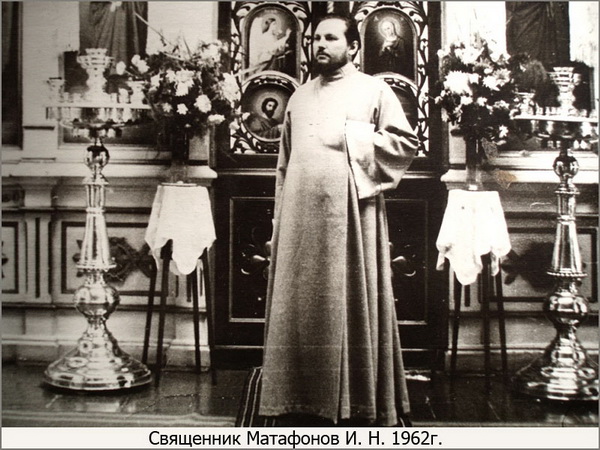
1961. Deacon – Alexander Magomedovich Kerimov.
1962–1966. Priest – Kondraty Andreevich Malakhov.
1962 — 1964. Priest – Alexander Vasilievich Predtechensky.
1963–1964. Priest – Alexander Magomedovich Kerimov. Because Priest F. Mironov had left for another parish, and because Priest A. Predtechensky had been accepted temporarily and served without a certificate of registration, the Church Council of the Cathedral of the Protection petitioned Vladyka Gabriel — to ordain Deacon A. M. Kerimov to the priesthood and appoint him rector of the Cathedral of the Protection.
1962–1963. Priest – Feodor Varfolomeevich Mironov.
1964 — 1966. Archpriest — Pavel Matveevich Medvedev, born 1900. The last rector of the Samarkand St. Nicholas community. He was placed without a post, but then, on the instruction of Vladyka Gabriel, served as second priest of the Cathedral of the Protection. He died of a severe illness in 1966. He is buried in Tashkent.
1964 — 1972. Priest (psalm-reader) – Platon Ivanovich Lapshin.
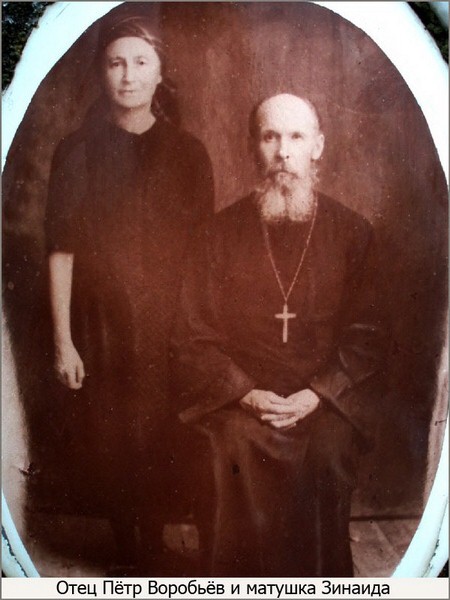
1966 — 1967. Archpriest — Pyotr Ivanovich Vorobyov, born 1886. He lived without a post. At the request of the chairman of the Church Council he returned to ministry to help the ailing Father Innokenty Matafonov. He died in 1970 and was buried together with his wife Zinaida in the central city cemetery in Samarkand.
1966. Priest — Vasily G. Kartavtsev. He died and was buried in Samarkand on 13 April 1971.
1966–1970. Rector, priest — Alexander Magomedovich Kerimov.
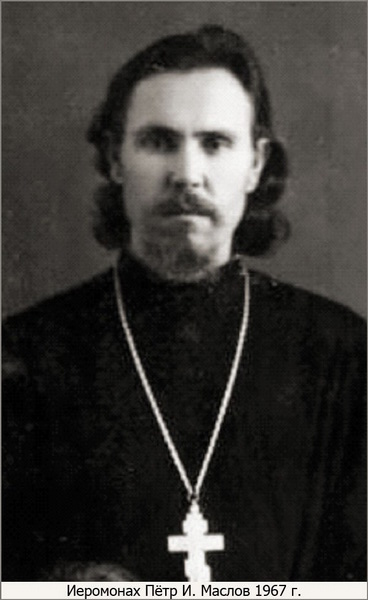
1967–1968. Hieromonk — Pyotr Ivanovich Maslov. Later served in Chirchiq.
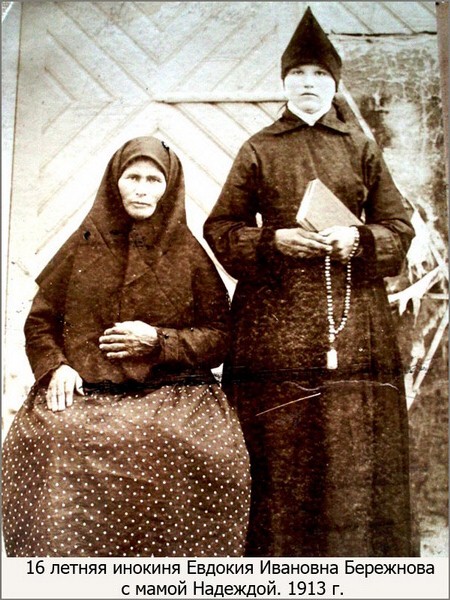
1960 — 1972. Nun – Evdokia Ivanovna Berezhnova, was a singer, died in 1984 and was buried in the central city cemetery of Samarkand in the same enclosure with Nun Maria Vlasenkova.
1968–1969. Priest – Simeon Konstantinovich Kochetkov. He lived without a post. He died in Samarkand on 31 December 1969.
1970. Rector, priest – Ilya Petrovich Ovcharenko.
1971. Priest – Nikolai Moiseevich Kovalchuk. Left for Ukraine.
1970–1971. Priest – Andrei Pavlovich Penzin. Transferred to Dushanbe.
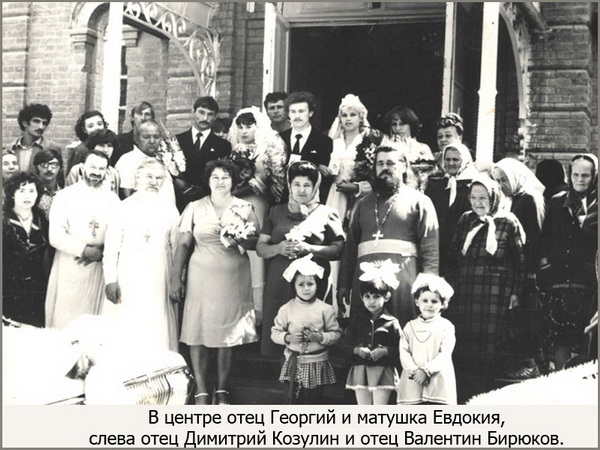
1970–1987. Priest – Georgy Trifonovich Khorunzhy. From 20 February 1971 — rector.
1972. Priest – N. I. Cherkashin.
1973–1974. Priest – Viktor Dubanov. Having moved to live in Samarkand, he became a disciple of Archimandrite Seraphim (Sutorikhin). On Father Seraphim’s recommendation, Vladyka Platon ordained him deacon in 1971 for the Samarkand Church of St. George. A year later he was ordained to the priesthood by Vladyka Bartholomew and appointed to serve as second priest in the Samarkand Cathedral of the Protection.
1977–1980. Deacon, priest – Valery Alexeevich Antonov.
1978. Priest – Vitaly Kravchenko.
1978. Priest – Valentin Yakovlevich Biryukov. Transferred to Russia because of his health. He wrote the book “On Earth We Are Only Learning to Live”.
1978. Priest – Mikhail Kotlyarov. He currently serves in the Cathedral of Tashkent.
1978. Priest – Pavel Seleshchuk. He was transferred to Kyrgyzstan, to the town of Kant, and later served in Russia near Belgorod.
1978 — 1987. Priest – Georgy Kaspersky.
1979–1981. Rector, Hegumen – Sergy (Alexander Vladimirovich Ryabtsev). At his own request he was transferred to the Kaluga Diocese.
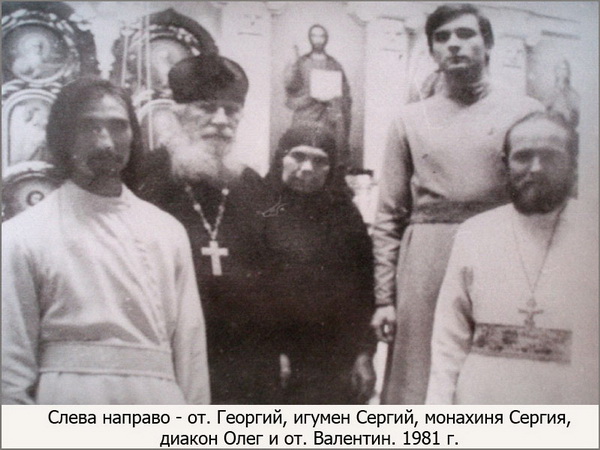
1979–1982. Nun — Sergia (Ksenia Alexeevna Markelova). She left for Russia.
1979–1987. Deacon, priest – Georgy Yakovlevich Petrov. He was an artist and painted icons for the church. He was forced to leave Samarkand for family reasons.
1980–1991. Deacon — Ivan Yuryevich Khorunzhy.
1980–1981. Deacon – Oleg Mustafin. Transferred to the Church of St. George. Because of illness he could not serve. He died in Samarkand in 1995 and was buried in the central cemetery.
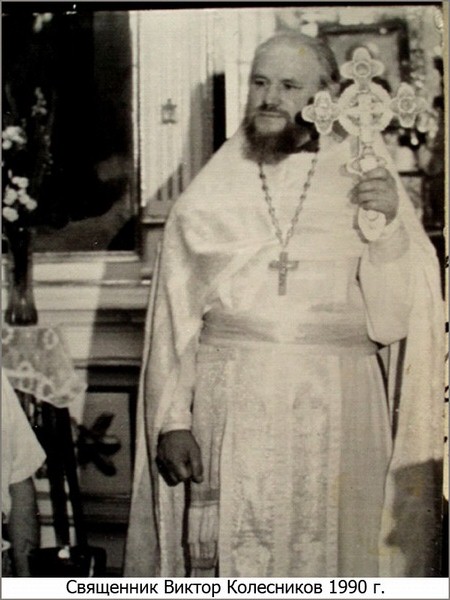
1987–1990. Rector, priest – Viktor Petrovich Kolesnikov. He was transferred to serve in Kyrgyzstan, in the city of Osh.
1990 — 1991. Rector, priest – Dimitry Vasilievich Goshchuk. Transferred to Tashkent.
1990–2001. Rector, priest — Georgy Trifonovich Khorunzhy. He and his wife had six children.
1989. Singer – Viktor Panchenko. 1992, deacon. 1993 — priest; he was the first to restore the Samarkand Saint Alexius Cathedral.
2006. Rector, Archpriest – Roman Zagrebelny. He began his ministry in 1991 in the Cathedral of the Protection as a sacristan — under Father Georgy Khorunzhy.
The History of the Icons of the Cathedral of the Protection
The Samarkand Cathedral of the Protection is unique also in the sense that within its walls, owing to the course of events, a considerable number of rare images are to be found. By 1930 all the churches in the city of Samarkand and its surroundings had been closed one after another. At that time only one church remained functioning – the Cathedral of the Protection of the Mother of God. Unable to save their churches, the Orthodox tried to preserve at least the icons, iconostases or church utensils, and the Cathedral of the Protection then became a place of refuge for many icons from the churches being closed.
Left without churches, the Orthodox began to set up houses of prayer for the celebration of services and Sacraments. But in the 1960s history repeated itself. The wave of Khrushchev-era persecutions put an end to the life of many surviving church communities: the Samarkand (St. Nicholas), Kattakurgan (St. Equal-to-the-Apostles Prince Vladimir) and Bulungur (Archangel Michael) houses of prayer. And at the end of 1962 all the property from them was likewise moved to the Cathedral of the Protection[11]. From the Kattakurgan house of prayer alone, 116 various icons and four banners were handed over by deed, not counting everything else. It may be said that the Mother of God herself undertook to preserve these holy images.
For many years, right up to the 1990s, all this remained within the walls of the Cathedral of the Protection. And when some churches began to be revived, part of these icons was given back to them. In this way icons were given to the Samarkand Cathedral of St. Alexius, and to the churches of Kattakurgan, Karshi and Navoi. In the Cathedral of the Protection in Samarkand there are quite a few old, remarkable icons. Some of them deserve to be written about separately. First of all, one must mention two old, large images located on the left and right kliros, in white icon cases. These are the beautiful image of the church’s patronal icon, the “Protection of the Mother of God”, and the image of Venerable Seraphim of Sarov.
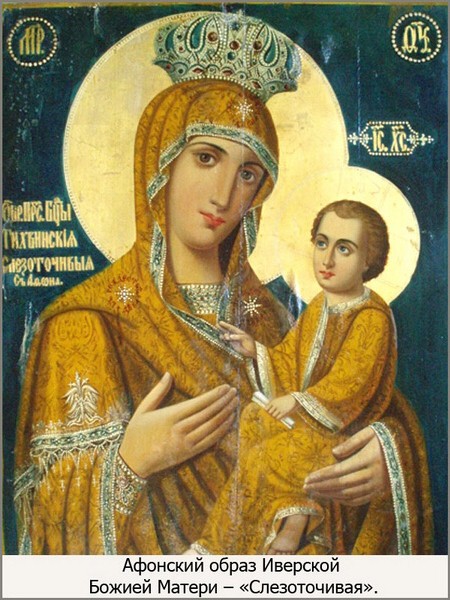
And recently, in May of this year, we were rehanging the icons in the cathedral, and on the back of one of the icons of Athonite work, the Tikhvin “Weeping” icon, we found an old inscription – “Katta — Kurgan”. At approximately the same time, among descriptions of the churches and shrines of the Turkestan region, we found a mention of one icon – the “Tikhvin — Weeping” icon. “In the church of Katta-Kurgan special attention is deserved by the icon of the Tikhvin Mother of God, sent by the Russian Monastery of St. Panteleimon on Athos. This icon was consecrated by His Eminence Nilus (an elder and schemamonk) upon the relics of the Holy Saints with a mixture of holy waters – from the springs of Palestine, the Jordan and Nazareth; set into the icon are: particles of the oak of Mamre and a particle of the stone of the Tomb of the Lord.” The prototype of this icon was in the Russian Skete of St. Elias on Holy Mount Athos. According to tradition, on 17 February 1877 in the Skete of St. Elias on Athos the Tikhvin icon became renowned for a miraculous flow of tears, after which copies began to be made of it. This icon hung unnoticed in the Cathedral of the Protection for many years, and no one suspected it.
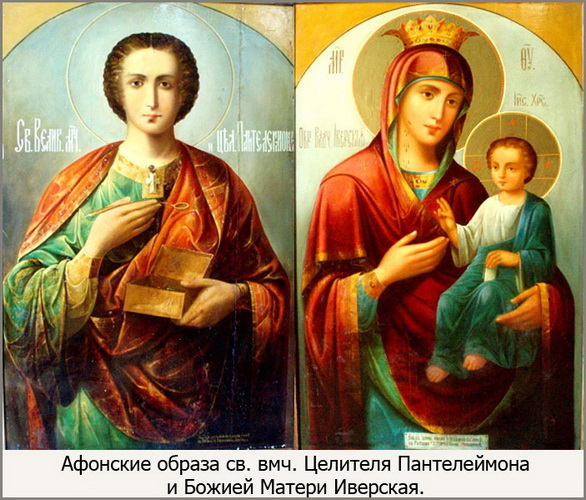
On the opposite wall hang two large images, of the Iveron Mother of God and of the holy Great Martyr and Healer Panteleimon. They too were painted on Holy Mount Athos in the Monastery of St. Panteleimon, and on the back there is an inscription which reads: “This icon was painted and consecrated on Holy Mount Athos, in the Russian Monastery of the holy Great Martyr and Healer Panteleimon, from which it was sent to the Church of St. George in the city of Samarkand as a blessing to the Christ-loving inhabitants, as gracious help, protection and intercession to all who with faith and zeal have recourse to it and pray tenderly before his venerable image.” 1895.
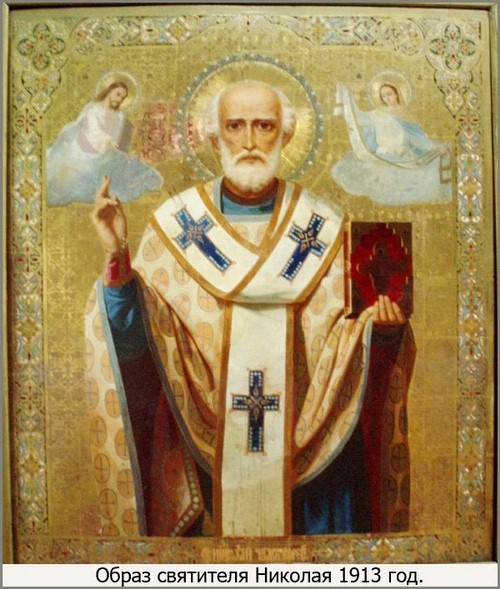
And beside them hangs an image of St. Nicholas, painted in Russia in 1913, the year of the celebration of the 300th anniversary of the House of ROMANOV. Our contemporaries do not know the history of these icons, but most often they pray precisely before these three images.
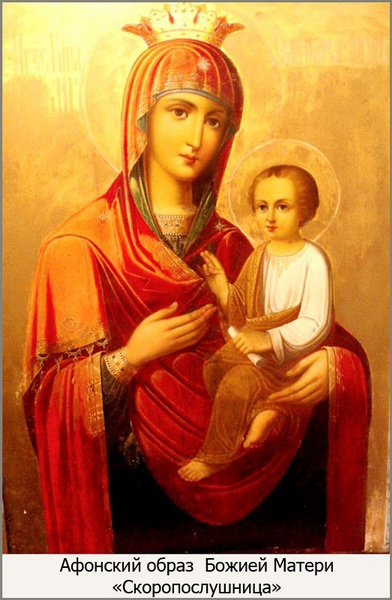
Besides them there hangs in the cathedral one more image painted on Athos, a beautiful depiction of the Mother of God called the “Quick to Hear”. This image was badly scorched in a fire, but in 2013 it was restored.
On the kliros are beautifully preserved large icons of fine Italian work: the patronal icon “The Feast of the Protection of the Mother of God”, the holy Martyr Prince Michael of Tver, and the Venerable St. Seraphim of Sarov. Next to him, in a separate icon case, is an old image of the Kazan Mother of God; it has darkened with time and varnish, but in spite of this it is clear that the quality of the painting is very high. This image is regarded among the cathedral’s parishioners as wonderworking.
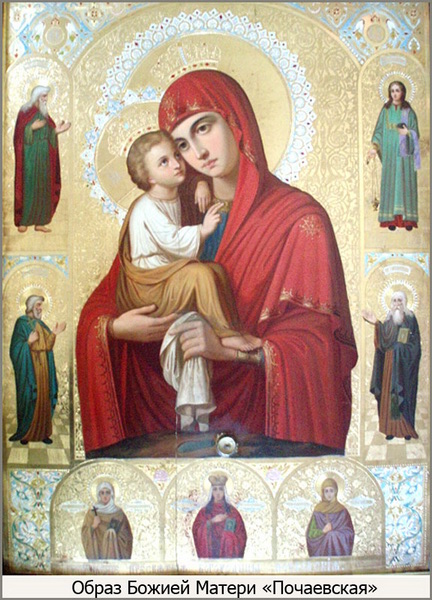
The cathedral has many icons of the Mother of God; among them one wants to single out the images of Italian work, the “Pochaev” with attending saints, and the “Sign”, painted in 1885.
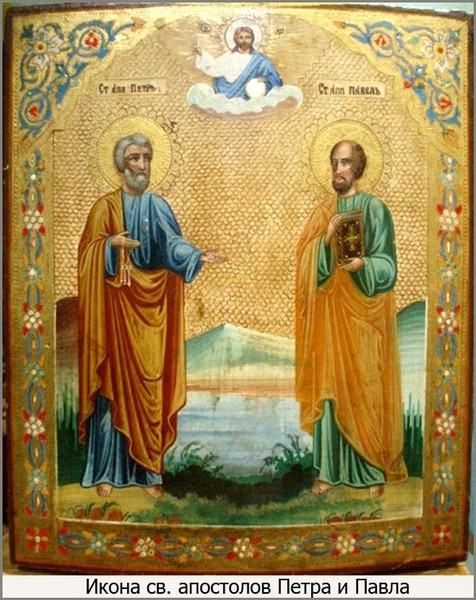
In the sanctuary of the Cathedral of the Protection hangs one more interesting icon — the image of the Chief Apostles Peter and Paul. On the back of it there is an inscription: “A blessing to the teetotaller Cossacks of the Sarkan Cossack Village, stationed in the 1st Semirechye Cossack Regiment, from the Sarkan Temperance Society, 16 May 1910. Sarkan Cossack Village; Chairman of the Sarkan Temperance Society — Priest Ioann Vitavsky. Secretary of the Society V. Vyazigin.”
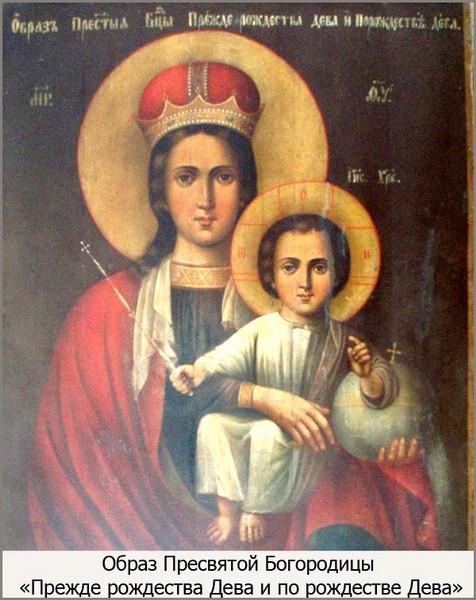
In 2007 a man came to the cathedral; he brought an icon that had hung for many years in his garage, and he did not know the history of this icon. It turned out to be a very rare image of the Mother of God – “A Virgin before the Nativity and a Virgin after the Nativity”. The style of painting of this icon is also very distinctive, resembling the school of Borovikovsky’s circle. And this image has one more peculiarity: on the right hand of the Mother of God the little finger is bent in a particular way.
Besides the icons listed here, within the walls of the cathedral there are quite a few more beautiful images whose history remains unclarified for now.
In the central area hang two icons painted in 1989 with the blessing of the rector, Father Viktor Kolesnikov. These are a large image of the Rublev Trinity and an image of Blessed Xenia of St. Petersburg, canonized that same year. They were painted by a cathedral worker, the singer Viktor Panchenko, who later became a deacon and then a priest.
The Sunday School and the Beaded Icons
This was the time when Sunday schools began to open in all parishes. Father Roman was then serving in two churches – the Alexius Cathedral and the Church of the Protection of the Mother of God. Having decided to found a Sunday school at the cathedral, Father Roman blessed Valentina Olegovna Guliyeva, a parish worker and a very enterprising woman, for this undertaking. Whatever she took up, people at once gathered around her. By that time she was one of the teachers of the Sunday school at the Church of St. George, giving lessons in the children’s and adult Sunday schools. For this reason it was decided to hold the classes at the Alexius Cathedral on Saturdays.
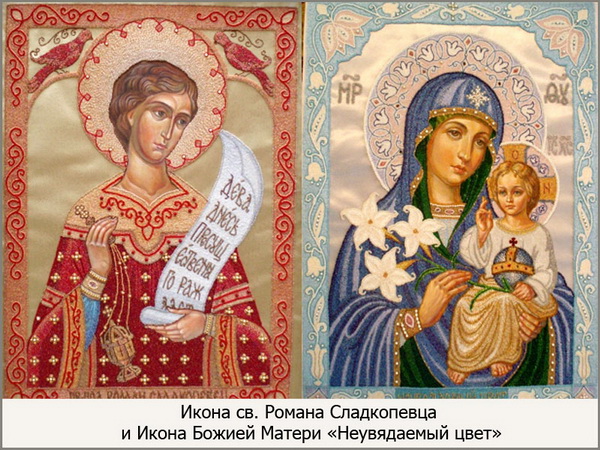
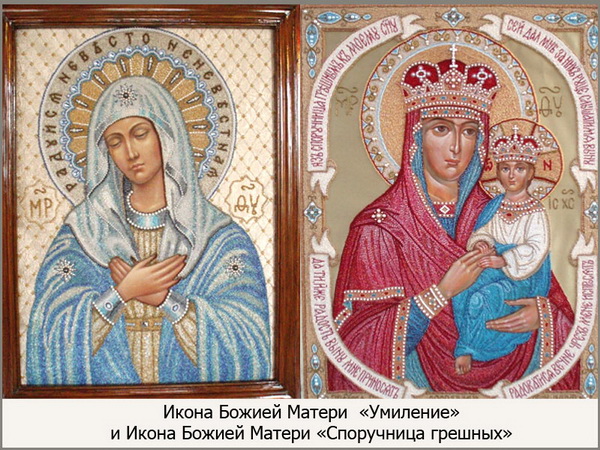
On 29 February 2004, in the first week of Great Lent, on the Sunday of Orthodoxy, all the details were discussed at the Church Council and they set to work. Since one of the most pressing problems of our time is dependence of various kinds, we decided to take up within the Sunday school the theme — “Education and the Struggle against Drunkenness, Smoking and Drug Addiction”. This idea had been conceived long before, and now it was realized. On 6 March, on the day of the Kozelshchyna icon of the Mother of God, the first moleben with the reading of an akathist was served before the icon of the Mother of God “The Inexhaustible Cup”. Many people came, and, what is remarkable, Muslims came too, to pray for their loved ones. The classes were arranged thus. After the Liturgy came Father Roman’s sermon, which took the place of the first lesson. After this a water-blessing moleben was served with the reading of a standing list of the suffering — more than two hundred names. At the end of the moleben all venerated the image of the “Inexhaustible Cup”, and immediately after this the classes began. This icon was embroidered with beads on top of a paper calendar pasted on cardboard. The image of the Mother of God “The Inexhaustible Cup” was embroidered by Valentina Olegovna and became the first icon embroidered with the use of beads. The programme of classes turned out very interesting and rich; first we spoke about the problems of alcoholism and about miraculous healings. Then we studied commentaries on the Gospel and the Apostle, and on the Psalms. Valentina Olegovna gave explanatory talks on the harm of sects, sorcerers and psychics. Nikolai Aliev gave the lesson on the Law of God. Alexei Vasilievich Goltsov spoke about the miracles that happen to people who have passed through the Sacrament of Repentance. Raisa Vasilievna Darmova told the Lives of the saints, and Olga Fyodorovna Ufimtseva spoke of the Mother of God and of the miracles connected with her. People knew that there would be a moleben every Saturday, and came specially for it, prayed for their relatives and took away water. Valentina Olegovna prepared a programme of performances with the children for church feasts. Thus for two years and four months the Sunday School held its classes at the Alexius Cathedral. And when Father Roman handed over the cathedral to the new rector, Father Igor, the entire Sunday school moved in full, together with Father Roman, to the Cathedral of the Protection.
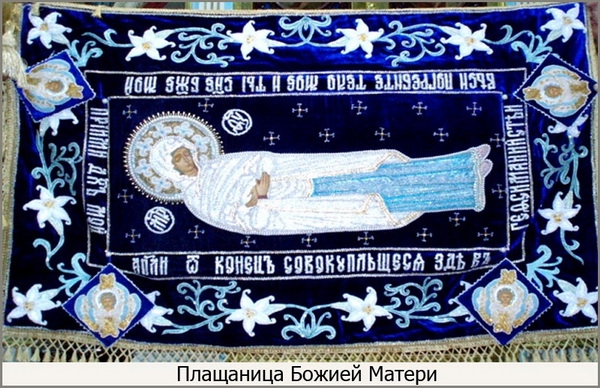
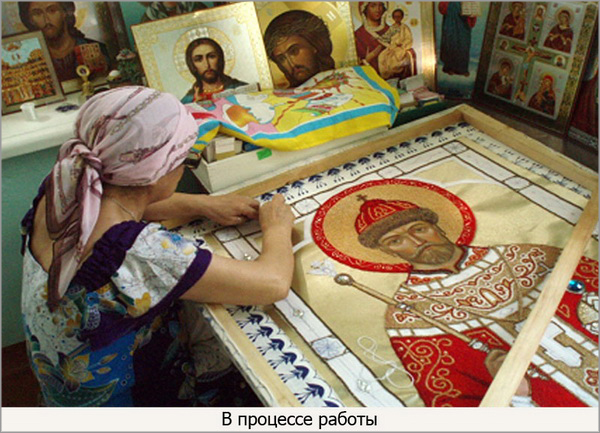
The first class in the new place was held on 26 June 2006, on the day of the icon of the Mother of God “It Is Truly Meet” (the Merciful), and it took place in the church, with an obligatory charity lunch. Both the school and the Saturday molebens were received very well by people. The age of the students of the adult school ranged from 20 to 70. The children’s Sunday school appeared a little later. Specific programmes for teaching children and instructive Orthodox literature did not yet exist then, and all the lessons were agreed with the Father Rector. The children were taught Gospel parables, the Law of God, moral upbringing and the Lives of the saints. Everything rested on enthusiasm. In 2000 Valentina Olegovna, while at Optina Hermitage, learned to embroider with gold thread. And in 2007 she lived for 18 days in the Shamordino Convent – the whole Dormition Fast – and there too she learned the technique of embroidering icons from an elderly nun, Euphemia. This nun had lived in the convent and embroidered icons since its reopening – 15 years. Shamordino is the only convent where absolutely all the icons are embroidered with beads and glass beads. On returning from the trip, Valentina Olegovna began at first to try working in this technique herself. At that time, already in the Cathedral of the Protection, a circle for embroidering icons with beads and glass beads was created, and a circle for sewing priestly and church vestments. Valentina Olegovna was the sacristan of the Cathedral of the Protection; people gathered both within the walls of the church and at her home. The circle sewed everything: vestments and banners, shrouds and veils. They sewed for themselves and as gifts for other churches. It was then that the technique of embroidering icons with beads developed. Father Roman supported this initiative and blessed the beginning of work on icons. The technology of making such icons is very distinctive and requires a special approach. Much experimenting was needed, and sometimes work had to be redone several times to achieve the desired result. The process of making such icons is very laborious and demands constant attention and perseverance. The last works of Valentina Olegovna for the church were the full-length icon of the holy Prophet John the Baptist and the collective work on the shroud of the Mother of God. In 2010 she moved to live in Russia. But in spite of this, work on the icons did not stop. A group of five people gathered: the embroideress Anna Gulyants, the church accountant Tatyana Kremer and Matushka Anastasia Poryaeva, and the authors of this account. Each of the icons was thought out and discussed in advance. The images were carefully chosen. Everyone wanted to fill the church with icons of a worthy standard. When Father Roman took over the Cathedral of the Protection, then besides the old, large images, many small, faded reproductions cut out of magazines hung on its walls.
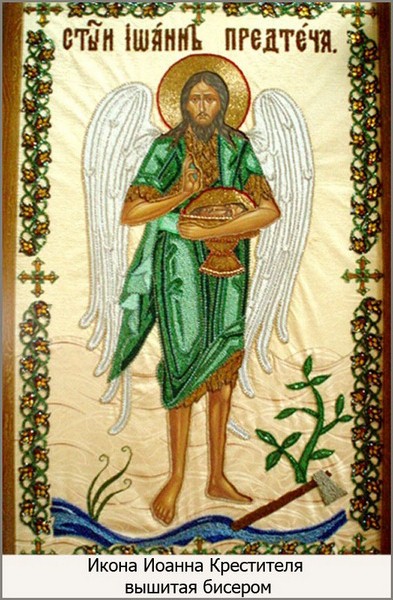
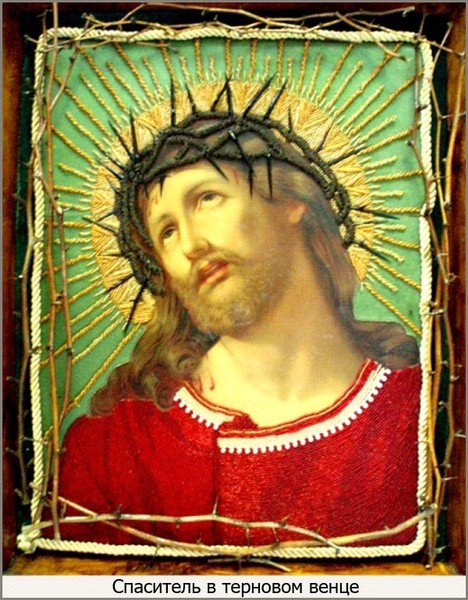
Anna’s first work was the image of the Saviour in the crown of thorns, embroidered after an old lithograph once brought from the Holy Land. After it followed the full-length icons of the “Quick to Hear” and of the “Lord Almighty”, also full-length. And then they thought and decided to embroider the prophet of God Daniel, since he is one of the patrons of the city of Samarkand, and the Protection of the Mother of God, also full-length. These images were conceived as a pair, and now they, as it were, greet those who enter the church.
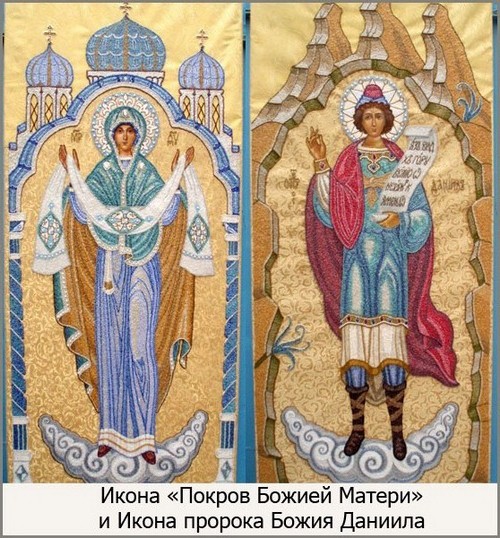
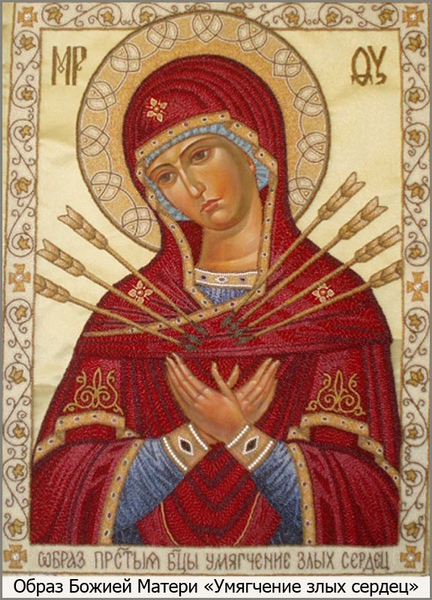
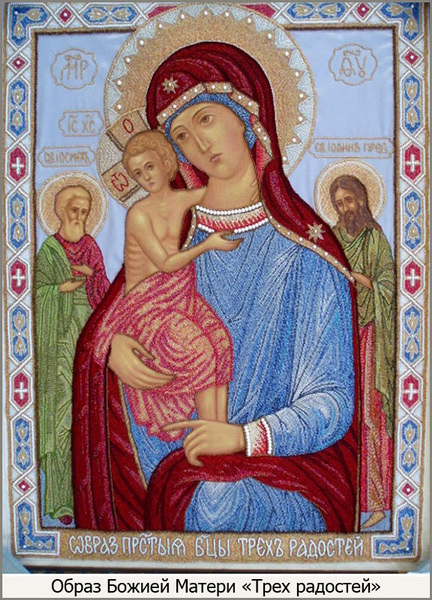
In the course of these works, plans for the future were nurtured. Some images seemed to ask by themselves to be put on the walls, and others were embroidered at the request of parishioners. In this way were painted and embroidered the icons of the Mother of God “Unfading Blossom”, “Of the Three Joys” and “Seven Arrows”, and later of the saints Cyprian and Justina, Peter and Fevronia, Mary of Egypt and the warrior Uar. On the kliros, for the singers, they embroidered the image of Romanos the Melodist with a golden censer, and on the opposite kliros – Tsar Nicholas II the Passion-Bearer.
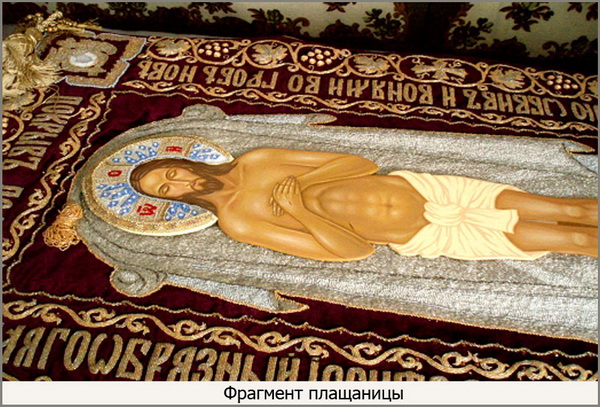
And the shroud of our Lord Jesus Christ was embroidered by Anna while she was in the Holy Land in 2011, and at the end of the work she laid it against the Stone of Anointing” in Jerusalem.
Over these years, through the efforts of women, the church was gradually transformed. For them the Church of the Protection was a home of their own, and they tried as best they could to adorn it, sparing no effort. Both Tatyana Kremer and Matushka Anastasia have left for Russia, having served in the House of God for fifteen years each.
Authors and compilers – A. M. Galak and E. V. Larina .
Special thanks to V. O. Guliyeva for her help in writing the history of the Sunday School.
Notes:
[1] Reference Book of the Samarkand Region. 1905, p. 40.
[2] Reference Book of the Samarkand Region. Address Calendar 1912, p. 198.
[3] Clergy documents of the Cathedral of the Protection for 1957.
[4] Reference Book and Address Calendar of the Samarkand Region. 1914, p. 52.
[6] Samarkand Regional State Archive Fund 67, Inventory 1, file 20, sheet 4.
[7] Address Calendar of the Samarkand Region for 1914 p. 51.
[8] The book “In the Footsteps of the Apostle Thomas”, Archpriest L. Patrakhin and Archpriest Pakhomy Lai. 2009, pp. 159–161.
[9] Blog of Priest Pavel Adelgeim: The Not-Quite-Shot, Not-Quite-Ground-Down Citizens of the City of God. www.adelgeim.livejournal.com
[10] The book “Unfabricated Tales”. Biography of Bishop Stefan Nikitin. Archpriest Georgy Trevogin. Tashkent.
[11] Deeds of transfer and acceptance. Clergy documents of the Cathedral of the Protection for 1962–1963.
The page is being edited…
Views (3407)