

…As we look upon the snow-white beauty of our churches, at the domes and crosses raised on high, let us recall the history of our native land. Centuries and millennia have passed. Time is able to consign everything to oblivion and ruin. But the churches of God have endured. As God is eternal, as the power of God’s truth is invincible, so the beacons of eternity – the churches of God – are indestructible and not subject to time.
Enter, O man, into the church of God and listen to your soul… As after a fierce storm a ship enters a quiet harbour and finds shelter there, so the human soul, entering the church of God after the wearying, exhausting and emptying bustle of this world, finds here the peace and comfort it longs for…
Links for viewing:
The Second Consecration of the Cathedral

Part One:
A Brief Survey of Church Building in Samarkand and the Construction of the Cathedral in Honour of St. Alexius of Moscow
On 15 October 2016 it will be 100 years since the day when a momentous event took place in Samarkand: the consecration of the military cathedral in honour of St. Alexius, Metropolitan of Moscow, the Wonderworker.
This majestic church was originally conceived as the principal military cathedral of the city, in which all the main church feasts and Imperial Days would be celebrated, with parades of the troops of the entire Samarkand garrison. Even before its consecration, Saint Alexius Cathedral was taken, with the Highest consent, under the high patronage of the Heir to the imperial throne, TSESAREVICH ALEXEI NIKOLAEVICH ROMANOV. (Russian State Historical Archive [RGIA], fund no. 806, inventory 5, file 9886, sheet 5.).
But much of what was conceived and planned in those years did not come to pass. First the war of 1914, and then the revolution of 1917, completely changed the course of events. What sort of time was it? We can now only guess at it from the surviving historical records and memoirs. By the day the cathedral was consecrated, the Russian Empire had already been at war for two years, and for that reason the entire combat contingent of the Samarkand garrison was absent; besides this, in 1916 an uprising of the local inhabitants broke out in Turkestan. The Empire was on the brink of disintegration. Confusion reigned in the minds and souls of many people of that time.
Saint Alexius Cathedral turned out to be the last building in the series of Orthodox churches of the Tsarist period erected in Turkestan.
Let us try to reconstruct the history of those days from the beginning.
On 2 May 1868 Russian troops took possession of the city of Samarkand, and the garrison was first quartered on the territory of the old city citadel. Among those who took part in the storming of the ancient city was a young twenty-year-old second lieutenant, at that time still unknown to anyone: Alexei Nikolaevich Kuropatkin. By his own recollection, he lost consciousness then and very nearly perished, having seized an enemy in hand-to-hand combat. (“Kuropatkin’s Diary”. 1916.). From that memorable day began the career of a military man, a hereditary nobleman and an Orthodox Christian. Later, the fate of this remarkable man would be linked with Turkestan for a long time.
Despite scanty means and a lack of building experience, in the same year the first Orthodox church was erected in the centre of the citadel, in the name of the Holy Great Martyr George the Victorious. The church that was built at once became the spiritually formative centre of the citadel. According to eyewitnesses, the church building was the only structure decorated on the outside and elegantly finished on the inside. But this building proved short-lived and by 1879 had begun to fall into ruin. Practically all Russian settlements in the pre-revolutionary cities of Turkestan arose on the sites of military fortifications, fortresses or citadels, and the parishes in them were at first military ones.
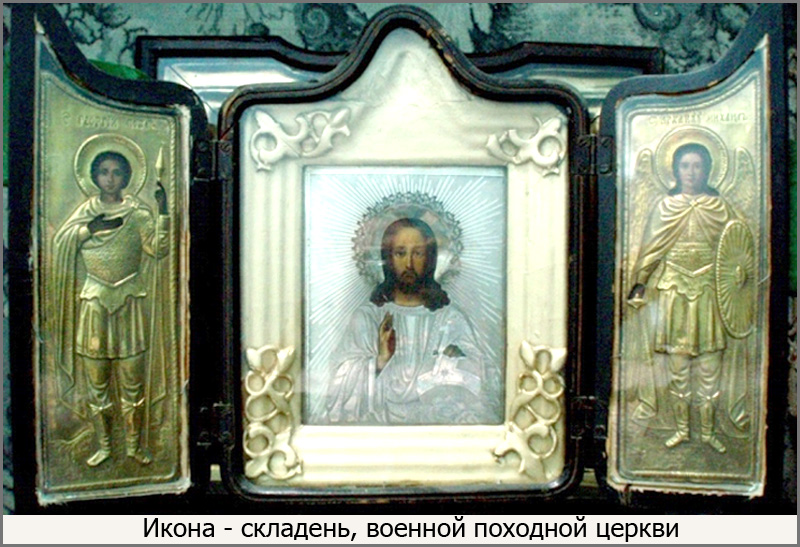
At that time, according to the established order, all the Turkestan rifle brigades and Transcaspian rifle battalions had their own field churches. But these churches, which accompanied the regiments in wartime, were cumbersome and of small capacity. They were transported with the baggage trains and were very inconvenient, both for conducting services and for military operations, which demanded mobility. Later it was decided to build garrison or regimental churches — solid, permanent buildings — in the places where military units were permanently quartered.
By the opinion of the State Council, Most Highly confirmed on 4 May 1871, and by a decree of the Holy Synod the Turkestan Diocese was established. After that, in the 1870s and 1880s active church building began in the Turkestan Region. In 1880 the Samarkand architect V. A. Lemke drew up an estimate and a design for a new church in the name of St. George the Victorious. According to this design, in 1882, on the square opposite the Military Assembly, a new, beautiful and more capacious church was built in the course of 10 months. It was built of unfired brick and plastered. In the decade from 1890 to 1899, two more military churches were built in Samarkand at the petition of Governor-General Count N. Ya. Rostovtsev: one at the railway station in the name of St. Nicholas the Wonderworker, and one in the military camp, at the 2nd Ural Cossack Regiment, in the name of the Right-Believing Prince St. Alexander Nevsky. The first of them was built through the care of the railway department, and the second by the military engineering department. (Reference Book of the Samarkand Region. 1900.)
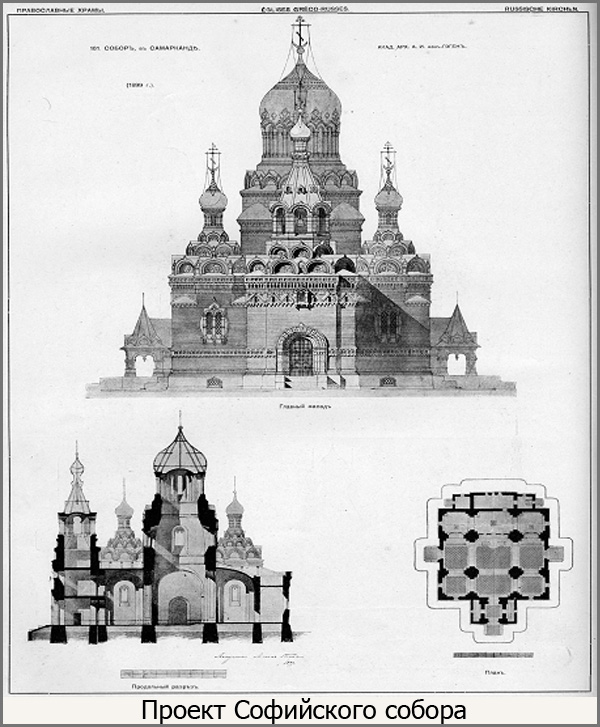
In 1888 the question first arose of building in Samarkand a principal city cathedral for 1,500 souls. (Reference Book of the Samarkand Region. 1900.) The city authorities planned to build a Cathedral of Holy Wisdom (Sophia) that would surpass in size and height all the architectural structures already existing in the city. This cathedral was to have two side chapels, one in honour of George the Victorious and the other in honour of St. Nicholas the Wonderworker. And then, in 1890, a plan of the cathedral drawn up by the academician of architecture S. Tolvinsky was sent from the city of Odessa. In 1899 another design of the cathedral was submitted, likewise drawn up by an academician of architecture, A. I. von Hohen. It is interesting that his design made use of motifs from the architecture of the medieval cities of Central Asia. There was also an idea that was innovative for that time — to build this cathedral of concrete. For a very long time the specialists could not decide on a site for such a large structure; surveys and trial borings were carried out in various parts of the city over several years. In the end the site for the Cathedral of Holy Wisdom was chosen on a rise in Ivanovsky Park. To carry out this idea a special Building Committee was set up, an enormous sum of money (250,000 roubles) was collected, and all the necessary building materials were purchased. In September 1912 Samarkand was visited by the newly appointed head of the Turkestan See, His Grace — Archbishop Innokenty (Pustynsky). A procession headed by the bishop, accompanied by the Samarkand dean, the clergy and a great gathering of the Orthodox, went in a procession of the cross from the nearest church to the site “prepared and magnificently adorned with flowers” (RGIA, fund no. 796, inventory 442, file 2553, sheet 20.). On the elevated site in Ivanovsky Park the bishop performed the rite of laying the foundation of this cathedral. But in the end none of these plans was destined to be realized. The materials that had been prepared for the construction of the Cathedral of Holy Wisdom were sold off.
Over the years the number of Orthodox churches in the city gradually grew. In 1903, on the territory of the Samarkand garrison, in the barracks building of the 12th Turkestan Rifle Regiment, a regimental church was set up in honour of the feast of “the Ascension of the Lord” (Tsitovich G. A. “Churches of the Army and Navy”, Pyatigorsk, 1913.). Non-military churches also began to appear. In 1904 a church in the name of the Hieromartyr Anthimus, Bishop of Nicomedia, was consecrated in the building of the new girls’ gymnasium built on Abramovsky Boulevard. And in 1905 the construction of the church-school “of the Protection of the Mother of God” was completed. (Reference Book of the Samarkand Region. 1905.) But despite this, the clergy constantly reported in their reports that the churches were overcrowded and that there was not enough room for all the worshippers. There was an acute shortage not only of churches but also of priests. In 1900, at the military church in the name of George the Victorious, for 1,500 military ranks and 3,000 souls of Orthodox civilians, there was only one priest. And in the whole Turkestan Diocese there were barely more than 50. The stationing of a large contingent of Russian troops, mostly on the outskirts of the Empire, had long prompted the high military command to take measures for building military churches in order to raise the level of religious and moral education in the army. The general assessment of the state of military churches given by the clergy of the Military Department was fully shared by the Minister of War of the Russian Empire, Adjutant General A. N. Kuropatkin. This remarkable man carried out a whole series of reforms in the Russian army, showing concern for soldiers and officers alike. He understood perfectly well that Orthodoxy is the foundation of foundations in the hard life of a soldier. And in particular, he did a great deal to solve this problem in Turkestan. He knew and loved this land well. Through his care many Orthodox churches were built in Turkestan, and besides this he gave his personal funds for their adornment.
In 1900 the Minister of War of the Russian Empire, A. N. Kuropatkin, drew up a report addressed to the Emperor with proposals for improving the living conditions of the lower ranks, in which he wrote that at the present time: “it appears necessary to find funds for building churches at all units of the troops in which priests are provided for by the establishment, and for enlarging the existing garrison churches; for this it is necessary to work out a type of military church, even if of the barracks system, but spacious and inexpensive, so that the search for funds to build churches should not cause the satisfaction of this urgent need to be postponed”….
The thoughts set out in this report found approval and support in the person of the Sovereign. On this original report His Imperial Majesty wrote in his own hand: “God grant that the religious needs of the troops may soon be met, which I consider a matter of the highest importance. 23 January 1900.” This resolution of Emperor Nicholas II was enough. After that, by Imperial command of 23 January 1900, a special commission was established at the General Staff under the chairmanship of a member of the Military Council, General of Infantry Count Tatishchev, with the participation of the Protopresbyter of the Military and Naval Clergy and of representatives of the General Staff, the Main Engineering Directorate and the commission, established by Imperial order under the Military Council, for the building of barracks, and other persons, to discuss questions concerning the satisfaction of the religious needs of the troops and the raising of their religious and moral education. The commission quickly completed its work on these questions, and moreover drew up a special type of model military church, model not in luxury and decoration but in capacity and economy of construction.
This architectural design was developed by the military engineer Fyodor Mikhailovich Verzhbitsky, who graduated from the St. Petersburg School of Construction in 1871. He was a specialist in railway and barracks construction, and was also a member of the Commission for the Building of Barracks under the Military Council of the Russian Ministry of War. His design of the new model church was submitted for the consideration of the Emperor, and earned Imperial approval and a prize of 500 roubles.
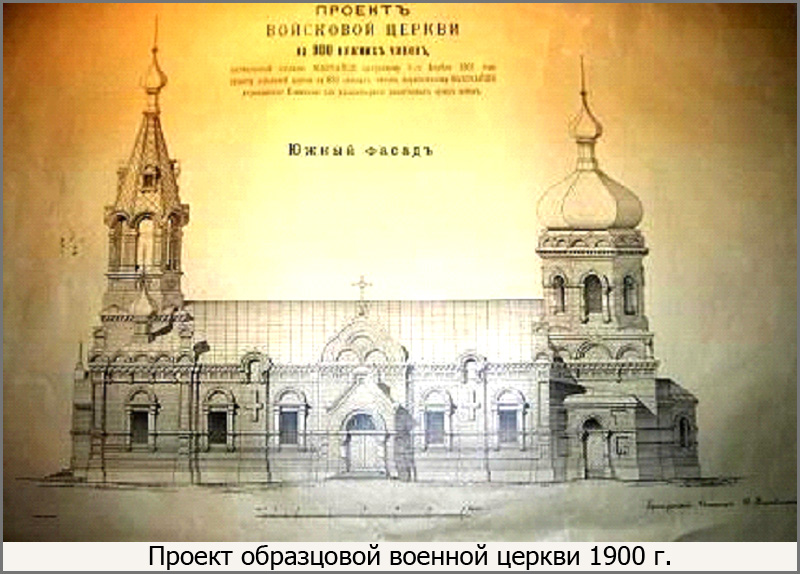
F. M. Verzhbitsky solved the task set before him, which was to create a building of the greatest possible capacity at the least expense. The type of church he created continued the direction in church building begun in the first half of the 19th century by the great Russian architect Konstantin Andreevich Thon – the author of the design of the Cathedral of Christ the Saviour in Moscow. F. M. Verzhbitsky’s design answered the progressive tendencies in 20th-century building: to achieve maximum expressiveness and effect with a minimum of means, creatively combining the traditions of Russian church architecture with the latest developments in the building trade. (The website “People’s Catalogue of Orthodox Architecture”). Despite the shortage of state funds for various budget needs, the Ministry of War was regularly financed for church building. From 1 December 1901 an Imperial command was announced on the building of military churches to an approved model. Order of the Military Department of 1901, no. 37, prescribed planning the capacity of the churches on the following basis: for regimental churches, 900 persons, and for battalion churches, 400. The church building had to be a separate one. The Military Department strove to finance the building of military churches above all on the distant frontiers of the Empire, and in particular in Turkestan. And on the same day, 1 December 1901, the Sovereign’s Imperial command was issued: 1) “To establish for the future the rule that in the barracks of the Military Department, both existing ones and those newly built by order and at the expense of this department, an Orthodox church, in the form of a separate building, shall be an indispensable part of the barracks of those units of troops for which church clergy are provided by the establishment; and 2) in building military churches to be guided by the Imperially approved design of such a church and the table of interior dimensions of military churches drawn up by the above-mentioned commission established by Imperial order” (Tsitovich G. A. “Churches of the Army and Navy”, Pyatigorsk, 1913.). Order of the Military Department of 23 January 1902, no. 32.
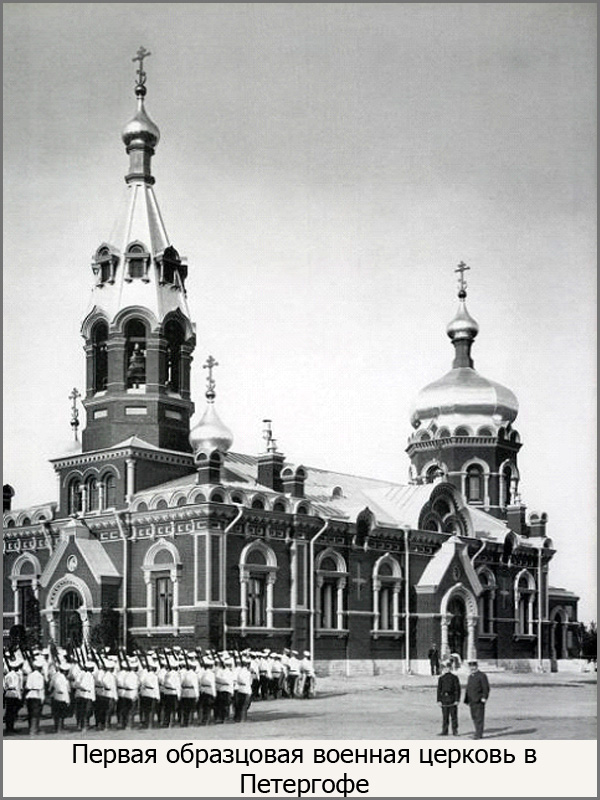
This model type of church was first realized in the building of the church of the 148th Caspian Infantry Regiment on the outskirts of Novy Peterhof, next to the railway station, which cost 49,000 roubles. The church was laid down by the Emperor Nicholas Alexandrovich on 30 June 1901 and consecrated by the Protopresbyter of the military and naval clergy, A. A. Zhelobovsky, in the presence of THEIR Majesties on 5 June 1903. This church was dedicated to the memory of the Holy Great Martyr Anastasia to mark the birth of HER Highness — Grand Duchess Anastasia Nikolaevna. In 1902 the design of F. M. Verzhbitsky reached Tashkent, to the charge of the engineering section (the department in charge of construction).
In the Russian Empire there was a tradition of dedicating churches under construction to saints whose names were borne by members of the Imperial family, or to special dates connected with them. On the basis of this tradition it was decided to dedicate the new cathedral in the city of Samarkand to St. Alexius, Metropolitan of Moscow, since in July 1904 a joyful event had occurred in the family of the Emperor — the birth of the long-awaited heir – TSESAREVICH Alexei. A sum of money enormous for those times was collected – more than 150,000 roubles. The cathedral was built, among other things, with donations from the Empress Alexandra Feodorovna and from military ranks (K. G. Kapkov, “Memorial Book of the Russian Military and Naval Clergy of the 19th – Early 20th Centuries”, p. 592.). In 1914 a visit of the Imperial Family to Turkestan was planned, and the people of Samarkand had begun to prepare for this event, and perhaps intended to time the consecration of the Alexius Cathedral to coincide with their arrival, but the war that began prevented this.
On the model of these military churches more than 65 churches were built throughout the Russian Empire, and 7 of them were built in Turkestan, and each of them had its own peculiar features, although it was intended for the state military department. The plans of Alexei Nikolaevich Kuropatkin were being put into effect. The first to be built in Turkestan was the church in the city of Termez (1905), after it in Verny (1906, in the name of St. Alexius of Moscow), and in Kerki, then in Skobelev (Fergana, 1907), then in Kushka (1908), and in Chardzhui (1910). The Samarkand Alexius Cathedral turned out to be last on this list in time of construction. In building these churches the local executors were given a certain freedom of action, depending on the particular conditions. In different cities of the Empire, this design was probably adapted by the local engineers and architects of each grouping of troops. And in the end each regiment could be proud of its own church, unlike the others. By this — same principle the building of the cathedral of St. Alexius, Metropolitan of Moscow, in Samarkand was carried out. Until recently this church was not only the largest in Central Asia, but also had its own individual appearance.
In many sources on the history of the building of the Samarkand Cathedral of St. Alexius there is an inaccuracy in stating that the architect of the cathedral was F. V. Smirnov, and even the memorial plaque bears the same surname. In fact the author of the original design was — F. M. Verzhbitsky. And the military construction engineer F. V. Smirnov, to all appearances, adapted his design and introduced corrections. F. V. Smirnov himself – a graduate of 1901 of the Nikolaev Engineering Academy in St. Petersburg, who finished it in the first category with the rank of captain and was transferred to the military engineers for excellent progress in the sciences. After that, in 1902, he was transferred to Turkestan to the post of junior officer of the Tashkent engineering section. By 1913 he had risen to a very high post — Head of Records for the construction branch of the district directorate for the quartering of troops of the Turkestan Military District, with the rank of lieutenant colonel, and then colonel. In 1916 he was transferred to serve from Tashkent to the Semirechye district.
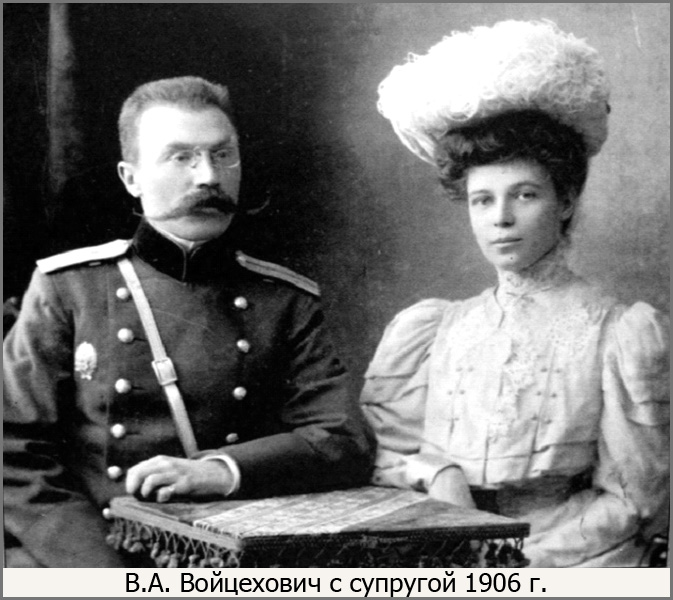
According to available information, the construction of the Alexius Cathedral was supervised by a captain of the Samarkand engineering section, Viktor Andreevich Voitsekhovich, also a military construction engineer. Having graduated first from a military school, and then with distinction from the St. Petersburg Military Academy, he took in the same Academy a further course of study, receiving the rank of military construction engineer. While heading the construction of the cathedral, V. A. Voitsekhovich also proposed laying the church floors with a special high-strength tile very similar to ceramic. (From the letters of V. A. Voitsekhovich’s granddaughter).
The materials from the report of the Turkestan Military Department for G. A. Tsitovich’s collection “Churches of the Army and Navy” for 1913 give information on the military churches of Samarkand: “Since 1910 in the city of Samarkand, next to the regimental church, a new majestic church has been under construction for the whole military garrison of Samarkand, costing more than 150,000 roubles, in the name of St. Alexius, Metropolitan of Moscow” (Tsitovich G. A. “Churches of the Army and Navy”, Pyatigorsk, 1913.). That is, the new cathedral was being built next to the church of the 12th Turkestan Rifle Regiment. This was the field church of the regiment, in memory of “the Ascension of the Lord”, housed in one of the barracks buildings of the military garrison from 1903, and holding up to 300 persons. The priests who served in it were: from 1903 to 1909, Alexei Simeonovich Raikov, and from 1912 to 1914, Grigory Mikhailovich Dyakonov. The exact date of completion of the construction of the Alexius Cathedral is not known to us, but in the reference publication of the city of Samarkand for 1914 it still does not appear in the list of functioning Orthodox churches. The cathedral of St. Alexius, Metropolitan of Moscow, was built on the territory of a block entirely occupied by the Headquarters and the military garrison, at the corner of Nikolaevskaya and Rostovtsev streets. Next to the cathedral on Rostovtsev Street a substantial building was built for the dean of all the military churches of the Samarkand Region. This building has survived very well to our time; today the military prosecutor’s office is housed within its walls.
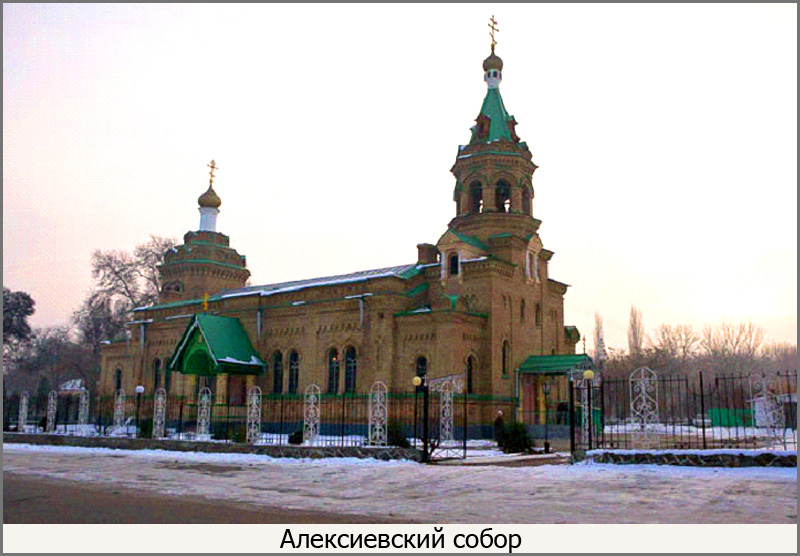
Among the religious buildings of that time, the cathedral of St. Alexius is striking in its size and the severity of its forms. This church is of the hall type; inside it is designed as a large and tall hall without supports or columns, which creates an impression of spaciousness and grandeur. It has a deep and large sanctuary and a very high dome. On the north and south sides of the sanctuary there is one auxiliary room each, the sacristan’s room and the vestry. On the west side of the cathedral is the main entrance, on either side of which there are also two small rooms (now the Sunday school and the kitchen are located there). A staircase runs up through the kitchen; by it one can reach the choir gallery and the bell tower. The choir gallery is very spacious and can hold up to 60 people (singers), and the acoustics in the cathedral are excellent. On the west side rises the octagonal bell tower and above it a tent roof with an onion dome, notable for its slenderness and harmonious proportions. The east façade is laconic and austere. The octagonal drum above the sanctuary is covered by a closed vault, edged on the outside with two rows of decorative kokoshniks and crowned by a small onion-shaped cupola on a round, slender neck. The smoothness of the walls is relieved only by flat pilaster strips and narrow, tall window openings of the embrasure type and blind flat arches. At the same time the side façades are more ornate. Paired tall arched windows with ogee archivolts are united by carved decorative half-columns. In the centre of the south, north and west façades stands a substantial porch, covered with a pitched roof supported on round twisted columns. Carved wooden “towels” (ornamental fascia boards) give the porch a lively and festive character. The Alexius Cathedral was created in the forms of Neo-Russian architecture, but considerably simpler and more laconic. It lacks the abundance and overloading of forms and details that are found in other churches. (Nielsen V. A., “The Architecture of Pre-Revolutionary (Russian) Samarkand”.). Separate mention should be made of the floor covering. The floors are covered with coloured tiles made by a special technique. Square cement tiles were coated on top with a special coloured liquid stone mixture. They have survived to our day. The quality of the work is astonishing, and resembles ceramics. They are now not in the best condition, but considering what the church had to endure over the years, and how mercilessly it was used for purposes other than its own, it is altogether a miracle that they survived. The construction of the cathedral building took several years. Originally the cathedral of St. Alexius was intended for the 5th Turkestan Rifle Regiment quartered in the city of Samarkand, but while it was being built the situation in the Empire changed.
Letter:
On the day of the consecration of the cathedral in honour of St. Alexius, Wonderworker of Moscow.
General of Infantry — Kurganovich.
Chief of the Samarkand Garrison. 2 October 1916, city of Samarkand.
To the Dean of the Tashkent Military Stationary Churches — Archpriest A. Mallitsky:
“All the correspondence concerning the construction of the Alexius military church was conducted on your instructions and through the mediation of Your Reverence”. (RGIA, fund no. 806, inventory 5, file 9886, sheet 3.).
Letter of 4 January 1917 from the Chief of Staff of the Turkestan Military District:
“Your Reverence, Father Protopresbyter Georgy Ioannovich (Shavelsky). In the city of Samarkand, with your permission, on 2 October 1916 there was consecrated the church newly built at the expense of the Turkestan District Directorate for the quartering of troops, in the name of St. Alexius, Wonderworker of Moscow, taken with the HIGHEST consent under the high patronage of HIS IMPERIAL HIGHNESS — THE HEIR TSESAREVICH ALEXEI NIKOLAEVICH. From the beginning of construction this church was intended for the 5th Turkestan Rifle Regiment quartered in the city of Samarkand, so that it should serve also as a garrison cathedral in which solemn services could be held on the great feasts and Imperial Days, with parades of the troops of the entire Samarkand garrison. Your Reverence was informed of this intention in a letter of the Commander of the District Troops of 30 January 1914, no. 1582. I request your consent to the transfer of the newly built Alexius church to the 5th Turkestan Rifle Regiment upon its return from the theatre of war, and of the St. George church of the said regiment to the 12th Turkestan Rifle Regiment, since the church which this regiment has is housed in barracks with an earthen roof and has fallen into complete dilapidation. At present the newly built Alexius church has been temporarily transferred to the 731st Saratov Militia Company quartered in the city of Samarkand, and is served by a priest of the Diocesan Department appointed by His Grace the Bishop of Turkestan and Tashkent — Archbishop Innokenty (Pustynsky), while the St. George church of the 5th Turkestan Rifle Regiment, at the petition of the Military Governor of the Samarkand Region, with the permission of the Commander of the District Troops, has been transferred temporarily, until the end of the war, to the Diocesan Department to serve the civilian population of the city of Samarkand. I ask for your archpastoral blessing, and commend myself to the prayers of Your Reverence”. (RGIA, fund no. 806, inventory 5, file 9886, sheet 3.).
In September 1916 the last Governor-General of Turkestan – Alexei Nikolaevich Kuropatkin – visited Samarkand, and during a tour of the city he entered the Alexius Cathedral and gave the instruction to consecrate its building. Twenty-five days after his visit, the cathedral was consecrated and began to function.
Letter of 28 June 1917 to the Protopresbyter of the Military and Naval Clergy, G. I. Shavelsky, from the Commander of the Troops of the Turkestan Military District: “You, too, were informed of the proposed transfer of the new Alexius church upon completion of construction to the 5th Turkestan Rifle Regiment in the letter of the former Commander of the Troops, General Samsonov, of 30 January 1914, no. 1582. After the consecration of the Alexius church by order of the former Commander of the Troops, General Kuropatkin, the Chief of the District Staff, in a letter of 4 January 1917, no. 482, petitioned Your Reverence for the transfer of the newly built and consecrated Alexius church to the 5th Turkestan Rifle Regiment upon its return from the theatre of war. As I am aware, the Chief of the Samarkand Garrison, in a communication addressed to you of 13 January 1917, no. 106, petitioned, without my consent to it, for the opening of a separate clergy staff at the Alexius church of the city of Samarkand, with its designation as a garrison church, and for the issue to this church of all the church registers for keeping church records, and also for permission to make a church seal. The groundless petition of the Chief of the Garrison compels me to confirm anew before Your Reverence the petition already raised, for the transfer of the Alexius church to the 5th Turkestan Rifle Regiment upon its return from the theatre of war”. (RGIA, fund no. 806, inventory 5, file 9886, sheet 3.).
Since 1914 this regiment had been detached from the city of Samarkand to take part in the theatre of war of the First World War. During the absence of the 5th Turkestan Rifle Regiment, the construction of the cathedral was completed in Samarkand, its consecration took place, and the cathedral became functioning. And a little more than four months later, the February Revolution took place in Russia. In the spring the news was made public that on 2 March 1917 the Russian Sovereign Emperor — Nicholas II — had signed an abdication of power for himself and for his son — the heir Alexei. Judging by the surviving archival data, the question of the ownership of the Cathedral of St. Alexius continued to be decided after these events. The October coup and the Civil War followed. The Cathedral of St. Alexius, Metropolitan of Moscow, turned out to be the last pre-revolutionary church building in the city of Samarkand. The situation in Turkestan began to change sharply, and an uprising of the local inhabitants took place. To stabilize the situation, on 22 July 1916 A. N. Kuropatkin was urgently appointed Governor-General of Turkestan. To restore order in the region he toured the whole Turkestan Region. He then wrote in his diary that a spirit of anarchy and disorder reigned everywhere. By January 1917 he had managed fairly quickly to cope with the task set him and to pacify the local population, but already in February the revolution took place. On 31 March of the same year the Soviet of Workers’ and Soldiers’ Deputies of the city of Tashkent removed him from power and placed him under house arrest. On 7 April A. N. Kuropatkin left Turkestan for ever. Interestingly, the career of this remarkable man, once successfully begun, now came to its end in the Turkestan Region. In all, Alexei Nikolaevich served in Turkestan for twenty years.
And in January 1918, by order of the People’s Commissariat, all military priests were dismissed from the army, thereby abolishing the military clergy. On 17 July 1918 all the members of the Imperial Family were killed, including the 14-year-old TSESAREVICH ALEXEI NIKOLAEVICH – Patron of the Samarkand Alexius Cathedral. Years later, the whole Family was glorified among the Holy Passion-Bearers, in the Synaxis of the New Martyrs of Russia, at the Council of Bishops in 2000.
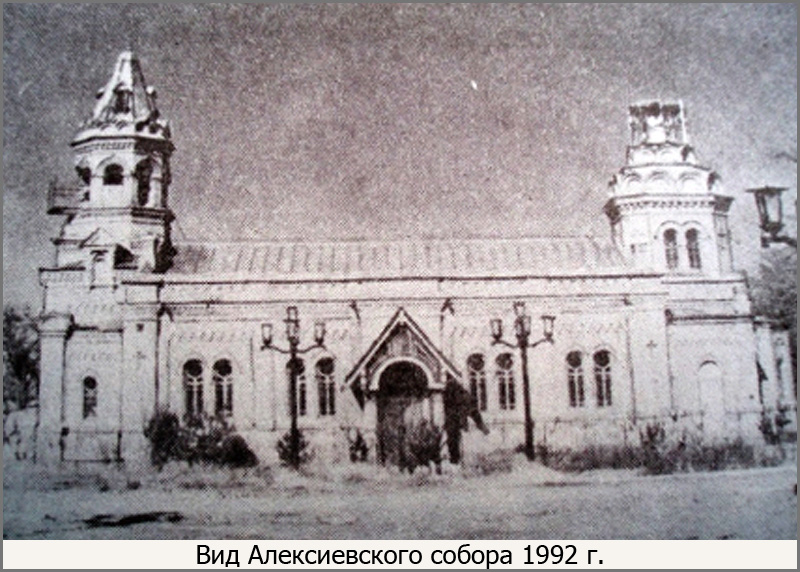
The Alexius Cathedral shared the fate of most of the churches built before the revolution of 1917. In 1925 Renovationism penetrated into Samarkand. In 1927 the Renovationist Metropolitan Alexander Vvedensky came from Moscow to Samarkand, and he describes how he was met by Archpriest M. Avdashkevich (Journal “The East on High”, no. 1–2, 2014. Roman Dorofeev, “The Church of the Great Martyr George in Samarkand”, p. 13.) of the Alexius Cathedral. His brother — Archpriest P. F. Avdashkevich was a military priest. Archpriest Mefody Filiksovich Avdashkevich was a graduate of the St. Petersburg Theological Academy of 1888, which he finished with the title of Candidate of Theology. Father Mefody studied at the Academy in the same year as the future His Holiness Patriarch Tikhon (Belavin). On finishing the Academy, Father M. F. Avdashkevich was assigned to the Caucasus as catechist of a teachers’ seminary. It was evidently from there that he came to Samarkand.
In January 1929 the names appear of the priest A. Pinegin and the deacon T. Gurov, who served in Saint Alexius Cathedral shortly before its closure.
On 27 March 1929, at a meeting of the Presidium of the Samarkand City Soviet, a petition was read into the minutes for the transfer of the Alexius Cathedral, or the Polish Catholic church, to be used as a house of physical culture. And on 16 February 1930, at the petition of the workers of Printing House no. 3, the Central Executive Committee of the Uzbek SSR confirmed the decision of the Presidium of the Samarkand City Soviet on the closure of the Alexius Cathedral. The City Communal Department was instructed to remove urgently all the bells from the churches of the city of Samarkand and “to set up a commission for the immediate closure of the Alexius Cathedral and the drawing up of an inventory of its property. In view of the fact that there are a number of claimants to the Alexius church, and that it is not entirely clear to the Soviet who intends to use it and for what purposes, and what means they have for its conversion, the question of the allocation of the said church is to be left open”. (Samarkand Regional State Archive, fund no. 26, inventory 1, file 260, sheet 8.).
It turns out that from the day of its opening Saint Alexius Cathedral functioned for about 14 years, and for roughly half of them Renovationist priests served in it. After its closure the cathedral building was turned into a dance floor, then a canteen, then a gymnasium, in the 1970s a club of a military unit, a warehouse….
In August 1980 the Aviation Regiment left the walls of the garrison. For a week soldiers carried the regiment’s property by lorry to the railway station, where a train stood waiting. They took out everything they could, even digging up the rose bushes. During the withdrawal of the military unit, the last head of the club took away to an unknown destination the old, beautiful panikadilo (the central chandelier); at about the same time the wall candelabra also disappeared.
One of the elderly women told Father Viktor – the first church warden and later the first rector of the returned cathedral of St. Alexius, Metropolitan of Moscow — that as a child she had happened to witness the sad events in the life of the church. She said that with thick ropes tied to a tractor they pulled down the domes with the crosses…. How they carried the icons out into the yard and piled them in a heap, and then set them on fire. A crowd of people gathered, and the people prayed…. Some of the Orthodox, in spite of the circumstances, managed to save a small number of icons, and afterwards hid them in their homes.
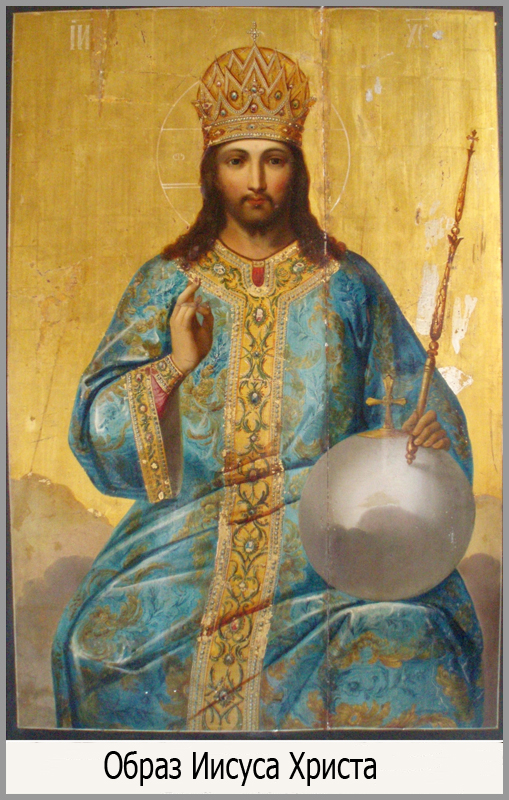
Subsequently some of these icons ended up in the Church of the Protection of the Mother of God and in the storage cellars of the Samarkand Museum of History and Culture, which used to be on the Registan. One of the old, rescued icons returned to the cathedral after more than 60 years – a large icon of the Saviour, painted in the Italian manner. The image of Jesus Christ is painted on a golden background; He is seated in royal vestments with a crown on His head. Leaning His left hand on an orb, the Saviour holds a sceptre, and with His right hand He blesses us.

Part Two
The Restoration of the Alexius Cathedral
Perhaps a new point of reference in the history of the cathedral should be considered to be 17 December 1988. Then a resident of Samarkand, an oncological surgeon and a Group 2 disabled person, Evdokia Nikolaevna Dudina, wrote a letter to the Bishop of Tashkent and Central Asia, Lev (Leo):
“…in Samarkand there stands, built of fired brick, the huge, slender building of the former Alexius Cathedral, where a military club is now located. This is what has led me to write to you. I was born in Samarkand and was baptized in the Church of the Protection. My mother and father were married in the Alexius Cathedral on 29 January 1917. I have an authentic certificate issued to my mother on 2 January 1929 with the church seal and the signatures of Archpriest A. Pinegin and Protodeacon T. Gurov…”
Further, Evdokia Nikolaevna asked Bishop Lev to petition for the return of the church to the faithful; her letter made it clear that in Samarkand there were people who wished to pray in the Alexius Cathedral. And in January 1990 she wrote a second letter to Bishop Lev saying that Samarkand students had collected more than two hundred signatures in favour of opening the cathedral. After some time the number of signatures grew to 368. In another letter the Orthodox of the city of Samarkand appealed to Comrade V. I. Krivoruchko, deputy of the Supreme Soviet of the former Uzbek SSR, asking him to petition for the registration of a community of Orthodox Christians, the opening of an account and the transfer of the Alexius Cathedral building to the faithful. (Diocesan newspaper “The Word of Life”, January–February 2012, no. 1–2 (306–307).).
In 1990 the situation changed: on 20 July Bishop Vladimir (Ikim) was appointed to the See of Tashkent and Central Asia, and on 17 September 1991 an extract from the decision of the 9th session of the Samarkand City Soviet of People’s Deputies arrived at the address of the diocesan administration, which stated: “Taking into account the requests of the faithful, of the public of the city of Samarkand and of Archbishop Vladimir of Tashkent and Central Asia, to transfer the Alexius Cathedral into the charge of the Archbishop of Tashkent and Central Asia for use for its proper purpose”. The adoption of this decision was assisted by the efforts of Georgy Khorunzhy, dean of the Samarkand district, and of the people’s deputies of the Republic of Uzbekistan N. N. Yakubov, V. A. Taranik and V. I. Krivoruchko; and His Eminence Archbishop Vladimir of Tashkent and Central Asia, with his meetings with the President of Uzbekistan — I. A. Karimov, decided the outcome of the matter.
The cathedral building was given to the Church, but in what condition?! The domes and the stone porch of the main entrance were missing, as were the iconostasis and the panikadilo, the icons and the cast-iron crosses, and much else. The first rector and restorer of the Alexius Cathedral – Father Viktor Panchenko – shared with me his memories of that time:
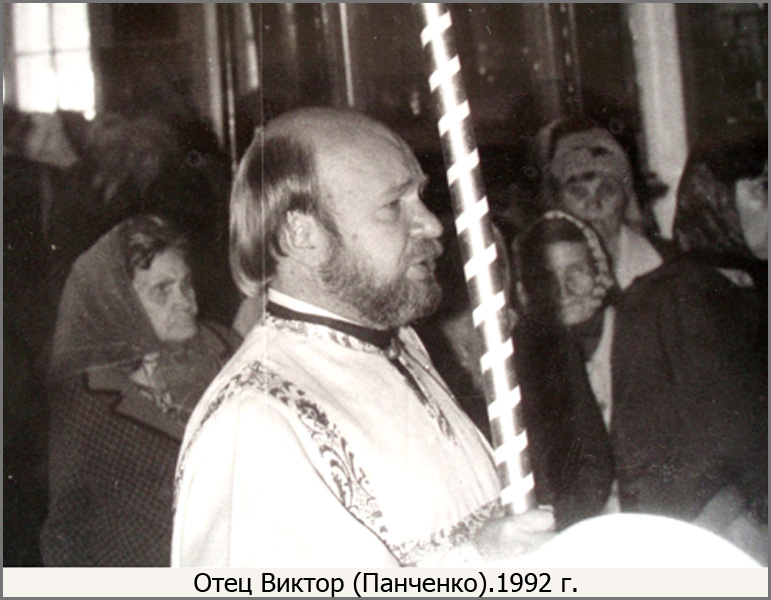
“After the Alexius Cathedral was returned to the faithful (the collecting of signatures and the wait for the decision of the city authorities took three and a half years), I was appointed church warden and head of the restoration of the church. That was in 1991. A year later I was ordained by Archbishop Vladimir to the rank of deacon, and in 1993 to that of priest.
I shall tell of a miracle that took place literally in the very first days of the restoration of the cathedral of St. Alexius. When, after negotiations with the authorities about handing the cathedral over to the parishioners, it was returned to us, we went there. The doors of the cathedral were boarded up tight. When we managed with difficulty to open them, we were shocked by what we saw: the whole interior of the church was befouled (in the literal sense of the word), the walls were “painted” with obscenities and satanic symbols…. The ceiling was torn apart, the windows smashed, the crosses in the cast-iron window grilles sawn off, the stucco mouldings broken, some absurd concrete partitions had been added…. In the sanctuary soiled mattresses were strewn about, and everywhere there were heaps of charred remains of fires…. Tears poured down my face…. At that moment I felt that I would not be able to do anything…. For even to clear the church of the traces of vandalism, funds and manpower were needed, which I did not have…. But then, at first, neither the diocese nor anyone else gave practically a kopeck for the restoration of the cathedral. I was supported only by Sister Xenia — an elderly nun who had previously laboured in the Cathedral of the Protection, and then asked the dean for a blessing to serve in the Alexius Cathedral and to live in it. She chose for herself a place in a small cell by the west entrance. We hastily cleaned this room for her, and Xenia began by praying day and night and reading akathists. And people began to be drawn to us. First several schoolchildren who lived nearby came and offered to help clear the church of rubbish. Then we set about taking down a brick partition under the choir gallery. I went off to get some food for them. And when I came back, I found them sitting outside the church, the boys shaking with trembling. They categorically refused to go back into the church. At first they did not want to answer any of my questions. After some time the eldest of them told what had happened. When the boys were chipping away at this partition (it had been built already in Soviet times, when the church was turned into a garrison club, and built without sparing cement) – the work was going very slowly. Naturally, — the children grew tired. And suddenly, out of the dust swirling above them, there appeared the figure of a tall elder in black robes and a klobuk. He seemed to hover above the floor…. The elder addressed the boys with the words: “Rest, lads, I will help you”. The children, frightened, shut their eyes and huddled together. Then there came a crash…. And when they opened their eyes, neither the elder nor the brick wall was there any more. Only lumps of the destroyed wall lay on the floor. In terror they ran out of the church. When I went into the cathedral, I saw that the children were telling the truth. By my reckoning, we should have taken that wall down in two or three days, and here it was done in the half hour or so that I was away. Then I too began to think, and was strengthened in my faith that the Lord was leading us. This is only one obvious miracle out of several. I no longer remember the names of those youngsters, but they, it seems to me, after this incident (of course, I explained to them what had happened), began to think and came to believe in God. Alongside the work of restoring the church I served in the Cathedral of the Protection, and then in the Church of St. George, and also served molebens in the Alexius Cathedral. Besides this I ran about to various offices, factories and organizations, begging for funds and materials. And the time was a difficult one: Russian-speaking inhabitants were leaving the city in great numbers, the shops of plants and factories were standing idle, money was losing its value. And only faith helped me and saved me from despair. I would not like to judge priests, but they helped us little. Everything had to be settled by myself. Each of my days then began with visits to the directors of plants and enterprises. Some helped us with materials, some with money (incidentally, among the donors there were also Muslims), and some (and they were the majority) frankly told us to get lost. I wrote about this to the diocese, to His Grace Vladimir. He replied advising me to pray and to bear all this. I had to spend a great deal of effort to obtain documentary confirmation of the cathedral’s own territory; for about three years they would not give me permission. Thank God – here Archbishop Vladimir of Tashkent and Central Asia himself supported and strengthened me spiritually.
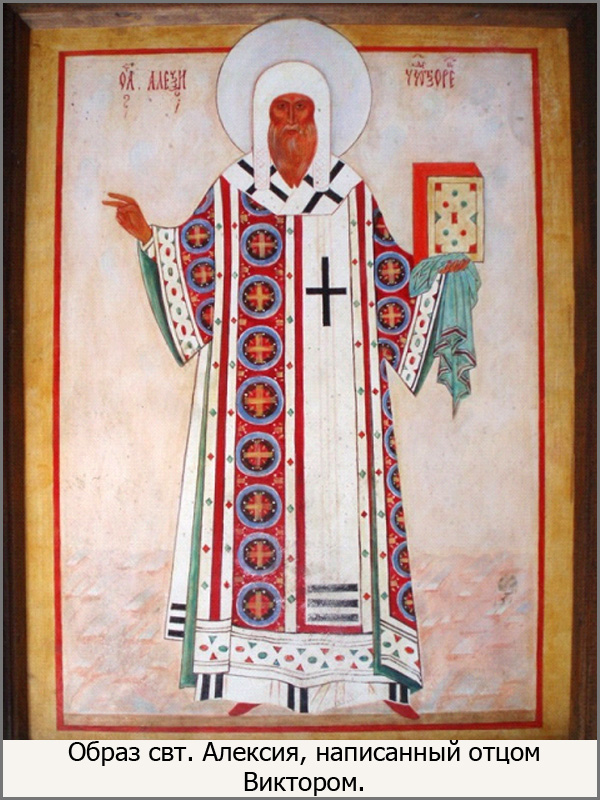
At that time there were absolutely no icons in the church, and I went to the city museum of history and culture. There, with great difficulty, I managed to beg a few old icons. One of them – a large icon of the Saviour, “the Great High Priest” – I restored; this icon, which once hung in this very church, has now returned. I myself also painted several small images for the cathedral, among them one of St. Alexius (after Dionysius) for the analogion. The Samarkand sculptors Nodar Bandzeladze together with Anzor Berdzenishvili, following my advice and wishes, made sketches of the cross for the domes. The model and casting were made at the “Krasny Dvigatel” (Red Engine) plant, and moreover free of charge – as charitable help. And the fence for the cathedral, using elements of the splendidly preserved decorative window grilles, was forged by my late schoolmate from A. V. Larina’s art studio – Vladik Grigoryan, and for a purely symbolic payment.
Yes, there were also temptations. A demobilized soldier, Ivan, attached himself to us, a very kind and good man. Vanyusha lived at the cathedral and helped me a great deal. But at times he abused his own kindness. I gathered building materials literally grain by grain, and they were stored right in the middle of the cathedral, since there were simply no other rooms. At night thoughtless residents of the neighbouring houses would come to Vanya and ask our Vanechka, one for 10 pieces of angle iron, another for 5 sheets of plywood or boards, and out of pity for them he would carry out of the church the materials that had come to us with such difficulty. But I always forgave our Vanechka, for in the morning he would ask my forgiveness on his knees, in tears, for the Lord’s sake. Once he asked for a blessing to go home to his mother. We temporarily took on a young man, a student, as watchman. The day before, a whole lorry-load of metal pipes for the heating and 5 cubic metres of thick plywood had been brought to the cathedral. And at that time a very good craftsman, a man of all trades, was working for us. From his sketches a multifunctional machine tool with many attachments had been made for me at the “KINAP” plant. And so this craftsman came at night to the student-watchman, got the watchman drunk and carried off in a “Kamaz” truck — everything that was in the cathedral. In the morning I came and saw that the doors of the cathedral were wide open. I went in – no materials, no watchman. My heart gave me trouble. I called the dean, and he demanded that I go to the police. I did not do this, but rushed to search all over the city for my unfortunate watchman. I found him in a psychiatric hospital, since, out of his mind, he had been picked up at night by the police and sent to hospital. I visited him, and he then told me everything and repented. Of course I forgave him. But the Father Dean reported what had happened to the police and a case was opened against the young man. Afterwards it cost me a great deal of nerves to hush up this incident. A few days later I went to the house of my thieving craftsman. He had not appeared at work since that very ill-fated night. I saw in his big yard all our materials, but his wife would not let me into the house, and I left with nothing. In time I forgave him too”.
We had to work and live on. Since the ceiling was of considerable height, and the ceiling structure needed to be restored, an acquaintance of mine, an engineer from “KINAP”, and I devised a construction on wheels. It spanned the whole width of the ceiling at once. For this I wheedled out of the chief engineer of the Airport an old, written-off aircraft boarding-stairs trolley. Then we welded a structure onto it according to our drawing and nicknamed this machine the “aeroplane”. It really did resemble an aeroplane hovering under the ceiling of the church. Several people could easily roll it about. In this way we made our work on the ceiling and walls easier.
One of the first artists with whom we began the paintings in the sanctuary was my comrade, the Samarkand painter Alexei Shcherbakov. He painted, in particular, the Archangels Michael and Gabriel, and the “Saviour Not Made by Hands”. We then faced the difficult task of choosing an artistic style. To our great regret, we found no photographs or archival documents showing exactly how the interior of the cathedral or the iconostasis had looked. In the end it was decided to take as the basis the classical painting of the 15th and 16th centuries. To my friends Oleg Enin and Zhenya Konoshenko, splendid artists, I proposed painting the icons for the iconostasis. Zhenya’s first work was a copy of Andrei Rublev’s icon “The Saviour in Power”, for the altar image. She painted this image on a large sheet of hardboard.
At about the same time two trumpeting angels were painted by Oleg Enin on the wall under the ceiling, to the right and left of the arch leading into the sanctuary. And on the wall opposite the sanctuary, in the choir gallery, the two of them together made a drawing over the whole wall for a painting of “The Resurrection of Christ”. They took the work in the cathedral very responsibly, and Oleg, in addition to this, was also my driver, and moreover free of charge. In his free time from work, he and I drove together around the enterprises, begging for funds as best we could”. (Letters of Father Viktor Panchenko, 2014. From a private archive.).
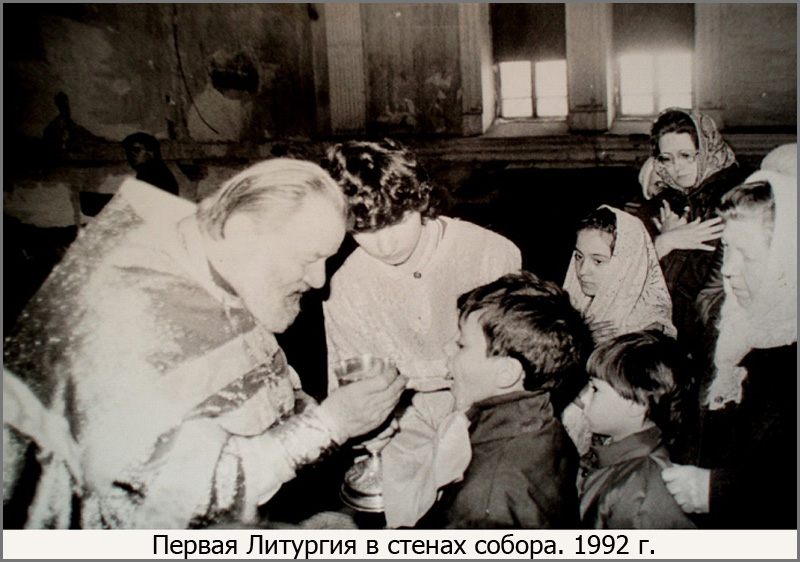
The first Liturgy in the returned church took place on 25 February 1992.
That day, early in the morning, the Orthodox people gathered at the Church of the Protection. With the icon of St. Alexius the procession of the cross passed through the whole city to the cathedral; they were mostly elderly women. The procession of the cross was headed by the dean, and with him walked Father Dimitry – rector of the Church of St. George, and the sacristan Roman (in future Archpriest and Dean). Father Viktor met the procession, standing in the doors of the Alexius Cathedral. Then the first Liturgy was served by three priests. The communion of the parishioners and children took place against the background of the devastated church. And after the service a moleben of thanksgiving was served to St. Alexius – the holy patron of the cathedral, and an akathist was read to him. Everyone stood in the cathedral with lighted candles and prayed. The atmosphere at that moment was somehow special; for the first time in many years life was kindled again in the church.
In 1994 Father Viktor left the diocese, and the art and restoration work in the cathedral was headed by the married couple Oleg Enin and Evgenia Pavlovna Konoshenko. Both graduated from the Ostrovsky Tashkent Theatre and Art Institute in 1981. They did a considerable amount of work: they studied examples of ancient Russian church art, and then developed sketches. Since all attempts to find out exactly how the iconostasis and the interior of the cathedral had looked before proved fruitless, everything had to be started from scratch. The proportions and configuration of the iconostasis were worked out anew. Models for the painting of the icons were selected very carefully. It was decided to make a three-tiered iconostasis. The first row — the local tier, the second — the festal tier, and the third – the apostles-and-prophets tier. The forthcoming plan of the painting work was corrected and approved by His Eminence Metropolitan Vladimir himself.
I was invited to work in the cathedral at the end of 1994. The cathedral then stood still without domes. It is engraved in my memory that in place of the dome above the bell tower a ladder stood pointing straight into the sky. The interior was still badly wounded. In the middle of everything towered the famous “aeroplane”. Besides the artistic work, building work was also going on in the church. Serbian builders had only just finished the plastering (incidentally, the quality of their work commands respect). The church itself somehow resembled a big anthill. Everyone was busy with his own task. Worn-out fragments of the ceiling covering were being replaced; some worked on the roof, others restored the porch, still others made the fence. About 30 people worked in the church at the same time: welders, artists, carpenters and masons. Simple Samarkand lads: the brothers Vladimir and Sergei Kulakovsky, the brothers Vitaly, Ivan and Vyacheslav Kapitonov, Alexei Gordeev and Alexei Pitsin. The master finisher, Uncle Sasha, restored all the damaged mouldings and stucco in the sanctuary, and then throughout the whole interior of the cathedral. Under the choir gallery stood a long table at which everyone sat down to dinner together. In those days there was much talk that, according to old-timers, secret passages ran under the floors of the cathedral and holy things were hidden in them. They even tried to dig trial pits in various places, but all without result. In this period of the church’s life all organizational and administrative questions were settled by Matushka Lyudmila Ulanova and her faithful associate — Aunt Gala Sergeeva. Both of them had moved to the Alexius Cathedral from the Cathedral of the Protection, bearing on themselves the whole main burden of questions and problems, and at times barely making ends meet. All the workers had to be fed and paid for their labour. The necessary materials had to be found, and a mass of attendant problems solved. But, surprisingly, the work moved forward without delays. In the centre of the sanctuary scaffolding stood right up to the dome. The vault had already been painted. Evgenia Konoshenko developed sketches for the ornamental painting of the walls of the sanctuary. To carry out this work young artists joined her: first Sergei Zotov, and after him I and Vasily Ovsyukov. While we did the ornamental painting, Evgenia Pavlovna painted two seraphim. The iconostasis, too, was made from her sketches. A Samarkand man, Andrei Alexandrovich Ignatov, beautifully, professionally and quickly carved the whole iconostasis from pine, with its ornaments, the royal doors and the lace-like cross – crowning the whole composition. After this he also made both choir stalls. Having finished the paintings in the sanctuary, we set to work together preparing the boards for the iconostasis. Right in the middle of the church we sawed chipboard to the size of the icons, since we had no other material. Of course, we tried to do all kinds of preparatory work as it had been done by the old masters. Having studied the relevant literature, we glued, covered with gauze and primed the boards. Then the prepared, gessoed boards took their places in the iconostasis. The royal doors had not yet been painted then, nor the deacons’ doors. The first icons painted for the iconostasis were — the Mother of God “of the Don” and “The Lord Almighty”. They were painted by Evgenia Pavlovna. The “Donskaya” image was chosen not by chance, since its history was connected with the southern frontiers of Russia and with the Cossacks. At that time in the sanctuary we set up home-made easels and sat down facing the high place to paint icons. Vasily began to paint the archangels on the deacons’ doors, and I was given the icon “The Annunciation” to paint. And Sergei Zotov, as the youngest and not yet married, was entrusted with painting the image of the Mother of God “Tenderness”. For all of us this work was still new, for icon painting is a special kind of creative work, with its own laws and rules. None of us had studied icon painting specially, and therefore it was decided to keep strictly to models. Both the brushes and the oil paints for this work were blessed by Archbishop Vladimir himself. I remember how on the very first day that we began work, Matushka Lyudmila came up to us and, kneeling by my easel facing the high place, began to pray fervently, with tears. It was quite a difficult task – to take up and paint an image straight away. But the very atmosphere in the cathedral was such that everyone supported and helped one another. Surprisingly, the work went quite smoothly; no one hurried us, and as a result we painted practically without alterations. After “The Annunciation” I was given the image of “The Dormition of the Mother of God” by Theophanes the Greek to paint, and after it “The Baptism of the Lord” and “The Nativity of the Lord”. Vasily Ovsyukov painted “The Ascension of the Lord” and “The Transfiguration of the Lord”. The artist Alexander Zhmailo painted the icon “The Entry of the Lord into Jerusalem”, Lada Zikeeva — “The Entry of the Mother of God into the Temple”. The first task was to paint the images for the iconostasis and the sanctuary, and only then for the main space of the cathedral. Later, many more icons were painted in the church of St. Alexius, on which E. V. Larina, A. M. Galak and Anna Sirodzheva worked. Anna painted the icons on the left and right choir stalls. The interior space of the cathedral long remained practically unfilled.
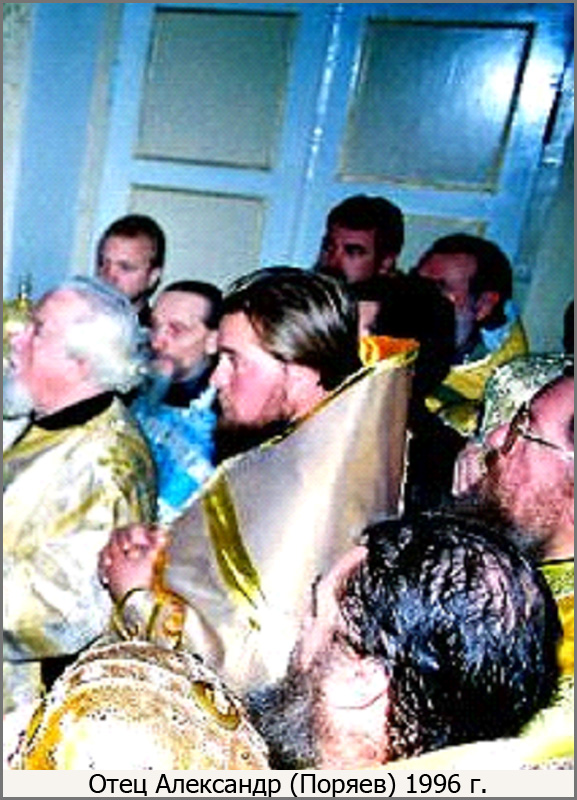
In June 1996 a new priest was appointed to the Alexius Cathedral – Father Alexander Poryaev. Father Alexander was born in Samarkand. In his youth, together with his friend Georgy, he began to attend church, and the two of them became altar servers under Father Dimitry in the Church of St. George. In November 1993 Archbishop Vladimir ordained Alexander to the rank of deacon in the Cathedral of the Protection in Samarkand. In build he resembled a young Russian bogatyr, and he always looked cheerful and full of life. Serving together with him in the cathedral as a chanter was the future priest – Father Oleg Tsvetkov. Father Alexander knew how to talk with all kinds of people and had the ability to solve problems easily and quickly. He never sat still, and it seemed that he managed to do everything. He met with the heads of enterprises and performed the services for the faithful. Under him the onion domes over the sanctuary and the bell tower were made and installed. This work took much time and effort. First, from a sketch, welders welded the frames for the onion domes. Then it was decided to cover the domes with copper sheets. Vladimir Rogov undertook this work. He made various patterns and calculations, and himself, after numerous trials, found the solution to this task. Also under Father Alexander the heating was installed and the panels of the cathedral were faced with beautiful pinkish marble. He chose the colour and pattern of the marble slabs together with Evgenia Pavlovna. Almost simultaneously with Father Alexander’s appointment, a rumour went round the cathedral that the Patriarch himself was planning to come to Samarkand. At first this news seemed incredible, but… . It turned out that in November the diocese was preparing to celebrate its 125th — anniversary. The authorities appeared and everyone began to think how to receive them. We wanted to get more done before the arrival of His Holiness the Patriarch.

The Second Consecration of the Cathedral
For the first time the head of the Russian Orthodox Church was planning to visit Central Asia and, in particular, Samarkand. And, of course, everyone in the cathedral awaited this visit with special feeling and interest. We already knew then that Patriarch Alexy himself would consecrate our cathedral, and this required corresponding preparation. A brand-new altar table for the consecration was set up in the sanctuary, the royal doors were made, and above them Evgenia Pavlovna painted the image “The Mystical Supper”. Besides this, practically all the icons of the festal and local rows were painted for the iconostasis. An onion dome with a cross was installed over the sanctuary. From the Tashkent Cathedral Archbishop Vladimir sent an old, beautiful panikadilo. Father Alexander purchased new utensils for the church. The dean, who was at the same time rector of the Cathedral of the Protection in Samarkand, gave the Alexius Cathedral large, old icons of saints in icon cases – “St. Alexius of Moscow”, “Seraphim of Sarov”, “St. Nicholas” and “Great Martyr Panteleimon”, a Calvary Cross, an antimension, the large Altar Gospel and the Gospel for services of need, banners, crowns and church books. And to Father Alexander the dean gave a set of priestly vestments.
The preparations for the arrival of His Holiness went on for more than four months. Everyone wanted to get as much done as possible. On the eve of his visit, all night long, the workers finished the porch of the main entrance and faced it with marble.
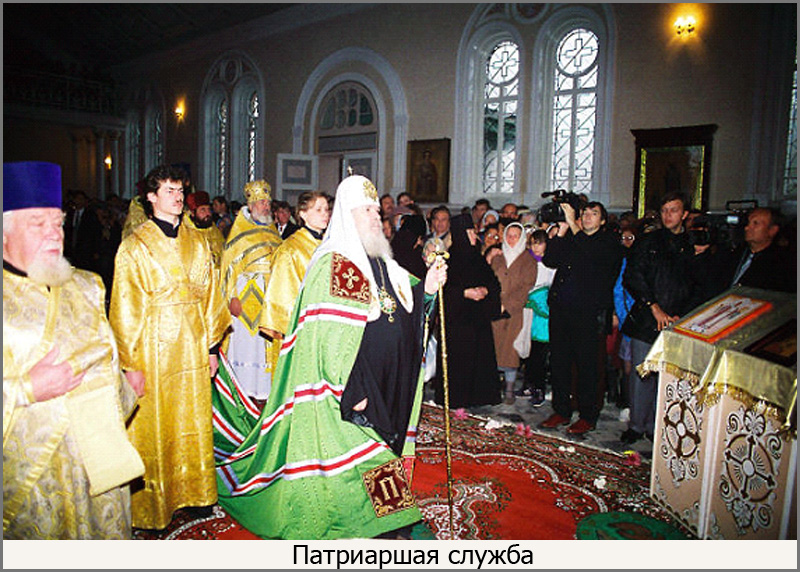
On 13 November, the day of Patriarch Alexy’s arrival, snow fell in Samarkand towards morning. Inside the cathedral there was no room to move. More people gathered than either before or after that event. Everyone wanted to see Patriarch Alexy II with their own eyes. In the cathedral everything was very solemn and festive. In the choir gallery the diocesan choir sang with great inspiration. The people gathered in the church turned now towards the singers, now towards the sanctuary. The service was performed according to a special rite. The Patriarch headed the consecration of the altar table and of the entire church. The procession went solemnly and decorously around the circumference of the cathedral and with a brush on a long pole they anointed the walls in the sign of the cross, almost right under the ceiling. His Holiness proclaimed: “Lift up your gates, O ye princes, and be ye lifted up, ye everlasting doors, and the King of glory shall come in. Who is this King of glory? The Lord of hosts, He is the King of glory”. And a procession of the cross went around the walls of the cathedral. The Patriarch, the bishops and the clergy in festal, shining vestments, and behind them a river of people. The cathedral had never seen such a number of clergy and bishops. Praying together with the Patriarch in the Samarkand cathedral were: Archbishop Sergius of Solnechnogorsk, Archbishop Vladimir of Tashkent and Central Asia, Archbishop Evgeny of Tambov and Michurinsk, Archbishop Alexy of Almaty and Semipalatinsk, and Bishop Eleutherius of Chimkent and Akmola. After the service Patriarch Alexy II addressed all those present from the ambo: “This church was founded and consecrated in 1912 in honour of the great hierarch of the Russian land, Alexius, Metropolitan of Moscow. I performed the rite of consecration of this church today with a special feeling of emotion, in honour of my Heavenly patron, whose name I bear in my monastic tonsure. I was glad today to celebrate the Divine service in the ancient city of Samarkand… . I want to remind you all of the words of the Apostle Paul, who in one of his Epistles says — ‘Brethren, stand fast in the faith’… . ‘Be clothed with great Christian love. Show love to one another”. He said that he was very glad to see all who had come and such a church, and that a revival of Orthodoxy is taking place not only in Russia but also beyond its borders. In farewell the Patriarch said that he had brought small icons depicting the “Iveron Mother of God”, with his blessing, as a keepsake of this event. His Holiness the Patriarch granted the cathedral an Altar Gospel and an icon of St. Alexius the Wonderworker, Metropolitan of Moscow. The rector of the cathedral, Priest Alexander Poryaev, presented the Primate with a hand-made carpet made by Samarkand craftswomen.
The Patriarch’s stay in Samarkand was marked by one more event, which the townspeople remember to this day. In the environs of the city he visited a local shrine where, according to tradition, the hand of the holy prophet of God Daniel is kept. The Patriarch and all the participants in the celebrations venerated the venerable relics, sang the magnification and served a moleben to the saint beside his mausoleum. By the walls of this mausoleum grows an old pistachio tree, about 600 years old. Through age, it had already almost dried up. And half a year after the moleben, in spring, for the first time in many years the tree blossomed again.
The first Paschal service in the reviving cathedral took place in 1997, and it was celebrated by Father Alexander. At the end of the service he looked very tired. As it later turned out, it was his first and last Paschal service. In the memory of that festal night there remained a feeling of genuine joy. The church was full of people and everyone rejoiced that at last, after a long interval, the Alexius Cathedral had come to life.
But the joy was not long-lived: in the summer of that year Father Alexander went on leave. And in August the tragic news was passed to Samarkand that on the 10th, on one of the roads of Russia, Father Alexander and Vladimir Rogov had been killed. Their “Zhiguli” car collided with an oncoming vehicle; this event was a shock to all who knew them. The accident occurred on the day of the celebration of the “Smolensk” icon of the Mother of God. The matushka was widowed, and the children and the cathedral were orphaned. For a time all work on the church was suspended. For almost a year Sergei Zotov looked after the cathedral. On feast days and Sundays a priest from the Church of St. George, a friend of Father Alexander, Father Georgy Fedchenko, came to serve. At Pascha of the following year, 1998, Archpriest Mikhail Kotlyarov came from Tashkent to serve. But, of course, everyone wanted the cathedral to have its own permanent priest.
From 1 August 1998 a young priest, a graduate of the Tashkent Theological School, Father Roman Zagrebelny, was appointed rector of the cathedral. Since the Alexius Cathedral had stood for a whole year without a rector, a great many unresolved questions had accumulated, and there were also debts. But although the new priest had as yet no experience, he managed fairly quickly to set up and organize the life of the parish. A group of like-minded people rallied around him. Father Roman took on any work. The priest himself burned with the desire to do more and tried without sparing his strength.
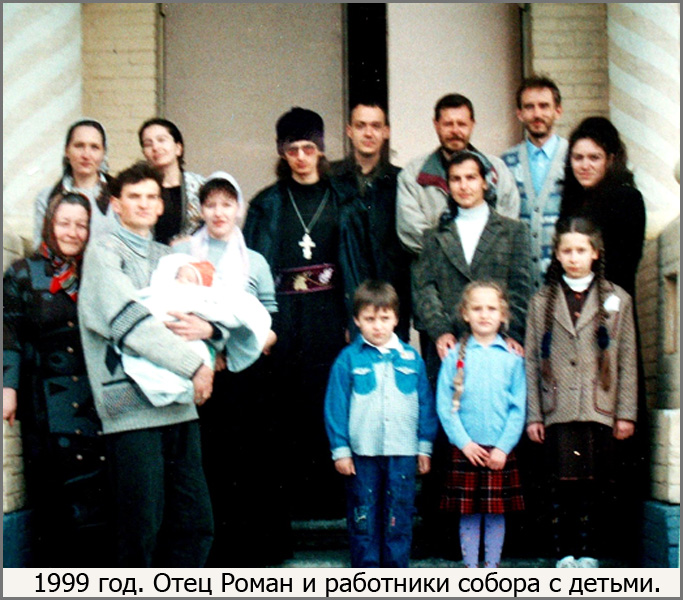
Under Father Roman the painting of the iconostasis was completed, and the painting of “The Resurrection of the Lord” in the choir gallery was begun. The most professionally executed icons were painted by Evgenia Pavlovna Konoshenko; these are the images on the iconostasis of – John the Baptist, the prophets Daniel and Jeremiah, St. Nicholas and, of course, the image of St. Alexius, Metropolitan of Moscow, himself. On the choir stalls the images of “The Trinity” and “The Resurrection of the Lord” were painted. On the grounds near the cathedral outbuildings were built and a garden was laid out. The grounds around the cathedral themselves were also enlarged – Father Roman secured an additional plot of land. Major repairs were carried out on the bell tower, under the belfry. Much was done.
In August 2003 the cathedral was visited by distinguished guests — two presidents accompanied by Metropolitan Vladimir: the President of Uzbekistan I. A. Karimov and the President of Russia V. V. Putin. The distinguished guest stressed that he had not expected, and was pleasantly surprised, that in such a distant city there was such a magnificent church. (Diocesan newspaper “The Word of Life”, 2003, August, no. 8 (205).
And in 2000 the rector of the Cathedral of the Protection in Samarkand left the Central Asian Diocese, and until June 2006 Father Roman became rector of two churches at once, bearing a double burden. In 2006 Archbishop Vladimir appointed Father Roman rector of the Cathedral of the Protection, and the whole staff, except the watchman, moved with him to the new place.

Part Three
The next rector, after Father Roman, became a graduate of the Tashkent Theological Seminary — Priest Igor Babakov.
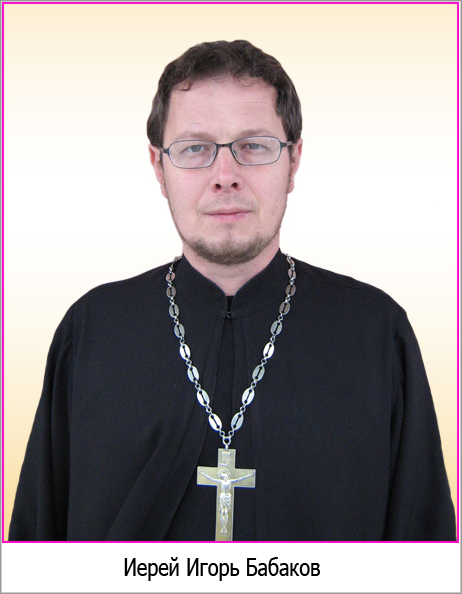
The beginning of his ministry was accompanied by certain problems. First, it was his first appointment, and he had to get to grips with the particulars of serving in a cathedral and to assemble a new team of workers. But Father Igor and Matushka Viktoria did not lose heart. At first friends, acquaintances and relatives helped them, and in time a very good and well-coordinated team came together. Many people have since laboured and helped the church, but I would like to mention at least a few of them. One of the first to come to work was Nina Mikhailovna – an excellent cook, and a very sensitive, modest and kind person. And throughout all these years Evgenia has been an irreplaceable assistant to the rector, a chanter and a teacher of the Sunday school. And the third one I would like to mention – is Pavel Evgenievich, a jack of all trades and the cathedral’s driver. On 12 April 2014 he created the group of the Alexius Cathedral on “Odnoklassniki”, which at once became very popular and numerous. The initiative and creative approach of its creator make the group’s page very interesting and informative. It reflects both the life of the parish itself and of our diocese, and news from other Orthodox sites. What is more, in 2015, through his efforts too, the website of Saint Alexius Cathedral was opened, no less interesting and rich in content. This work is especially relevant and important in our time.
Photos
By the time Father Igor arrived the interior of the cathedral had been restored and the iconostasis painted, but on the whole there were few icons in the church and its walls were practically bare. Father Igor decided to continue the work of adorning and filling the interior of the church. Through his efforts many new, large icons were painted in the cathedral and the restoration work continued. First of all, the artist Anna Sirodzheva painted half-length images on both choir stalls.
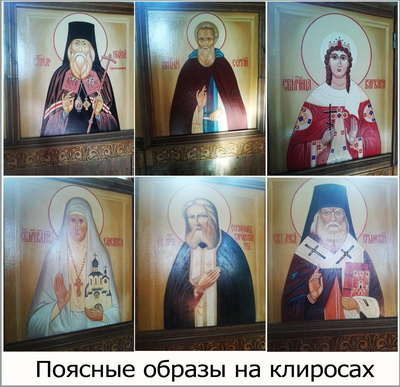
Later the artists Elena and Alexander painted the image of the Protection of the Mother of God, of the Great Martyr St. George the Victorious, of the holy martyrs Faith, Hope and Love and their mother Sophia. By 2011 they had painted the large icon “All Saints Who Shone Forth in the Russian Land”, work on which was not easy and took almost two years. Set into this icon is a reliquary with a particle of the holy relics of St. Nikita, Bishop of Novgorod.
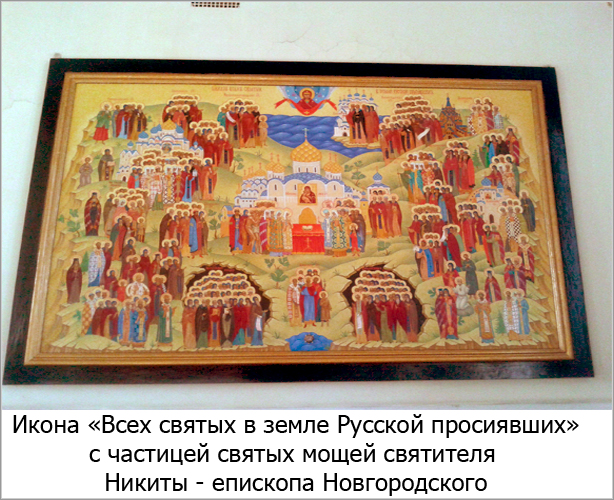
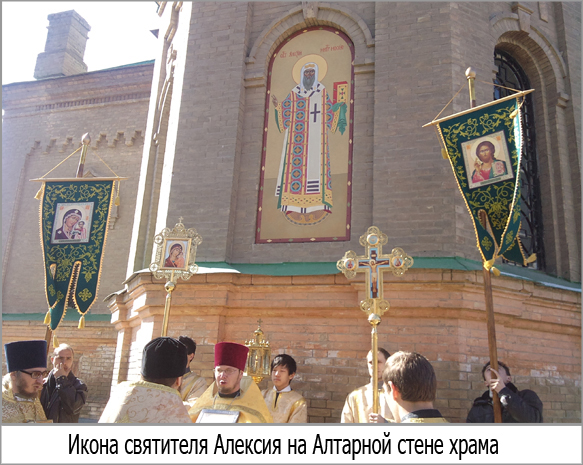
In addition to this holy object, the icon of the Great Martyr George the Victorious contains a piece of a cloak that belonged to this saint. And in the icon of Seraphim of Sarov a part of the venerable one’s own vestment is set. In February 2014, on the east side of the sanctuary, in the place where the church’s patronal image should be, an icon of St. Alexius was painted and installed. The image of the hierarch is painted in the style of the Russian icon-painting tradition of the 15th century. This place in a special niche stood empty for many years, and now, on the patronal feast, the figure of the saint at last took it, fitting beautifully into its surroundings.
Father Igor’s wife, Matushka Viktoria — a wonderful choir director — organized a small but professional and splendidly coordinated choir. By September 2007 a room for the Sunday school for eighteen pupils was fully equipped and began to function at once. A new, beautiful porch was made on the side of the main entrance. A beautiful garden was laid out around the cathedral and night lighting installed. Through the efforts of the rector, on Sundays and feast days the parish carries out a charitable distribution of Orthodox publications of spiritual content and on the history of the churches of Samarkand.
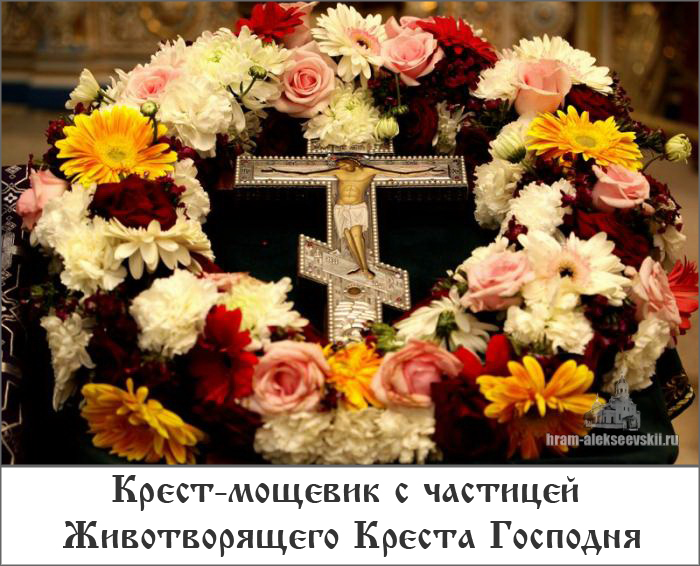
Beginning in 2011 our diocese was headed by Metropolitan Vikenty, and with his arrival the life of the Samarkand churches began to flow in a new, more eventful rhythm. This was reflected in the life of the Alexius Cathedral as well. Vladyka Vikenty himself, as well as clergy and representatives from other Orthodox dioceses, became frequent guests in Samarkand. For the first time in the long history of our deanery the relics of saints were brought and displayed for veneration in the cathedral: St. Nicholas of Myra, Blessed Matrona, the head of the Martyr Vikenty, of the Hieromartyr Cyprian and the Martyr Justina, the Martyr Boniface and the Great Martyr Catherine, as well as reliquaries with particles of the holy relics from the Kiev Caves Lavra, from the Near and Far Caves. Especially memorable was the reliquary cross with a particle of the Honourable and Life-Giving Cross of the Lord and the relics of more than twenty saints.(From a personal conversation with the rector, Priest Igor Babakov.).
On the day of the commemoration of St. Luke (Voyno-Yasenetsky), 31 May 2013, a very significant event took place in the cathedral – the arrival of Vladyka Vikenty and of the icon of St. Luke with relics. On such days people usually flock together from all three churches of Samarkand. The service on that day was especially solemn.
Photos
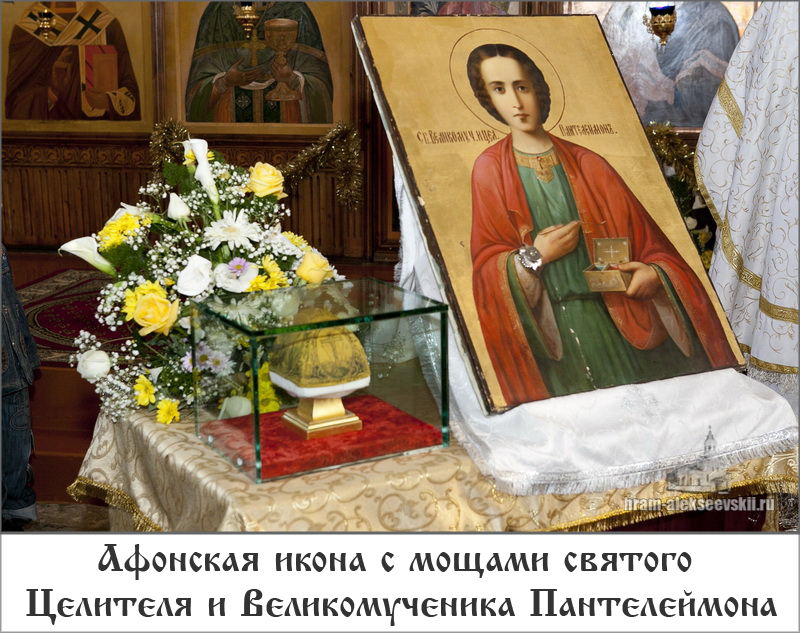
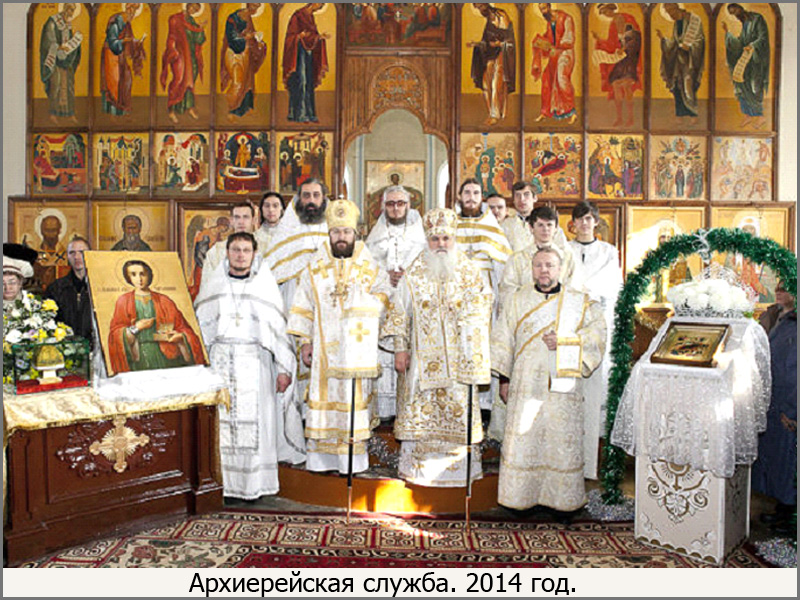
In January 2014 an ancient Athonite icon with the relics of the holy Healer and Great Martyr Panteleimon was present in Saint Alexius Cathedral. On 9 January Metropolitan Vikenty and Metropolitan Hilarion (Alfeyev) of Volokolamsk served in the cathedral building. On this occasion, too, a large number of people gathered in the cathedral.
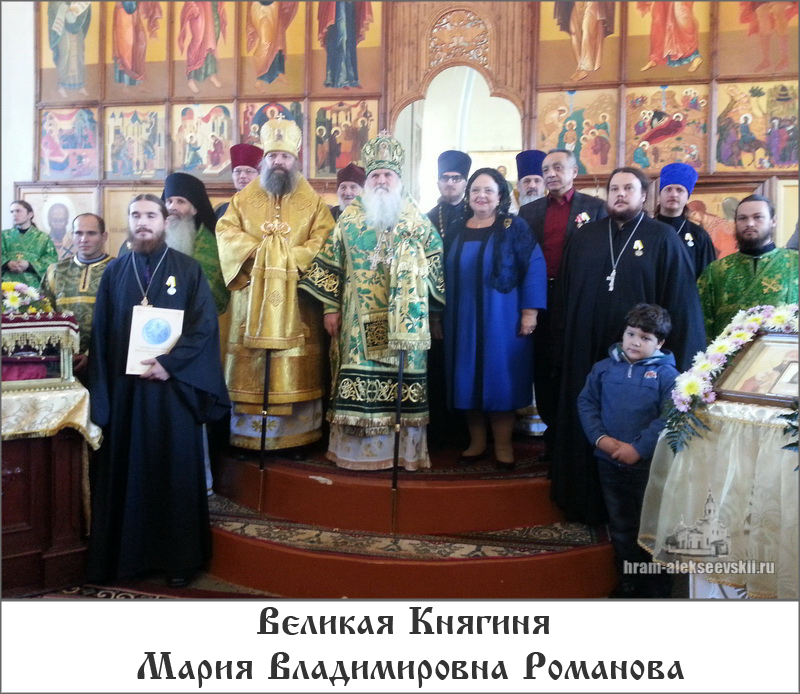
Representatives of the Romanov family also visited the cathedral: Princess Olga Nikolaevna Kulikovskaya-Romanova, and the Head of the Russian Imperial House of Romanov – Grand Duchess Maria Vladimirovna. After the Liturgy, in a solemn ceremony, the Grand Duchess presented the Samarkand priests and one benefactor with commemorative orders and medals.
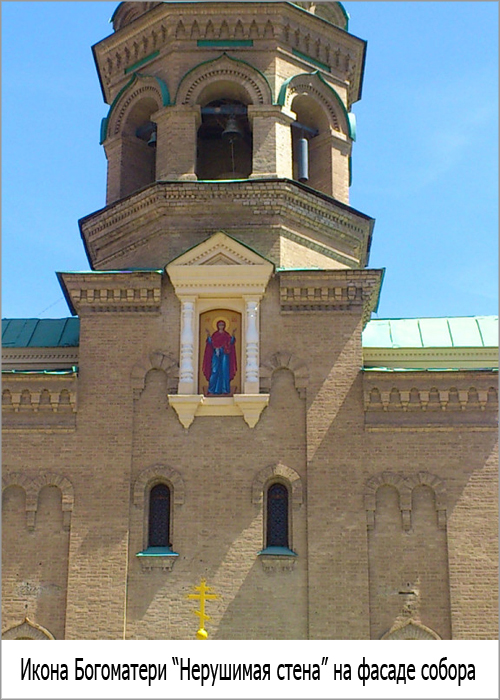
On 28 April 2015 one more long-awaited event took place in the life of the cathedral. On the west side, under the bell tower, high up, a newly painted icon of the Mother of God “The Unbreakable Wall” was installed and blessed by the rector. Father Igor and the artist spent a long time deciding which image would suit this place best. In the end the rector himself chose the model for painting this icon. In the evening of the same day a photo report reflecting this event appeared on the internet and gathered many kind comments.
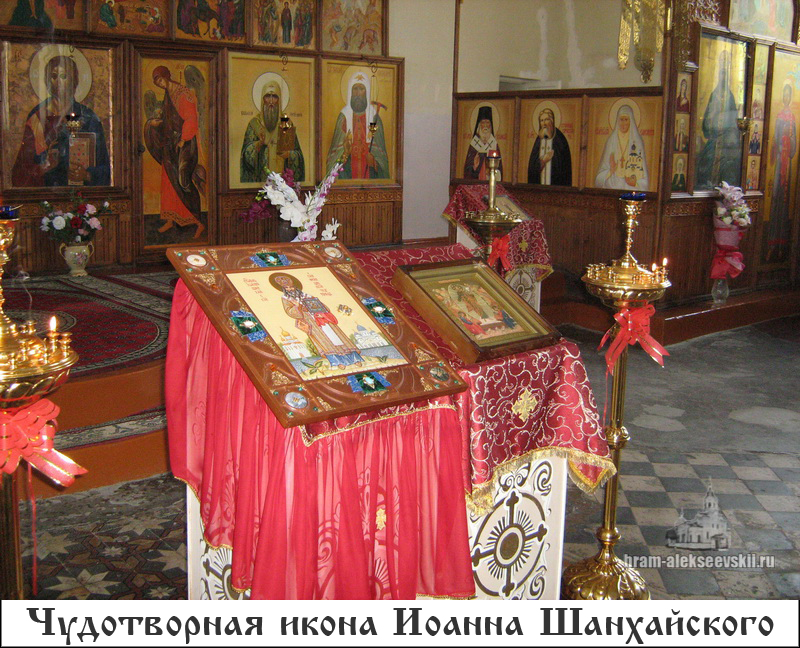
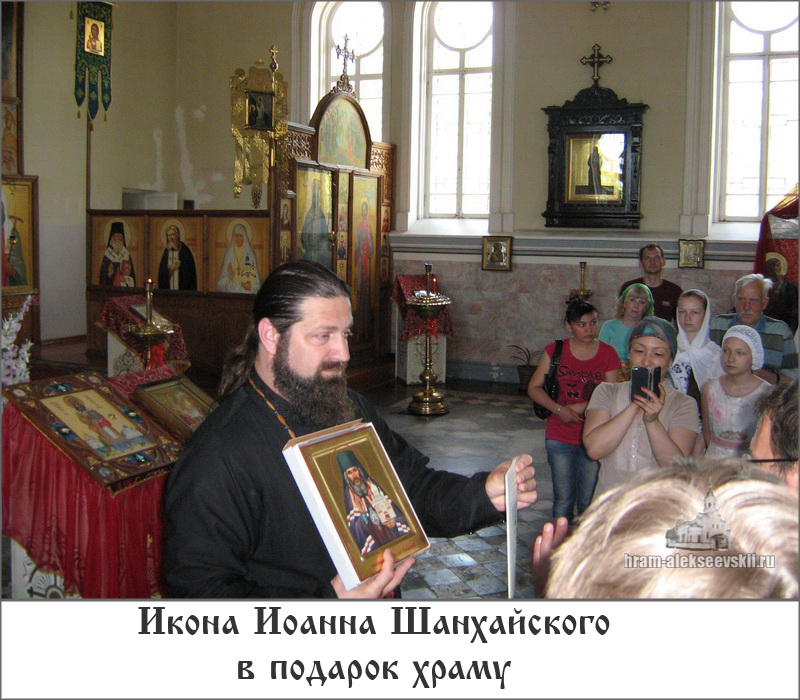
Quite recently, in May of this year, a delegation came to the cathedral for literally a few hours, among whom was a priest from Jordanville – Father John. He brought with him an icon of the holy Archbishop — John of Shanghai with a particle of his relics. The icon of St. John stood in the cathedral for no more than an hour and many people of Samarkand regretted that they had not managed to venerate it, but Father John left as a gift to the Alexius Cathedral another icon of the same saint, small but very beautiful, sanctified on the relics of John of Shanghai.
Father Igor serves in the Alexius Cathedral to this day; in that time he has done a great deal, and behind all this stands real labour. Many parishioners like the sermons that Father Igor delivers from the ambo. Work on the adornment and improvement of the church, as well as of the adjoining grounds, goes on constantly. Despite everyday cares and worries, the rector always has interesting plans for the future. In time it is planned to erect on the grounds of the cathedral a whole complex including a baptistery and a refectory, a room for the Sunday school, as well as rooms for guests and meetings. For this construction a professional architectural design is being prepared, in which everything must be foreseen and thought out. There is still much work ahead.
As is well known, Samarkand is a city with a long and interesting history, and many guests from different countries constantly come here. Some with curiosity, and some — with a feeling of reverence, cross the threshold of the majestic cathedral. Today the church of St. Alexius lives a full life and its doors are open to all. (The text was written from the author’s personal recollections, and materials from the diocesan newspaper “The Word of Life” were also used).
We would like to express special gratitude for the writing of this history to Svetlana Zhukova – Senior Research Fellow of the History Department of the Samarkand Regional Museum of Local Lore, and to Vladislav Sobolev, for the archival materials they provided.
This page is being edited…