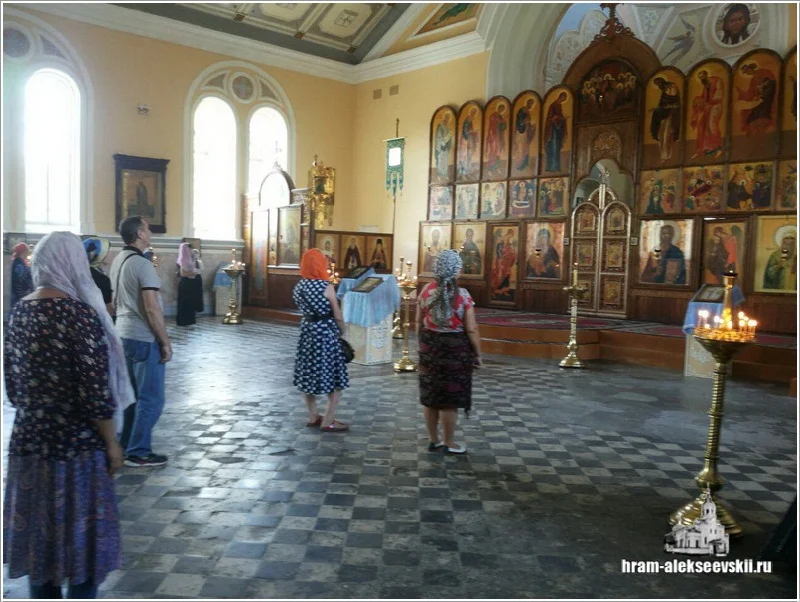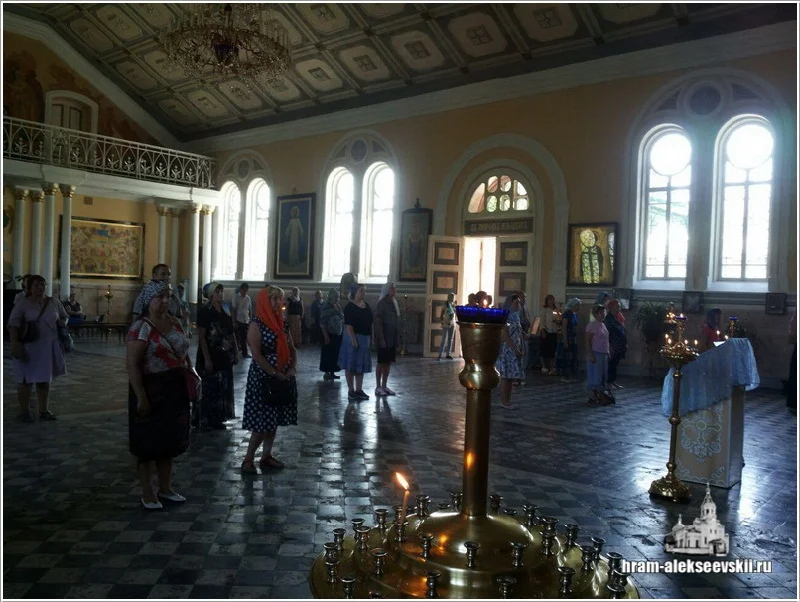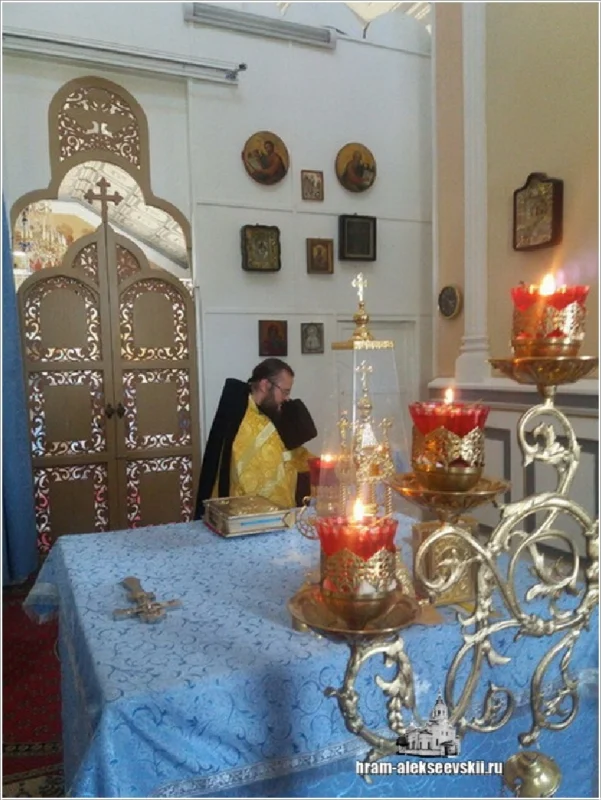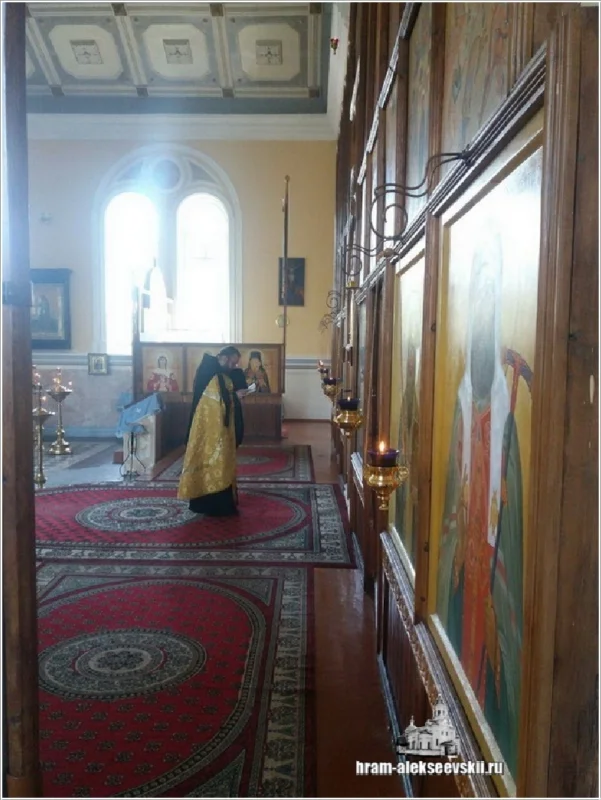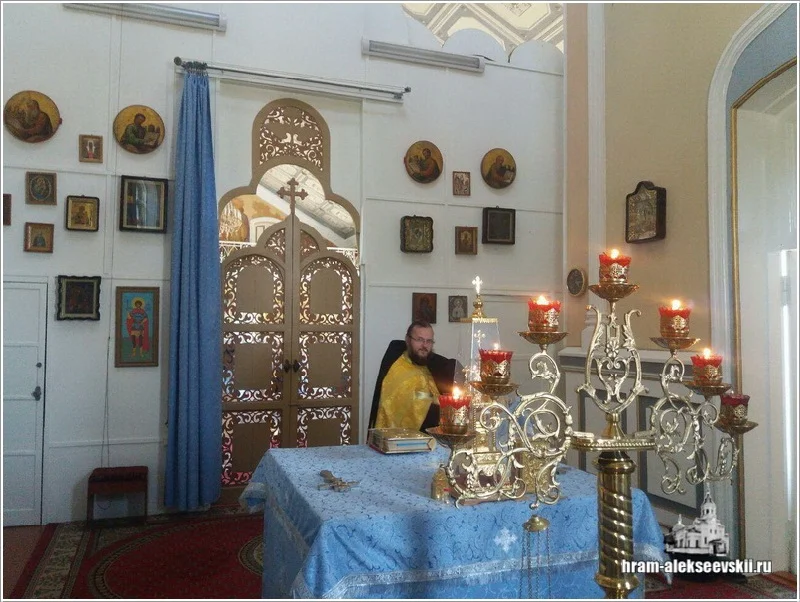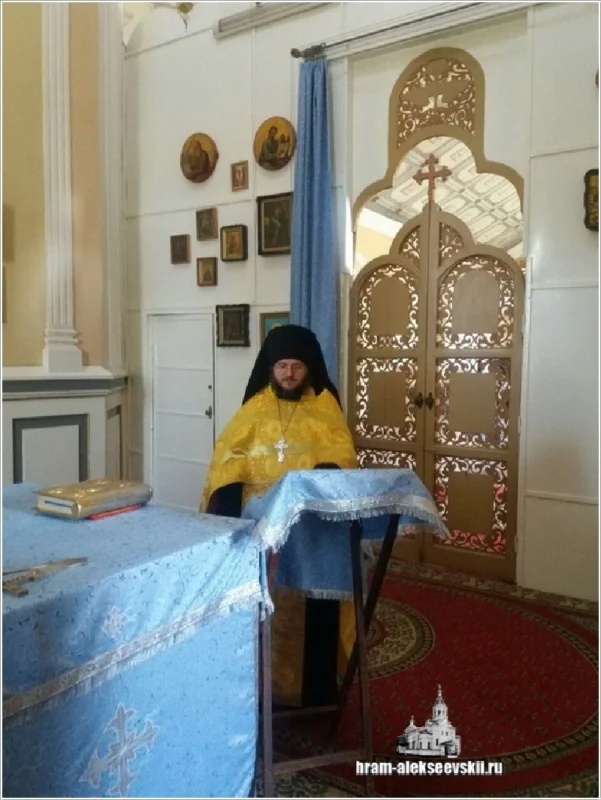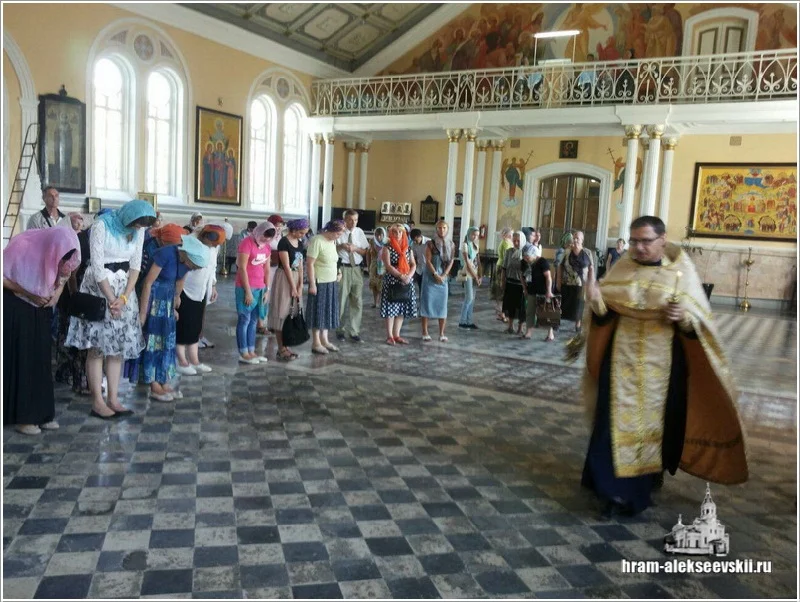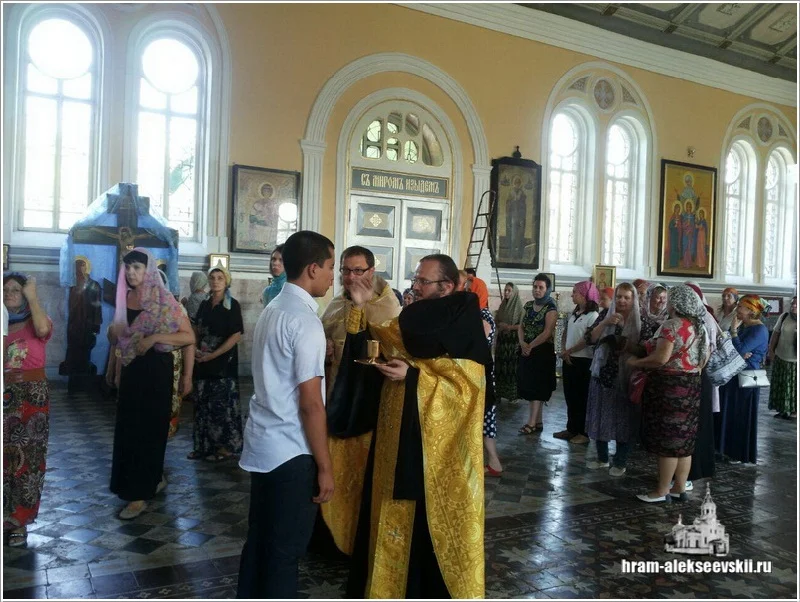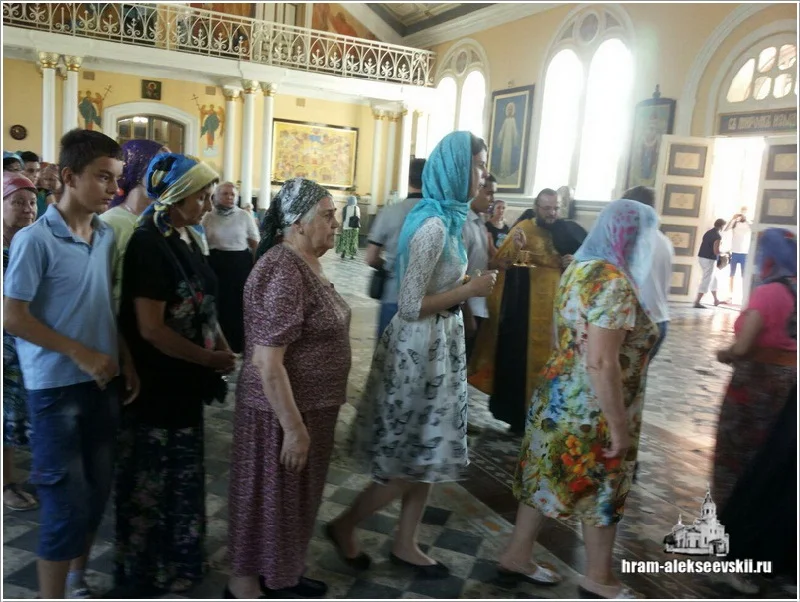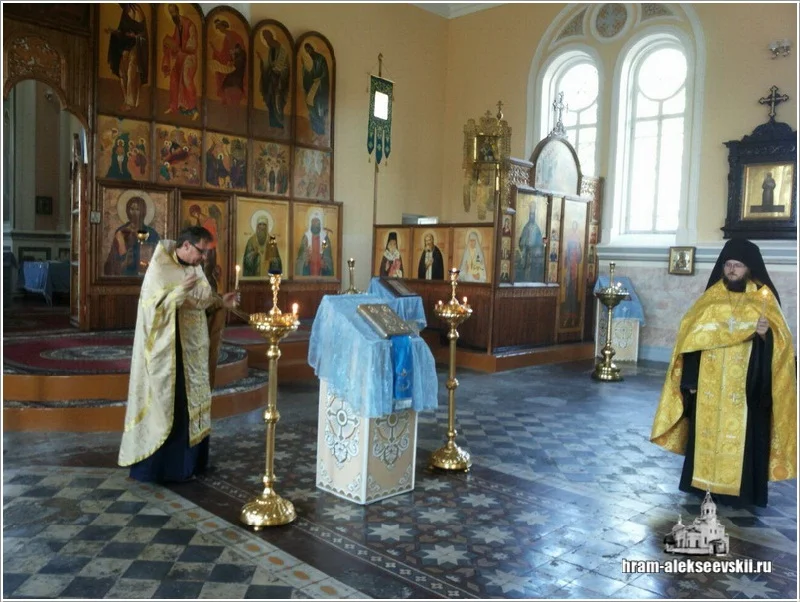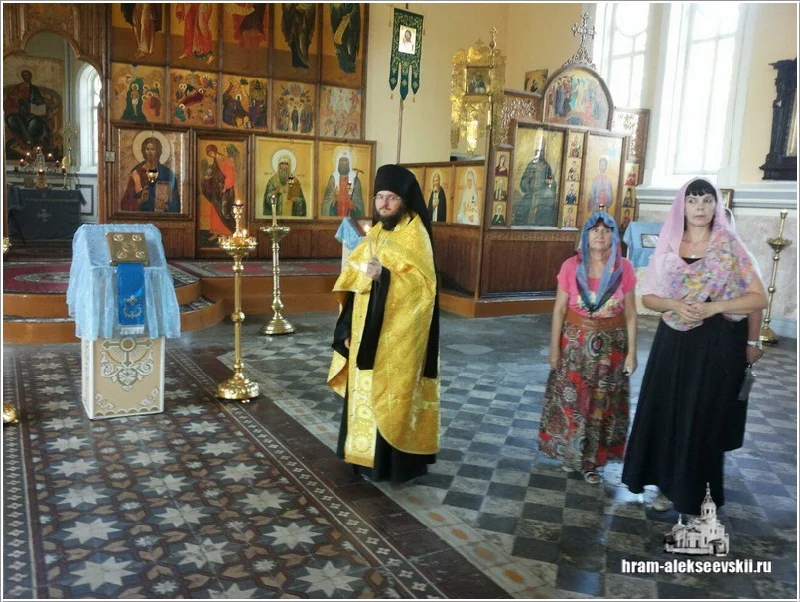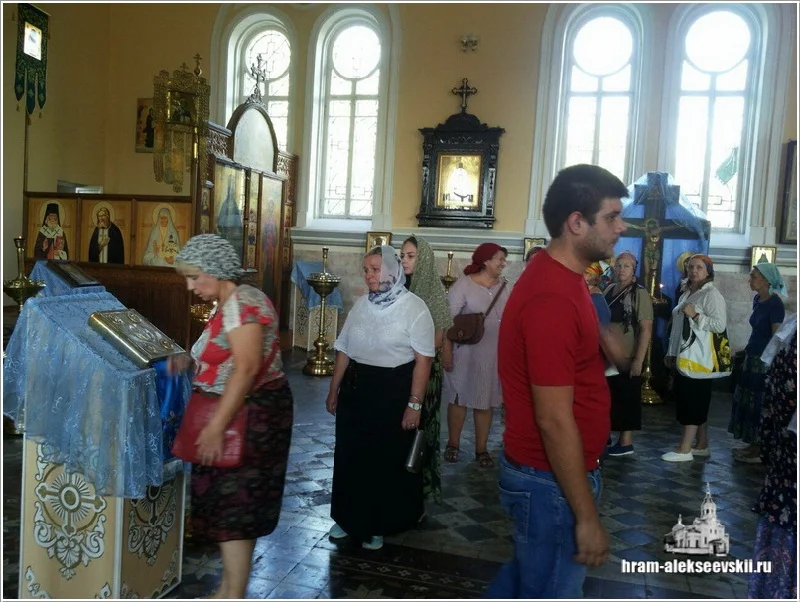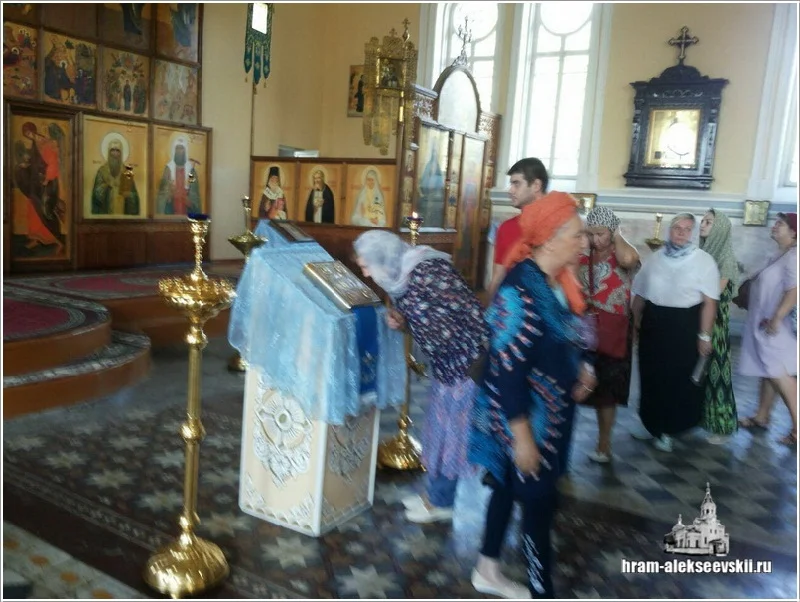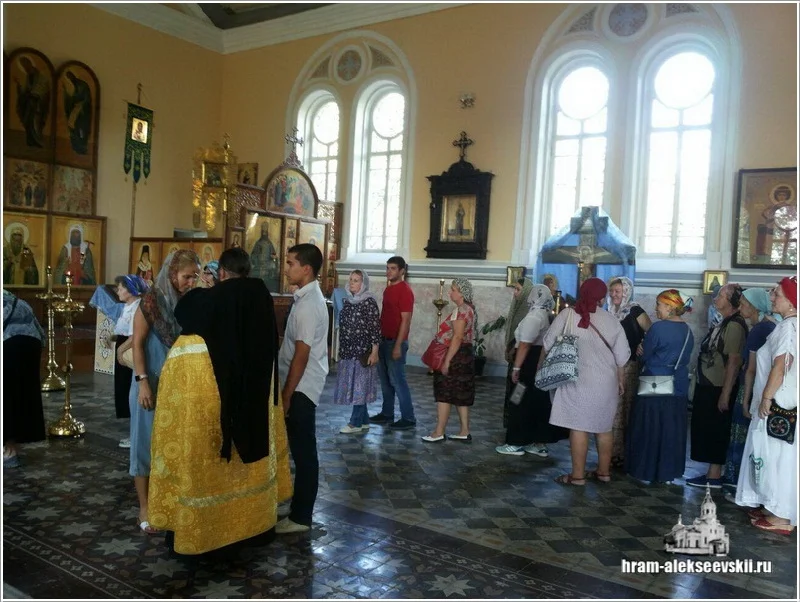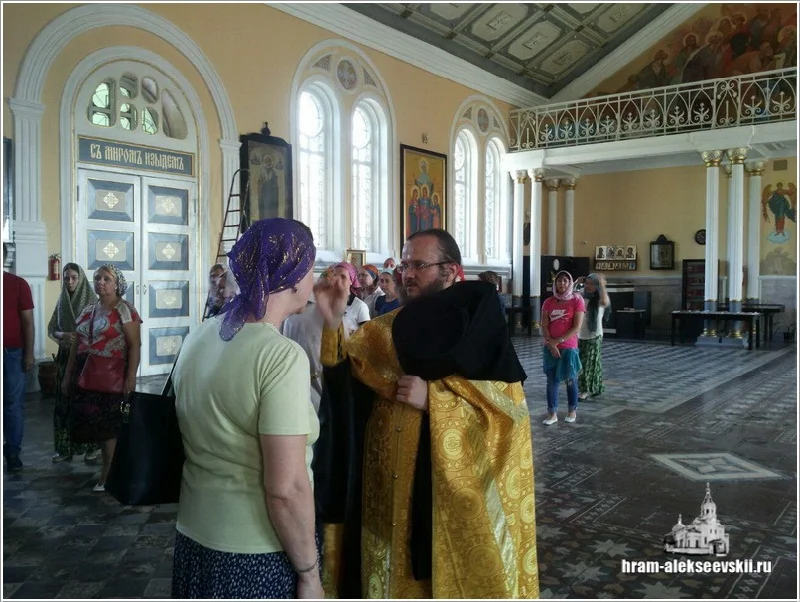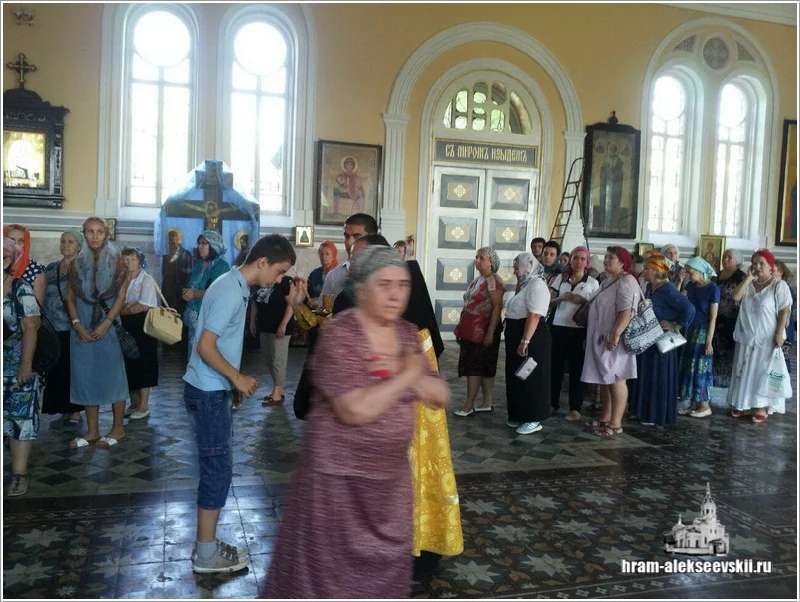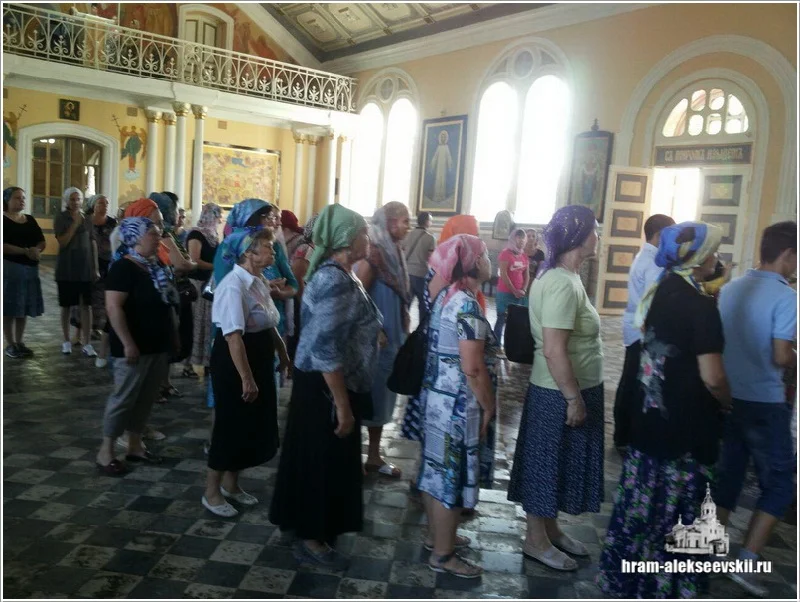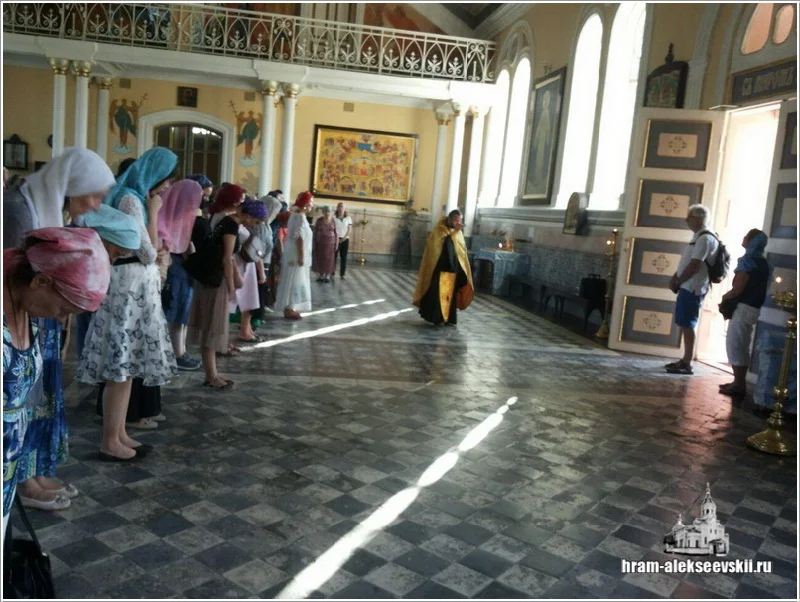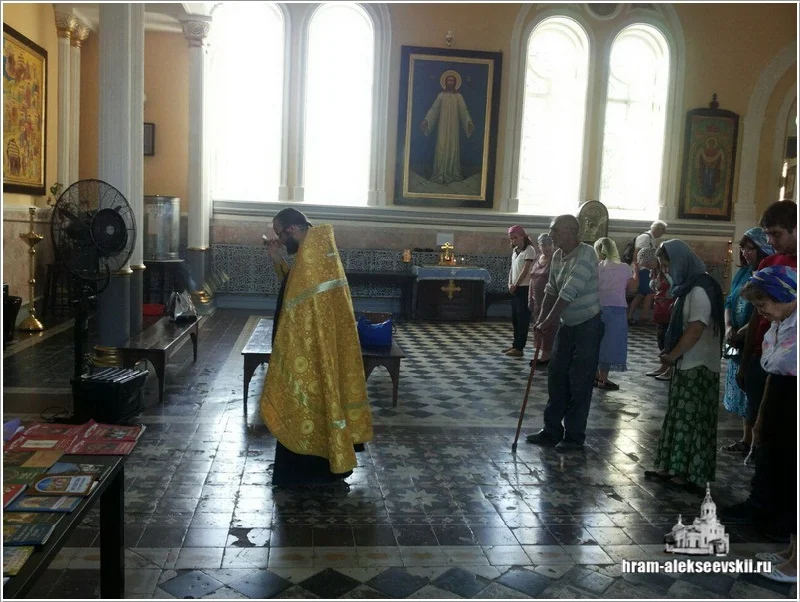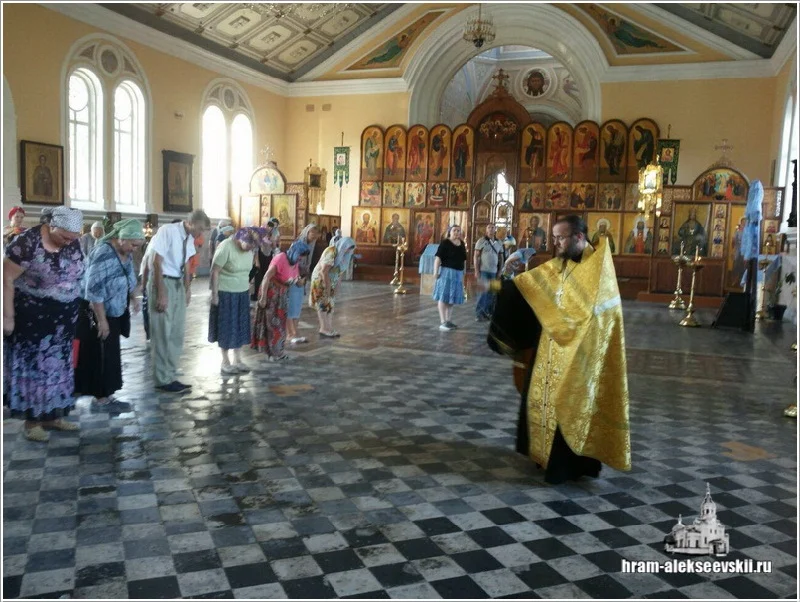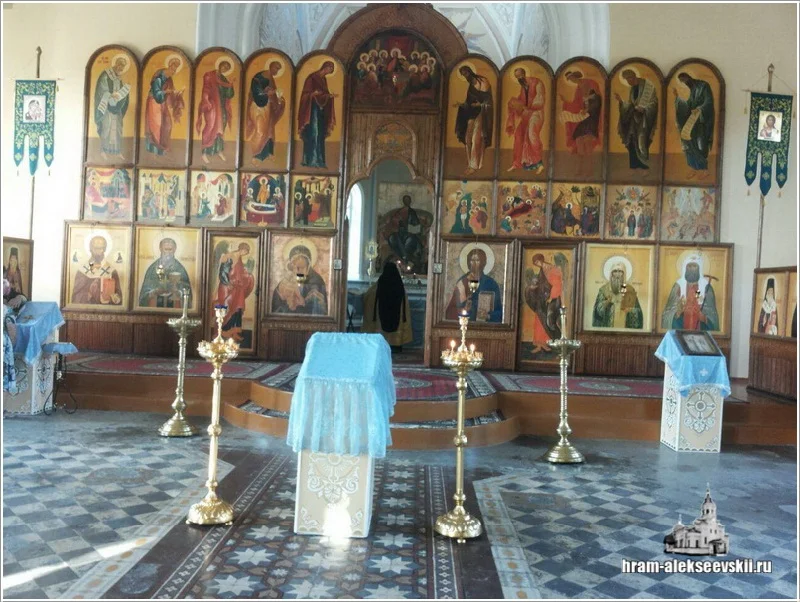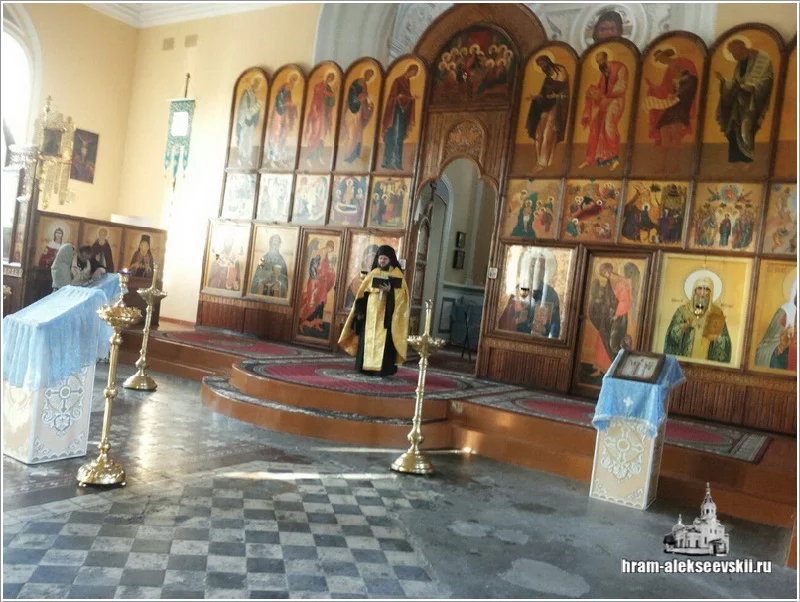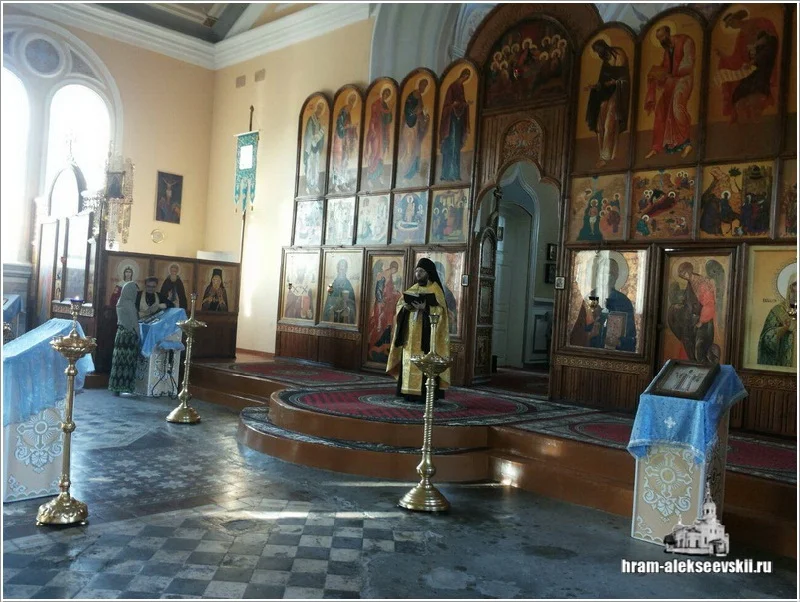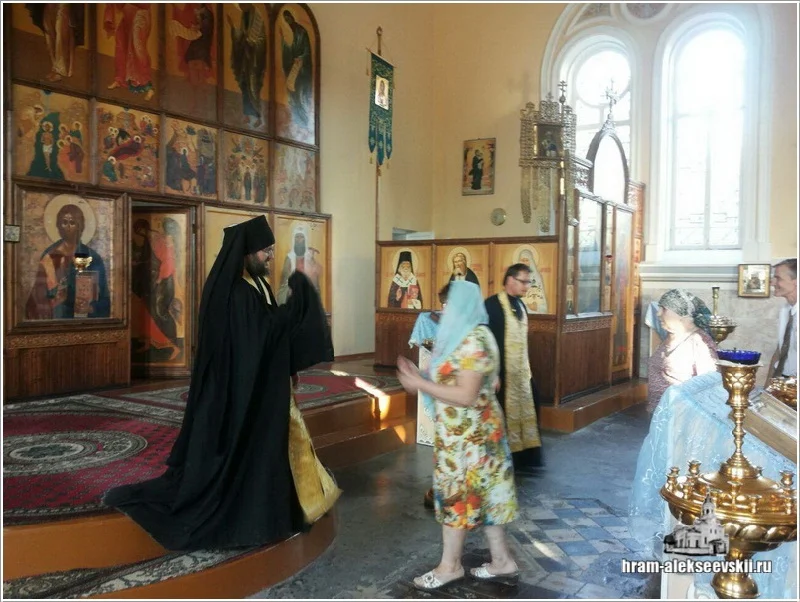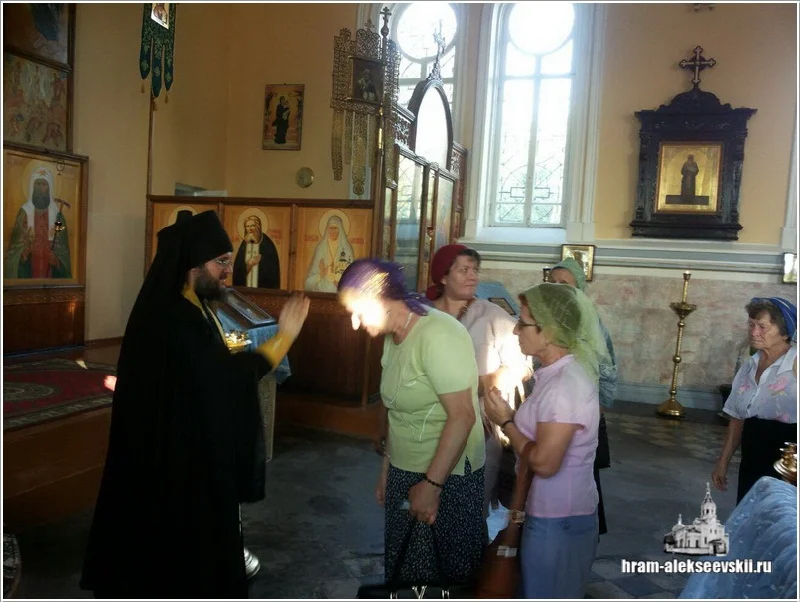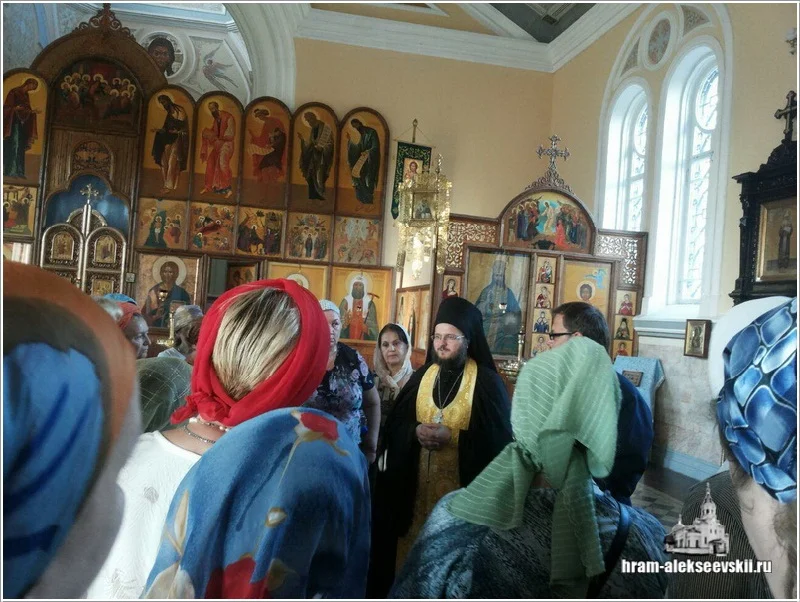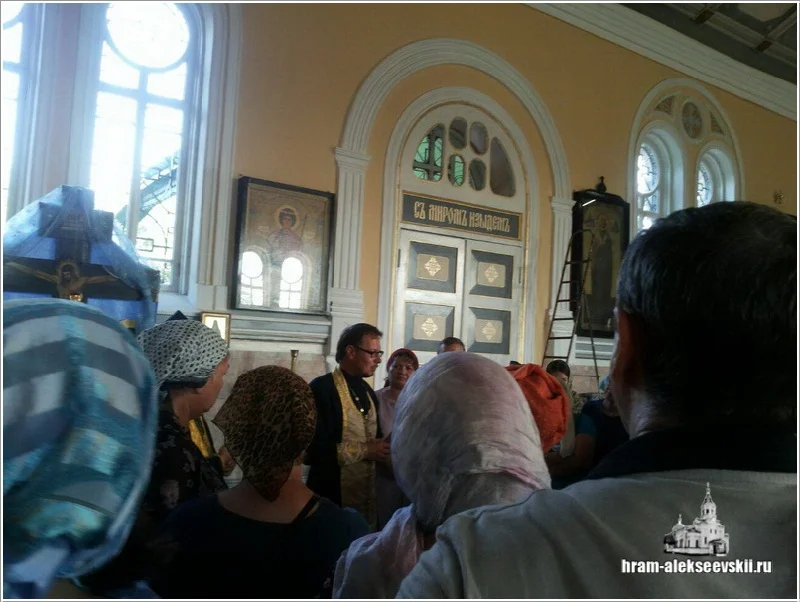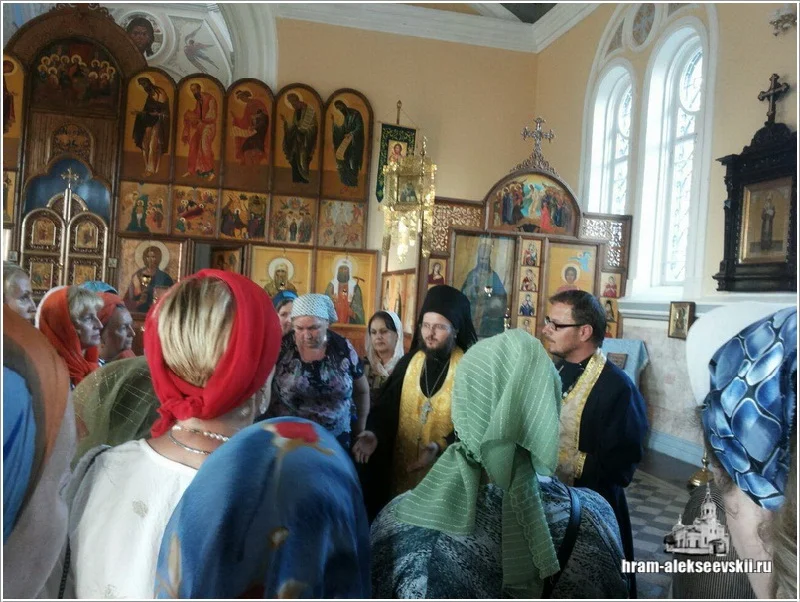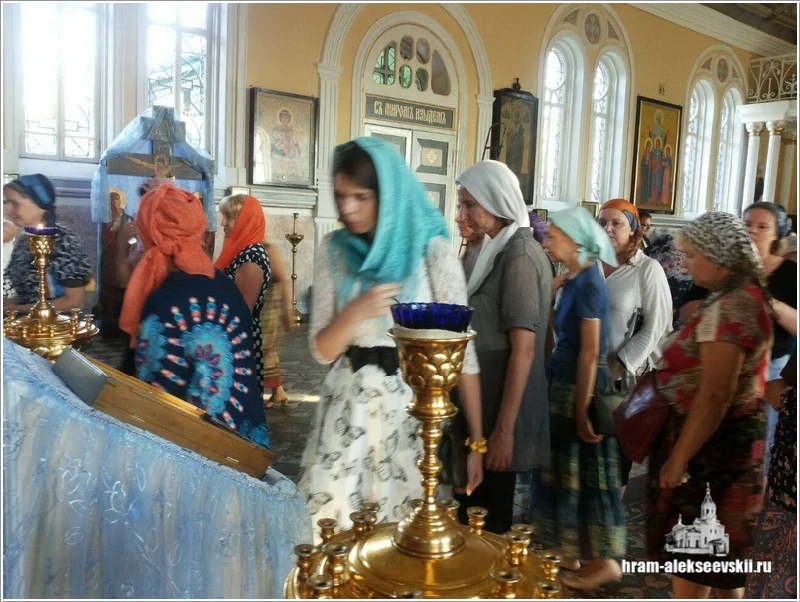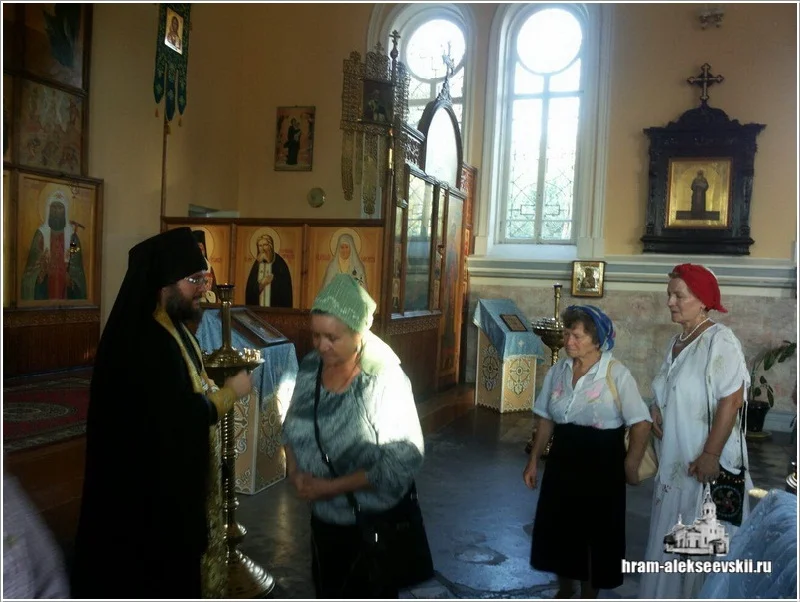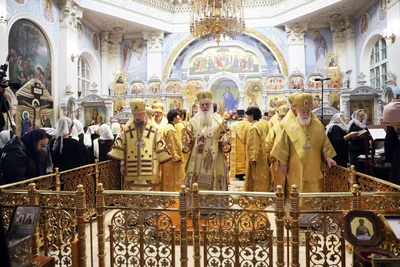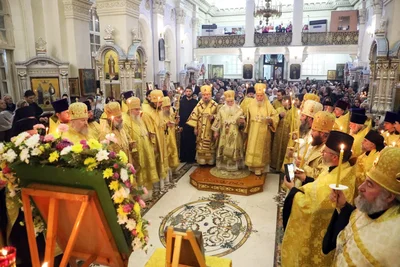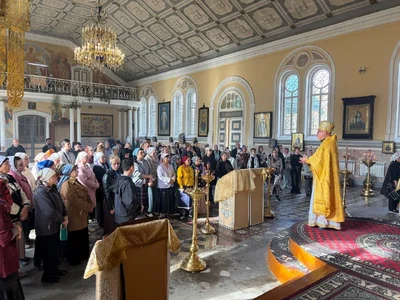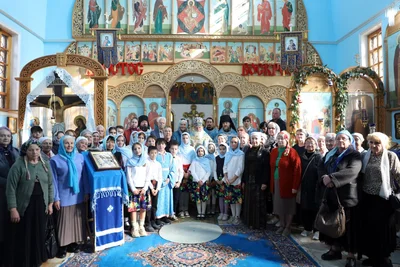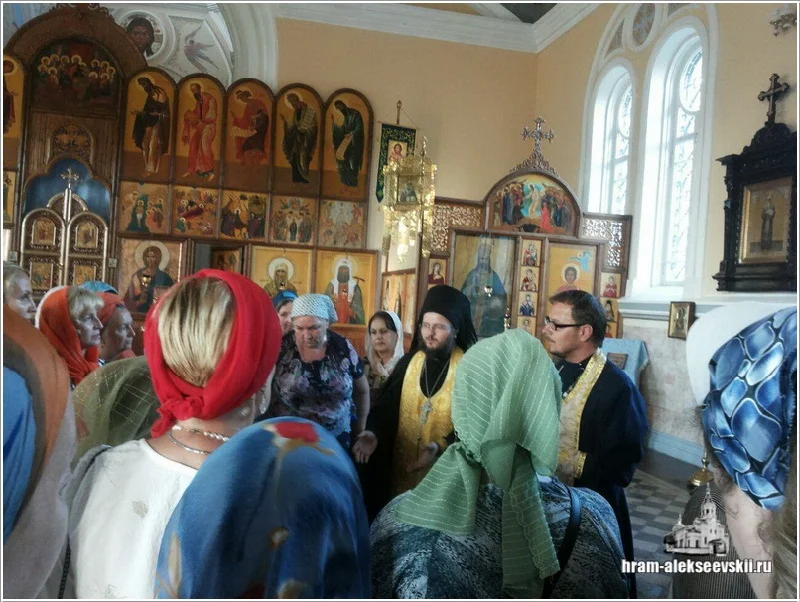
On 9 September Saint Alexius Cathedral honoured the memory of Venerable Moses the Ethiopian.
The service was celebrated by the rector of the cathedral, Priest Igor Babakov, and by Hieromonk Mikhail (Stolyarov), a cleric of the Dormition Cathedral in Tashkent.
Venerable Moses the Ethiopian lived in Egypt in the 4th century. He was an Ethiopian, dark of face, and was therefore called "Murin" (the Moor). In his youth he was the slave of a nobleman, but after he committed a murder his master drove him out, and he joined a band of robbers. Because of his harsh temper and great physical strength they chose him as their leader. With the band Moses committed many crimes, murders and robberies, so that everyone feared even his name. For several years the robber Moses lived this sinful life, but through God's great mercy he repented, left the band of robbers and went to one of the desert monasteries. There he wept for a long time, asking to be received among the brethren. The monks did not believe his repentance was sincere, but the former robber begged them not to drive him away until the brethren accepted him. In the monastery Venerable Moses lived in complete obedience to the abbot and the brethren, shedding many tears as he lamented his sinful life. After some time Venerable Moses withdrew to a solitary cell, where he led a severe life of prayer and the strictest fasting. Once four robbers from his former band attacked the cell of Venerable Moses, but he, having lost none of his enormous physical strength, tied them all up and, lifting them onto his shoulders, carried them to the monastery, asking the elders what to do with the captives. The elders told him to let them go. When the robbers learned that they had fallen into the hands of their former leader and that he had spared them, they followed his example, repented and became monks. When the rest of the robbers heard of the repentance of Venerable Moses, they abandoned robbery and became zealous monks.
Venerable Moses was not quickly freed from the passions. He often came to the abbot of the monastery, Abba Isidore, asking for advice on how to rid himself of the passion of fornication. The elder, experienced in spiritual warfare, taught him never to eat his fill, to remain half-hungry and to keep the strictest abstinence. But the passion did not leave Venerable Moses in his dreams. Then Abba Isidore taught him to keep all-night vigils. The saint stood through whole nights in prayer, never bending his knees so as not to fall asleep. The long struggle brought Venerable Moses to despondency, and when the thought arose in him of leaving his desert cell, Abba Isidore strengthened his disciple's spirit. He showed him in a vision a multitude of demons in the west preparing for battle, and in the east an even greater number of holy Angels, also preparing for battle. Abba Isidore encouraged Venerable Moses, saying that the power of the Angels surpasses the power of the demons, and that the long struggle with the passions was necessary for him to be completely cleansed of his former sins.
Venerable Moses took up a new ascetic labour. Going round the desert cells at night, he brought water from the well to each brother. He took particular care of the elders who lived far from the well and had no strength to fetch water for themselves. Once, as he bent over the well, Venerable Moses felt a heavy blow on his back and fell senseless by the well, lying there until dawn. Thus the demons took revenge on the saint for his victory over them. In the morning the brethren carried him to his cell, and he lay paralysed for a whole year. Having recovered, the saint confessed to the abbot with firm resolve that he would continue his ascetic struggle. But the Lord Himself put an end to this struggle of many years: Abba Isidore blessed his disciple and told him that the passion of fornication had already left him. The elder told him to receive the Holy Mysteries and go to his cell in peace. From then on Venerable Moses received from the Lord power over demons.
The fame of his ascetic labours spread among the monks and beyond the desert. The ruler of the country wished to see the saint. Learning of this, Venerable Moses decided to hide from the visitors and left his cell. On the way he met the ruler's servants, who asked him how to get to the cell of the hermit Moses. The saint answered them: "It is not worth going to that false, unworthy monk." The servants returned to the monastery, where the ruler was waiting for them, and passed on to him the words of the elder they had met. From their description of the elder's appearance, the brethren unanimously recognised him as Venerable Moses himself.
After many years of monastic labours Venerable Moses was ordained deacon. The bishop clothed him in white vestments and said: "Now Abba Moses is all white." The saint replied: "Master, what makes one pure, the outward or the inward?" In his humility the saint considered himself inwardly unworthy to receive the rank of deacon. Once the bishop decided to test him and ordered the clergy to drive the deacon out of the altar, abusing him as an unworthy Moor. The saint accepted the dishonour with complete humility. Having tested him, the bishop ordained him presbyter. In this rank Venerable Moses laboured for 15 years and gathered around himself 75 disciples.
When the saint reached the age of 75, he warned his monks that robbers would soon attack the skete and kill all its inhabitants. The saint blessed the monks to leave in good time so as to escape a violent death. The disciples begged the saint to leave with them, but he replied: "For many years I have been awaiting the time when the word of my Master, the Lord Jesus Christ, would be fulfilled in me, Who said: 'All who take the sword will perish by the sword'" (Matt. 26:52). Then seven brethren remained with the saint, one of whom hid nearby as the robbers approached. The robbers killed Venerable Moses and the six monks who had stayed with him. Their death took place around the year 400.
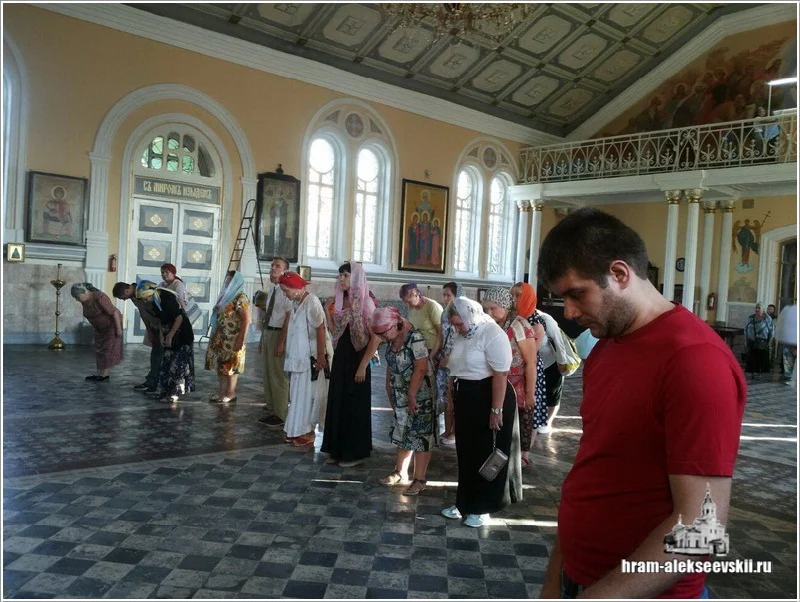
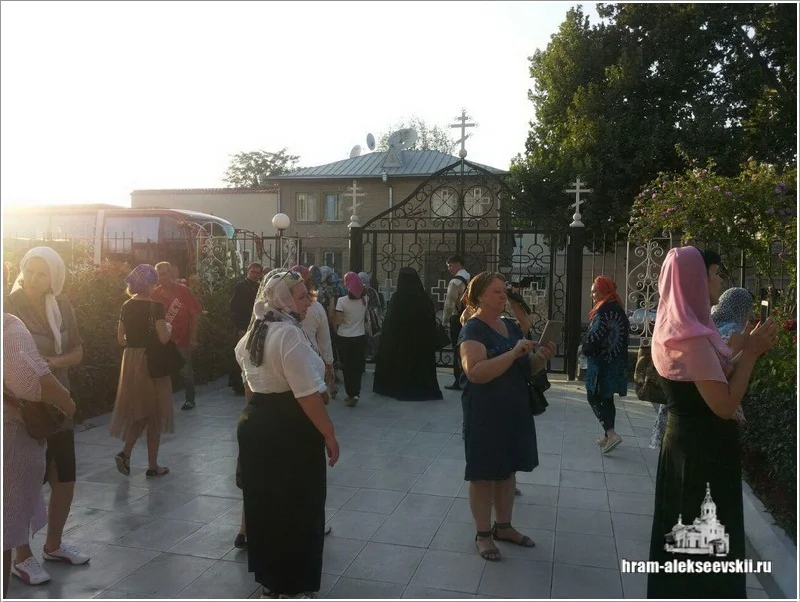
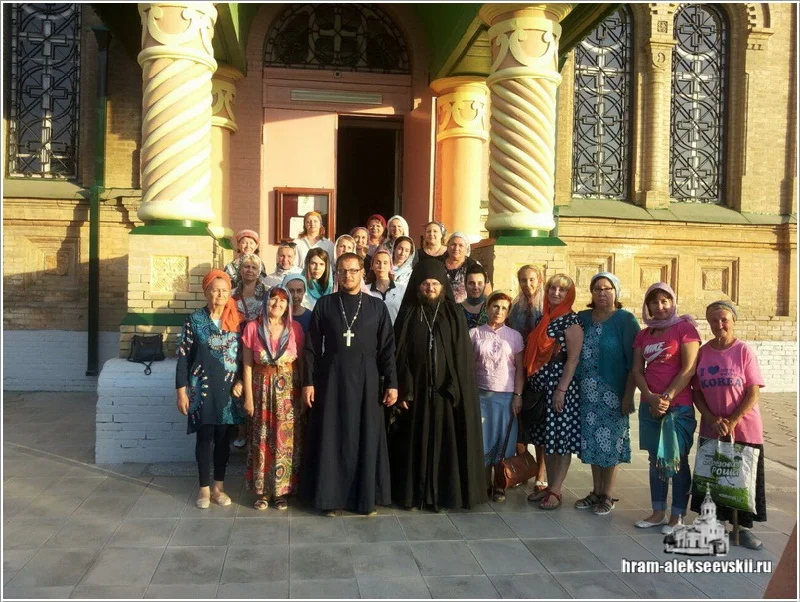
Members of a pilgrimage group of the Diocese of Tashkent and Uzbekistan prayed at the service together with the parishioners of the church.