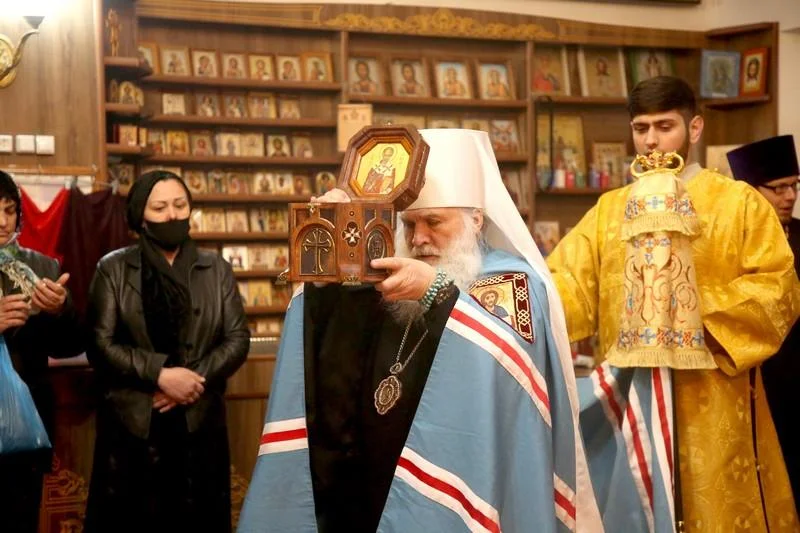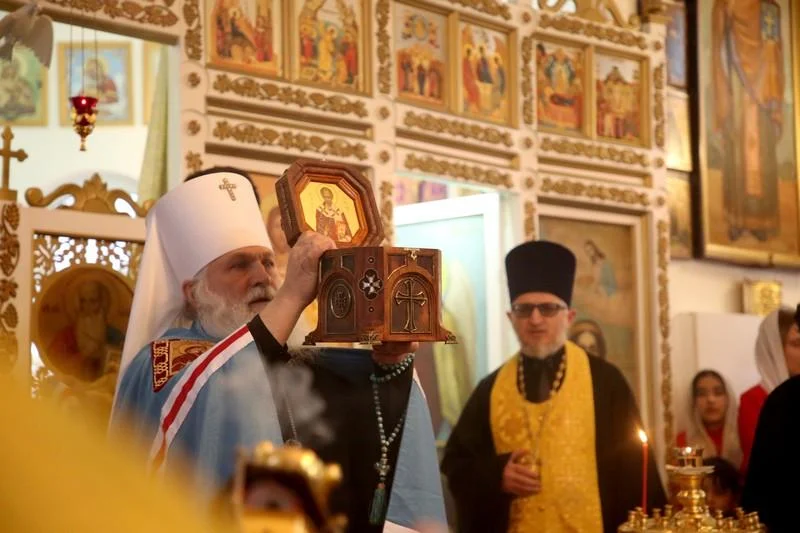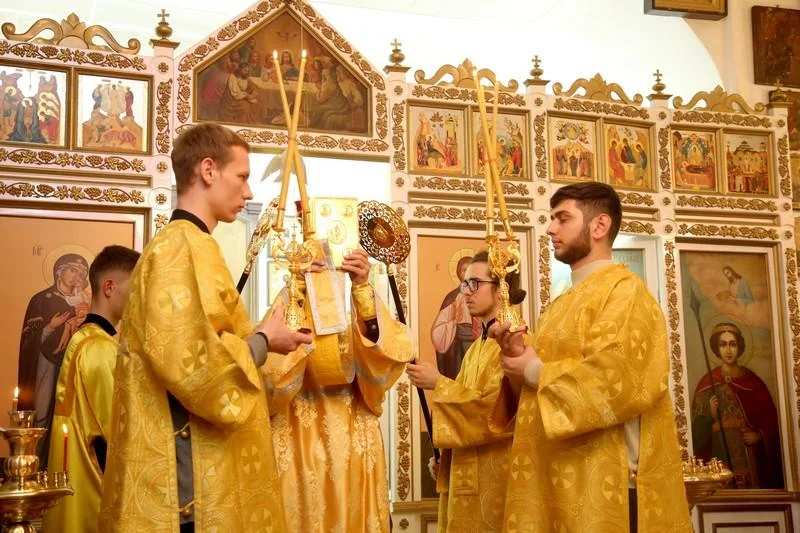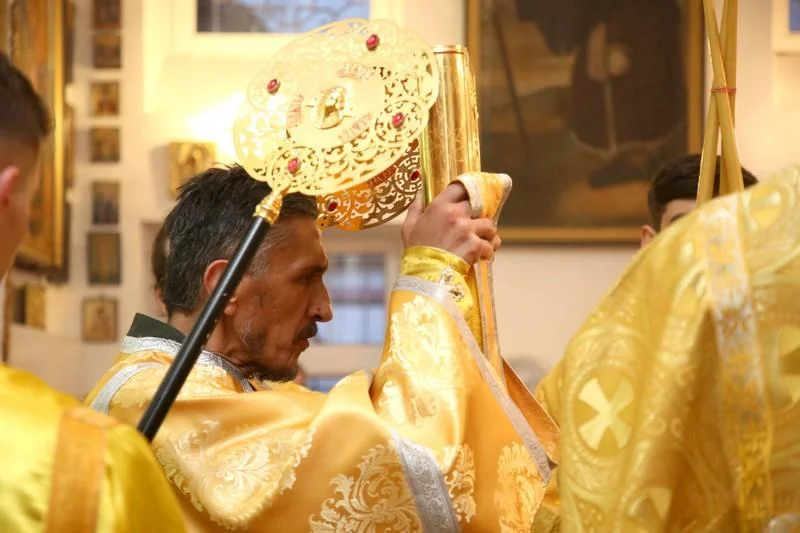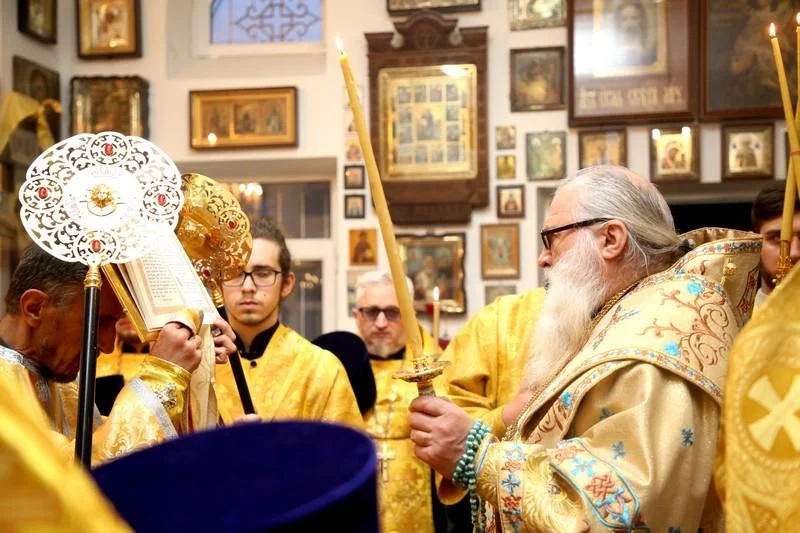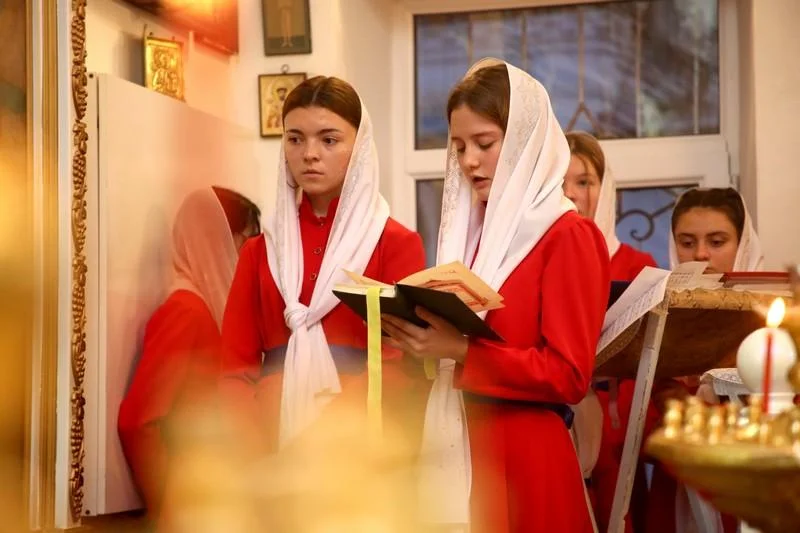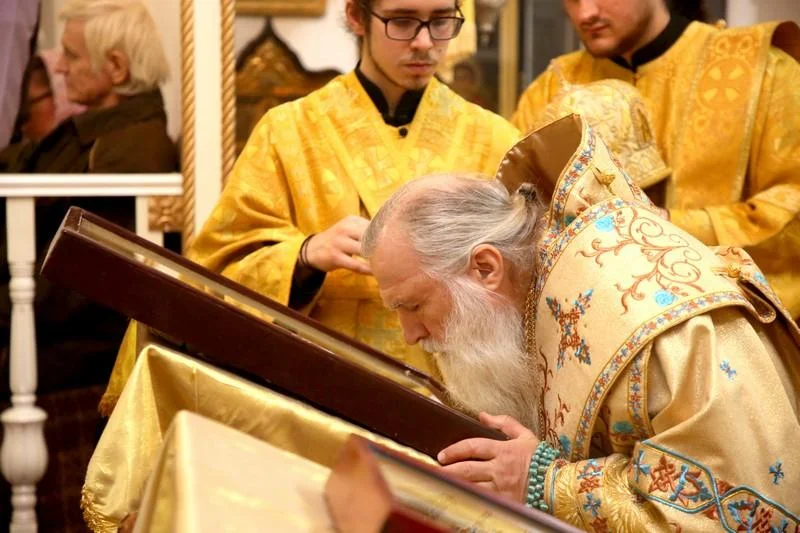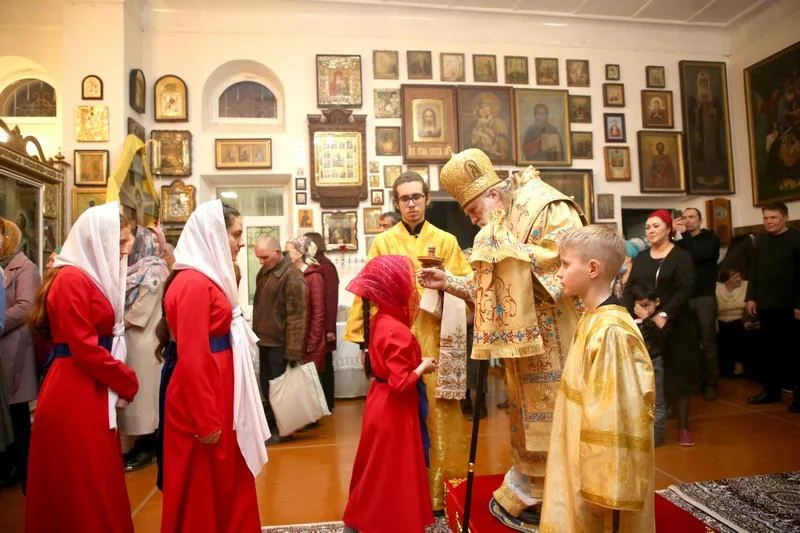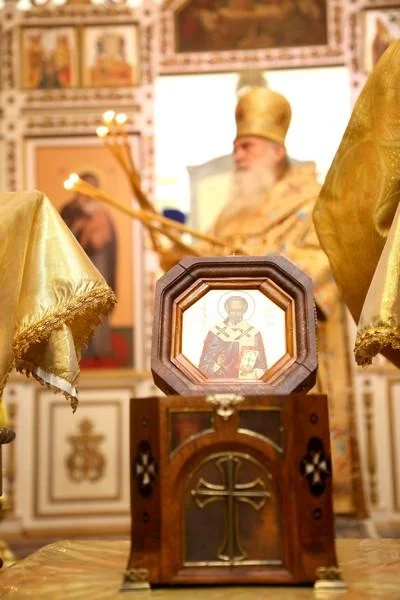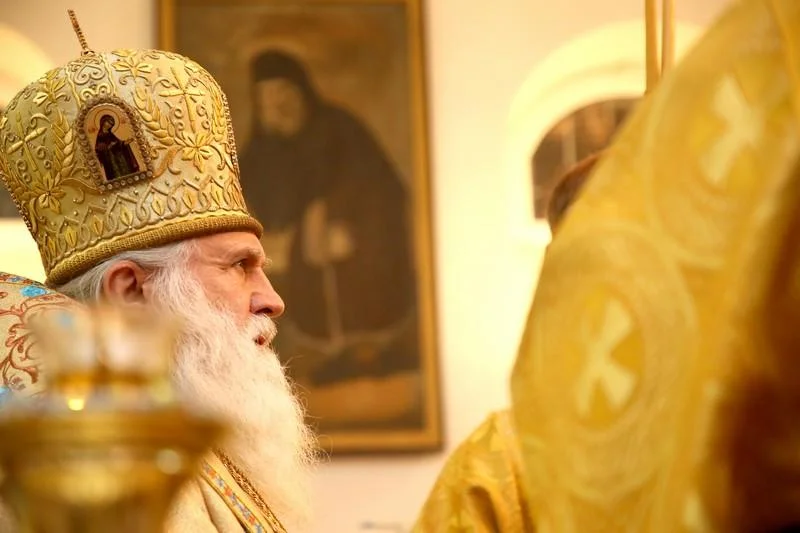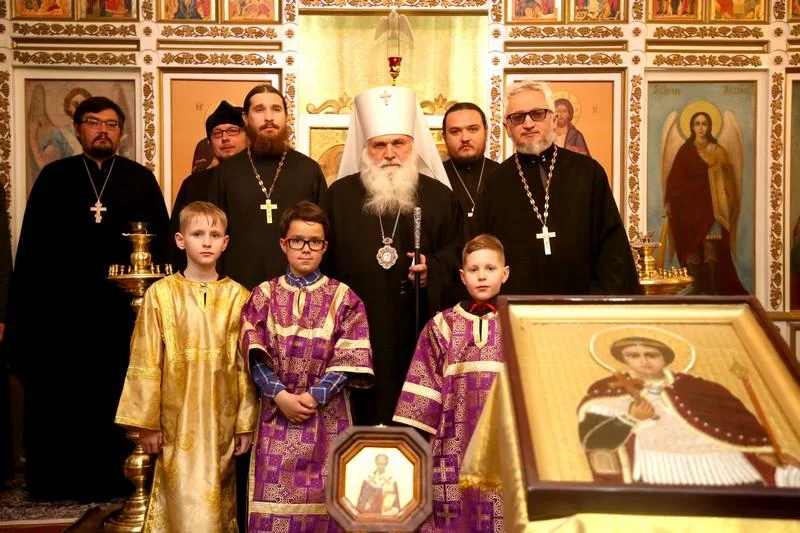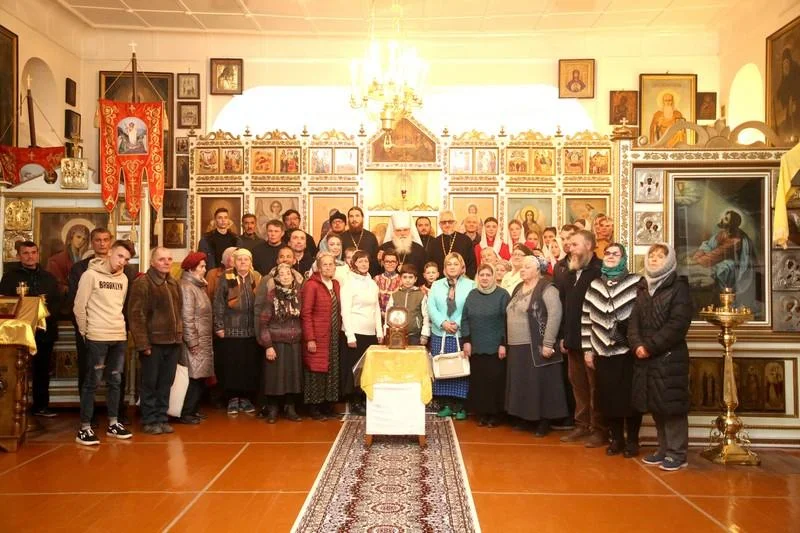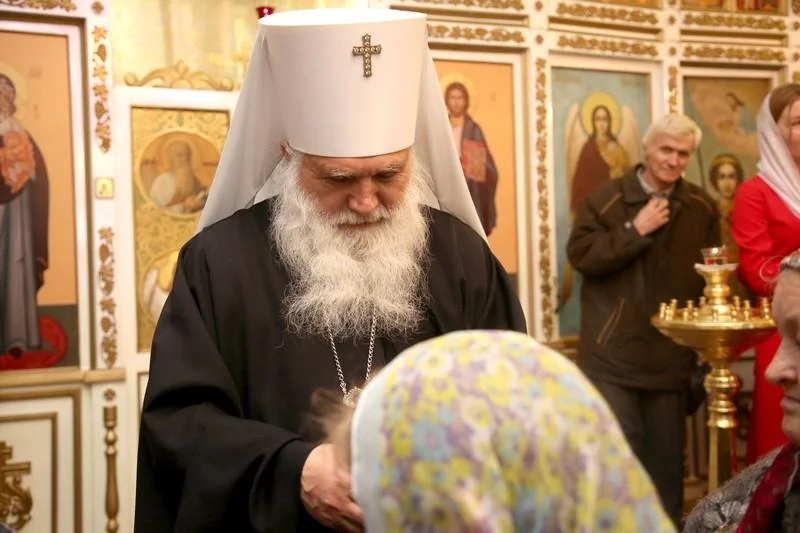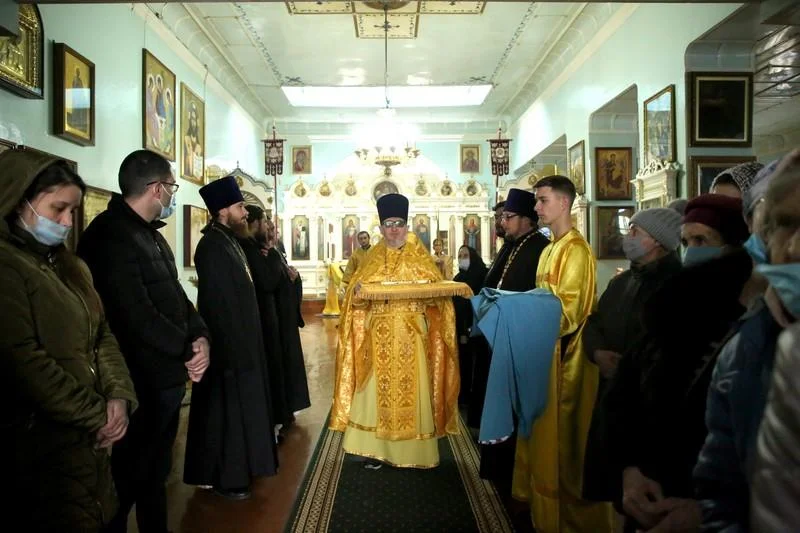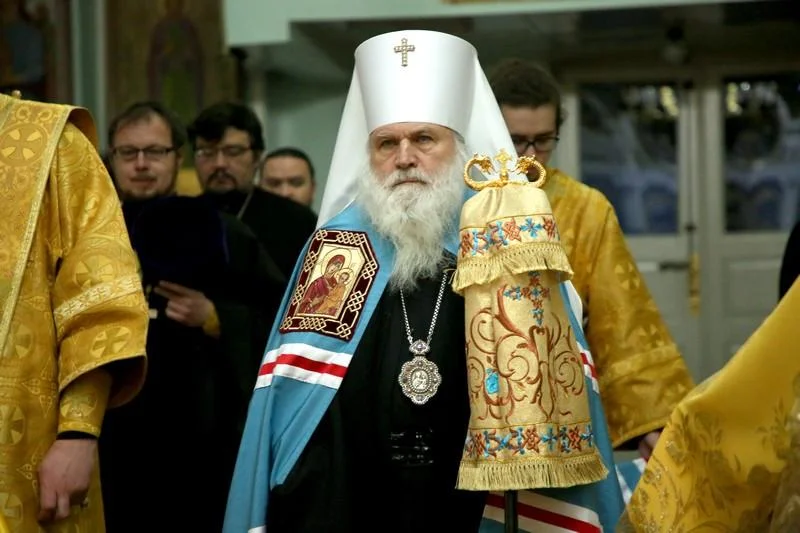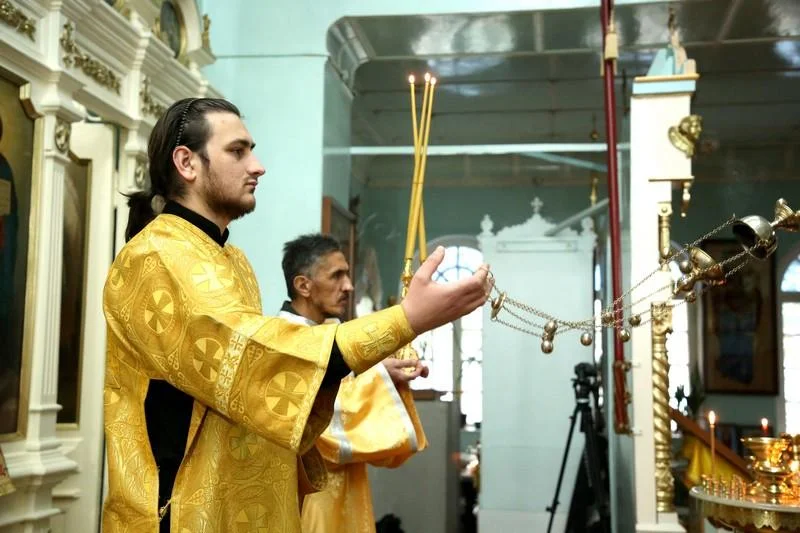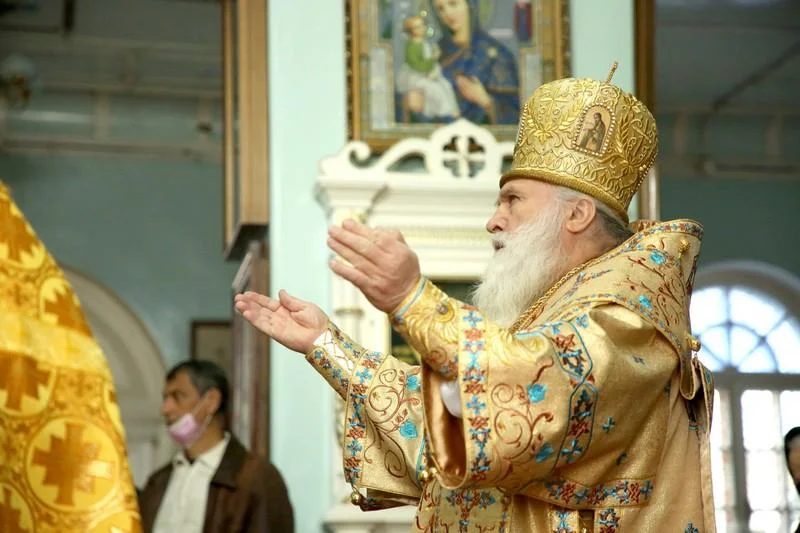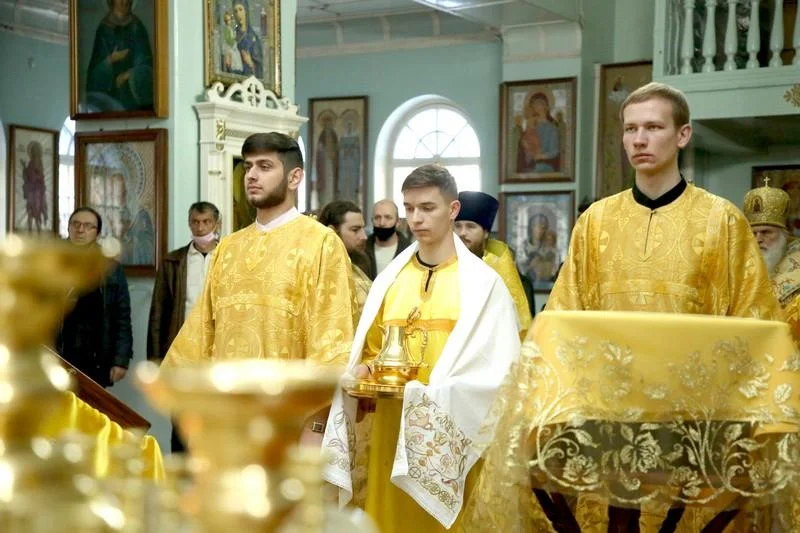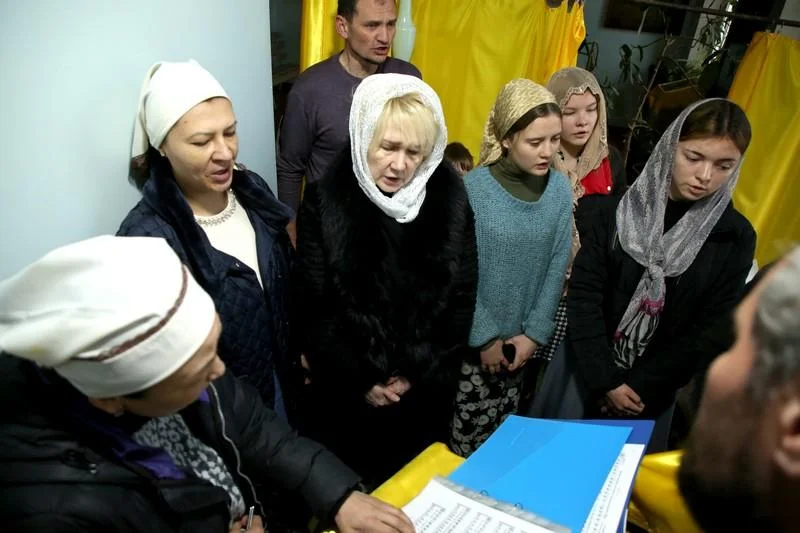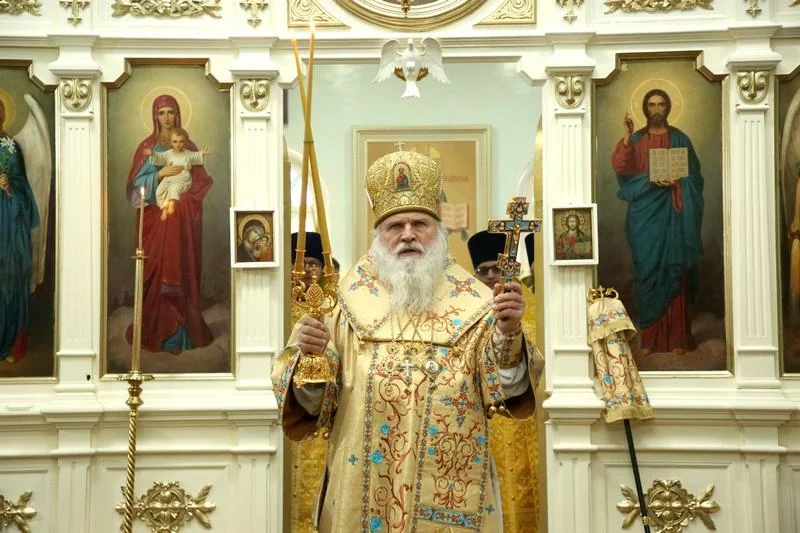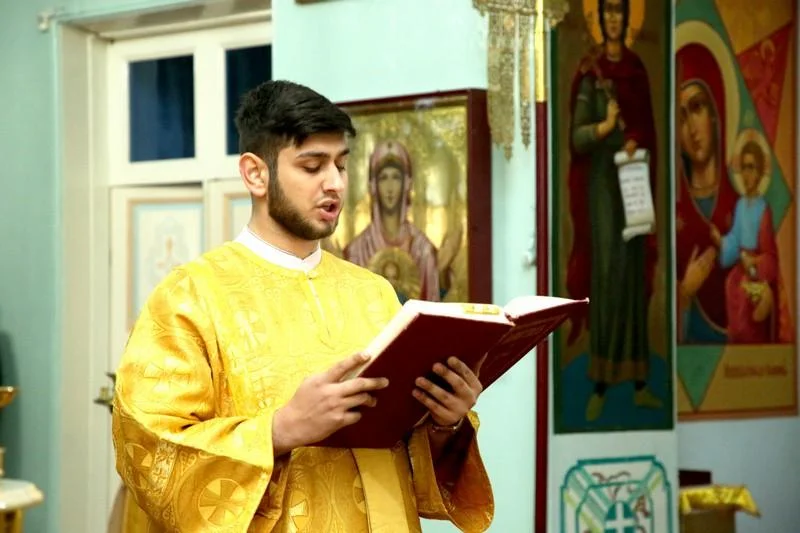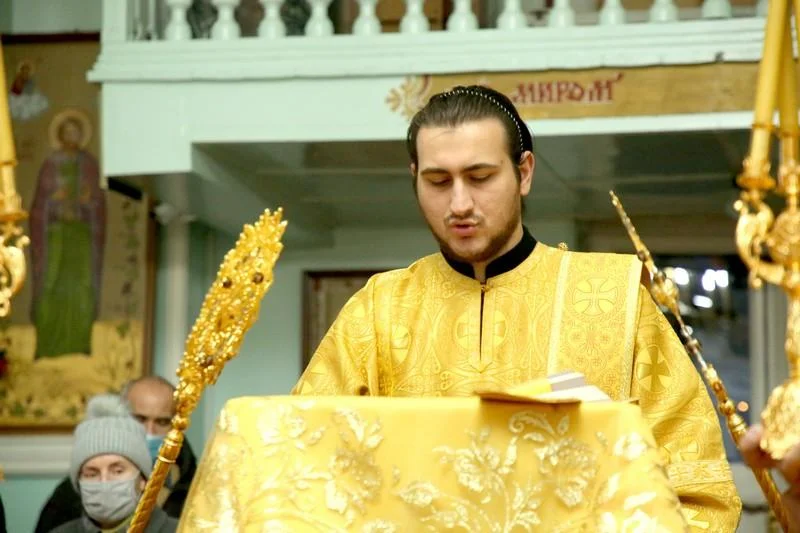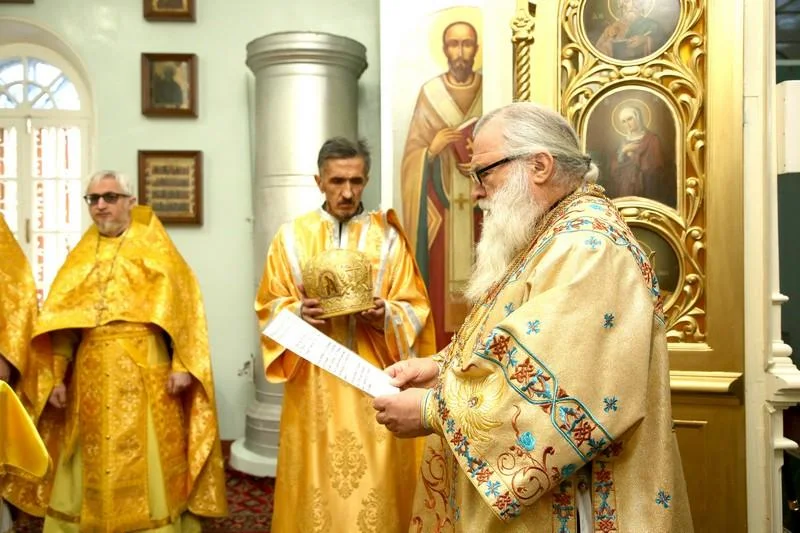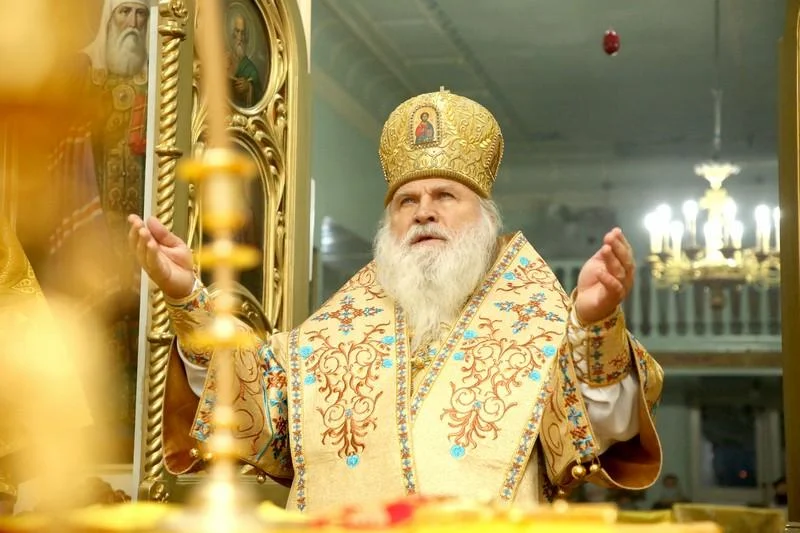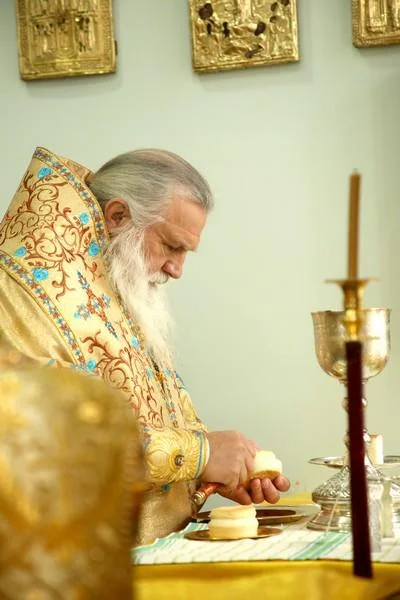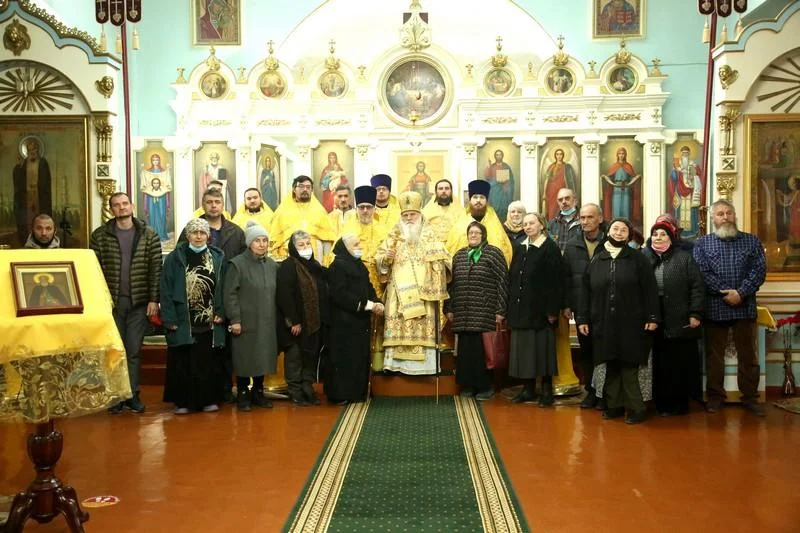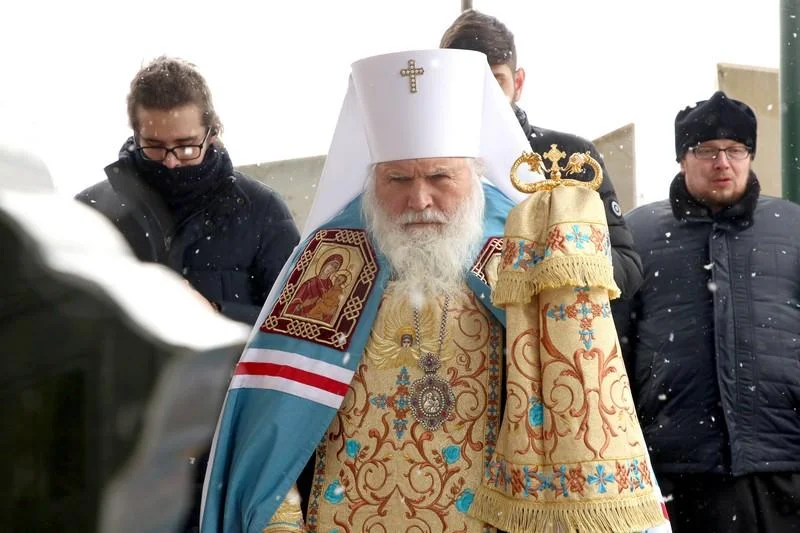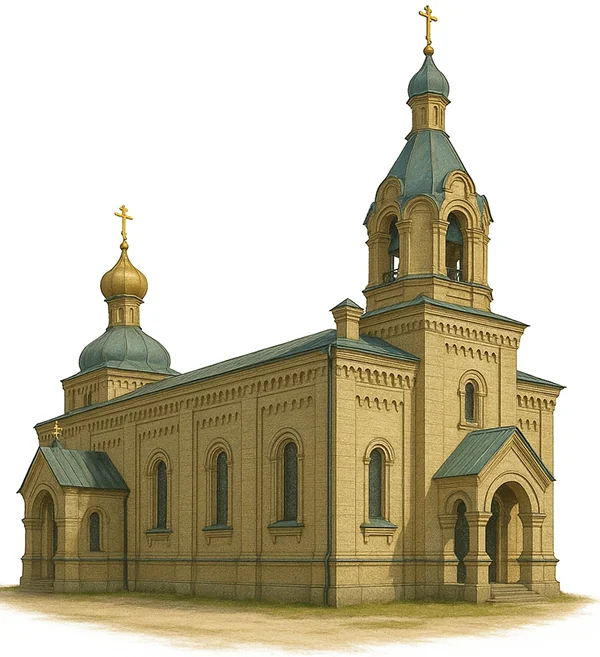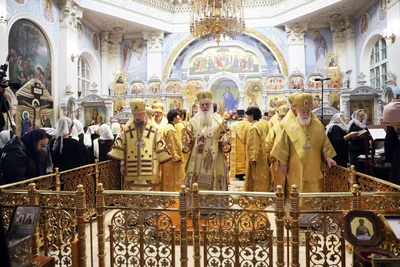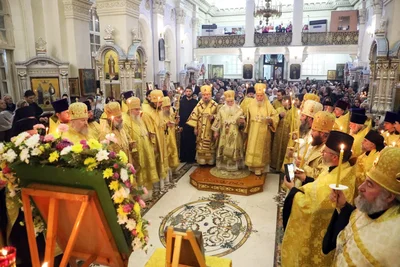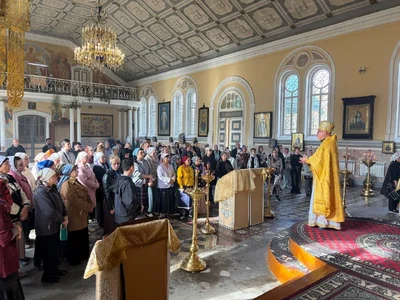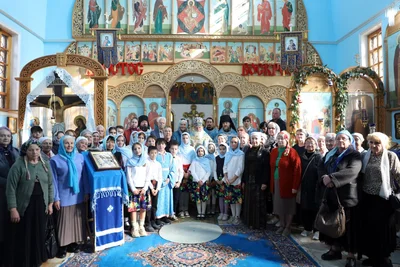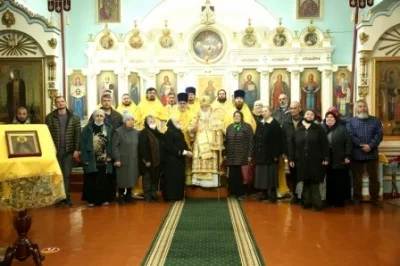
On 24 February 2021, the feast of Venerable Demetrius of Priluki, the head of the Central Asian Metropolitan District, Metropolitan Vikenty of Tashkent and Uzbekistan, celebrated the Divine Liturgy at the Church of the Protection of the Mother of God in Samarkand. The evening before, a polyeleos service was held at the Church of the Great Martyr George the Victorious in Samarkand.
His Eminence was assisted by the clergy of the Samarkand deanery.
After the Liturgy Metropolitan Vikenty addressed the worshippers with his archpastoral word, telling them about the life and labors of Venerable Demetrius of Priluki.
Venerable Demetrius was born at the beginning of the fourteenth century into the wealthy merchant family of the Pokropaevs in the village of Veslevo near Pereslavl-Zalessky. While still young he took monastic vows at the Goritsky Dormition Monastery, where he was also ordained a priest. Some time later he founded the cenobitic Monastery of St. Nicholas on the shore of Lake Pleshcheyevo and became its hegumen.
His Life tells of St. Demetrius's repeated visits to the Holy Trinity Monastery of St. Sergius and of his spiritual friendship with St. Sergius of Radonezh. Historians believe that the two saints met in 1354, when St. Sergius was in Pereslavl to be installed as hegumen by Bishop Athanasius.
The Life tells us that the saint was very handsome, but tried to hide his beauty by constantly wearing his cowl. So that his beauty would fade, he fasted continually, yet despite his efforts his face only grew brighter. He hardly ever conversed with laypeople and never with women. Once a certain woman who had heard of his beauty and chastity tried, against the saint's will, to see his face, after which she was punished with paralysis and was healed only through his prayer. The saint became known among the people: accepting an invitation from Grand Prince Dmitry Ioannovich of Moscow, he visited Moscow and baptized one of his sons (most likely Vasily I Dmitrievich, born on 30 December 1371, the grandfather of Grand Prince Ivan III, who greatly venerated St. Demetrius).
Particularly worth noting is the remarkable fact that both great holy men were friends and at the same time godfathers of the children of another famous Russian saint, the holy right-believing Grand Prince Dmitry Ioannovich Donskoy. One could recall many more saints who were contemporaries of these servants of God, many of whom knew one another or lived at roughly the same time and came from the same region. Even more interesting is that such facts, which abound in early Russian history, especially from the end of the fourteenth to the first half of the seventeenth century, eloquently testify that the concept of "Ancient Rus'" describes not so much a state as a unique and vast church community. Thus "Ancient Rus'" and "Holy Rus'" are truly synonyms.
While St. Demetrius was hegumen of the Monastery of St. Nicholas, in the summer of 1377, a copy was made of the Paraenesis, a collection of homilies of St. Ephrem the Syrian that was popular in early Rus'.
On the advice of Sergius of Radonezh, St. Demetrius decided to withdraw further from worldly fame. Taking with him only the monk Pachomius, he went to the northern lands. There, at the confluence of the Velikaya and Lezha rivers, not far from the village of Avnega (now the village of Voskresenskoye in the Gryazovets district of the Vologda region), the monks built a wooden church of the Resurrection of Christ, but they soon had to leave because of a conflict with the local population, who feared that these lands and the surrounding villages might soon become monastery property.
Therefore in 1371, on the left bank of the Vologda River at a bend of the river – "na Prilutse" – he built a wooden Cathedral of the Savior and founded the first cenobitic monastery in the Russian North.
The inhabitants of Vologda gladly agreed to help the ascetic in this work: the owners of the land intended for the monastery, the "most honorable man" Ilya Rakov and his neighbor Isidore, nicknamed Vypryag, gave this land to the monastery and even trampled down the winter crops that had sprouted on it themselves, so that construction of the monastery could begin without delay.
On the spot blessed by the saint a cross was erected, which was later kept in the monastery. It has not survived. However, the Cilician Cross, which comes from the Priluki Monastery and is dated to the first third of the sixteenth century, is well known. According to tradition, this enormous cross, 190 cm tall, was carried on his shoulder by St. Demetrius of Priluki from Pereslavl. Monastery tradition links the name and origin of the cross with Cilicia (Asia Minor), from where it was brought to Rus'. It is a richly decorated eight-pointed processional altar cross made of wood and covered with gilded basma and 84 small images skillfully carved from bone. According to the chronicle, in 1552 Hegumen Arseny carried this cross to Moscow for prayers before the Kazan campaign of Ivan IV Vasilyevich.
Other pious people of Vologda donated generously to the new monastery everything it needed: money, timber and liturgical vessels. Many monks followed their hegumen from the Monastery of St. Nicholas that he had founded earlier. As soon as the number of monks had grown sufficiently, the saint introduced the cenobitic rule, which in itself was a notable event, since most monasteries of the Novgorod lands resisted the introduction of the common life.
The Life in the Menaion also tells of the saint's many spiritual gifts: the gifts of unceasing prayer, of clairvoyance and of working miracles. St. Demetrius told the brethren of the death of Grand Prince Dmitry Ioannovich Donskoy, which occurred on 19 May 1389, several days before the news reached Vologda.
The saint warned his brother, who had come from Pereslavl-Zalessky for his blessing, not to go trading among the pagan Ests and Sami. The brother did not heed the advice and perished.
St. Demetrius's monastery, which stood on the road to Beloozero, received pilgrims and fed the hungry. Sometimes, unbeknownst to the brethren, the saint gave alms from the donations made to the monastery and defended those who had suffered "from the violence of evil judges." Throughout his life the saint was a strict faster: at the common meal he took only a pot of hot water ("ukrop") and a small prosphora. He never tasted fish or wine, even on great feasts, although the Typikon permitted them. All year round the saint deliberately wore the same old sheepskin coat, suffering bitterly from the cold in winter and from the heat in summer.
The saint departed to the Lord in deep old age, having foretold his repose, on 11 February 1406 (the year is approximate), and was buried by the south wall of the Cathedral of the Savior (the present stone church was consecrated in 1542). Before his death he blessed his disciple Pachomius to become hegumen.
After the death of the saint of God the whole monastery was filled with a delicate fragrance. In his Life the day of the saint's repose is given, as was customary in Rus', without the year. The year of his death is determined by the date of the first posthumous miracle.
"Venerable Demetrius sought neither comfort nor prosperity in this world, but sought out the places least comfortable for living, so that in this discomfort he might glorify Christ and preserve that precious gift of Christ – the faith," noted Metropolitan Vikenty.
In his sermon the archpastor particularly drew the attention of the faithful to the fact that Orthodox Christians have begun to prepare for Great Lent, and shared his thoughts on how these preparatory weeks should be spent:
"Our Lord and God said, when He created man, that he was to cultivate this earth, that is, to make it more beautiful, brighter and more perfect. And we see that our sins do not cultivate our earth or make it better, but destroy it all the more.
In Holy Scripture we hear the words that creation groans and labors with birth pangs, awaiting deliverance, because mankind, unfortunately, does not live piously, does not live in God, in fulfillment of the will of God, does not live by that pearl of Christ which we should acquire and with which we could cultivate and adorn this world. Virtues adorn this world. And they transfigure our inner world. Through this inner world we must be able to transfigure the outer world.
We always pray for the peace of the whole world. God grant that our peace, the peace of the inner heart, be manifested outwardly. And only when there is peace within us can we hope that there will be peace in the outer world among the people around us.
We must be a light to this world. And we must shine with our virtues, which bring peace to the whole world. It is very important that we acquire this peace in our souls."
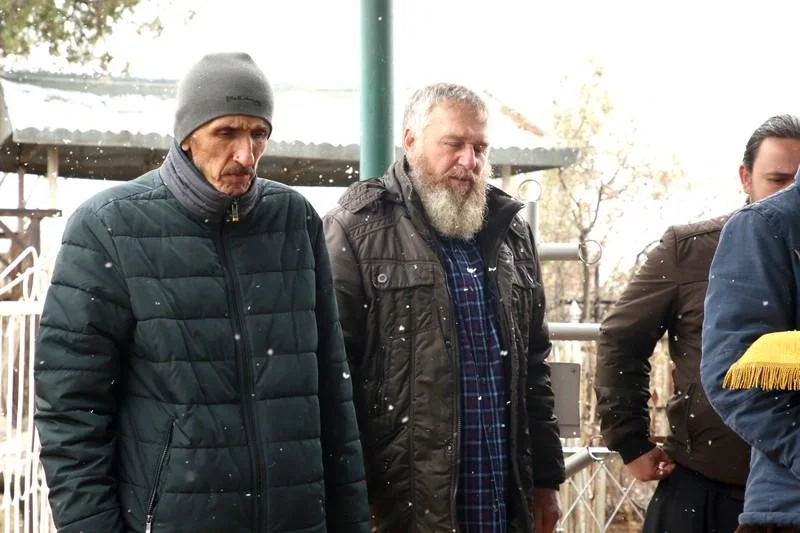
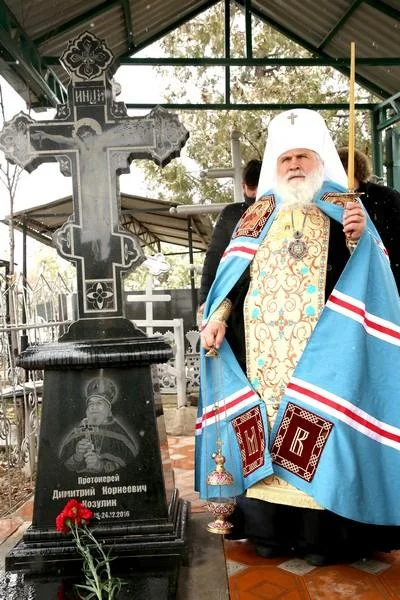
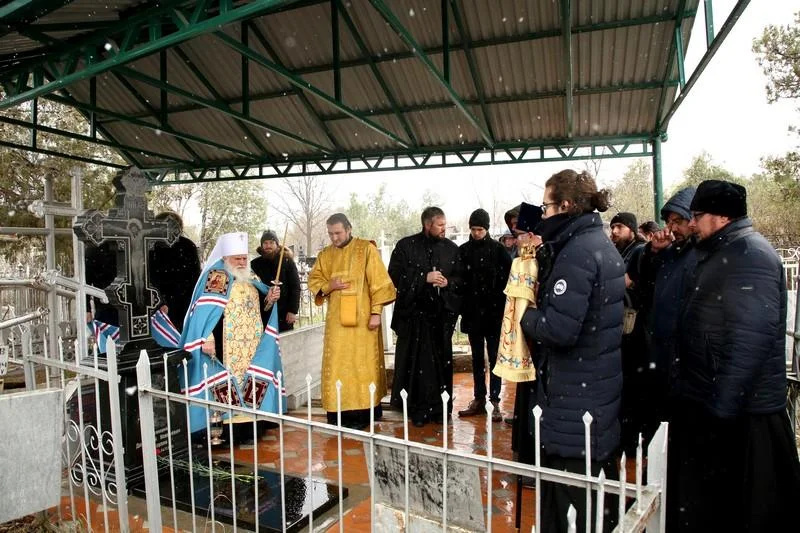
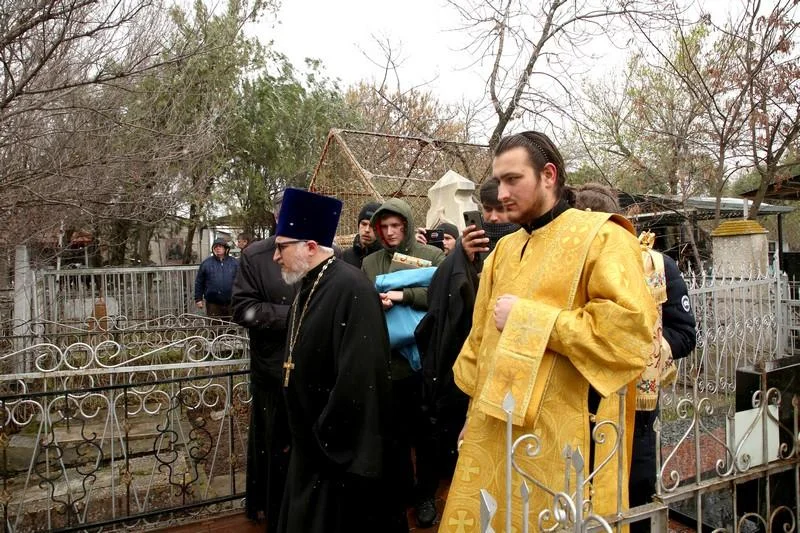
After the sermon Metropolitan Vikenty went to the Orthodox cemetery of Samarkand, where he served a litiya for the departed at the graves of Archimandrite Seraphim (Sutorikhin) and Archpriest Dimitry Kozulin.