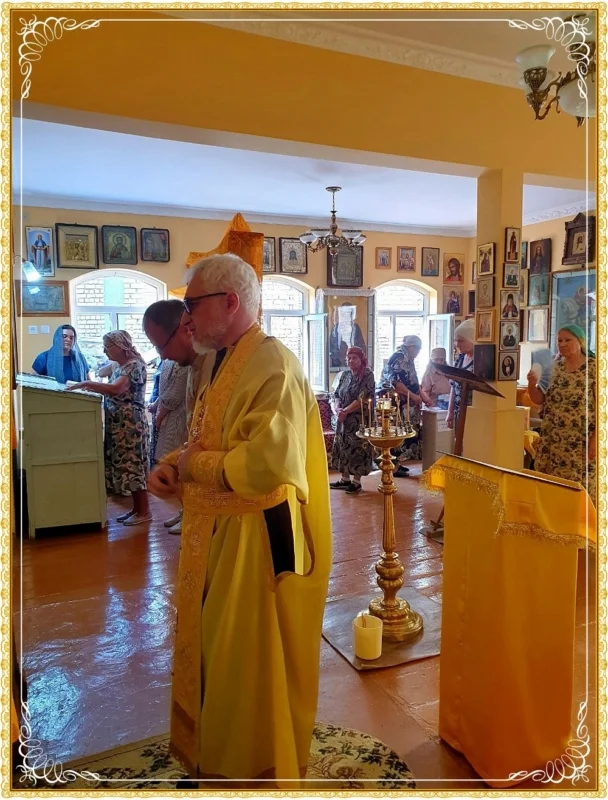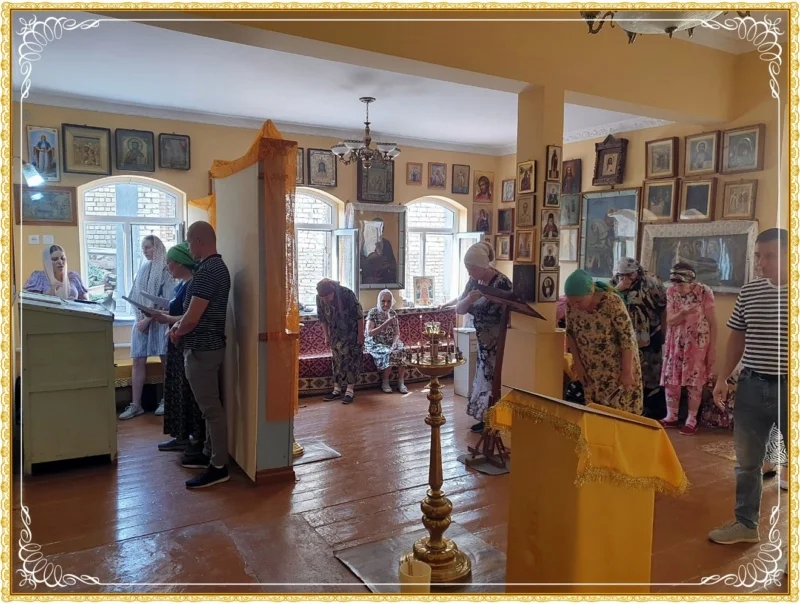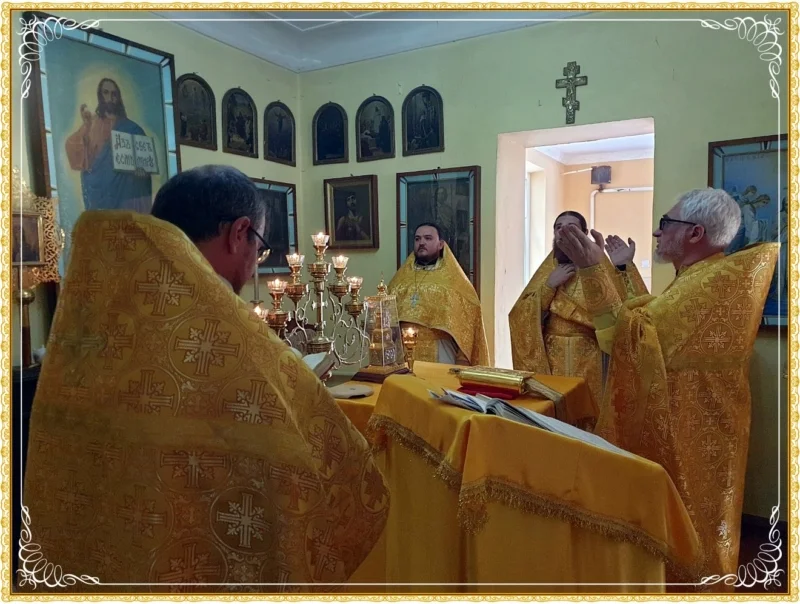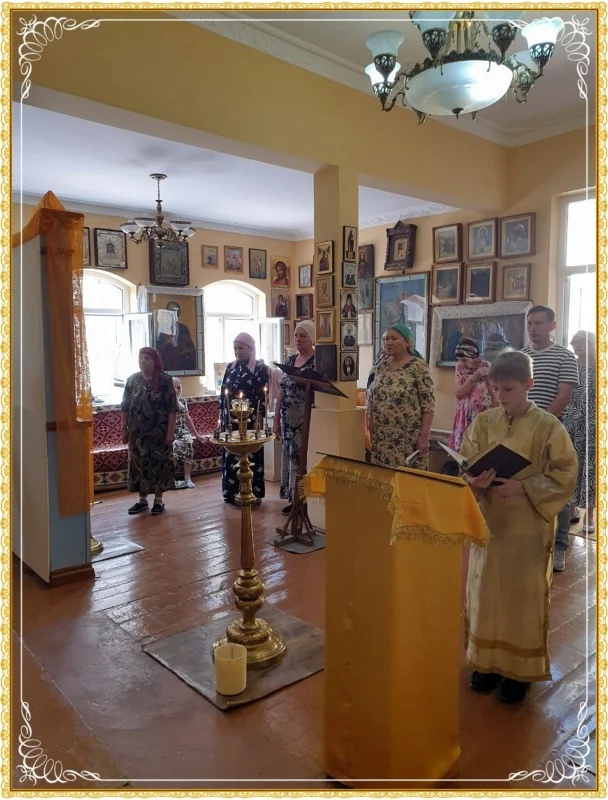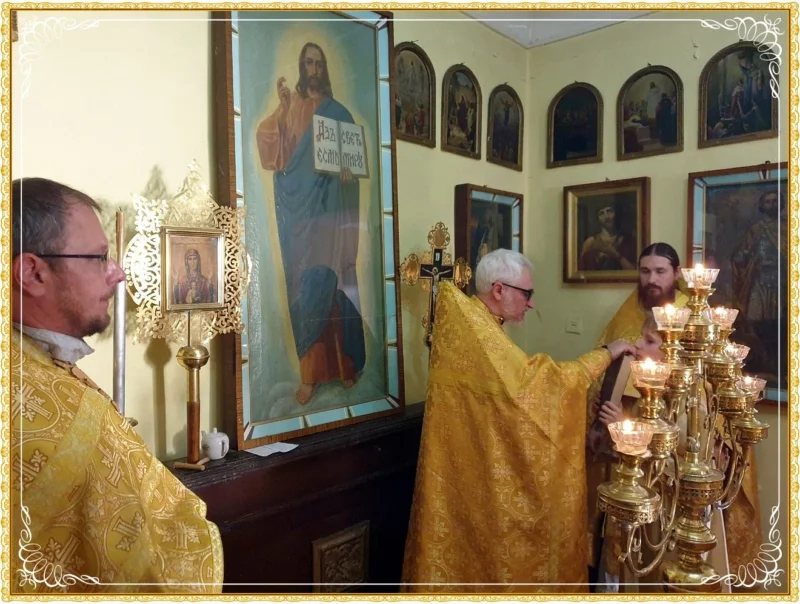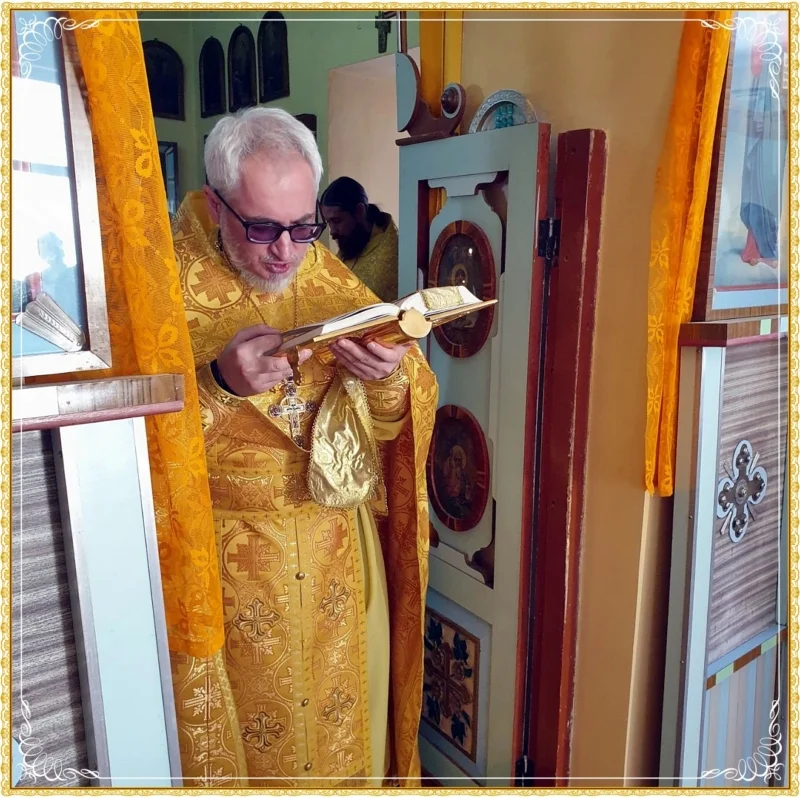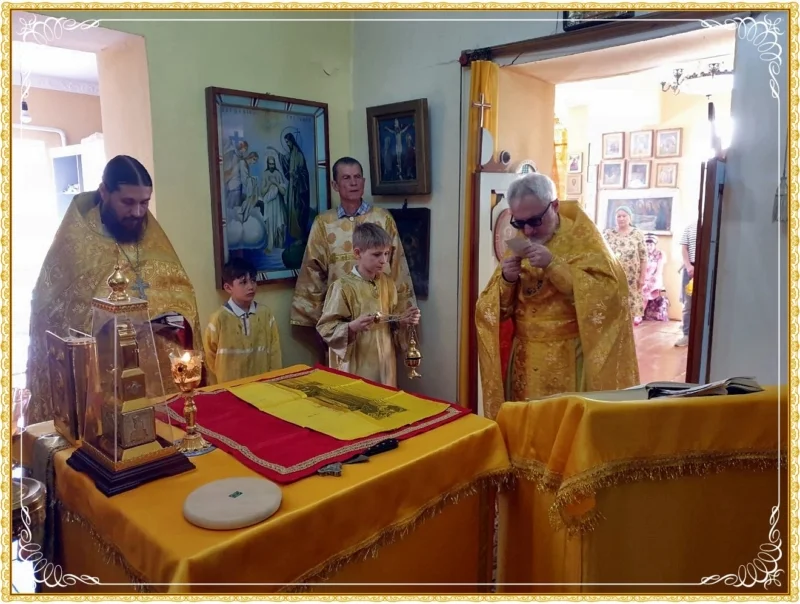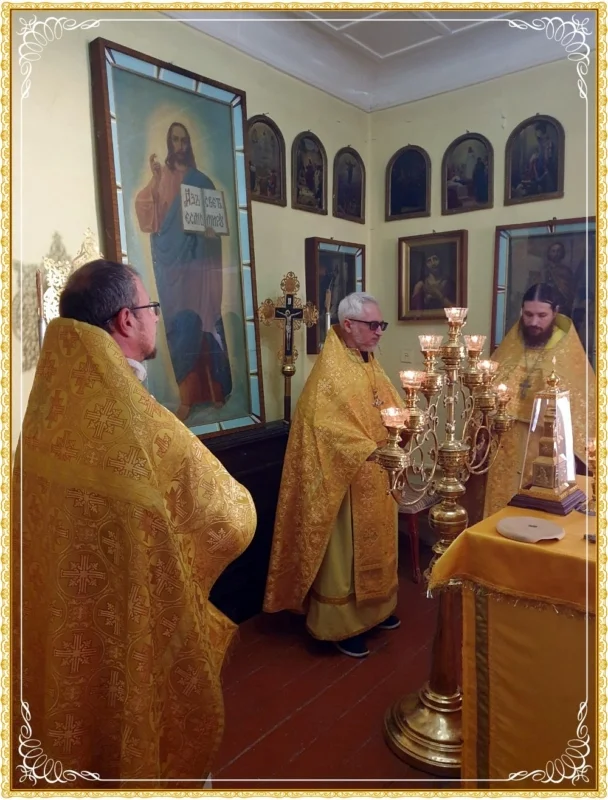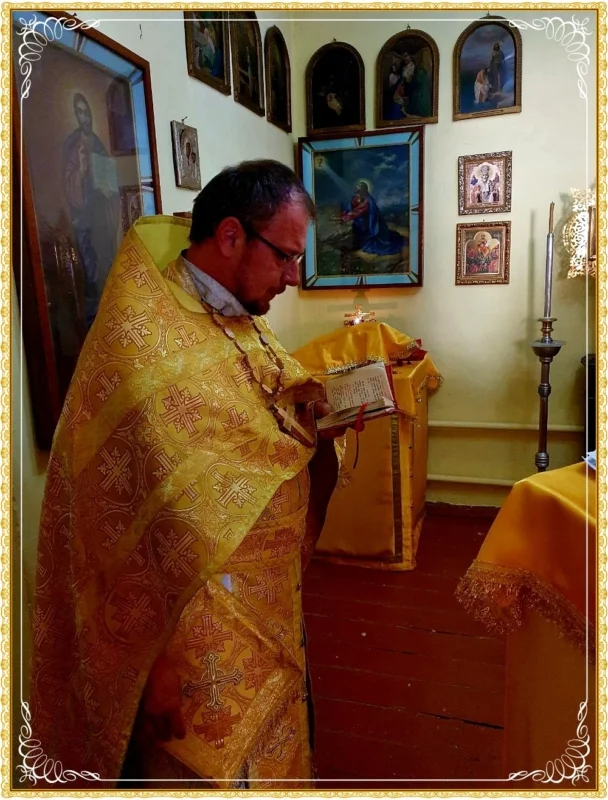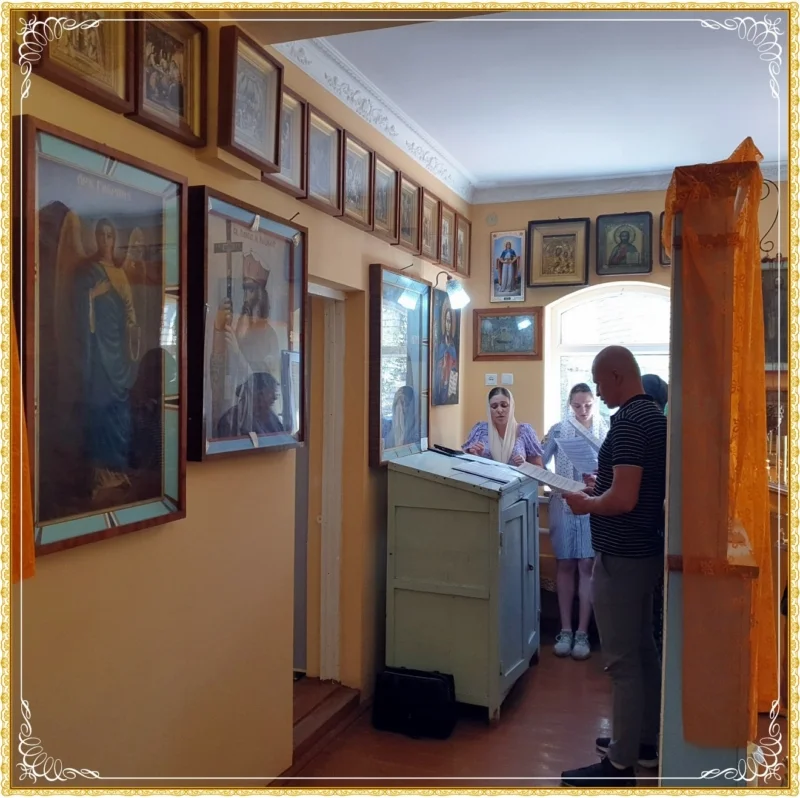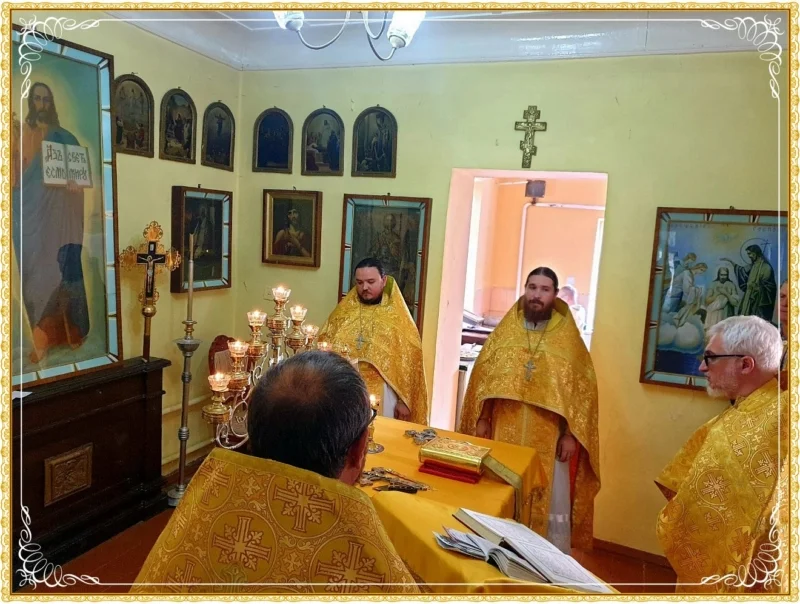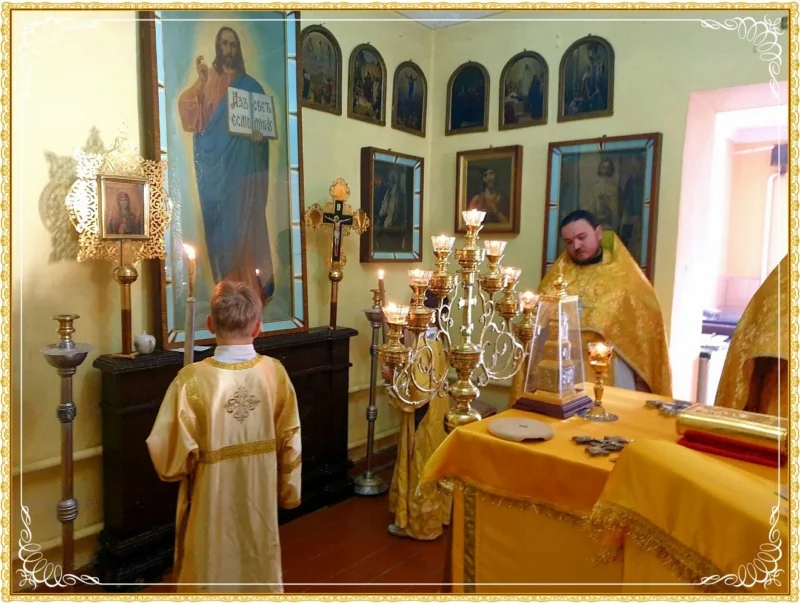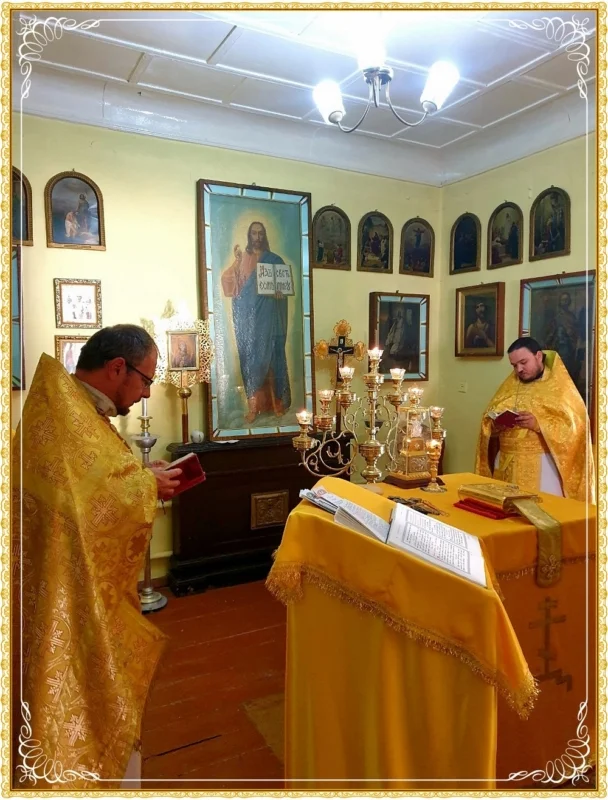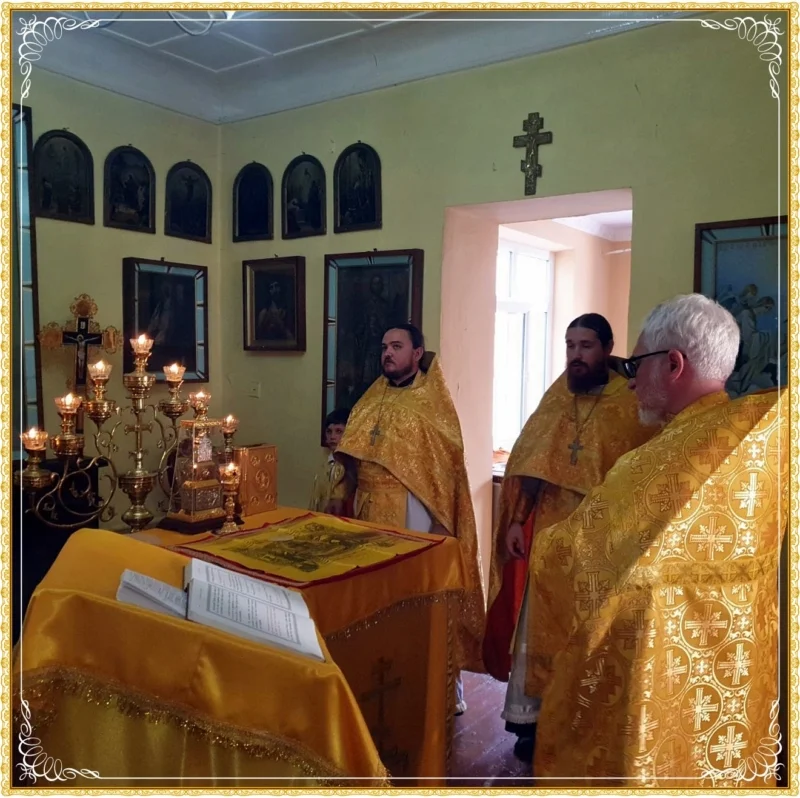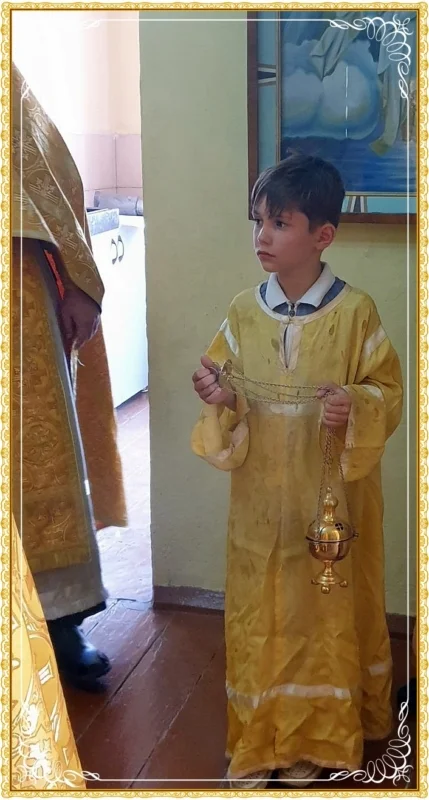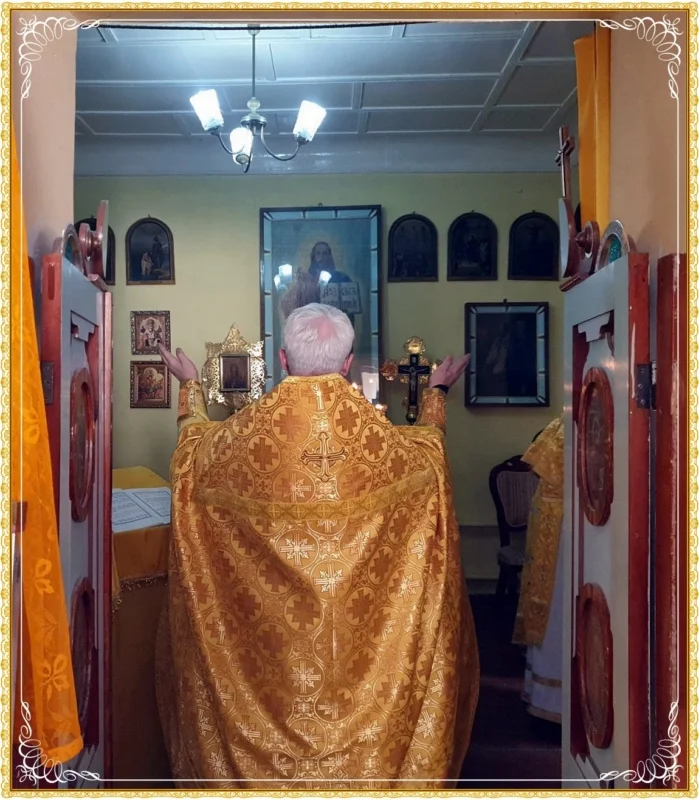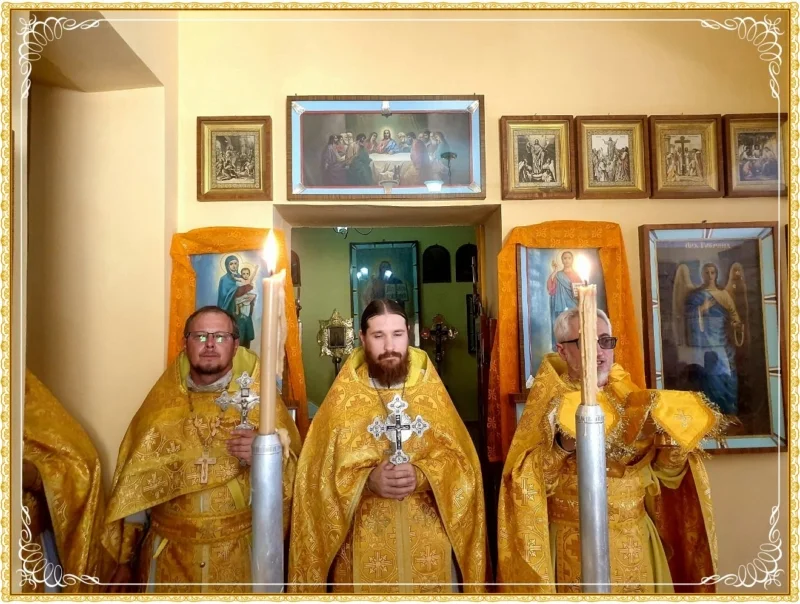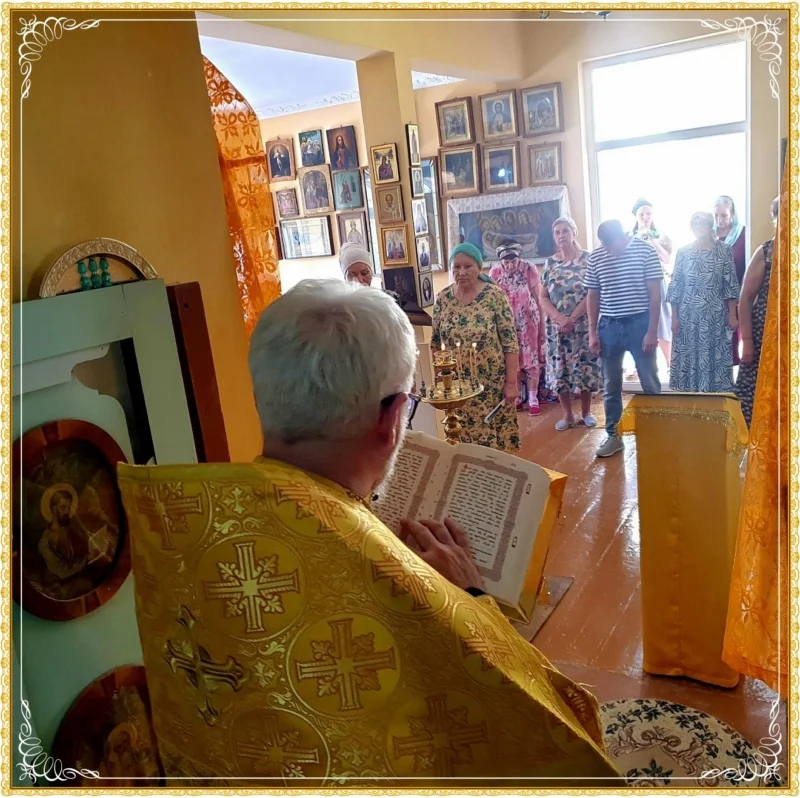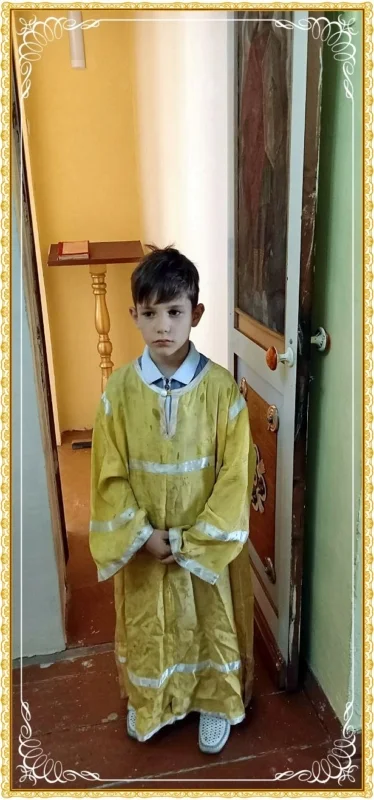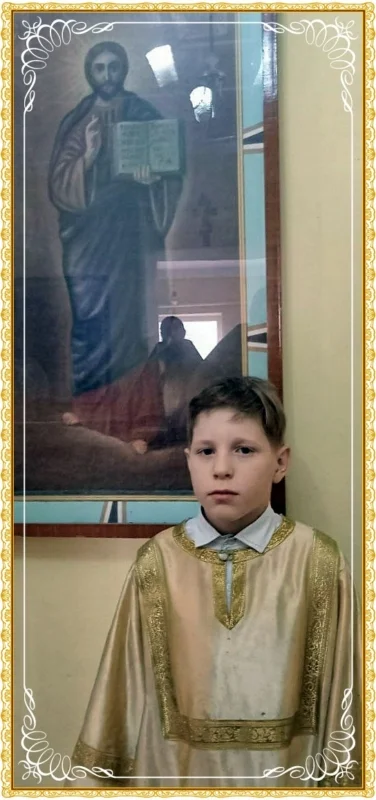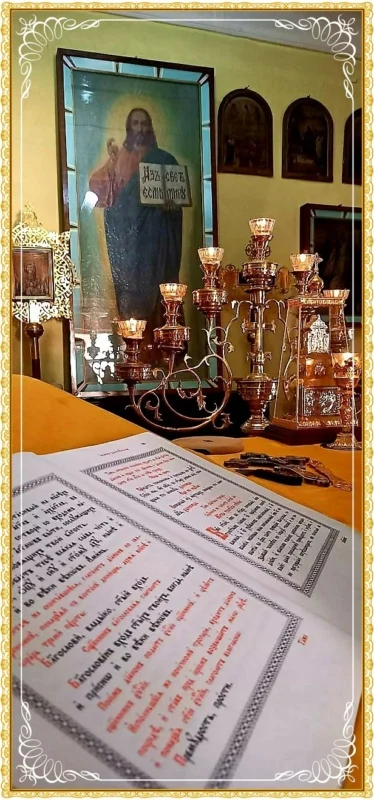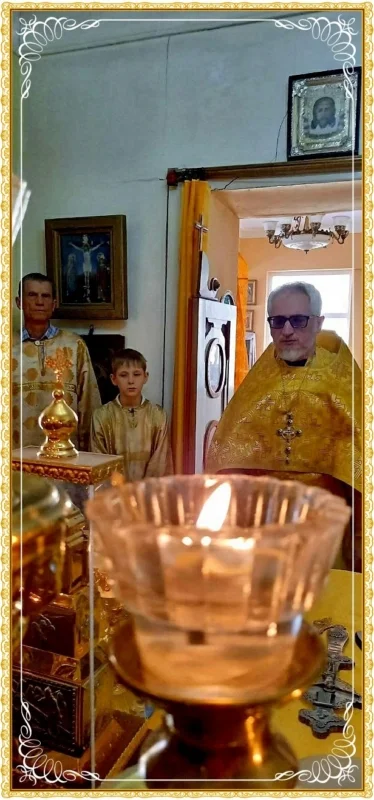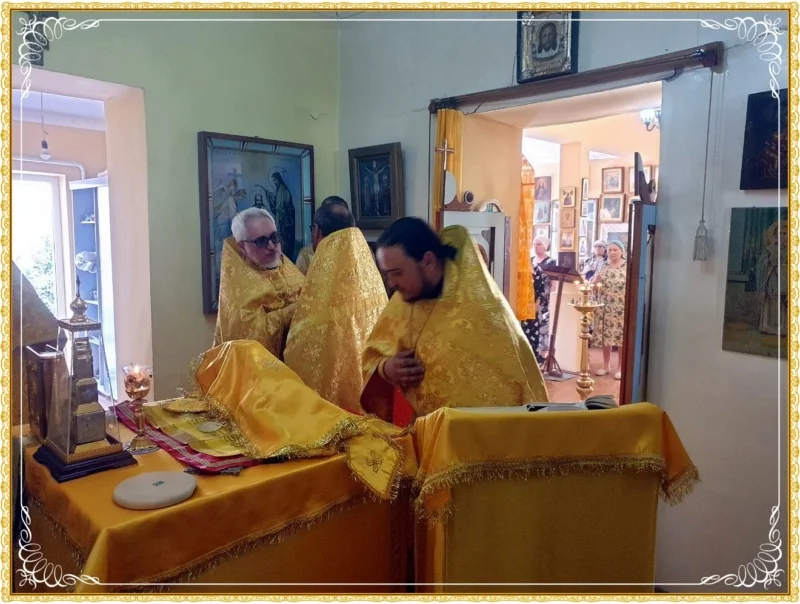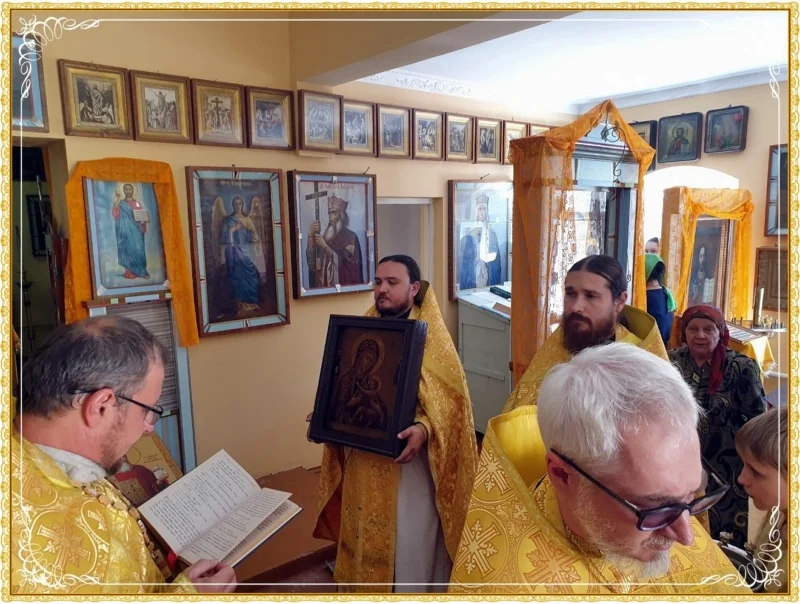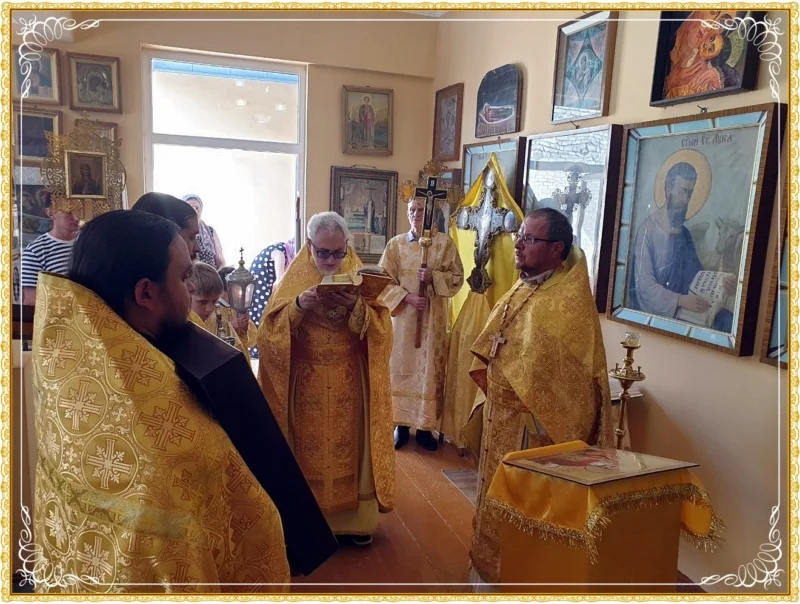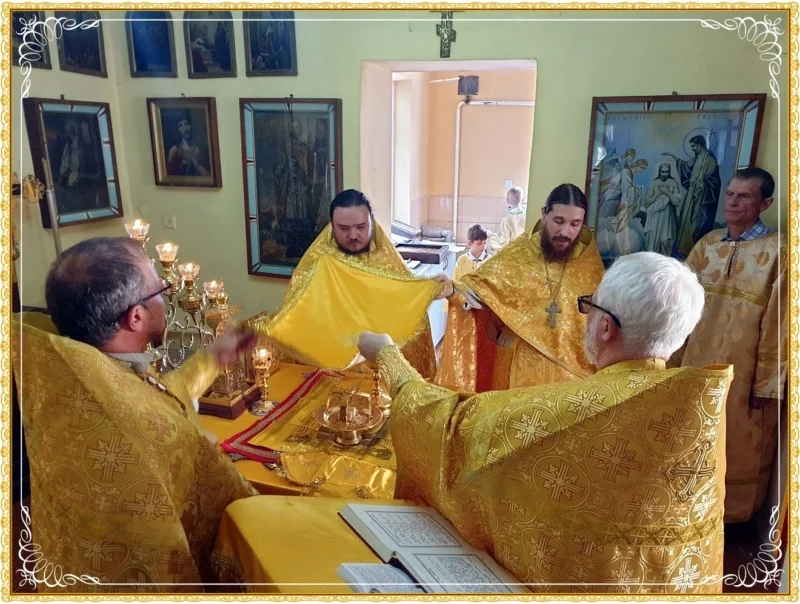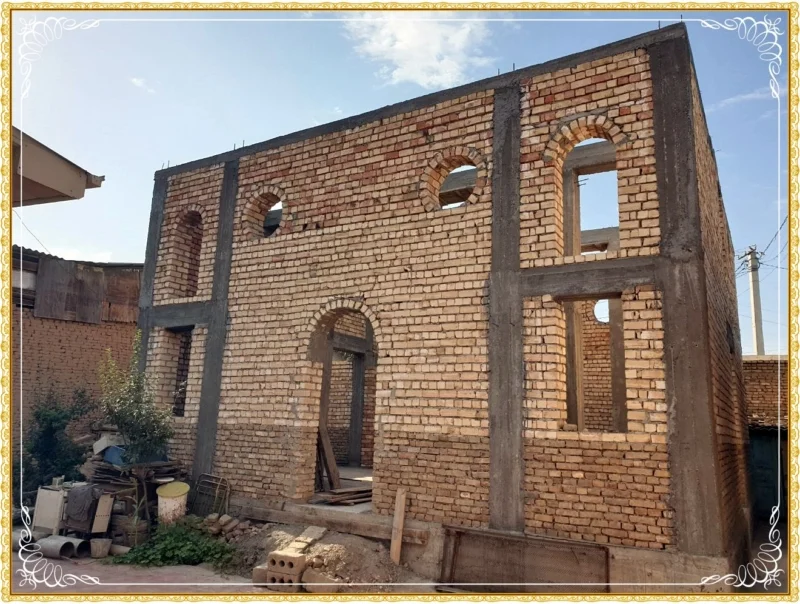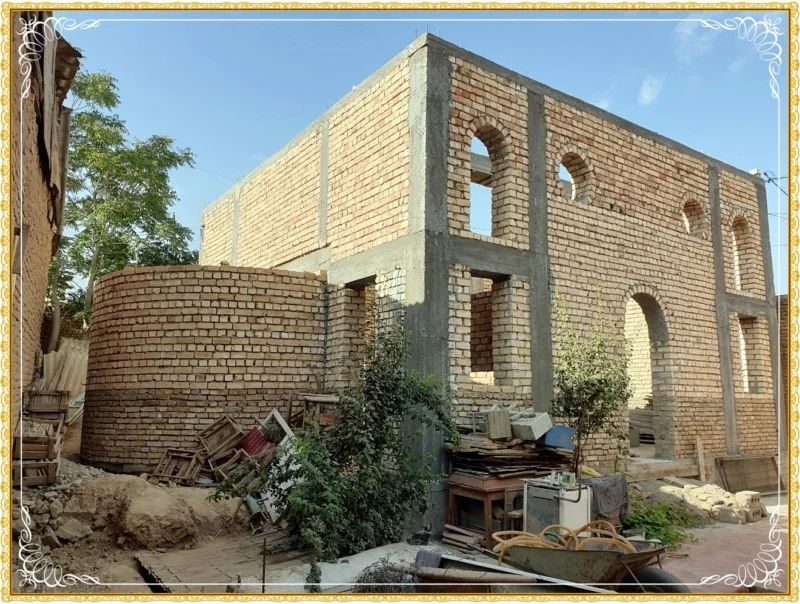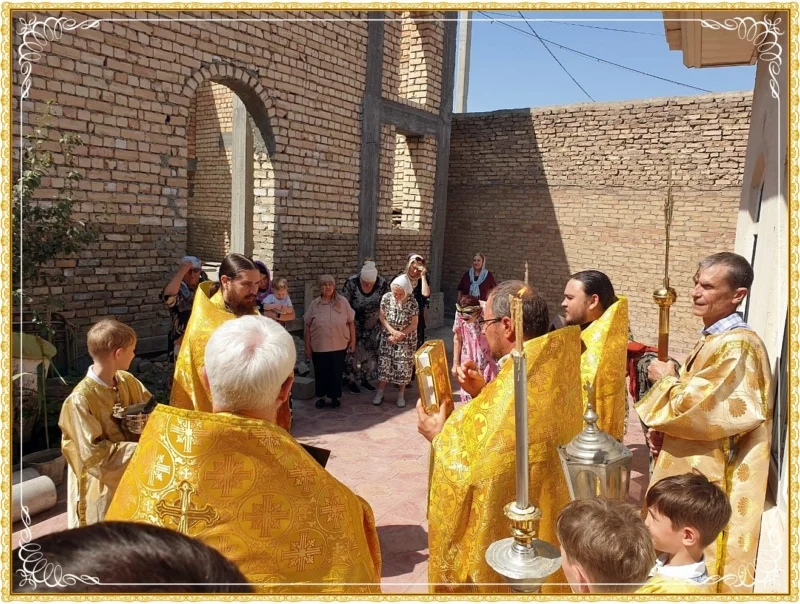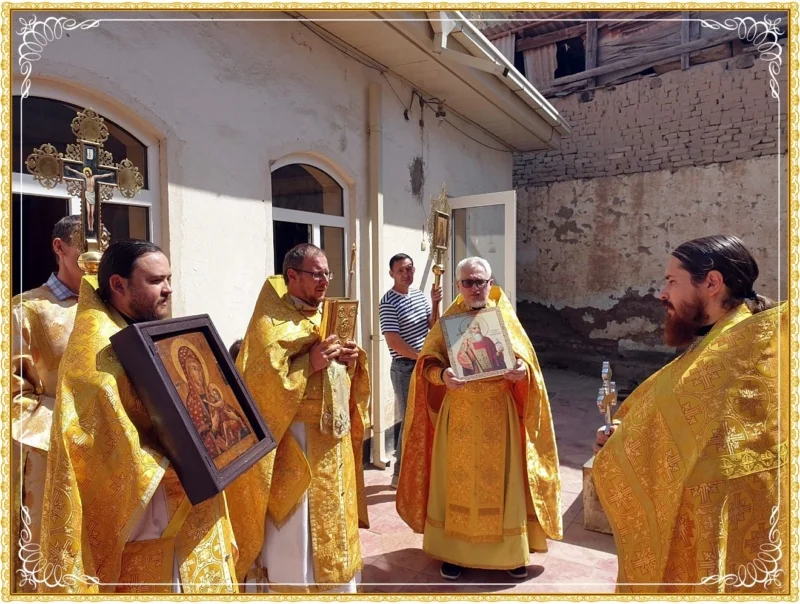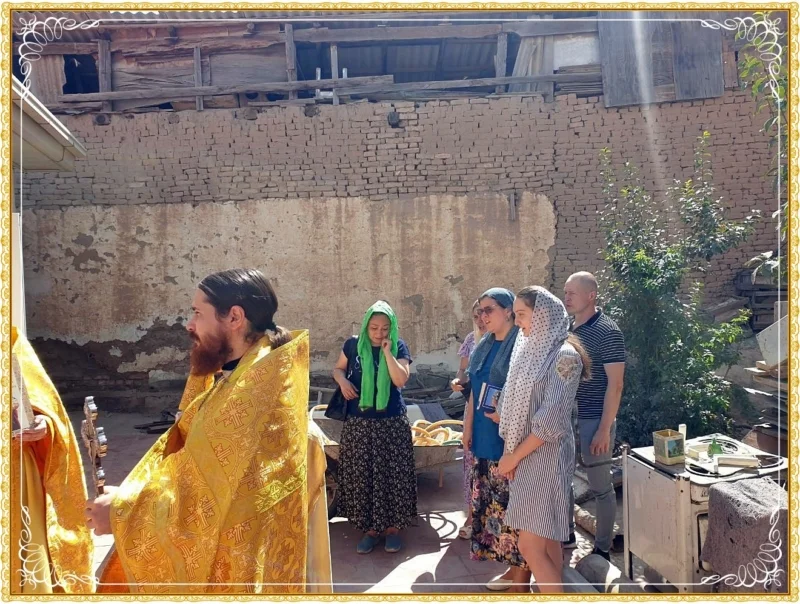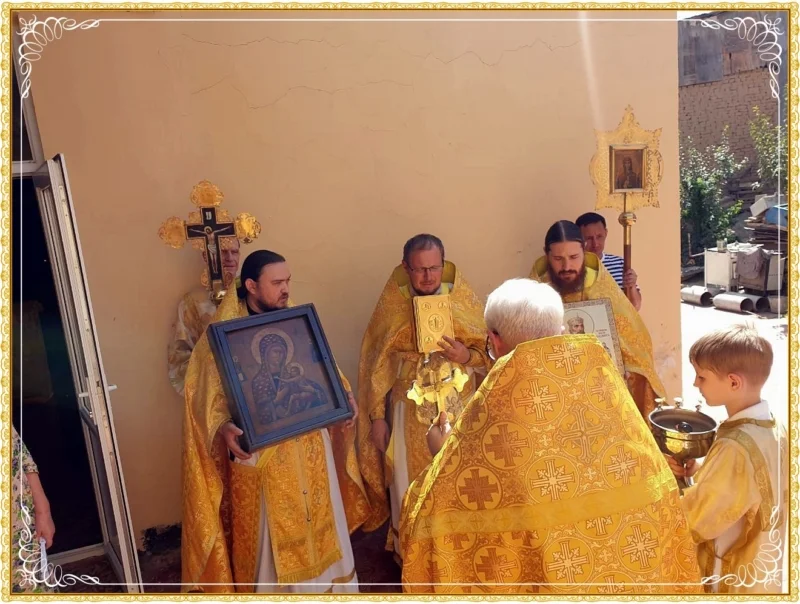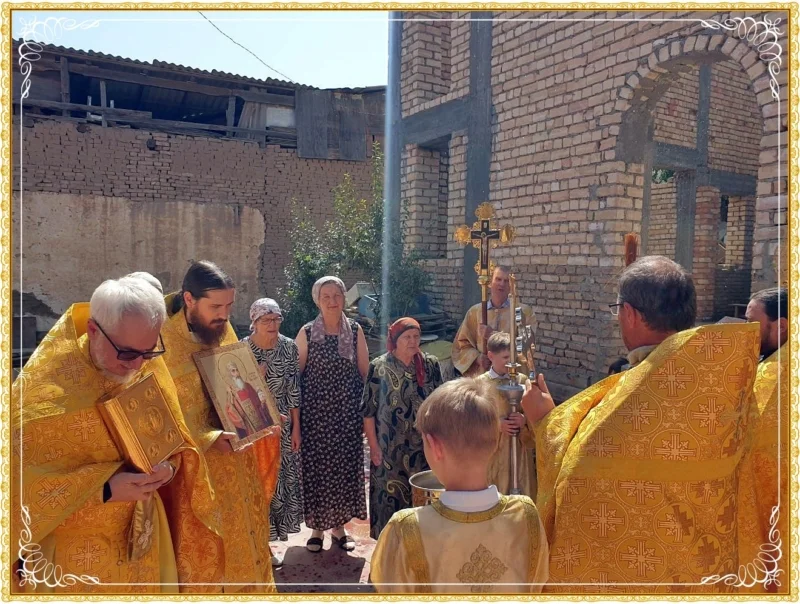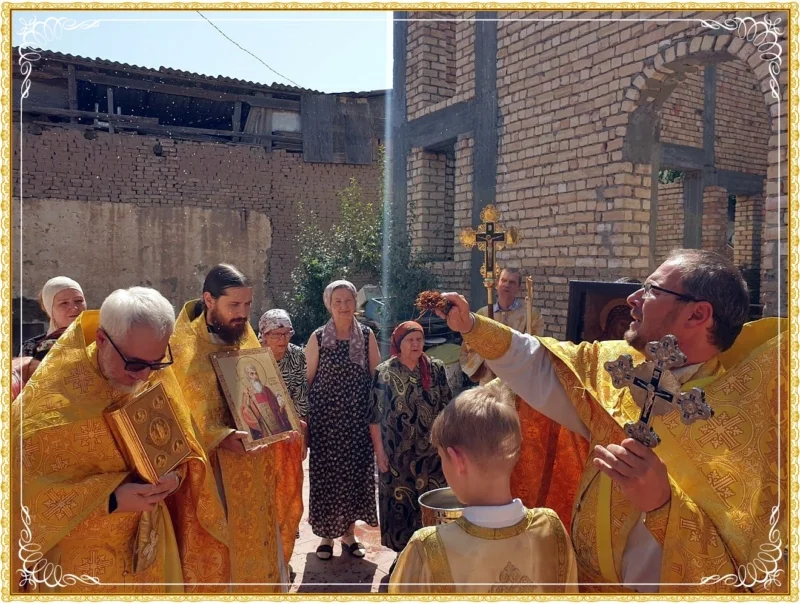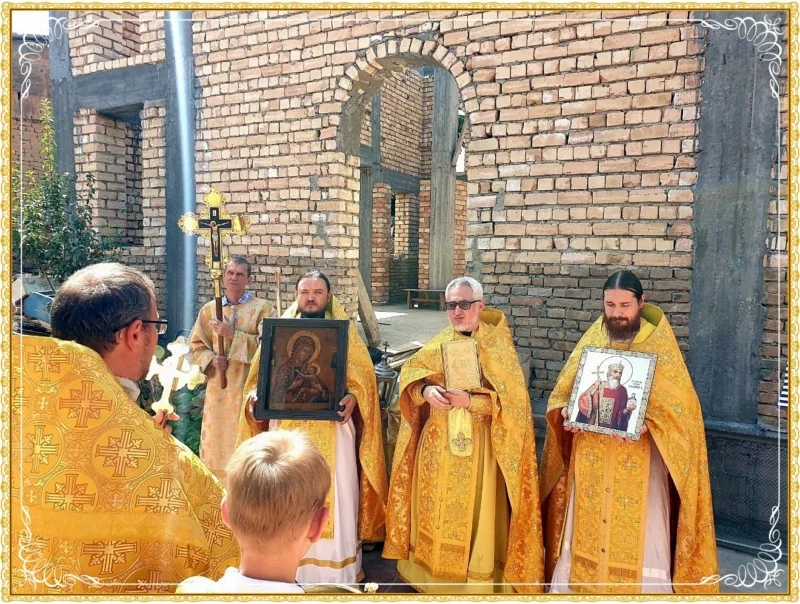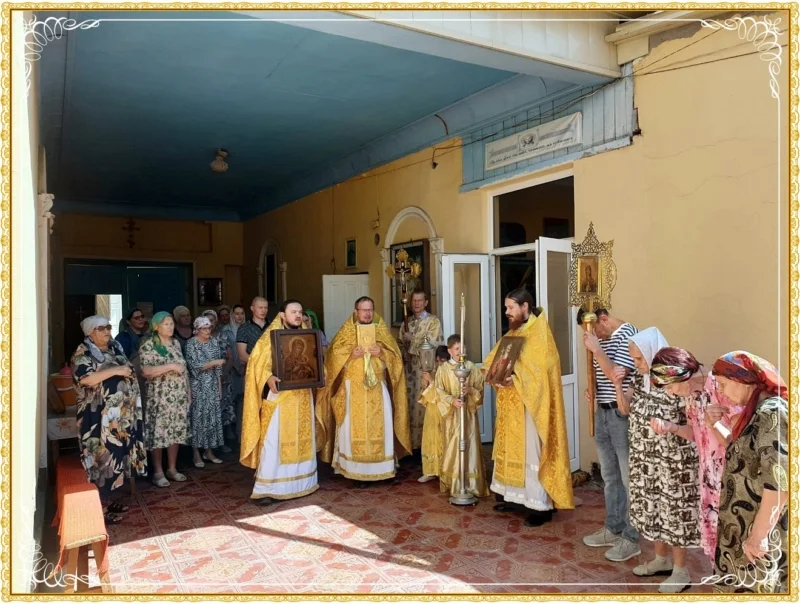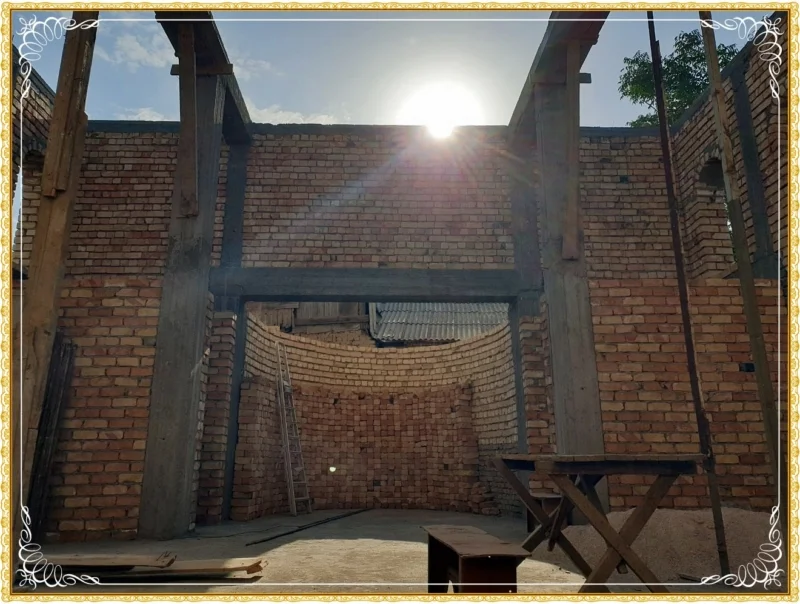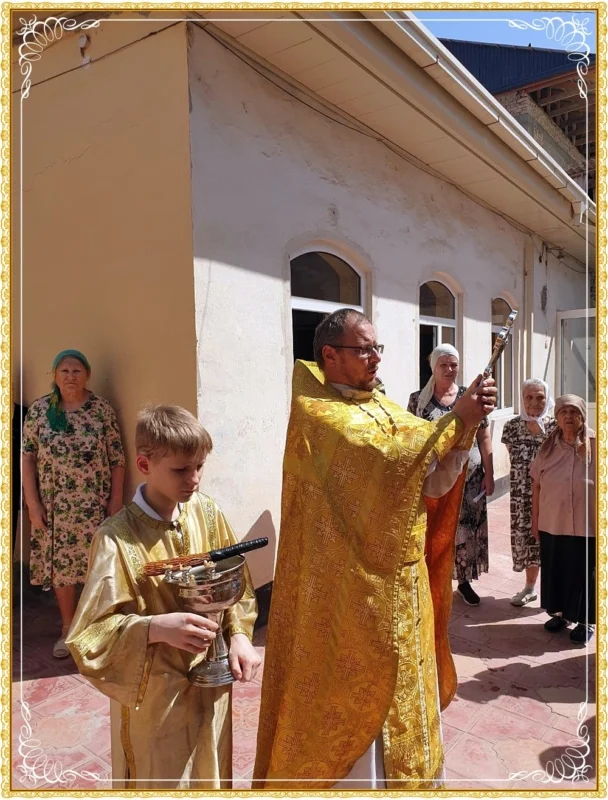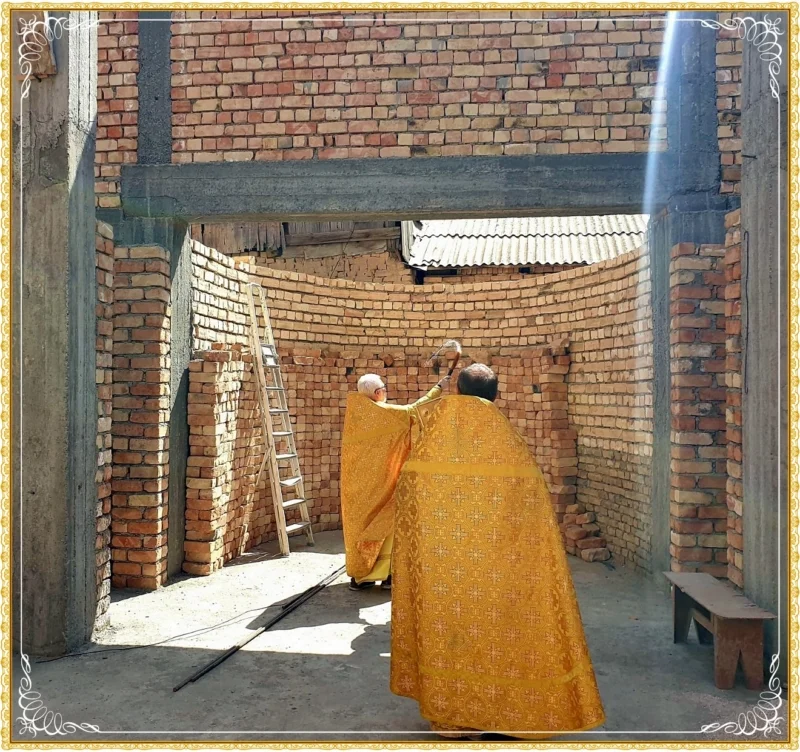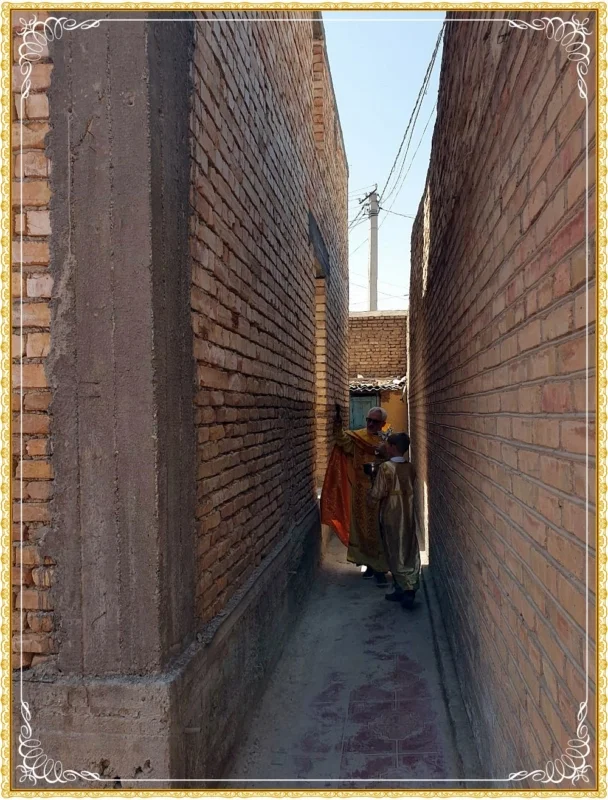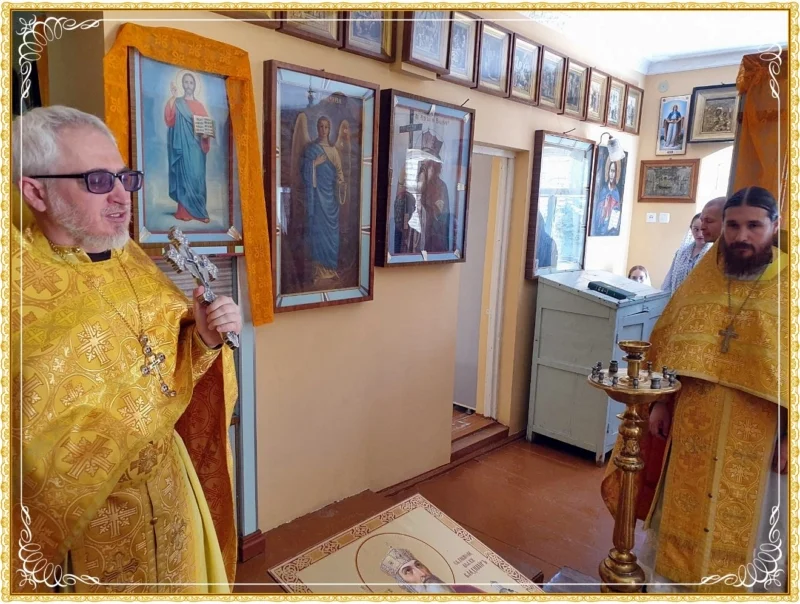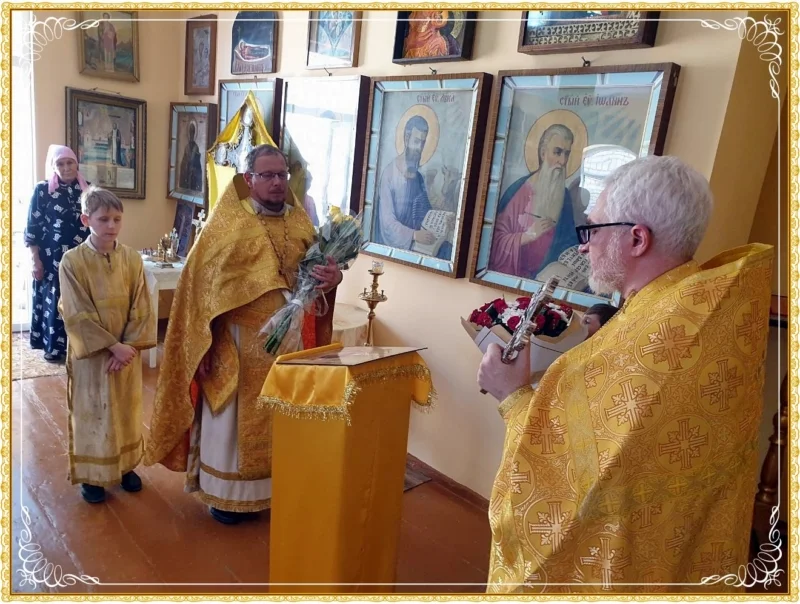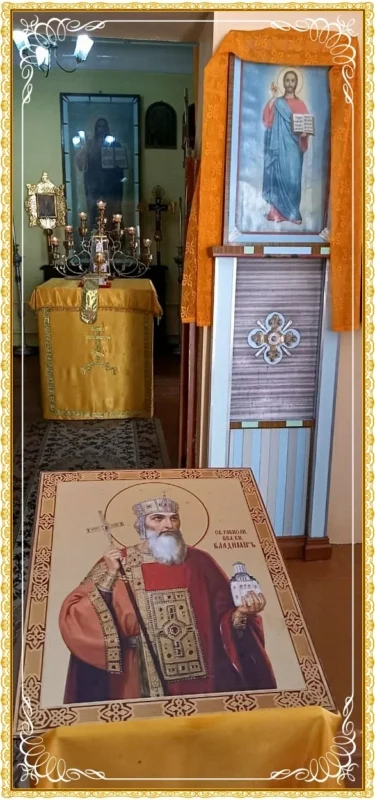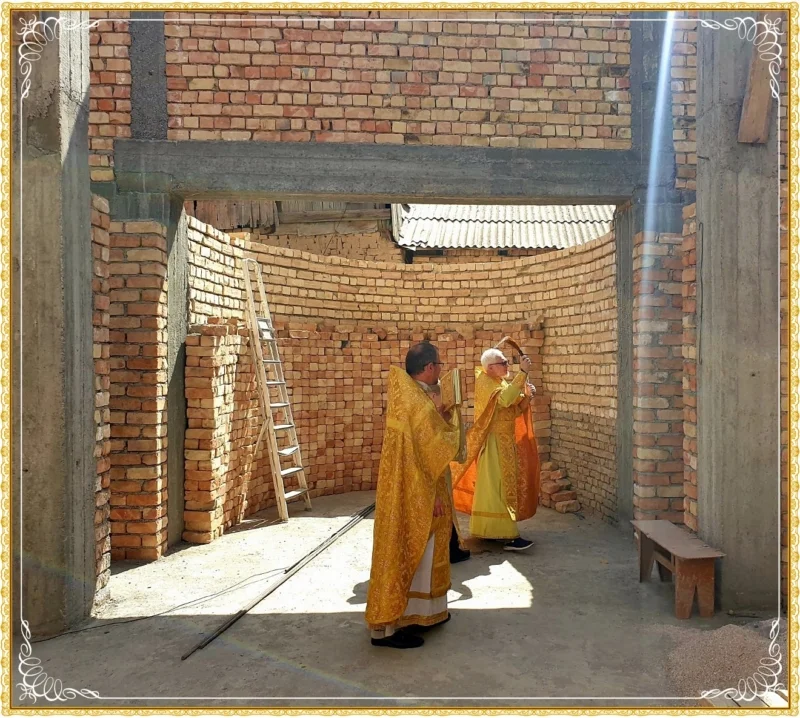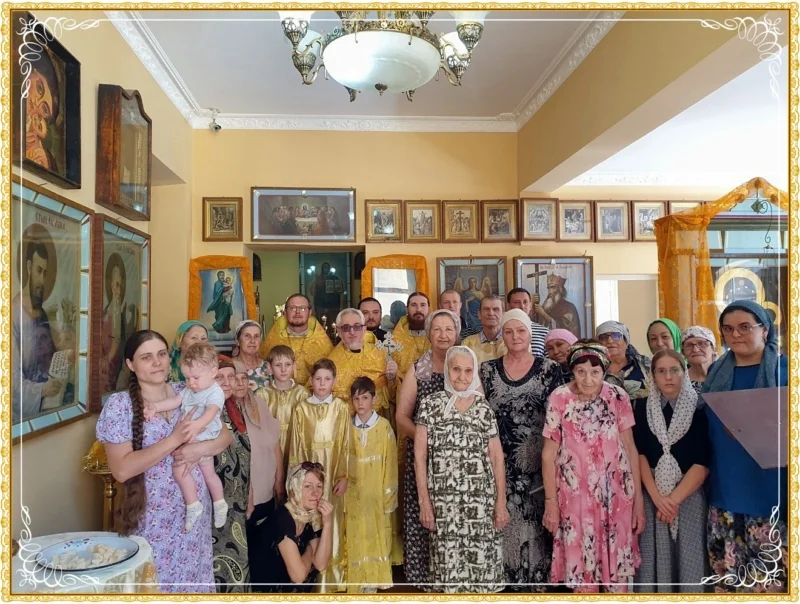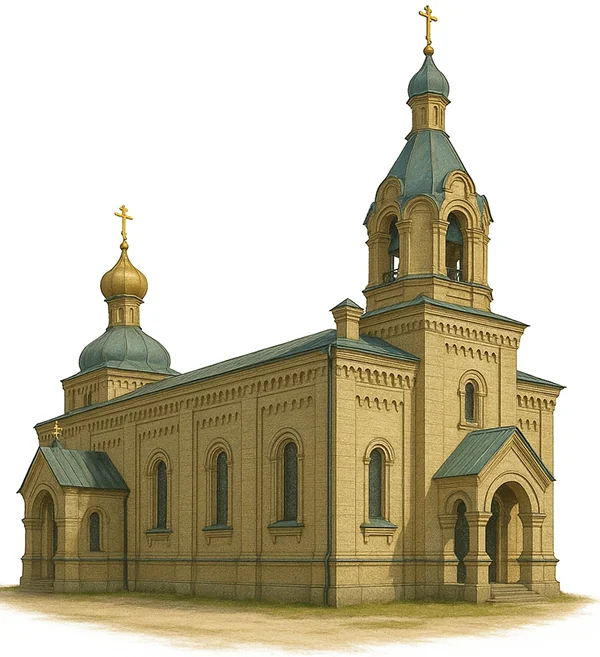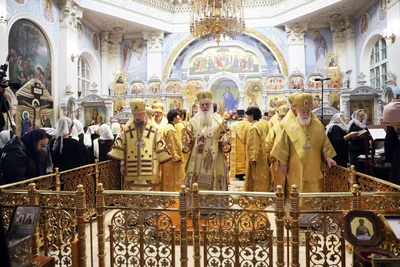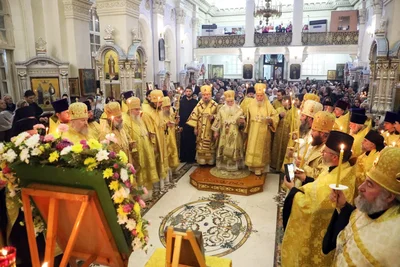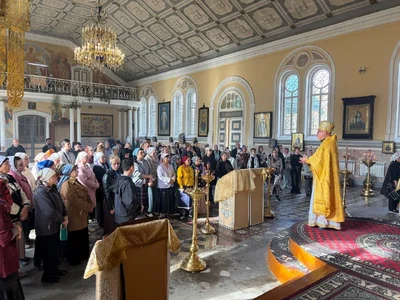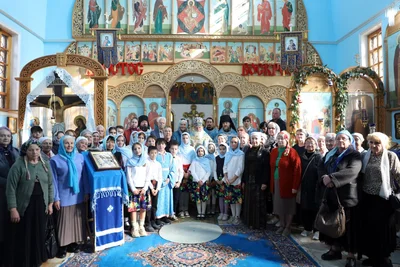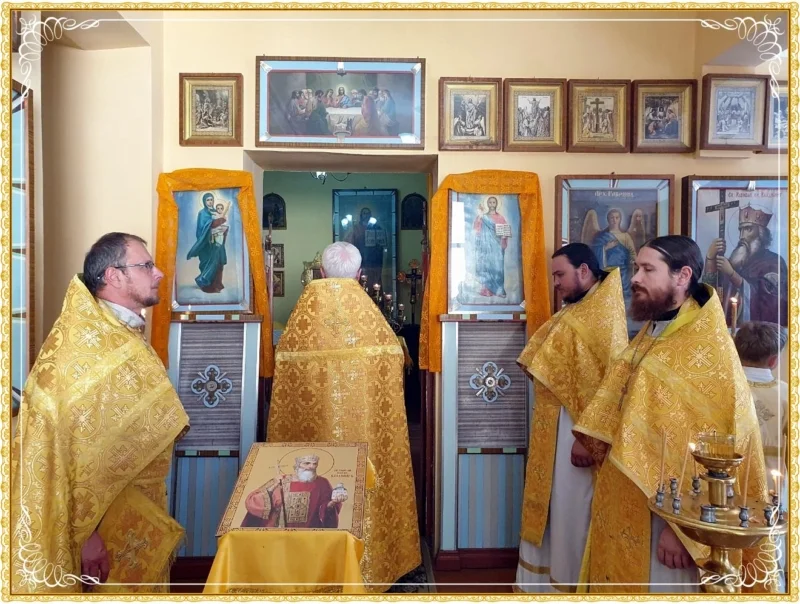
On 28 July, the feast of Holy Equal-to-the-Apostles Grand Prince Vladimir, a festive Divine Liturgy was celebrated for the patronal feast of the Church of St. Vladimir in Kattakurgan.
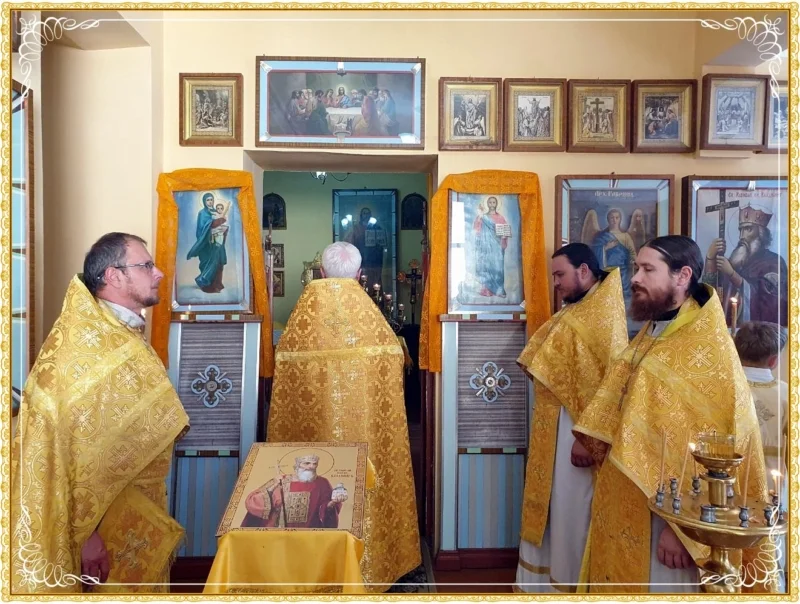
The Divine Liturgy was led by the dean of the Samarkand Deanery and rector of the Church of the Protection of the Mother of God, Archpriest Roman Zagrebelny.
He was assisted by:
the rector of Saint Alexius Cathedral, Priest Igor Babakov;
the rector of the Church of St. George, Priest Timofei Fishelev;
Priest Oleg Lin.
Few names on the tablets of history can compare in significance with the name of the holy Equal-to-the-Apostles Vladimir, the Baptizer of Rus', who determined for centuries to come the spiritual destiny of the Russian Church and the Russian Orthodox people.
Prince Vladimir was the son of Sviatoslav by the Drevlian princess Malusha. He was born in 963. Vladimir was brought up by his mother's brother, the pagan Dobrynya. In 972 Prince Vladimir began to rule Novgorod. In 980, at the height of the war between the brothers, Vladimir marched on Kiev, where his elder brother Yaropolk reigned. Having defeated his brother, Vladimir began to rule in Kiev. He conquered Galicia, subdued the Vyatichi, fought the Pechenegs, and extended the borders of his realm from the Baltic Sea in the north to the Bug River in the south. He had five wives and numerous concubines. On the hills of Kiev he set up idols, to which human sacrifices began to be offered. It was then that the Varangians Theodore and John died for Christ. The circumstances of their death made a strong impression on Vladimir, and he began to doubt the truth of the pagan faith.
At the prince's invitation, preachers from various countries came to Kiev: envoys from the Muslim Bulgars who lived beyond the Volga, Latin Germans, Jews and Greeks. The prince asked them about their faith, and each offered him his own. But the strongest impression on him was made by an Orthodox Greek preacher, who at the end of his discourse showed him a picture of the Last Judgement. On the advice of his boyars, Vladimir sent ten wise men to test on the spot whose faith was best. When these Russian envoys arrived in Constantinople, the magnificence of the Church of Hagia Sophia, the harmonious singing of the court choir and the solemnity of the patriarchal service moved them to the depths of their souls. "We knew not," they later told Vladimir, "whether we were on earth or in heaven." And the boyars at once remarked to him: "If the Greek faith were not better than other faiths, your grandmother Olga, the wisest of people, would not have accepted it."
Vladimir decided to be baptized, but did not want to subject Rus' to the Greeks. Therefore, soon after the envoys returned, Vladimir went to war against the Greeks and took Chersonesus. From there he sent envoys to Constantinople to the emperors Basil and Constantine, demanding the hand of their sister, Princess Anna. They replied that the princess could be the wife only of a Christian. Then Vladimir declared that he wished to accept the Christian faith. But before the bride arrived in Chersonesus, Vladimir was struck with blindness.
In this state, like the Apostle Paul, he came to know his spiritual infirmity and prepared himself for the great sacrament of rebirth. The princess, on arriving in Chersonesus, advised him to hasten his Baptism. Vladimir was baptized (in 988) and given the name Basil. As he came out of the font, he received sight in the eyes of both soul and body, and in an abundance of joy exclaimed: "Now I have come to know the true God!"
Having returned to Kiev accompanied by priests from Korsun and Greece, Vladimir first of all invited his twelve sons to be baptized, and they were baptized in one spring, known in Kiev as Khreshchatyk. After them many boyars were baptized. Meanwhile Vladimir set about destroying the idols, and the chief of them, the idol of Perun, was tied to a horse's tail, dragged ignominiously down the hill and thrown into the Dnieper. The overthrow of the idols was followed by the instruction of the people through the preaching of the Gospel. Christian priests gathered the people and taught them the holy faith. Finally, St. Vladimir proclaimed in Kiev that all the inhabitants, rich and poor, should come to the river on an appointed day to receive Baptism. The people of Kiev hastened to fulfil the prince's will, reasoning thus: "If the new faith were not better, the prince and the boyars would not have accepted it."
On the appointed day the inhabitants of Kiev gathered on the bank of the Dnieper. Vladimir himself came there with Christian priests. All the people of Kiev entered the river, some up to the neck, some up to the chest; adults held infants in their arms; the priests on the bank read the prayers, while St. Vladimir, filled with rapture, prayed to God and commended himself and his people to Him.
After Kiev and its surroundings, the holy faith was planted in Novgorod. The first Metropolitan of Kiev, Michael, arrived there in 990 with six bishops, accompanied by Dobrynya, St. Vladimir's uncle. First they overthrew the idol of Perun, dragged it along the ground as in Kiev and cast it into the Volkhov River; after that they catechized and baptized the people. From Novgorod Metropolitan Michael, accompanied by four bishops and Dobrynya, came to Rostov, where he baptized many, ordained presbyters and built a church. Paganism, however, held on in Rostov for a long time, so that the first two bishops of Rostov, Saints Theodore and Hilarion, after much struggle against paganism, were forced to leave their see. Much labour for the eradication of paganism and the establishment of the holy faith was undertaken here by the holy bishops Leontius and Isaiah and by Venerable Abraham, archimandrite of the Rostov monastery he founded.
In 992 the holy faith was planted in the Suzdal land. Holy Prince Vladimir came there with two bishops. The people of Suzdal willingly accepted Baptism.
St. Vladimir reigned in the Russian land for twenty-eight years after his baptism and sat on the throne of Kiev for thirty-three years; he reposed on 15 July 1015, at night, in the village of Berestovo. The body of the holy prince was laid in a marble shrine, and, bitterly mourned by all the people, he was buried in the Church of the Tithes.
The children of St. Vladimir, to whom he had given appanages, took care to spread and strengthen Christianity in the regions under their rule. Thus in the tenth century, besides Kiev, Novgorod, Rostov and Suzdal, the holy faith was planted in the towns of Murom, Polotsk, Vladimir-Volynsky, Smolensk, Pskov, Lutsk, Tmutarakan and in the land of the Drevlians. Later, within the land of the Vyatichi (afterwards the Kursk, Oryol, Tula and Kaluga governorates), much labour in preaching the Gospel was undertaken by Venerable Kuksha, a monk of the Caves Monastery, who suffered a martyr's death at the hands of the pagans.
In general, the Christian faith at first spread mainly around Kiev and along the great waterway from Kiev to Novgorod. From Novgorod it spread along the Volga route. Under the influence of the Orthodox faith the Slavic tribes began to unite into a single state.
The successful spread of the faith of Christ among the Russian people was furthered above all by the fact that it was spread for the most part by peaceful means, by preaching and persuasion (and not by fire and sword, as was often done by the Roman Catholics), and, moreover, thanks to the labours of Saints Cyril and Methodius, in the native Slavonic language.
From the Russians the Orthodox faith of Christ reached the non-Slavic peoples living nearby and on the borderlands of Rus'. Thus in the tenth to thirteenth centuries some of the Finnic tribes (the Izhorians and Karelians), the Chud, the Cheremis and the Votyaks, the peoples of the Vologda region and others began to accept Baptism. At the beginning of the thirteenth century Nizhny Novgorod was founded on the banks of the Volga and the Oka as a strong bulwark of Orthodoxy among the peoples of the Volga region and central Russia.
In the west of Russia the spread of the Orthodox faith encountered another strong influence, coming from the Roman Catholic Church. In Finland Latin missionaries from Sweden preached. South of the Gulf of Finland Orthodoxy was established first, but later Latin missionaries from Denmark penetrated there. At the end of the twelfth century the Latin Order of the Sword Brothers was founded in Livonia, which opposed both Russian influence and the successes of Orthodoxy. In Lithuania the Orthodox faith began to spread as early as the twelfth century from neighbouring Russian settlements. In the thirteenth century, when the Lithuanian princes took possession of the Russian towns of Novogrudok, Slonim and Brest, some of them accepted Baptism.
The successes of the holy faith were furthered especially, in the fourteenth century, by the martyrdom for it of three courtiers of the Lithuanian Prince Olgerd (son of Gediminas, the founder of the Lithuanian principality), namely Saints Anthony, John and Eustathius. But at the end of that same century Lithuania, and the Orthodox Western Rus' subject to it, united with Catholic Poland. After this the great efforts of the Roman popes were directed, first, at separating the south-western dioceses from the one Russian Church and, second, at introducing there the so-called Lithuanian union.