Martyr
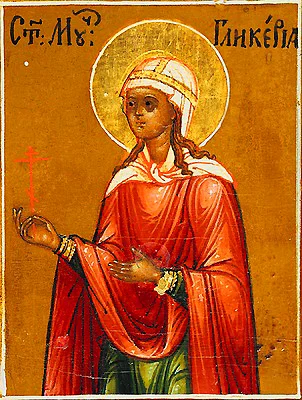
Martyr Glyceria of Heraclea (of Trajanopolis)
2nd century (under Emperor Antoninus Pius)
Also known as: Glyceria of Trajanopolis
Martyr Glyceria — daughter of a former Roman proconsul, Macarius, who had relocated with his family from Rome to Trajanopolis in Thrace; she openly confessed Christ before the governor Savinus, was subjected to brutal tortures (including being cast into a heated furnace and thrown to lions), and was put to death in the city of Heraclea, where she had been transferred for further torment; she was buried by Bishop Dometius of Pontus.
Reading options
St. Glyceria the Martyr lived in the 2nd century, during the reign of Emperor Antoninus Pius (some manuscripts give c. 177). She was the daughter of a former Roman proconsul, Macarius, who had relocated with his family from Rome to the Thracian city of Trajanopolis — hence one of her epithets, "of Trajanopolis," referring not to a separate site of martyrdom but to her birthplace and family residence. When the governor Savinus arrived in Trajanopolis to compel Christians to sacrifice to pagan gods, St. Glyceria openly confessed faith in Christ, shattering an idol by the power of the sign of the cross. For this she was subjected to brutal torment: beaten, scraped with iron, cast into a heated furnace (from which she emerged unharmed), and thrown to lions in the amphitheater. She was transferred to the city of Heraclea (Heraclea Pontica in Thrace) for further torture and execution — hence her second epithet, "of Heraclea," by which she is known in most sources. There she suffered martyrdom; her body was buried by the local bishop, Dometius.
Icons and images