Synaxis of saints
Synaxis Synaxis of the Fathers of the Kiev Caves
Established in 1643
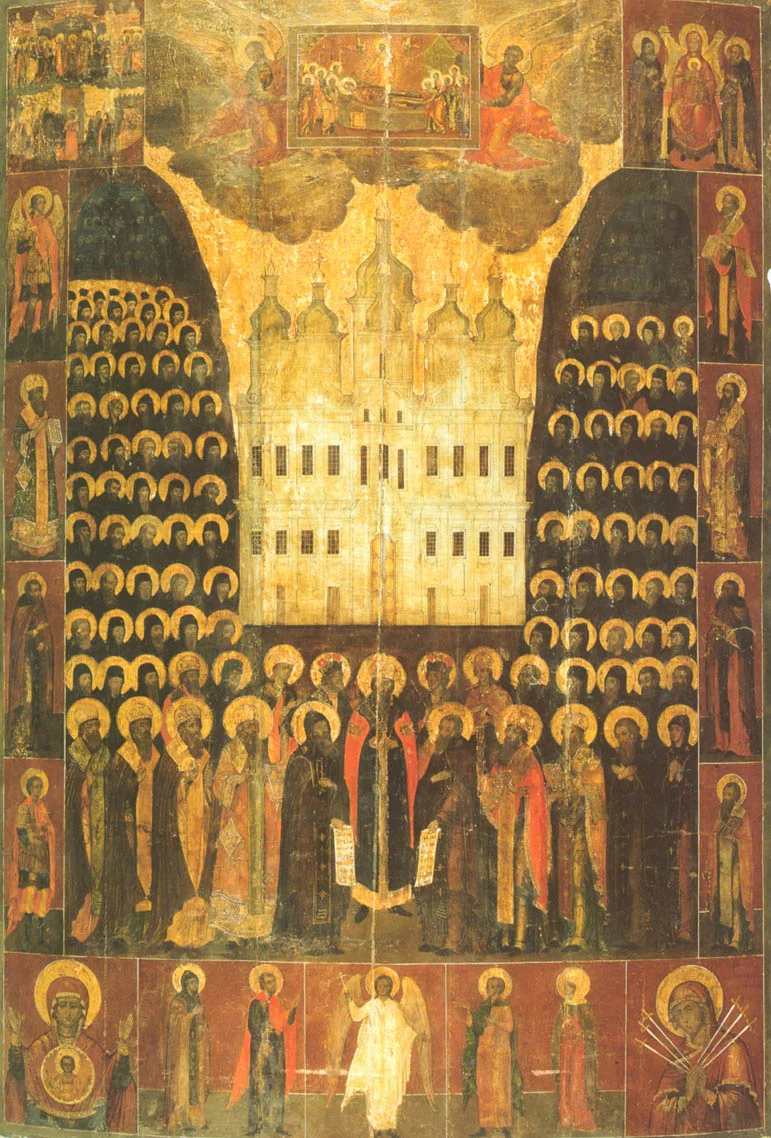
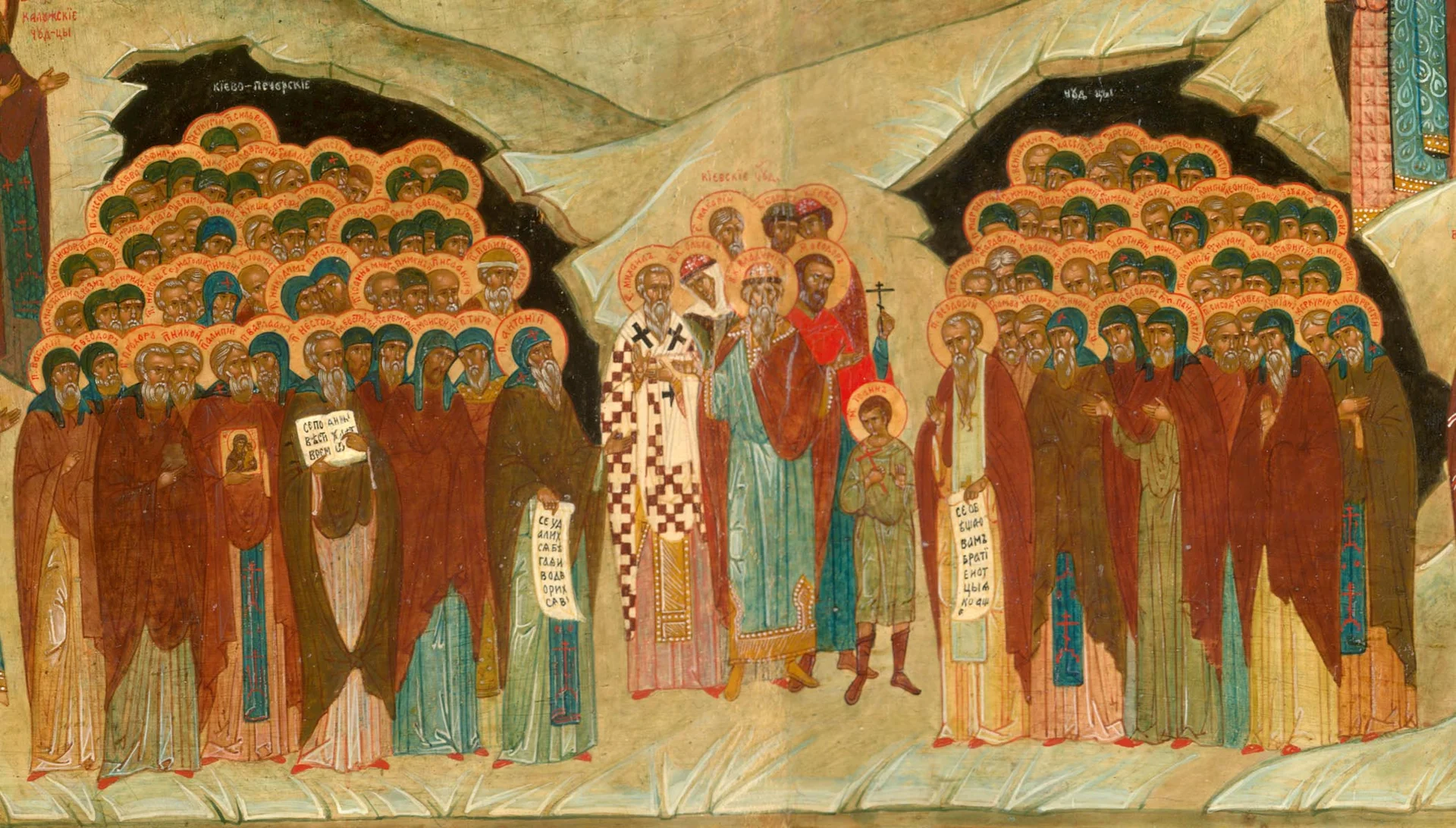
Synaxis of the Venerable Fathers of the Kiev Caves — a general commemoration of over a hundred ascetics of the Kiev Caves Lavra, whose holy relics rest in the Near and Far Caves; established in 1643 by Metropolitan Peter (Mogila) of Kiev, who commissioned the Constantinopolitan hieromonk Meletius Syrigos to compose the service; kept on the movable 2nd Sunday of Great Lent, separately from two more specific commemorations — the Synaxis of the Fathers resting in the Near Caves (September 28/October 11) and the Synaxis of the Fathers resting in the Far Caves (August 28/September 10).
Reading options
The Synaxis of the Venerable Fathers of the Kiev Caves unites the memory of the ascetics of the renowned Kiev Caves Lavra, founded by Venerables Anthony and Theodosius of the Caves in the 11th century — one of the most important centers of Russian monasticism, learning, and holiness.
General veneration of the Kiev saints was formally established in 1643 by Metropolitan Peter (Mogila) of Kiev, who commissioned the Constantinopolitan hieromonk and patriarchal exarch Meletius Syrigos to compose the service ("stichera and canon to the Venerable Fathers of the Kiev Caves and all saints who shone forth in Little Russia"). The feast is kept on the movable 2nd Sunday of Great Lent.
Separate from this general feast are two more specific ones: the Synaxis of the Venerable Fathers resting in the Near (Anthony's) Caves (September 28/October 11 — according to some sources this date was established as early as 1670, according to others it was moved there in 1886 under Metropolitan Platon of Kiev to align it with the Far Caves' date), and the Synaxis of the Venerable Fathers resting in the Far (Theodosius's) Caves (August 28/September 10). About 73 ascetics' relics rest in the Near Caves (along with about 30 myrrh-streaming heads), and about 45 in the Far Caves (likewise with myrrh-streaming heads); the total number of venerated saints is often given as "over a hundred," though sources do not agree on a single precise figure.
Icons and images
Sources
- https://ru.wikipedia.org/wiki/Собор_всех_преподобных_отцов_Киево-Печерских
- https://ru.wikipedia.org/wiki/Собор_преподобных_отцов_Киево-Печерских,_в_Дальних_пещерах_почивающих
- https://ru.wikipedia.org/wiki/Собор_преподобных_отцов_Киево-Печерских,_в_Ближних_пещерах_почивающих
- https://drevo-info.ru/articles/5799.html