
Apse
The rounded projection on the east wall of a church that houses the sanctuary.
Reading options
The apse is a projection on the eastern wall, semicircular or cut by several facets. From inside it is a niche in which the altar table stands; from outside, those very semicircles by which a church is recognized from any side and by which it is easy to tell where the altar faces.
The apse is covered by a half-dome, called the conch — in Greek, “shell.” In the conch the Mother of God is most often painted with raised hands: the Oranta, “the Indestructible Wall” or “the Sign.” She is thus directly above the High Place, and when the Royal Doors are open she is visible from the church.
Why there are often three
In a large church there are usually three apses, and each corresponds to its own part of the sanctuary: the middle, largest one is the altar proper with the altar table; the northern one is the table of oblation; the southern one is the diaconicon, a room for vestments, books and utensils. From outside this reads as three semicircles of different height.
In small churches there is one apse, and sometimes none at all: the eastern wall is made straight, and the altar is simply fenced off by the iconostasis. This does not affect the arrangement of the service.
See also
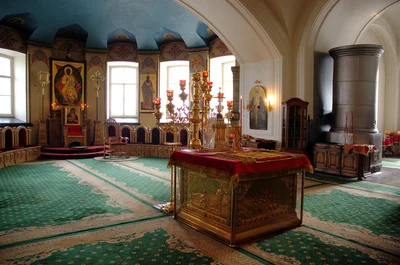
The church building
Altar (sanctuary)
The eastern part of the church behind the iconostasis, containing the holy table; entered only by clergy and servers.
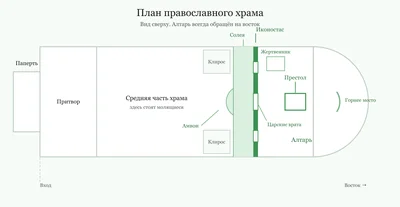
The church building
Church (temple)
A building consecrated for divine service, divided into narthex, nave and sanctuary, with the sanctuary facing east.
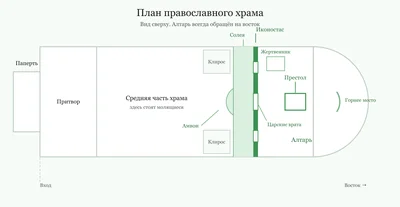
The church building
High Place
The place at the east wall of the sanctuary behind the holy table, with the bishop's seat.
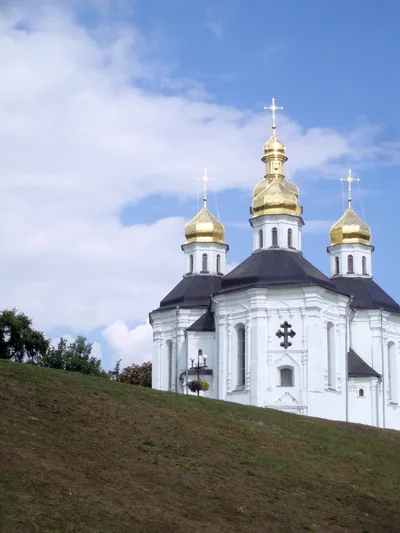
The church building
Dome (cupola)
The vault over the nave, crowned outside by a cupola and cross; the number of cupolas always carries a meaning.