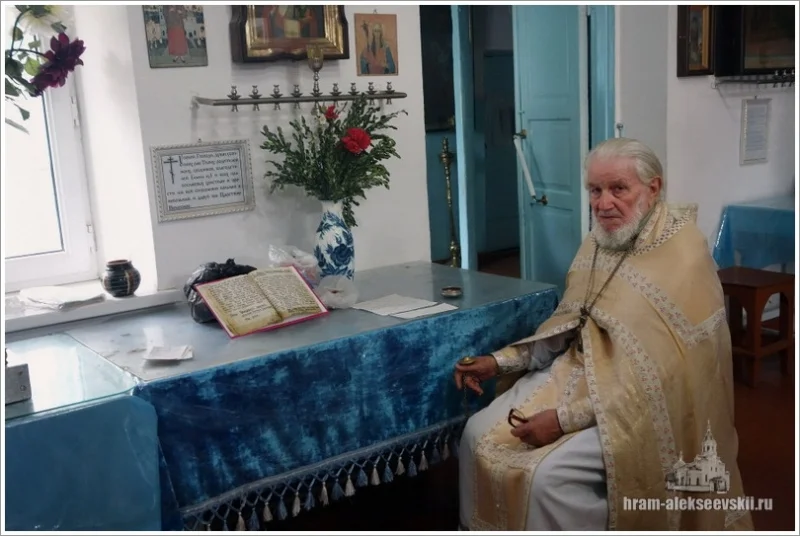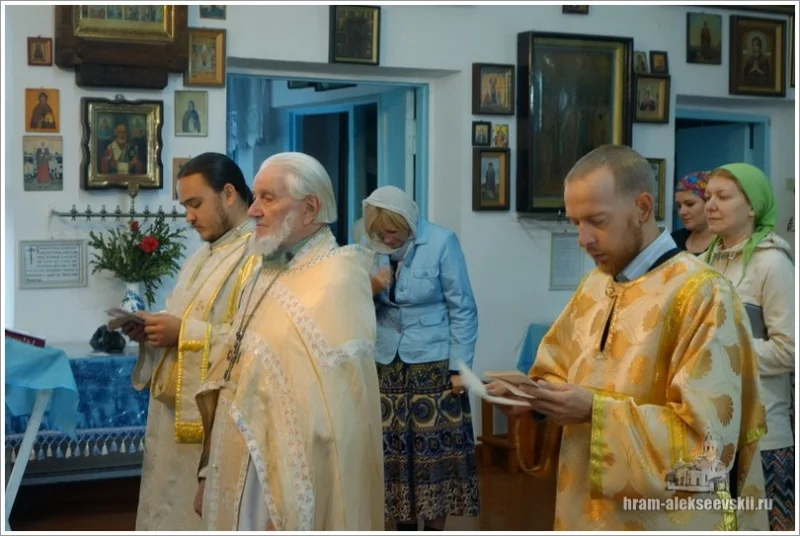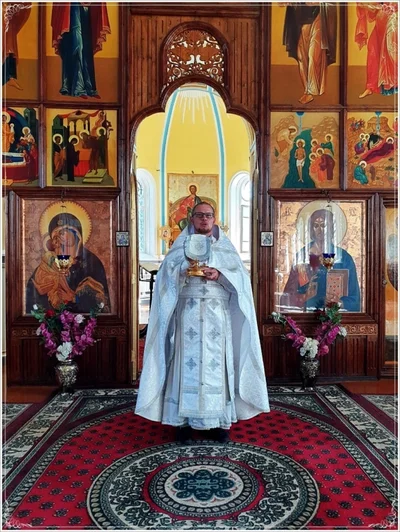
On 24 December, in the 82nd year of his life, Archpriest Dimitry Kozulin, rector of the Church of St. George in Samarkand, reposed.
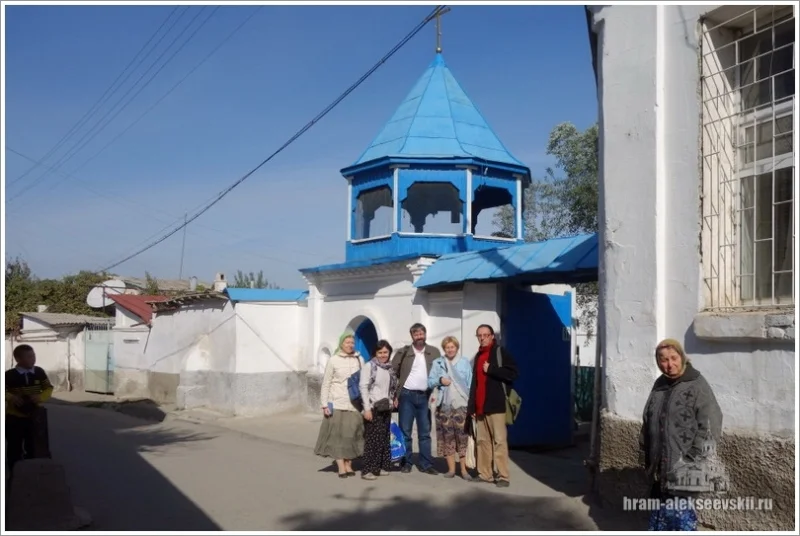
We, members of the St. George Brotherhood, first met Archpriest Dimitry Kozulin in 2011, when we came to Samarkand for the first time, trying to learn as much as possible about the ministry of the ascetics of faith who served here in the Soviet years.
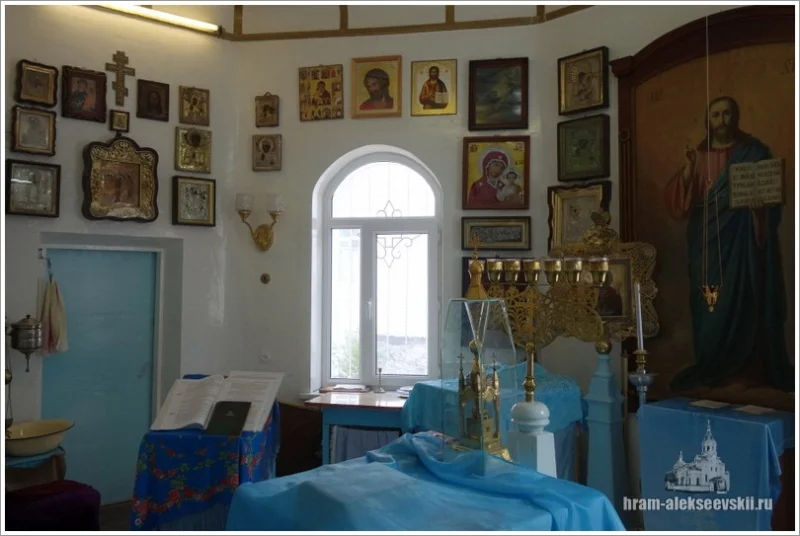
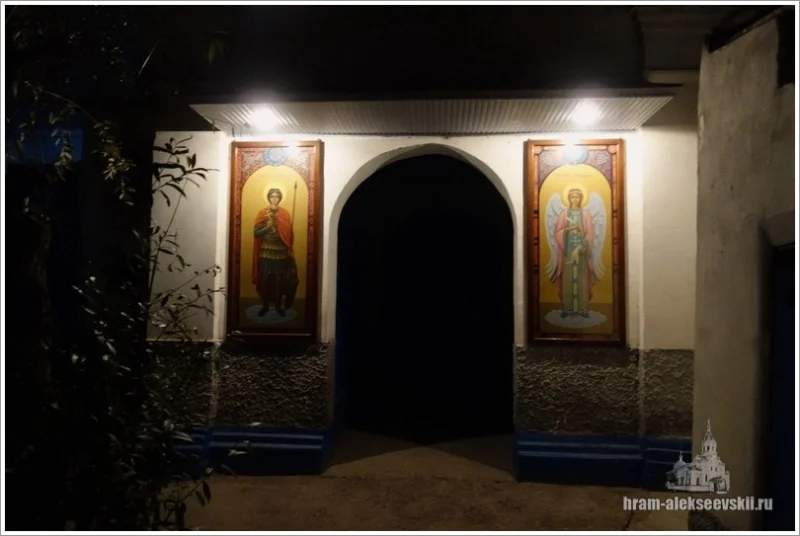
It was then that we first visited the Church of St. George in Samarkand and the "St. George Corner," as people call the small monastery that grew up around the church. And ever since, we always wanted to go back there.
The St. George Corner is an amazing place, where Archimandrite Serafim (Sutorikhin) served for many years and where a community of believers gathered around him in the 1940s–1960s. A real small monastery took shape here, with all the necessary buildings — a church, a baptistery, cells, a refectory, a guesthouse, a bathhouse and various farm buildings. All this was acquired by Fr. Serafim's community with the believers' own means: little by little the land around the church was bought up, and on it the buildings the community needed for its life were built of adobe brick.
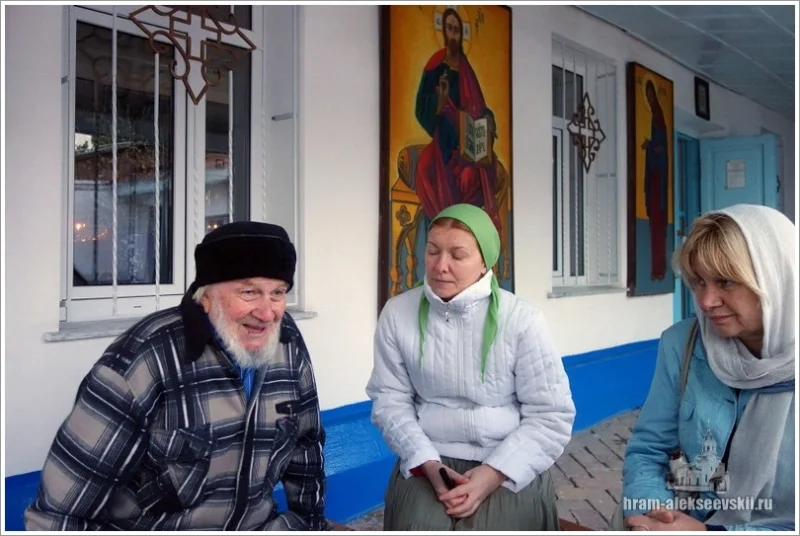
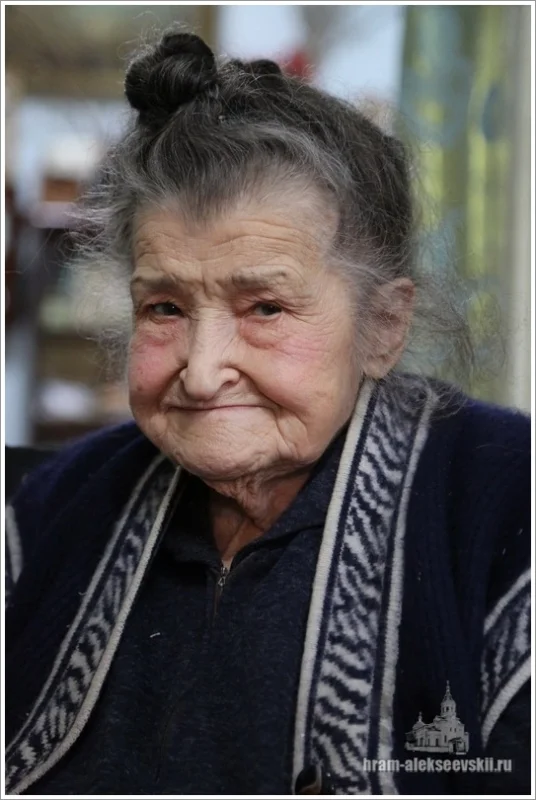
Fr. Dimitry, the rector of the St. George Church, welcomed us warmly and arranged lodging and meals for us. He struck us as a modest man of few words. For the questions that interested us, he suggested we speak with his wife, Matushka Antonina.
Matushka Antonina has lived here, in the St. George Corner, since childhood — since 1946, when she was seven years old. She told us how in 1961 Fr. Serafim was forbidden to serve:
"He loved people very much, especially children; he was even stripped of his registration for that — for attracting children, and for 'frightening people with the Last Judgment and hell.' That was the charge brought against him when his registration was revoked."
"When they were taking away his registration, this church of ours was full of people; they came every day as if it were Sunday, because we had been told it would be closed and padlocked," Matushka recalled. Evil was met with resolute resistance: the faithful stood up for their rector and spiritual guide, and four years later Fr. Serafim again began to serve in the church. The archive of the St. George Church keeps a document in defense of Fr. Serafim — a letter from the parishioners to the authorities signed by four hundred people, each giving their name and place of residence. And this at a time when people were persecuted for their faith — they could be fired from their jobs or expelled from their institutes…
When Fr. Serafim was stripped of his registration, he continued to serve the Liturgy secretly, at night. Fr. Serafim's closest spiritual children gathered for these secret Liturgies. It was also at night that he married Fr. Dimitry Kozulin and Matushka Antonina — precisely in the period when the authorities had forbidden him to serve.
And so in the autumn of 2015 we returned to Samarkand, to the St. George Corner. On the very first evening we talked with Fr. Dimitry. Batiushka, a modest man, told us about his life — how as a child he spent fifteen years hiding with his family in the mountains of Kyrgyzstan: after their family was dispossessed as "kulaks," they had to flee persecution by the authorities. Fr. Dimitry's parents and relatives were deeply believing people, and in the mountains what was practically a monastery took shape, under the pastoral care of Fr. Serafim (Romantsov), who in those times was forced to hide in the mountains. Fr. Dimitry carried this faith, absorbed from childhood, through his whole life.
Fr. Dimitry began helping Fr. Serafim (Sutorikhin) at the Church of St. George in Samarkand in 1968.
"I was a bit thick-headed," Fr. Dimitry told us. "Fr. Serafim was practically in tears, asking me, 'Stay,' saying I was the right helper for him. But I was building my own house and so on, so I didn't agree, and my wife and I left. And what did Fr. Serafim do? He prayed for us, prayed that we would come here. And after a while there were layoffs at my work… That was a clear sign — we were being invited, so why should we sit around there? And so we moved here in 1968. When I arrived, it was as if I had already been here for thirty years…"
With Fr. Serafim's blessing, Fr. Dimitry graduated from the Moscow Theological Seminary in 1972. And from then on, for almost fifty years, he carried out his priestly ministry at the Church of St. George.
"I was with Fr. Serafim for only five years, but I am so glad that he treated me with all his heart, and I, thank God, took it in. He was very well known and greatly revered… Fr. Serafim buried his elder, Fr. Pyotr Knyazhinsky, and then the time came and I buried Fr. Serafim. And I automatically became rector — my God, so foolish, and already a rector…" Fr. Dimitry recalled.
Following Fr. Pyotr Knyazhinsky and Fr. Serafim (Sutorikhin), Fr. Dimitry gave his whole life and all his strength to the service of God and the Church. All these years, life and faith in the St. George Corner were preserved and multiplied by his prayer, love and pastoral labors. The St. George Corner remained a small monastery in which a living Christian life continued. Few people live there now, since very many Russians left Central Asia in the 1990s, but people came to Fr. Dimitry for help from various parts of Uzbekistan and Russia, and having come, they would sometimes stay in the St. George Corner for a long time… And how many spiritual children Fr. Dimitry had, how many people came to him for advice and help!
For example, the St. George Corner has a small farm where Fr. Dimitry's spiritual children carry out their obediences. During our stay a lamb was slaughtered there. And Fr. Dimitry drew up a note, "Where the lamb went," listing the neediest families of Samarkand.
Caring for the Christian education of those just beginning their path to God and to the Church, he gave us Muscovites a task — to send to the St. George Corner literature that local believers could not obtain. We bought prayer books with Russified texts and catechisms for the Samarkand catechumens. Batiushka drew our attention to the fact that the prayer books and catechisms should not be too long and should be printed in large type: "For a modern person who has come to church for the first time, long texts are hard; one has to start with short ones."
It is very precious to us that we were able to touch the experience of this holy life. Being near Fr. Dimitry was extraordinarily joyful and grace-filled. His words and counsels were simple and wise — like his life, simple and wise in that he found in it the main thing: the Lord, Whom he followed and Whom he served with his whole life.
"I am grateful to God that I always served with joy, whatever the circumstances," — these words of Fr. Dimitry have stayed with me.
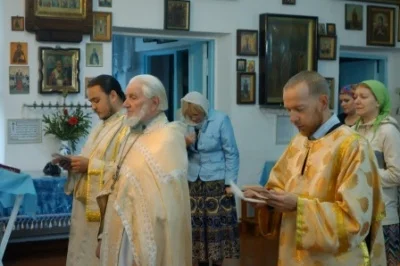
I also remember the services in the St. George Church, his reverent standing before God, his deep prayer. We understood that Fr. Dimitry had little physical strength left, but when he served the Liturgy he was transfigured.
Saying goodbye to us, Fr. Dimitry gave us his blessing: "Live as long as God grants, and to the glory of God… So let us say goodbye — we will pray for you, and you remember us."
We will always keep in our hearts the happy moments of fellowship and common prayer that we were granted to share with Fr. Dimitry.