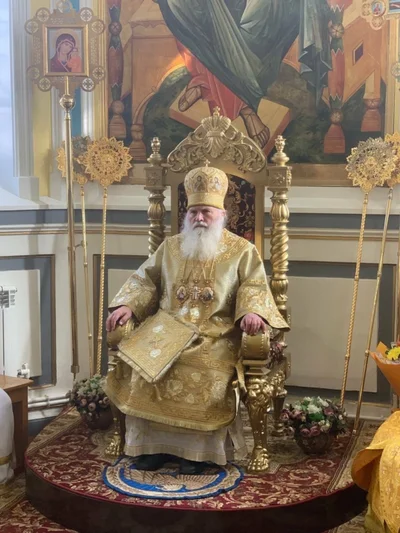
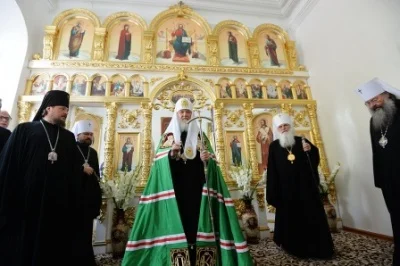
On 2 October 2017, His Holiness Patriarch Kirill of Moscow and All Russia, who was making a Primatial visit to the Diocese of Tashkent of the Central Asian Metropolitan District, arrived in Bukhara.
The Primate of the Russian Orthodox Church was accompanied by the head of the Central Asian Metropolitan District, Metropolitan Vikenty of Tashkent and Uzbekistan; the Chairman of the Department for External Church Relations, Metropolitan Hilarion of Volokolamsk; Metropolitan Kirill of Yekaterinburg and Verkhoturye; the head of the Administrative Secretariat of the Moscow Patriarchate, Archbishop Sergiy of Solnechnogorsk; the Chairman of the Synodal Department for Church Relations with Society and the Media, V.R. Legoida; and the head of the Press Service of the Patriarch of Moscow and All Russia, Priest Alexander Volkov.
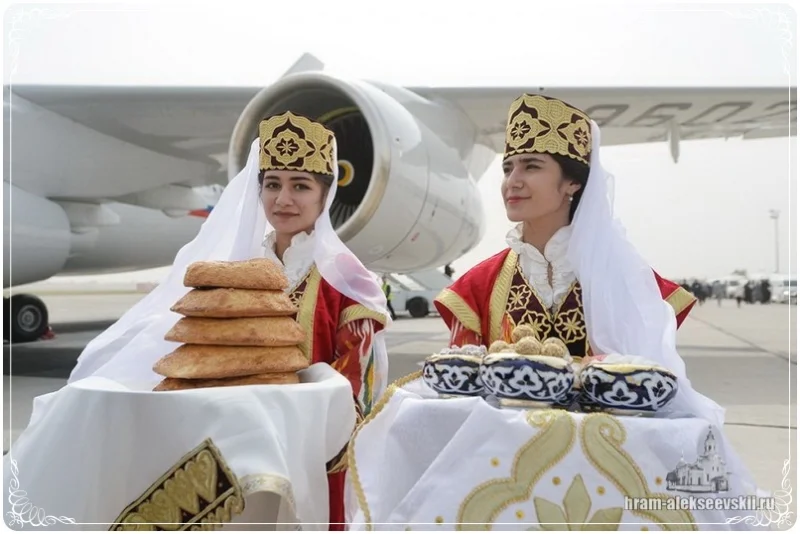
At Bukhara airport His Holiness Patriarch Kirill was welcomed by the State Advisor to the President of the Republic of Uzbekistan, R.T. Kamilov; the Chairman of the Committee for Religious Affairs under the Cabinet of Ministers of the Republic of Uzbekistan, A.A. Yusupov; the Deputy Minister of Foreign Affairs of the Republic of Uzbekistan, S.P. Niyazkhodzhaev; the Ambassador Extraordinary and Plenipotentiary of the Russian Federation to the Republic of Uzbekistan, V.L. Tyurdenev; the Chairman of the Muslim Board of Uzbekistan, Mufti Usmonkhon Alimov; and the khokim of Bukhara Region, U.I. Barnoev.
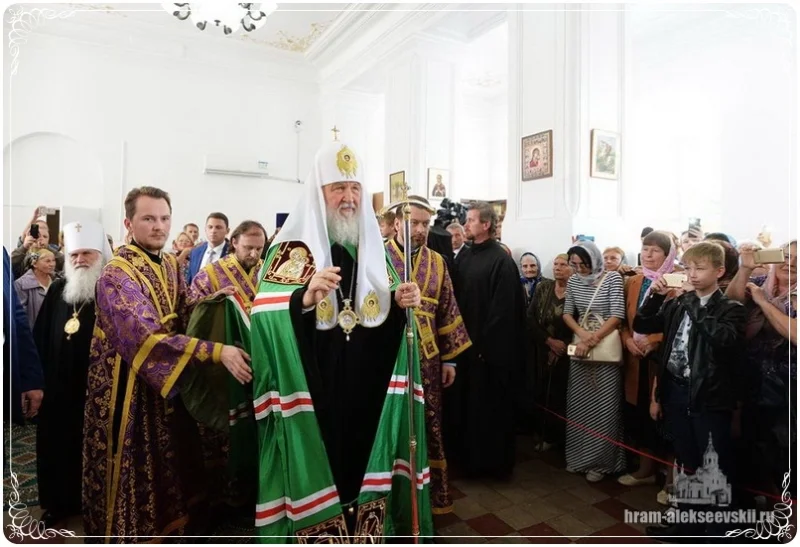
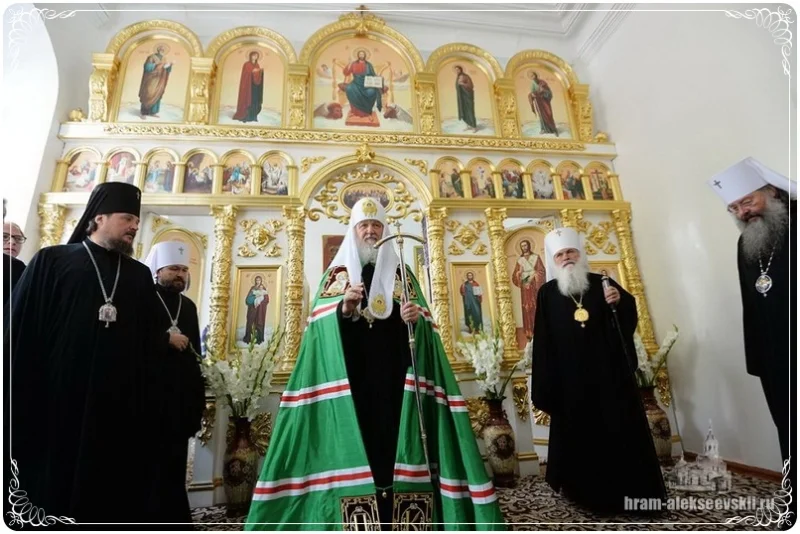
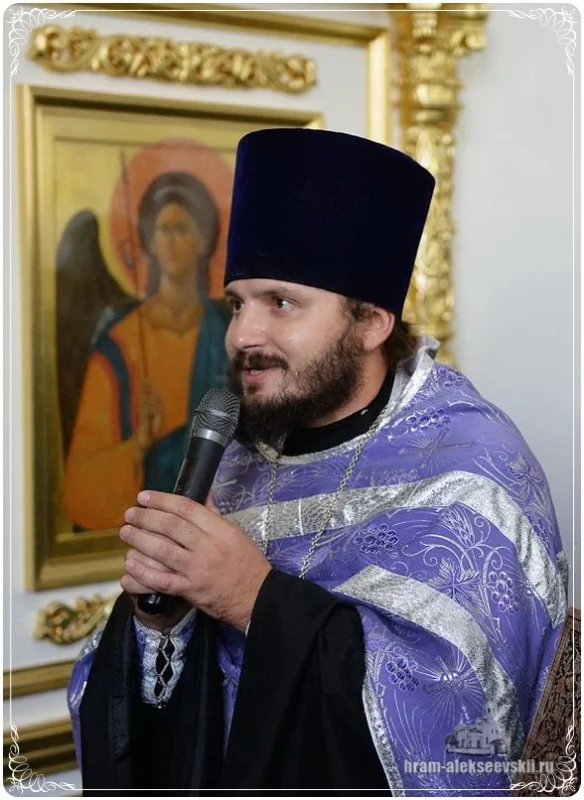
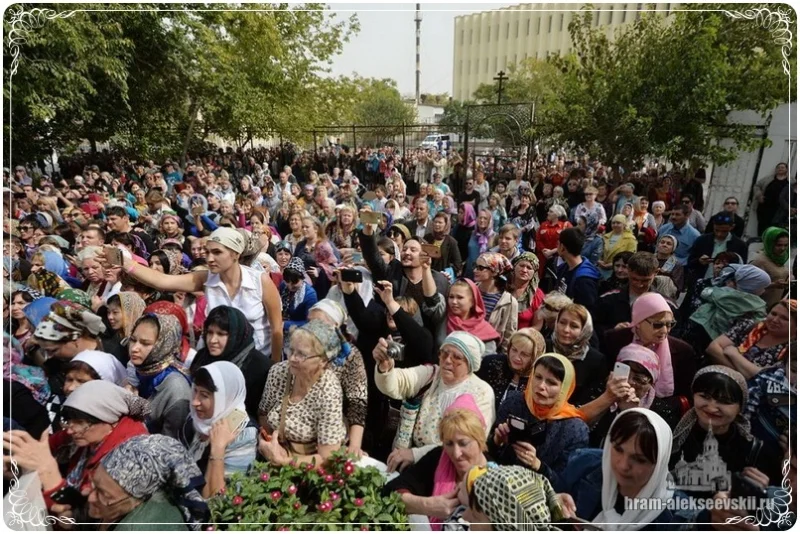
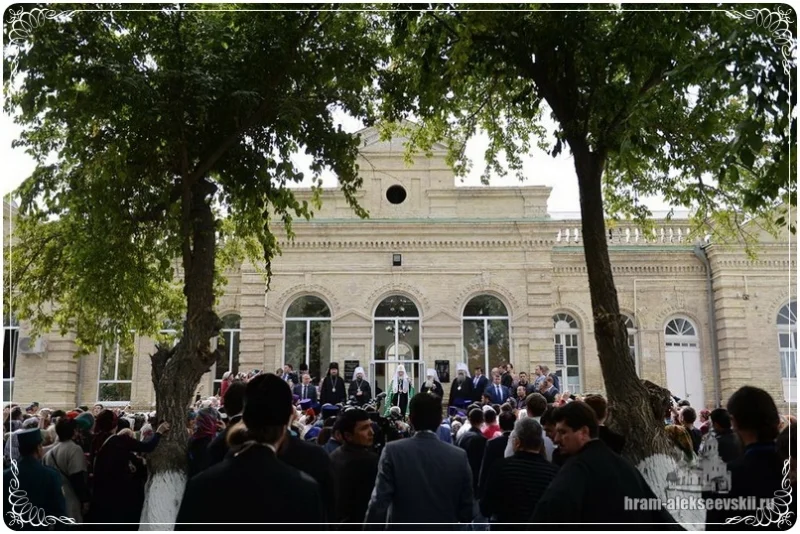
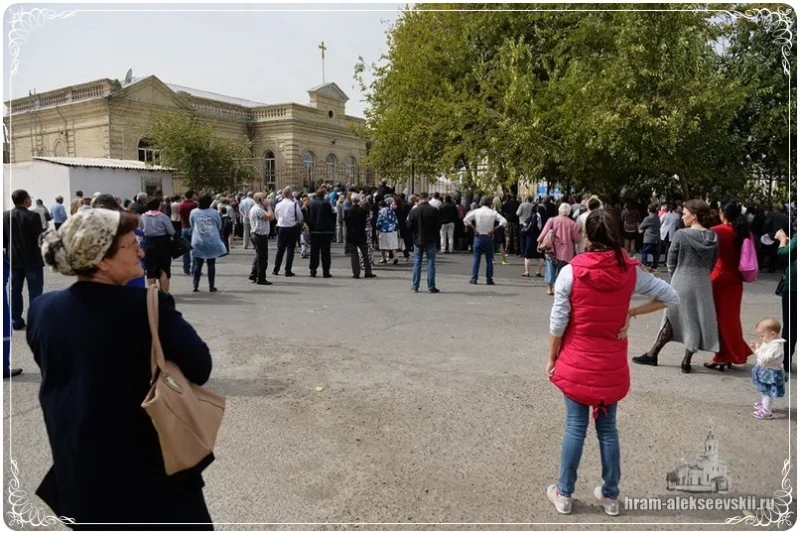
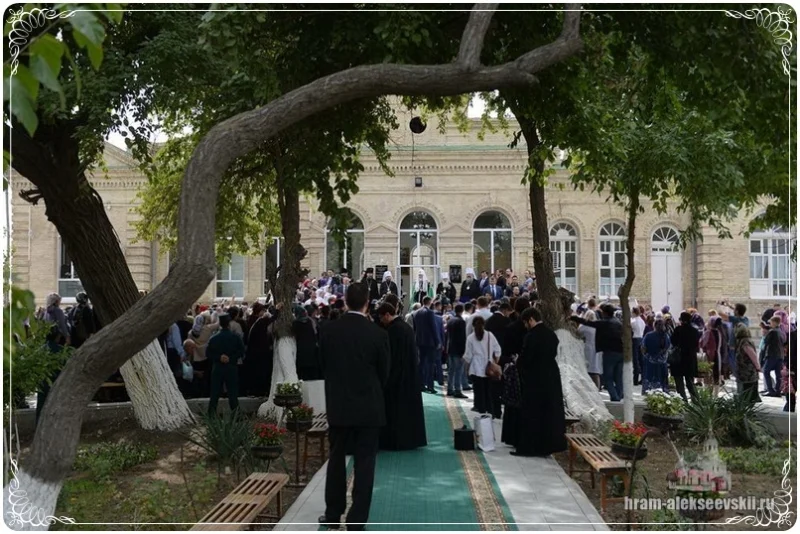
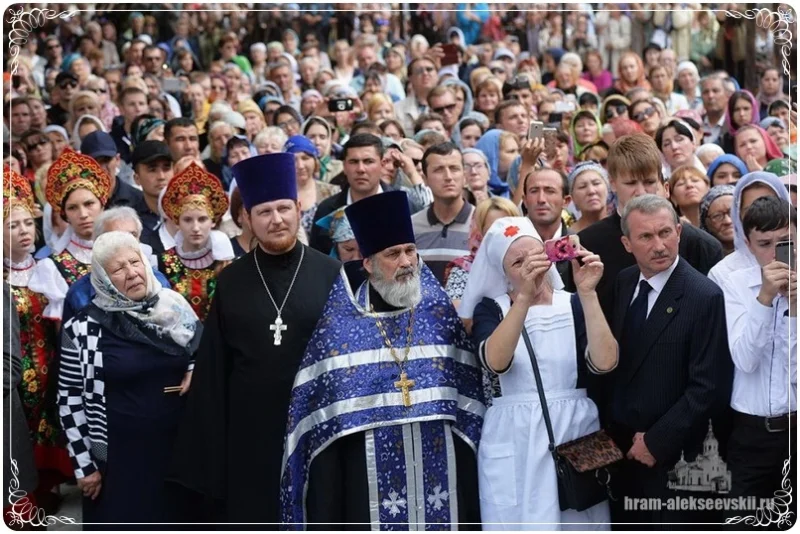
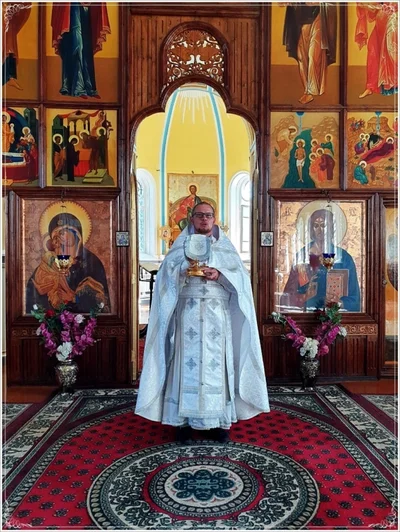
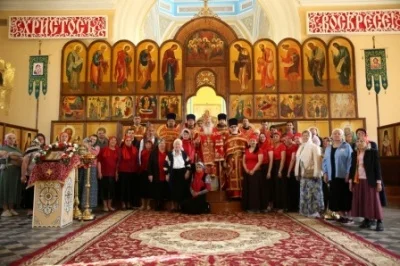
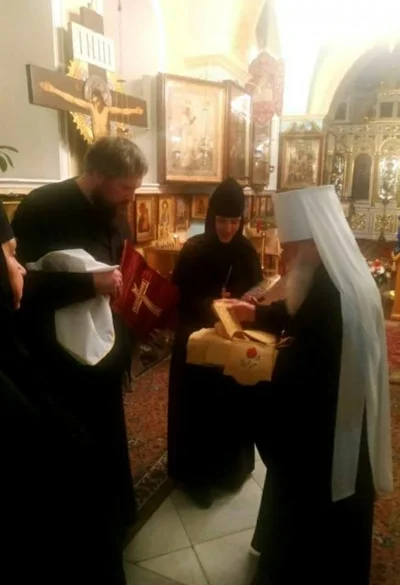
From the airport the Primate of the Russian Church proceeded to the Church of the Archangel Michael, Commander of the Heavenly Hosts, in Bukhara, where His Holiness was greeted by the rector, Priest Leonid Petrov, the clergy and a large number of the faithful. Fr. Leonid welcomed His Holiness the Patriarch in the church and presented him with a souvenir made by Bukhara craftsmen.
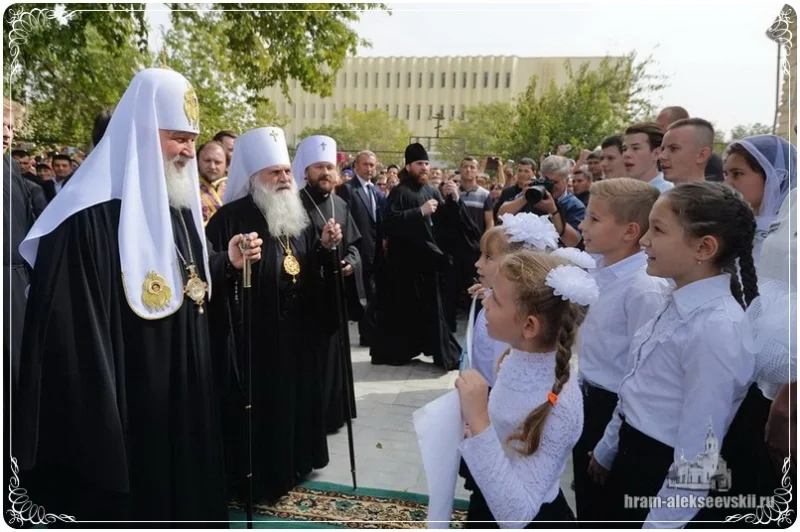
The Primate, the hierarchs and the clergy then came out onto the church porch. The head of the Central Asian Metropolitan District, Metropolitan Vikenty of Tashkent and Uzbekistan, greeted His Holiness.
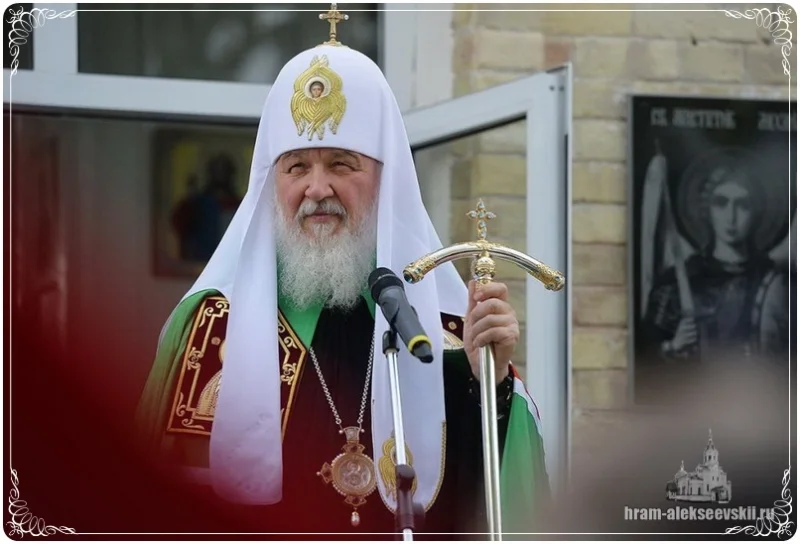
From the steps of the church His Holiness Patriarch Kirill addressed the faithful with a Primatial word.
"Your Eminence, Vladyka Vikenty! Dear Vladykas, fathers, brothers and sisters!
I greet you all warmly, and I feel great joy at this meeting with you, which means a great deal to me. Of course, I have read about Bukhara; I know the history of this city and its cultural significance, as well as the special significance of Bukhara for people who profess Islam. But it was hard to imagine that at some point I would be able to visit this city and see you, its Orthodox flock. I rejoice to see your bright faces, which reflect your faith, your hope and your love.
We are all called by our Lord and Savior to live according to His will, according to His design, according to His laws. When a person strives to live in accordance with the Divine law, he gains the most important thing of all: he becomes a happy person. I very often say that neither education, nor money, nor social position, nor power opens the way to happiness, because happiness is in the soul, in the heart; everyone knows this. Growth in material well-being is undoubtedly useful for ensuring decent living conditions, but it is far from always accompanied by what we call happiness.
That is how man is made, and woe to those who do not understand this, who rely exclusively on external factors and strive to arrange their lives in the belief that this is enough. Not at all! When we live with God, even difficult outward circumstances are overcome with ease, because the Lord grants us great inner strength. And we come to recognize this strength when we gather in church, when we partake of the Holy Mysteries of Christ, when we read the Gospel, when we take the Divine words to heart.
It is very important that the religiosity of our people, including those living outside Russia, should not be a religiosity of custom alone, as if to say: if you are Russian, you must be Orthodox. How many there are who call themselves Orthodox, yet go to church very rarely, and whose faith is somewhere on the periphery! In order to rely fully on the potential of our faith, we must be active in confessing it. This activity should show itself in going to church, in daily prayer, in turning to God when the soul is especially heavy. And in response to our faith, to our turning to Him, the Lord grants His mercy. Religious life must be alive. One cannot be a believer only from Sunday to Sunday, and yet sometimes a person remembers God and goes to church only a few times a year. A believer lives by his faith and makes it the foundation of his relationship with those around him. This is the chief task of pastors: to awaken precisely such faith in their flock, a desire to be with God and to build one's life on the foundation of the Divine law.
Each of you has dreams, desires and hopes. God grant that by the power of God all your best expectations, hopes and dreams come true. I wish each of you health and strength of body and soul. I wish each of you peace in your families and well-raised children and grandchildren. The most important ideas that have spread throughout human history have been handed down to each succeeding generation first of all through parents, because parents teach a child from the very beginning of his life; they form his character and his worldview. And how important it is that children be introduced to the faith from their earliest years! It is also very important that, as a child grows up, he receives knowledge about his faith. That is why it is so necessary to develop the Sunday school, and God grant that as many children as possible attend it. But it also happens that a child studies in Sunday school and goes to church with his parents and grandparents, and then, on entering adolescence, gradually stops going, because the elements of this world take hold of him, and what his parents brought him up in often recedes into the background. That is why it is very important that our young men and young women, as they enter adult life, keep the habits of religious life that are laid down both in church and in the family.
You live among a Muslim majority. Bukhara is a special city. It is home to a madrasa famous throughout the world, where outstanding figures of the Islamic world were educated, theologians who now hold high positions in the Islamic ummah. It is very important that our relations with representatives of the Islamic religion always be peaceful and kind. And how is peace between people established? If we do no evil, we can count on kindness toward ourselves. Good relations between representatives of different religions, Christianity and Islam, are an essential guarantee of the prosperity of society. God grant that people always live side by side, never at enmity with one another on religious grounds. God grant that peace abide in your families and all around you.
I wish God's blessing to each of you, and prosperity to the city of Bukhara. May the Lord keep you!"
His Holiness the Patriarch presented the church with an icon of the Mother of God "Multiplier of Wheat" (Sporitelnitsa Khlebov). The faithful received small icons of the Savior Not Made by Hands.
***
From the late Middle Ages the city of Bukhara was an important religious and cultural center of the Muslim world, and historically the residence of followers of other faiths in the city was not welcomed. Between 1873 and 1920, when the Emirate of Bukhara was a protectorate of Russia, Russian employees (mainly railway workers) and Russian settlers lived in the town of "New Bukhara", now called Kagan. An Orthodox church dedicated to the Holy Right-Believing Prince Alexander Nevsky was built in that town; it has not survived to the present day.
The Church of the Holy Archangel Michael was founded in March 1875, and its construction was completed in November 1875. The church was closed in 1929.
After the coup of 1920 and the flight of Emir Said Alim Khan to Afghanistan, the ban on Christians settling in Bukhara was lifted, but because of the policy of state atheism it was impossible to register an Orthodox parish.
Only after Uzbekistan gained independence, in 1992, was an Orthodox parish registered; it gathered for services in unsuitable premises.
In 1994 the Bukhara Regional Khokimiyat handed over to the Orthodox community part of the railway station, which was no longer in use by then, and in 1997 the entire complex was transferred, in which the church was arranged in its present form.