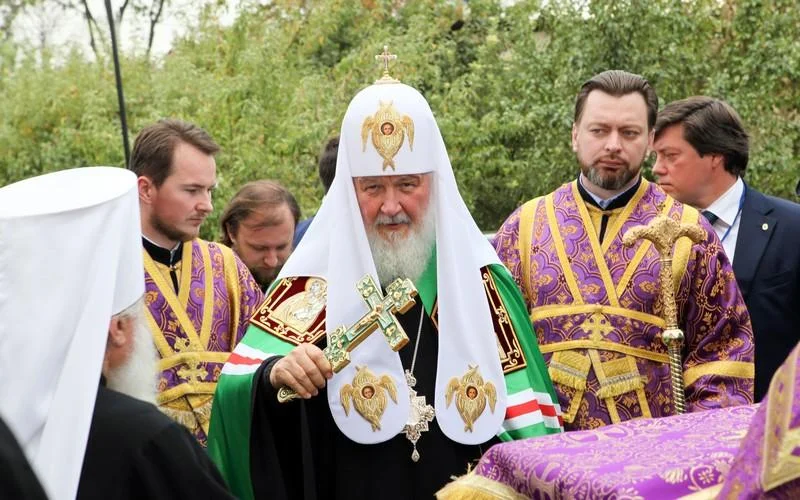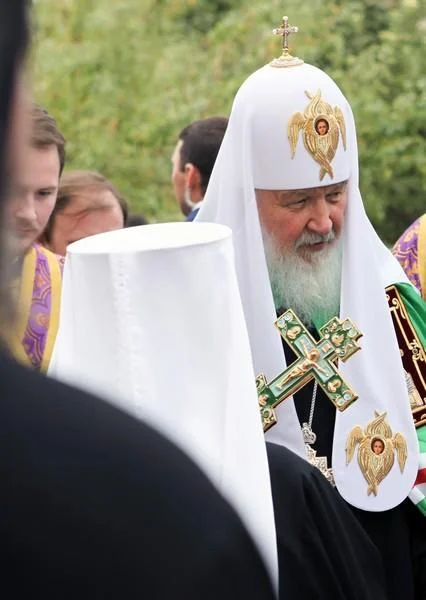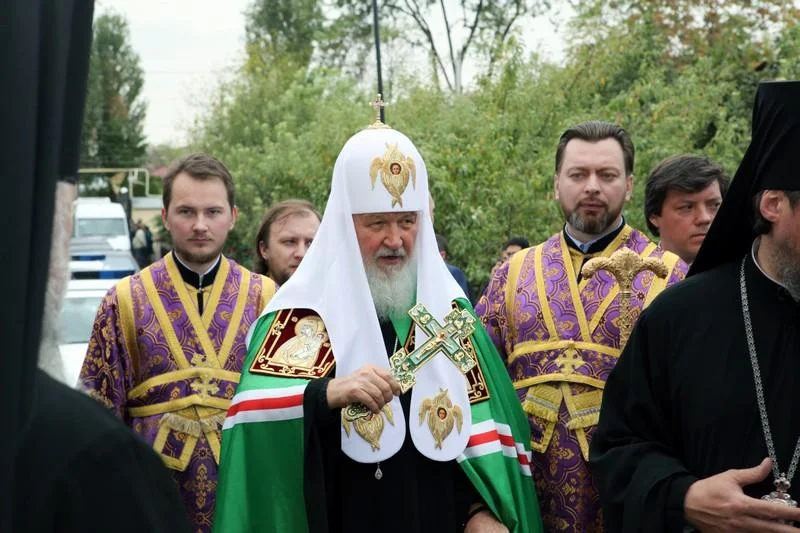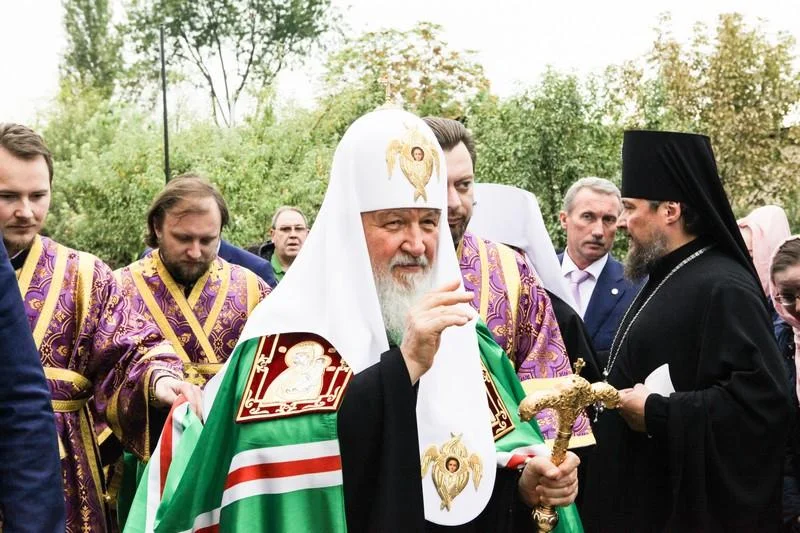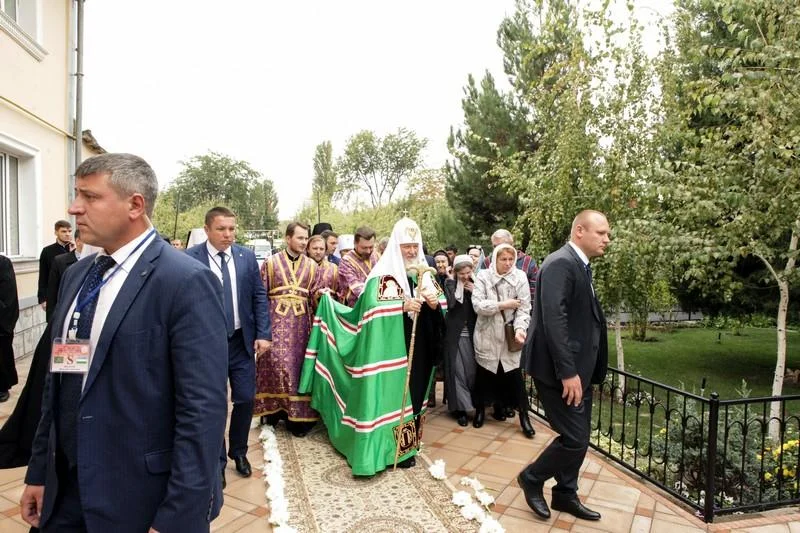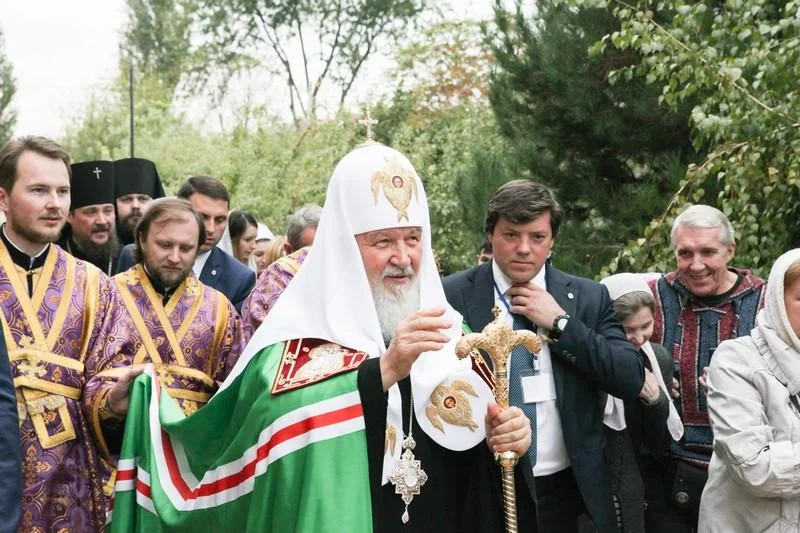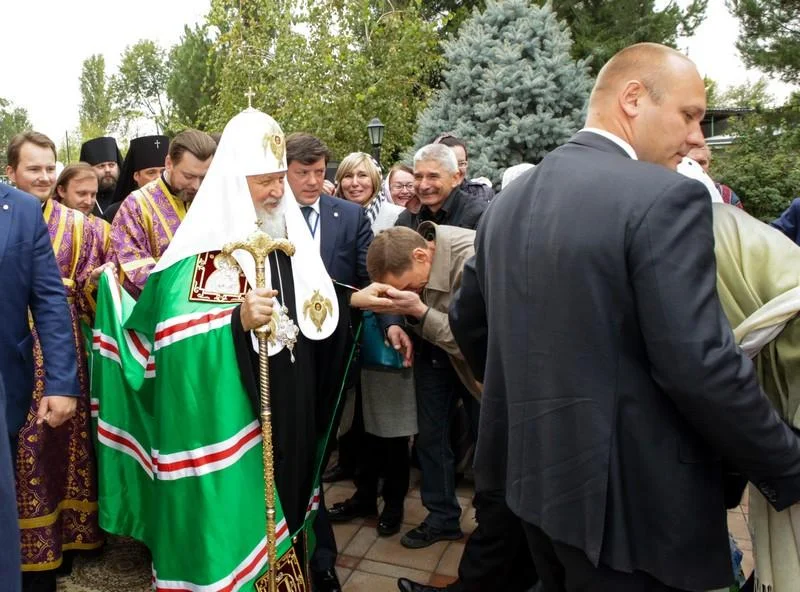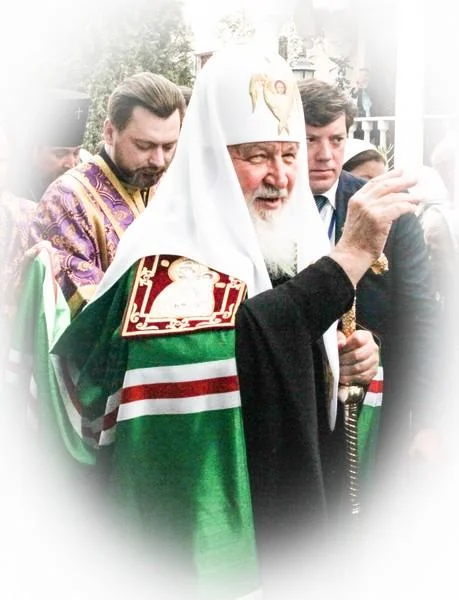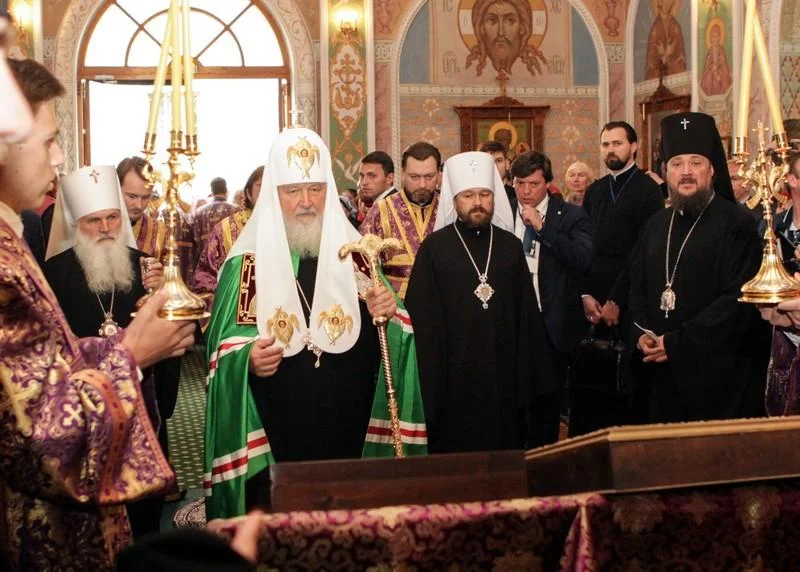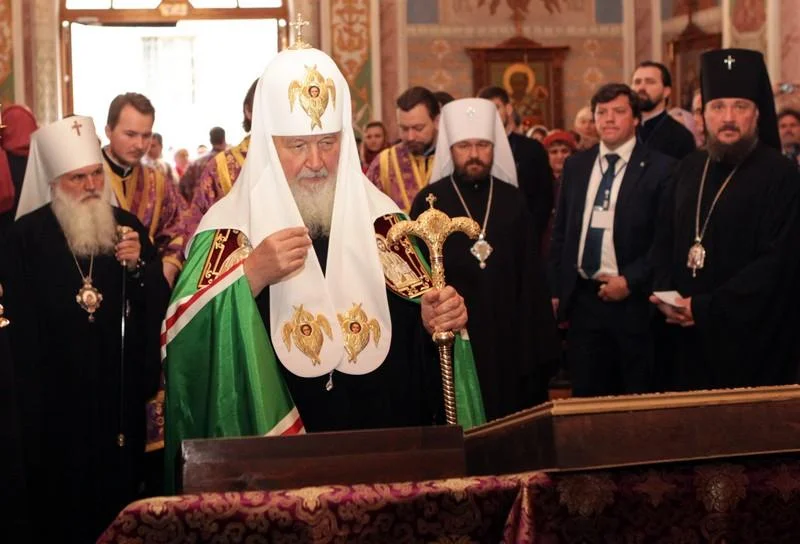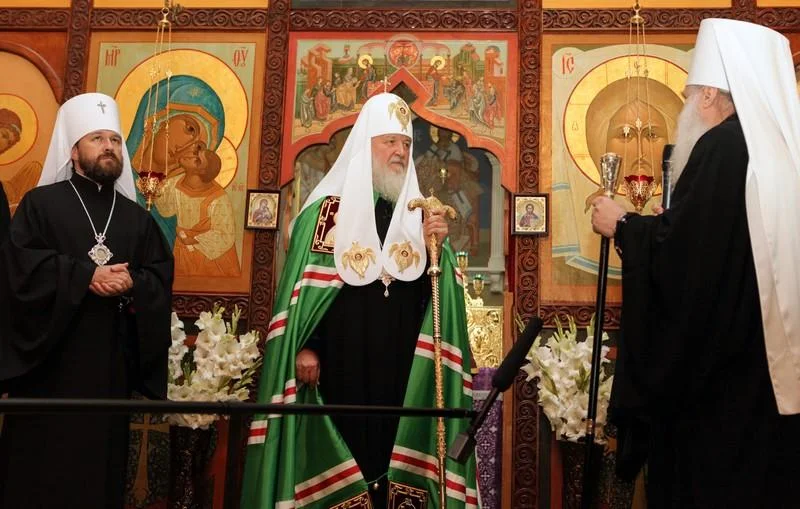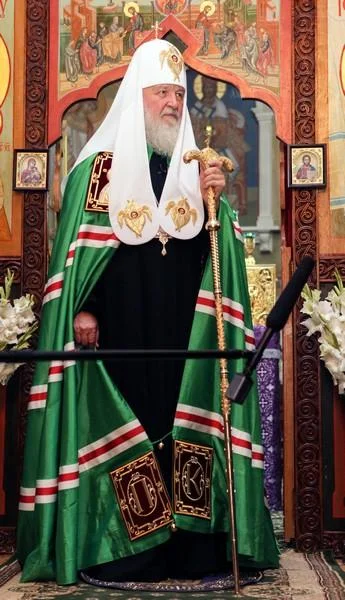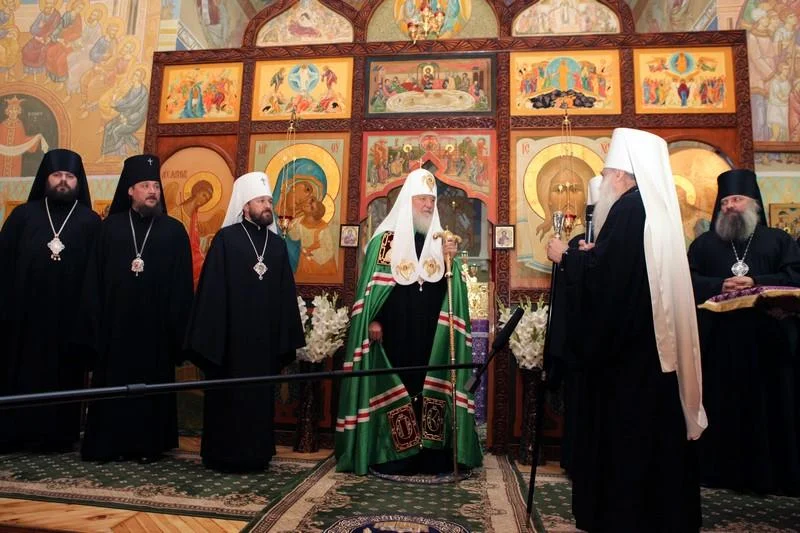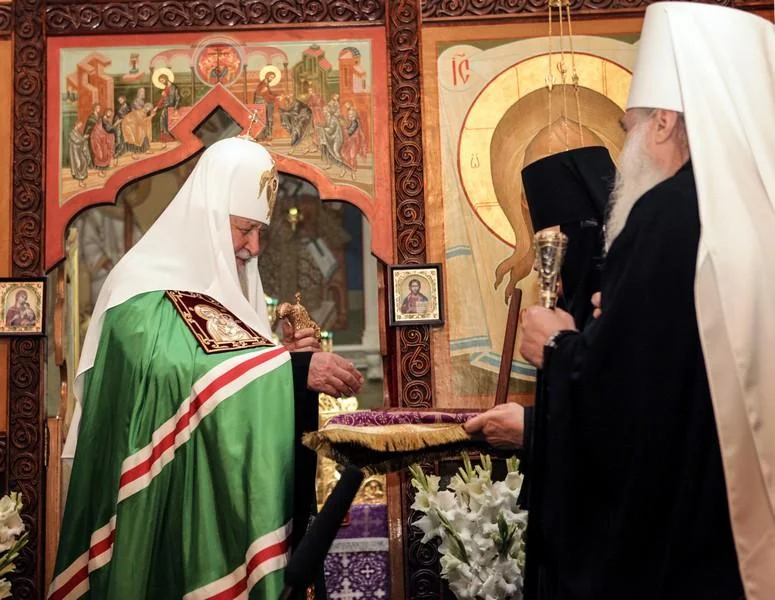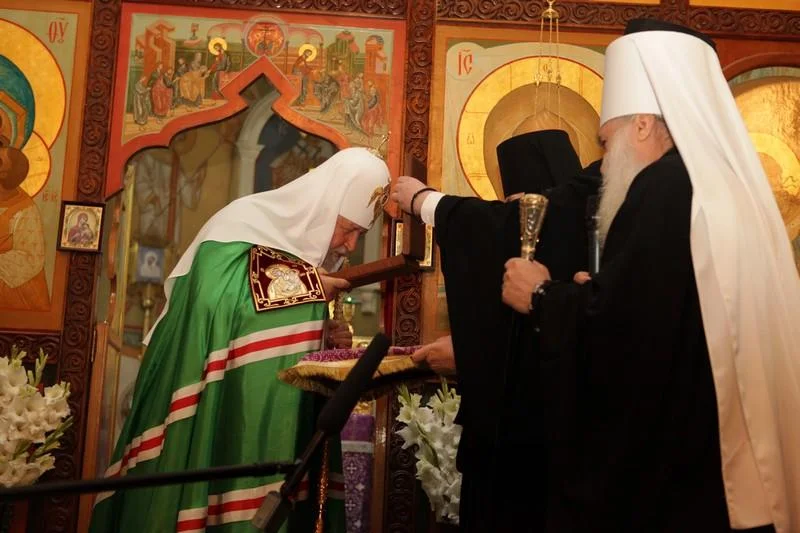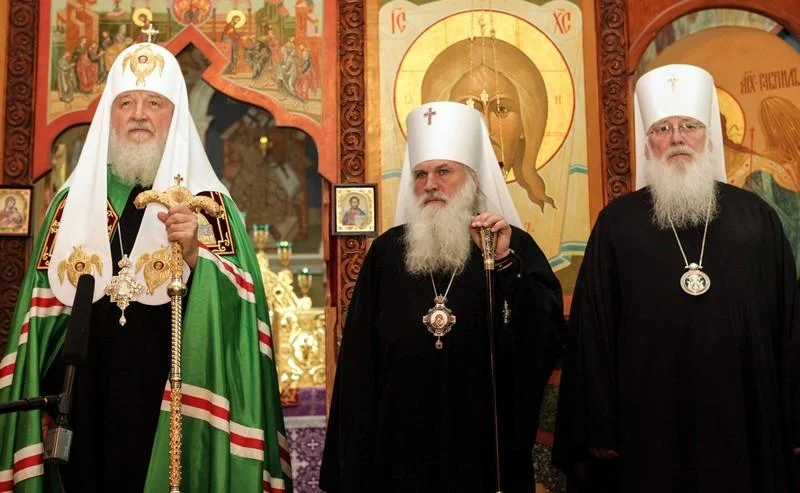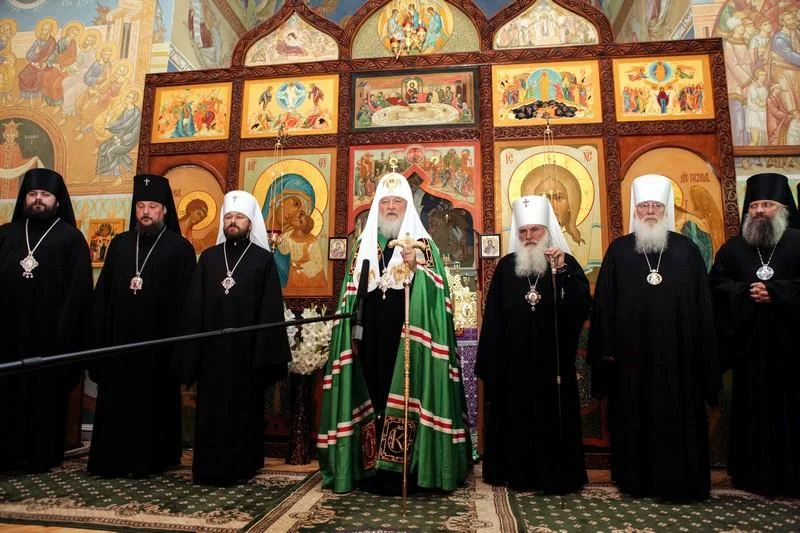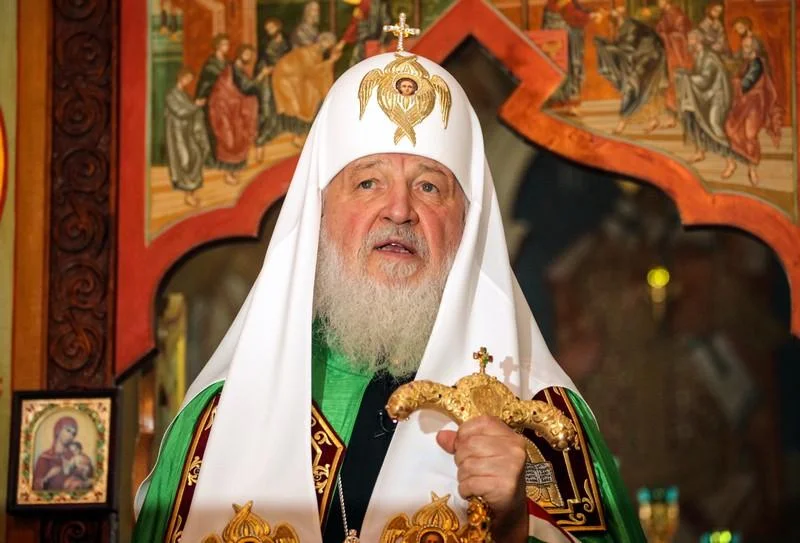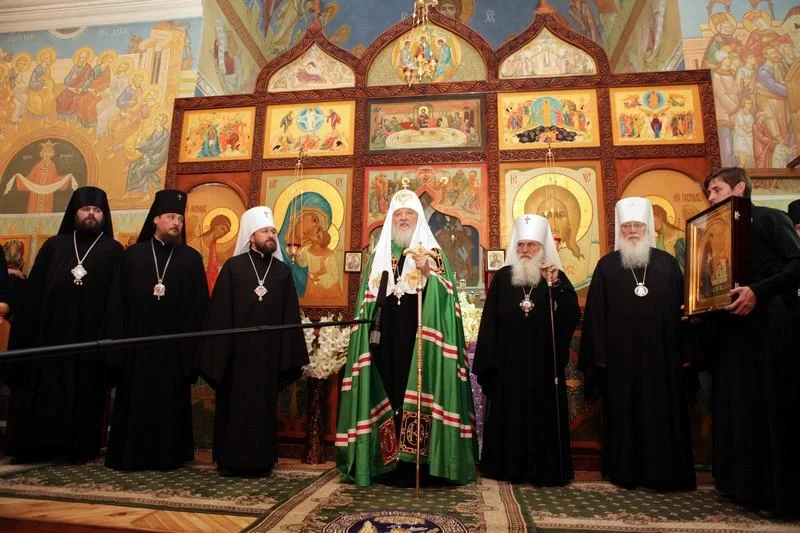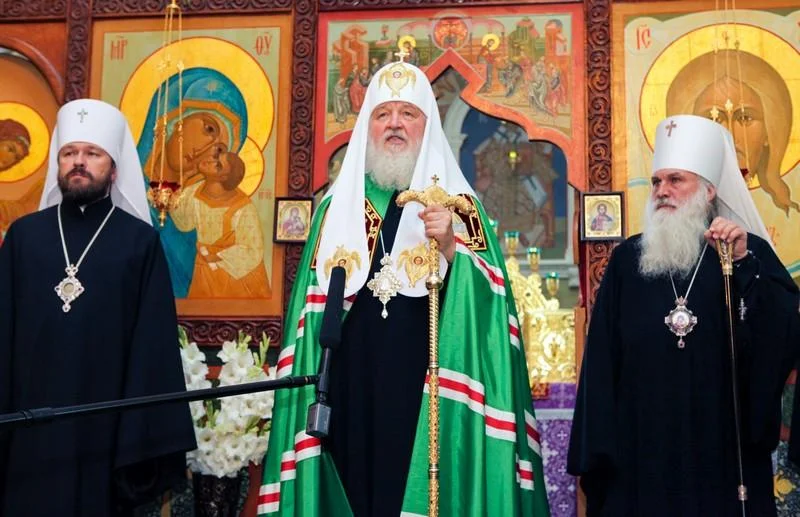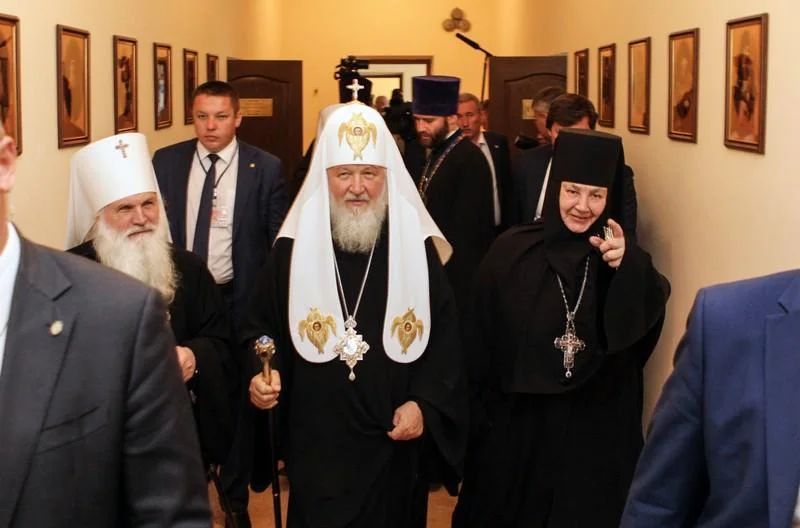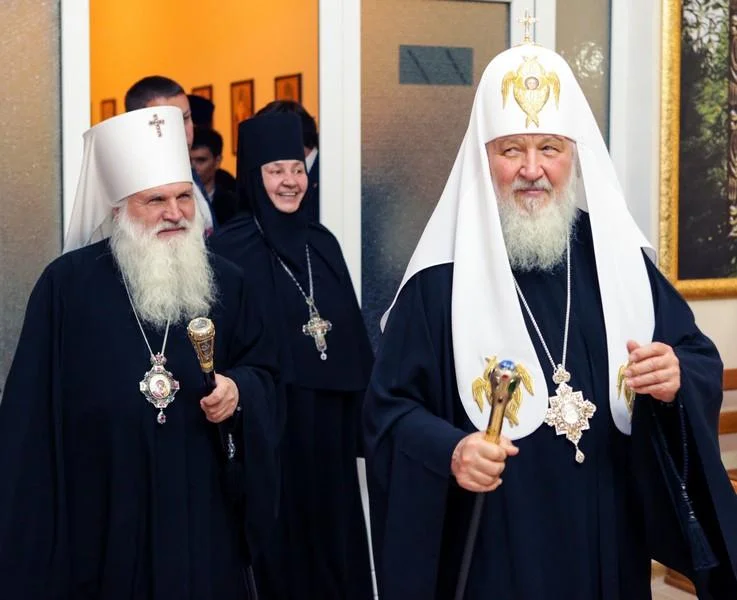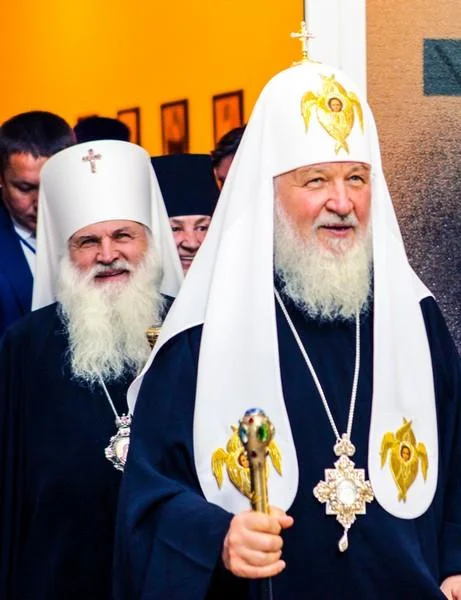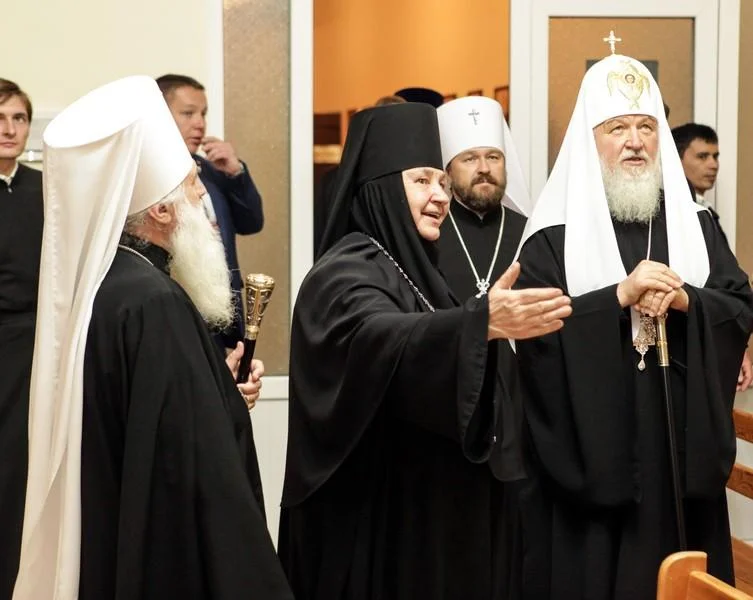
The first stop on the programme of the visit of His Holiness Patriarch Kirill of Moscow and All Russia was the Holy Trinity St. Nicholas Convent in the city of Tashkent.
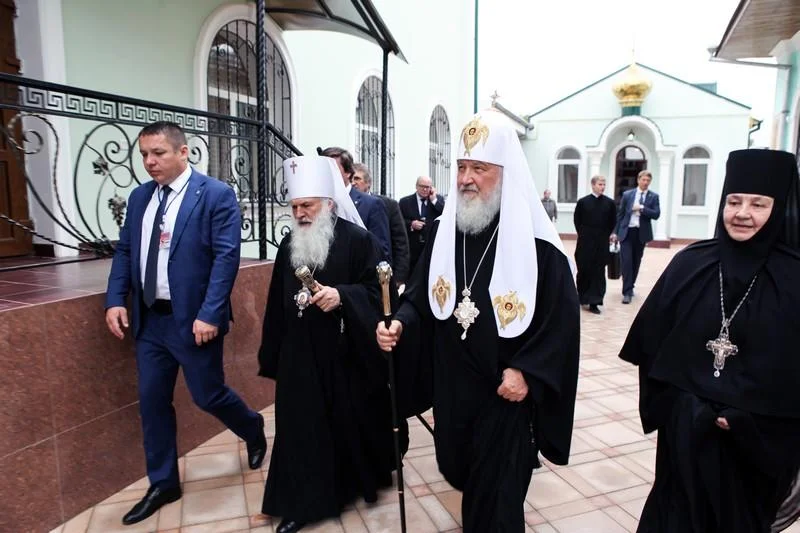
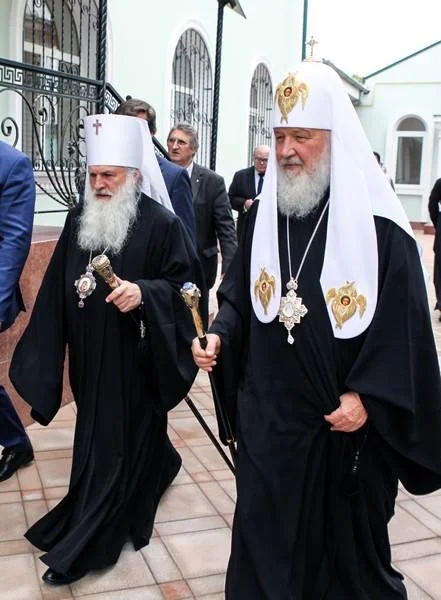
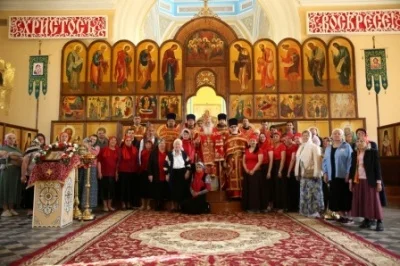
At the holy gates of the convent, His Holiness was welcomed by: Metropolitan Vikenty of Tashkent and Uzbekistan, head of the Central Asian Metropolitan District; Metropolitan Hilarion of Volokolamsk, Chairman of the Department for External Church Relations of the Moscow Patriarchate; Metropolitan Lev of Novgorod and Staraya Russa, who headed the Diocese of Tashkent in the 1980s; Archbishop Sergiy of Solnechnogorsk, head of the Administrative Secretariat of the Moscow Patriarchate; Bishop Pitirim of Dushanbe and Tajikistan; Bishop Daniil of Bishkek and Kyrgyzstan; Hegumenia Ekaterina (Malgina), abbess of the Holy Trinity St. Nicholas Convent, and the sisters of the convent; the clergy of the Diocese of Tashkent; and many Orthodox residents of Tashkent.
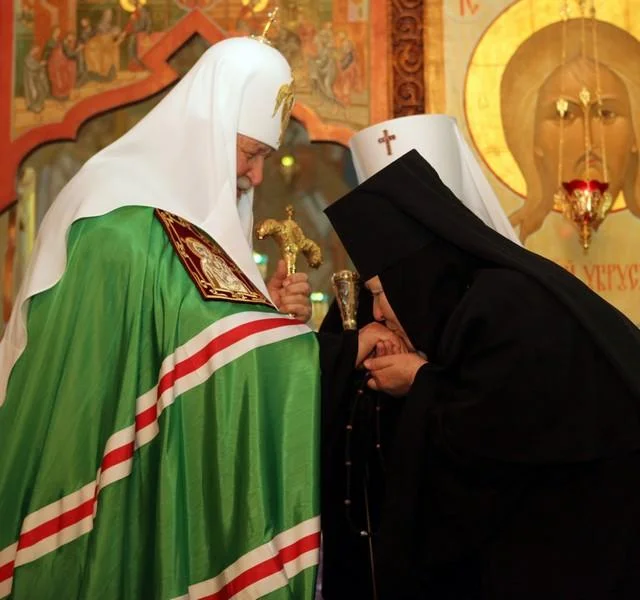
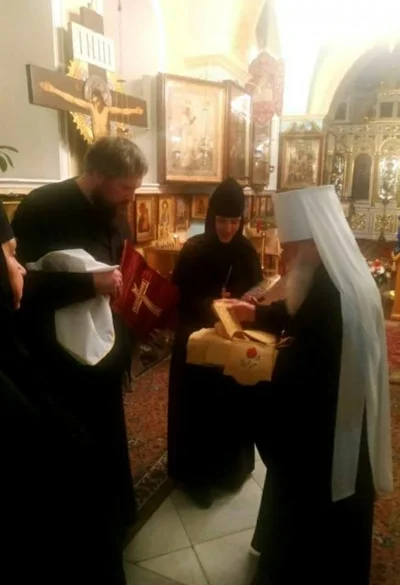
In the Church of St. Nicholas, His Holiness was greeted by Metropolitan Vikenty, who presented him with a panagia bearing an image of the Holy Trinity. In his address of welcome, Metropolitan Vikenty thanked His Holiness for his visit to the Diocese of Tashkent and also for the wise and timely decision to establish the Central Asian Metropolitan District.
The Primate of the Russian Orthodox Church addressed the faithful with a Primatial word:
"I am very glad that the very first visit I make after landing at Tashkent airport is to the Holy Trinity St. Nicholas Convent. I know the history of this convent. I know that after it was closed, many of the nuns went into hiding for fear of repression and worked in secular institutions, yet remained faithful to the Church. People gathered around some of them, and the nuns taught Orthodoxy to a generation that could obtain knowledge of the faith nowhere else. Their hearts must have bled when they saw the convent closed, wrecked and desecrated. But the time came, the convent was revived, and today it is an important spiritual centre of Tashkent and of the whole Diocese of Tashkent. I would like to honour the memory of all those who preserved the monastic tradition in Uzbekistan at a time when no one could even think of monasteries. God grant that the sisters today, too, approach their monastic calling with full responsibility.
Lay people have a special attitude toward monks and nuns. For many, a monk or a nun is the ideal of spiritual life, because each person, as it were, measures himself against the monastic and most often realizes that he himself could not bear such a feat, for the life of a monastic is truly a feat for the sake of Christ. But it also happens that people put on monastic garb, yet the vanity of the world gets in the way, and the feat does not come about... When a lay person meets such a monastic, a feeling of deep disappointment very often arises. That is why the responsibility of monastics is very great.
It is very important that our monasteries continue to be centres of spiritual attraction, that people from the world gladly attend monastic services, talk with monastics and turn to them asking for their prayers, and that prayers for the world and for people are always offered up in monastic communities. For the chief obedience of a monk is to pray for those who cannot pray as a monk does.
And so I call on you, Mother, and on all the sisters to remember your very high calling and not to shut yourselves up in your inner life, but to remember that the influence of the convent must extend beyond its walls. That is exactly what your predecessors did in the hardest of times, when it was impossible even to wear monastic clothing.
May the Lord preserve the Holy Trinity St. Nicholas Convent! May monastic life flourish here! May more and more sisters join the monastic life here, and we believe that through the prayers of those who have dedicated themselves to God, the mercy of the Lord will extend also to those who are far from the convent walls."
His Holiness also addressed words of gratitude to Metropolitan Vikenty:
"I thank you, Vladyka Vikenty, for the labours you bear, including the spiritual care of this convent. I am convinced of how important the decision to create the Central Asian Metropolitan District was. Who in Moscow, at the level of the whole Church, knew about the particular features and details of Orthodox life in the Central Asian republics? There were very few such people. But now, since the metropolitan who heads the Central Asian District is a permanent member of the Holy Synod, at every session of the Synod he reports on what is happening in the Central Asian District. He tells what is happening in each diocese and presents the journals of the Synod of the Central Asian Metropolitan District, and the Holy Synod of the Russian Orthodox Church takes decisions on their basis.
All this makes it possible to feel the pulse of church life here in Central Asia, and we note with gratitude to God that church life in the Dioceses of Tashkent, Bishkek and Dushanbe and in the Patriarchal Deanery in Turkmenistan is developing successfully today. We rejoice at this and hope that the Orthodox faith will be preserved among the Orthodox people living across the expanses of the Central Asian Metropolitan District."
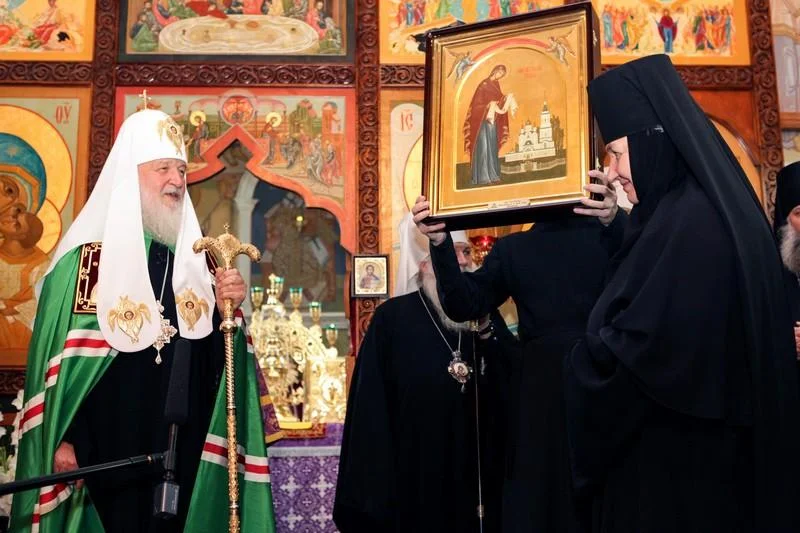
In memory of his visit to the convent, the Primate of the Russian Church presented it with an icon of the Protection of the Most Holy Theotokos.
His Holiness Patriarch Kirill then visited the precentor and catechist department of the Tashkent Theological Seminary, located on the grounds of the convent.