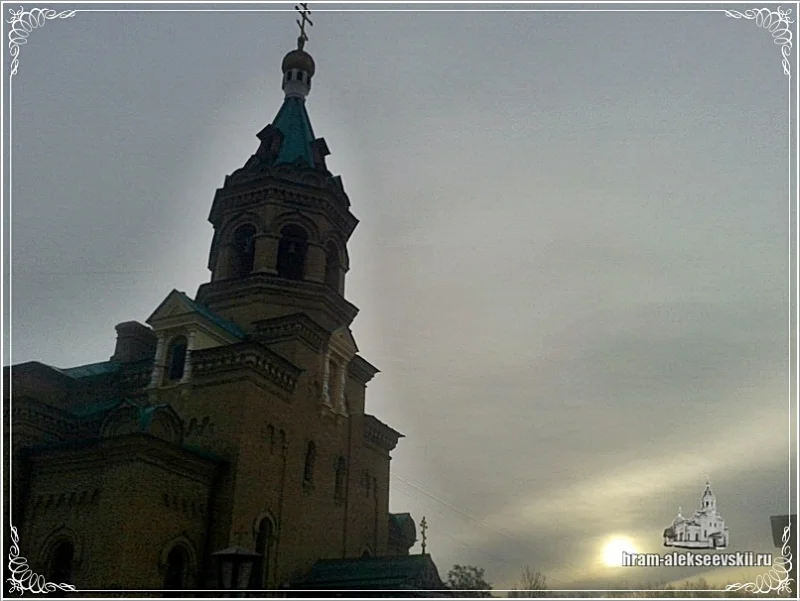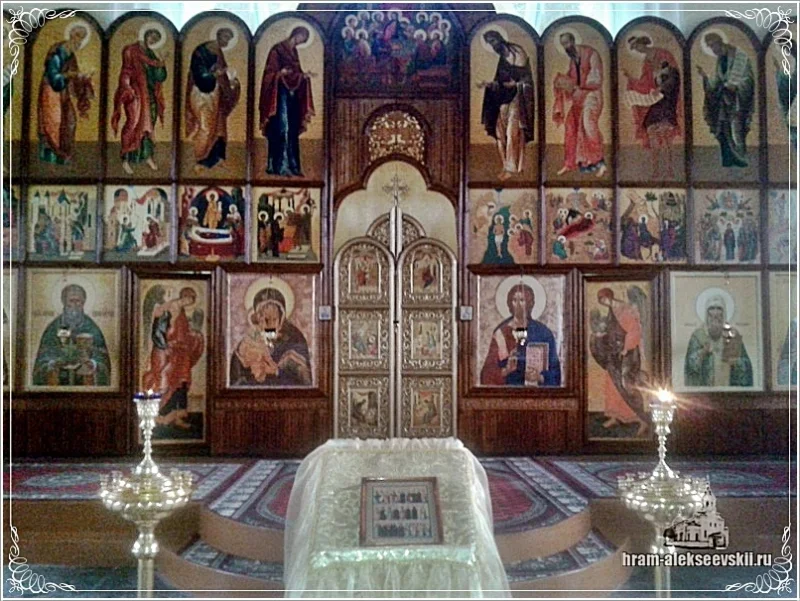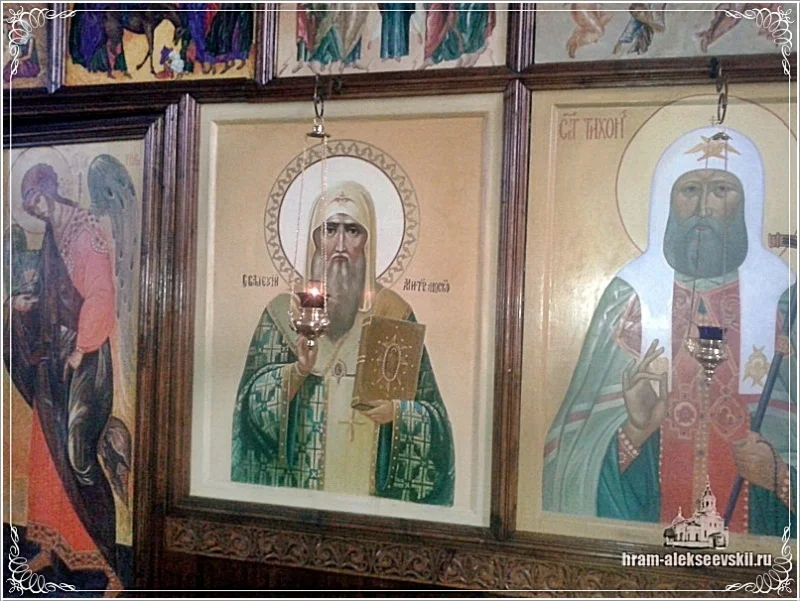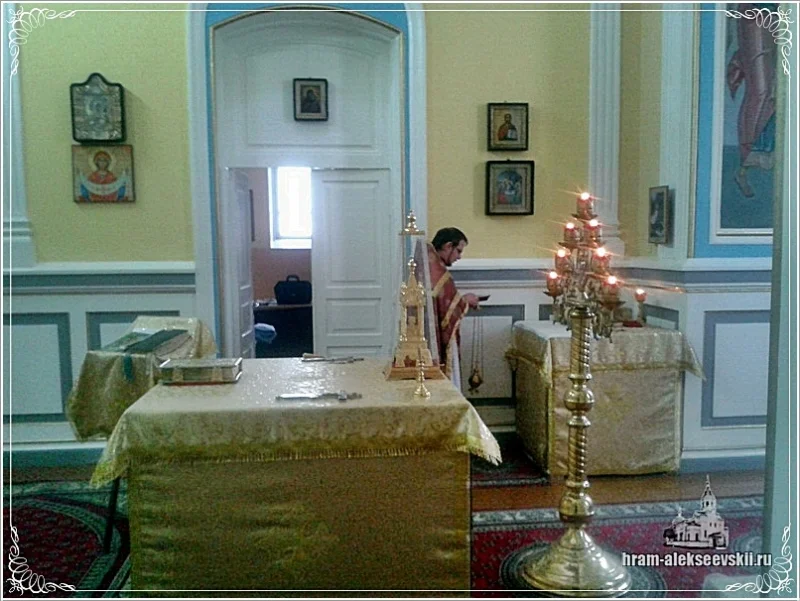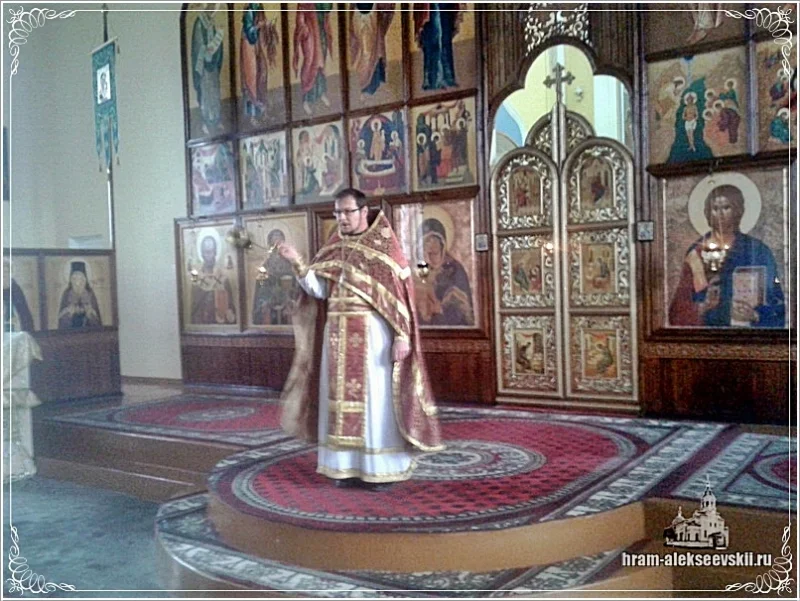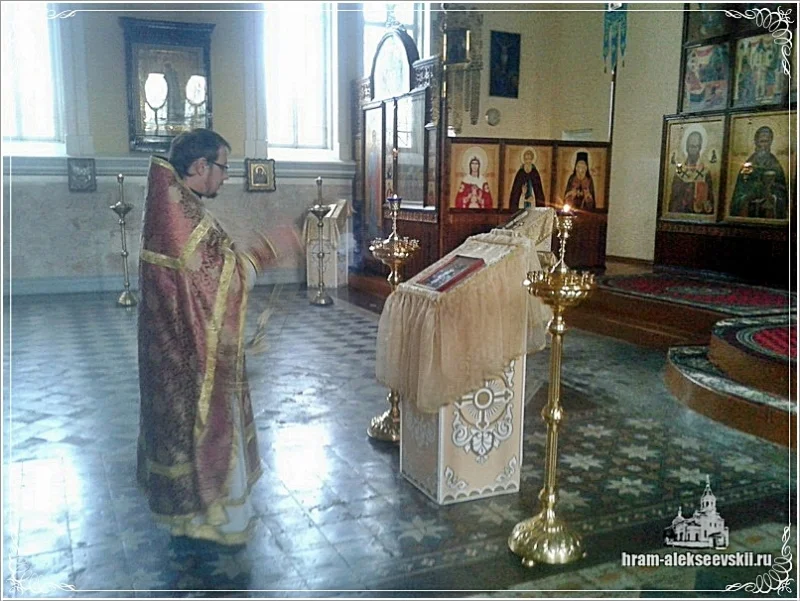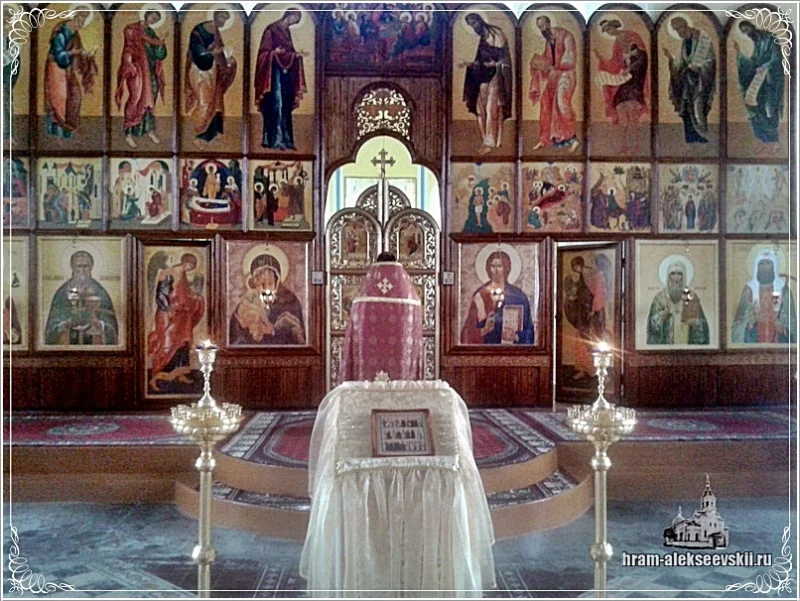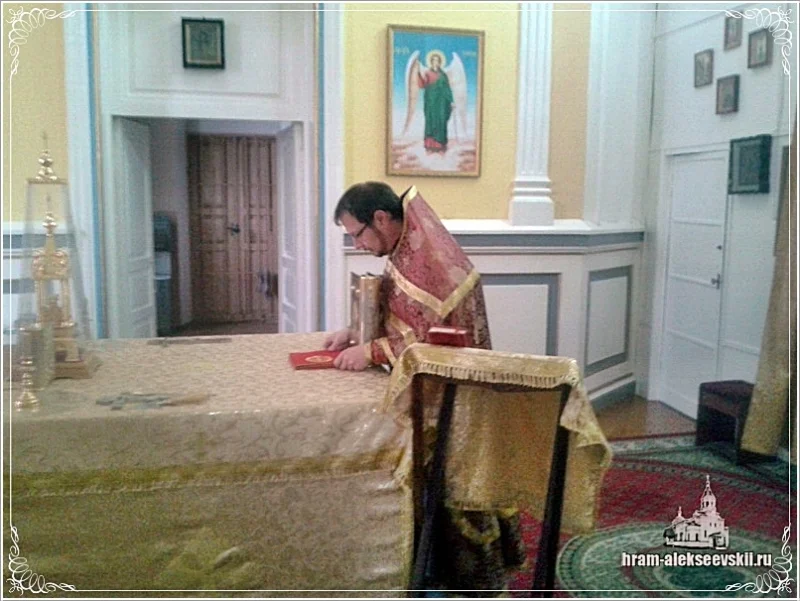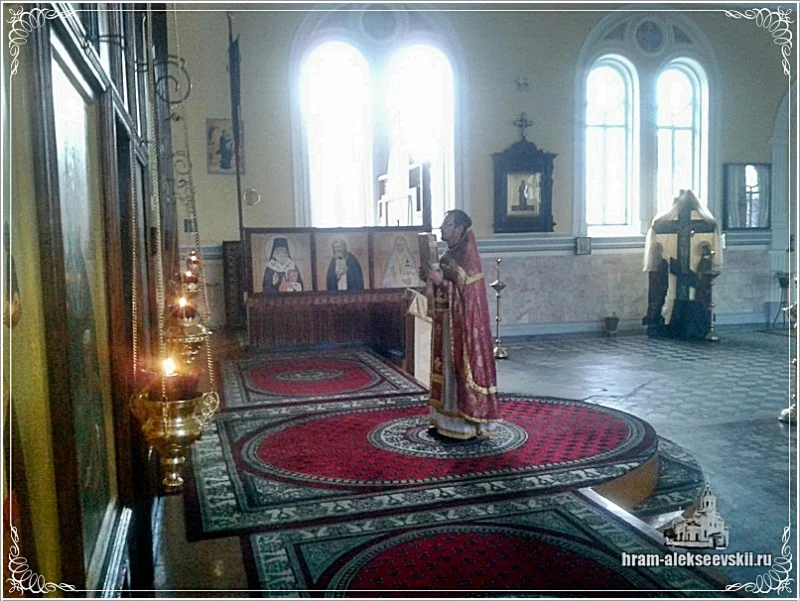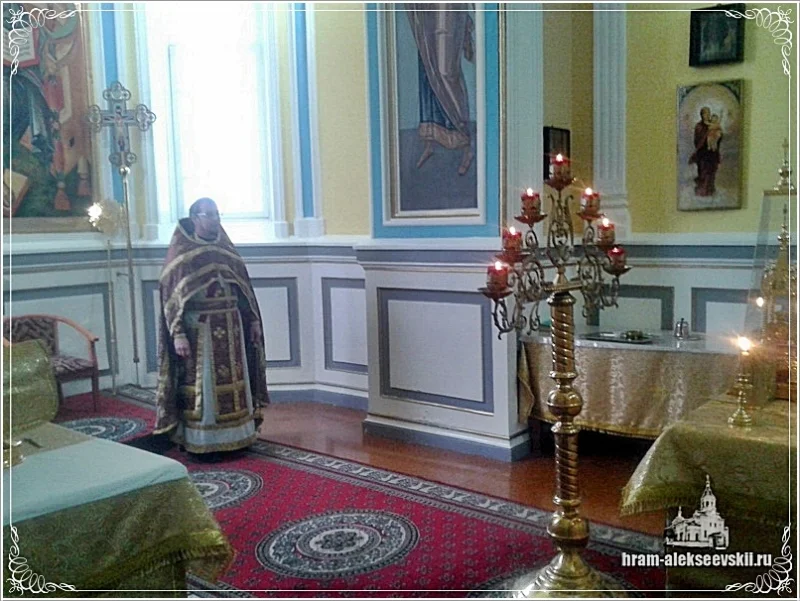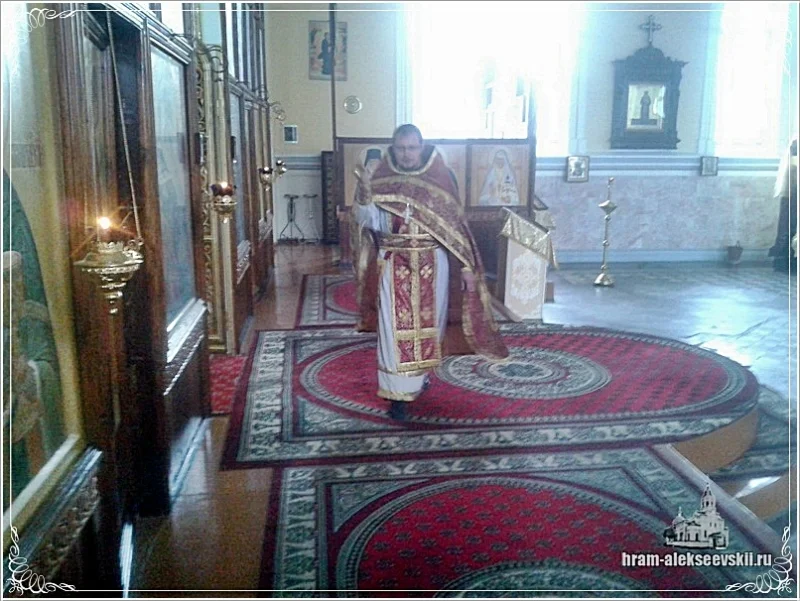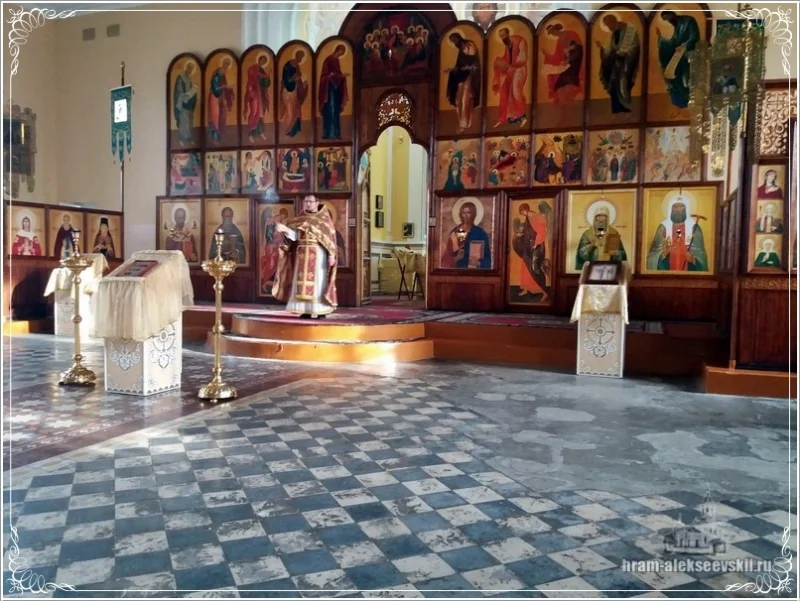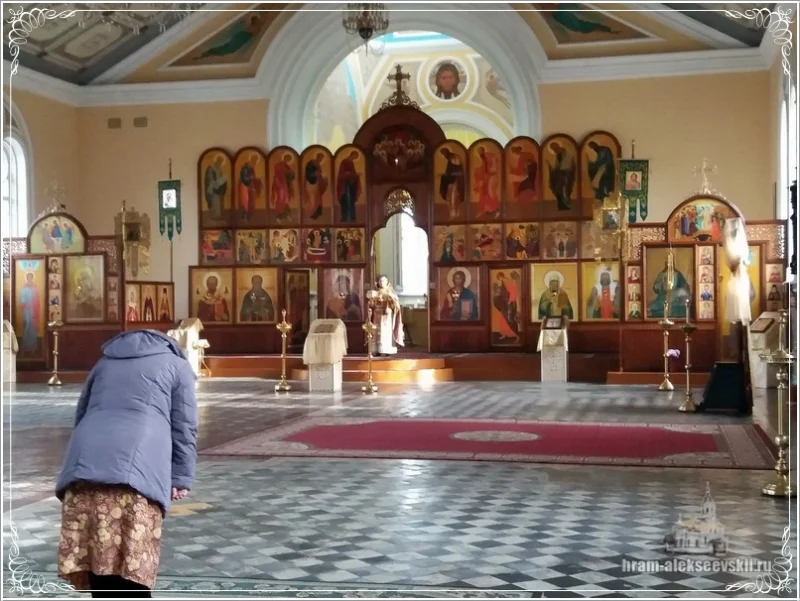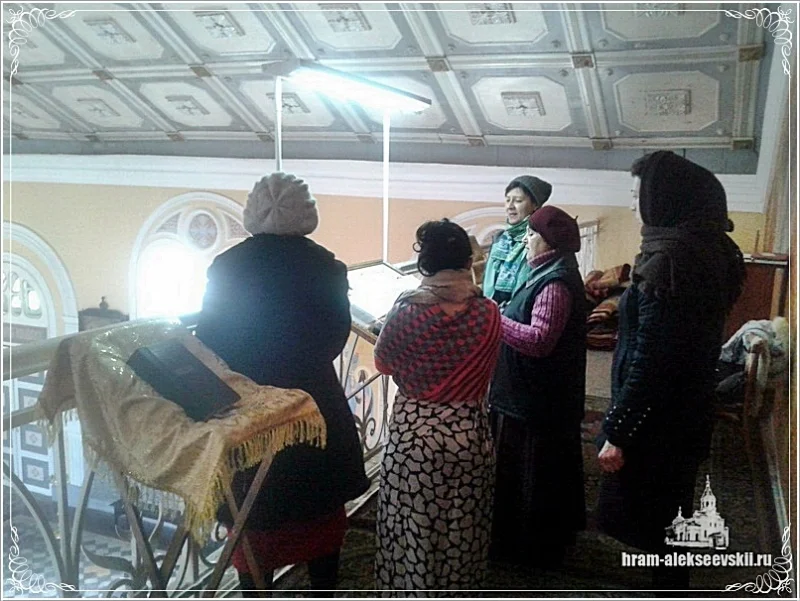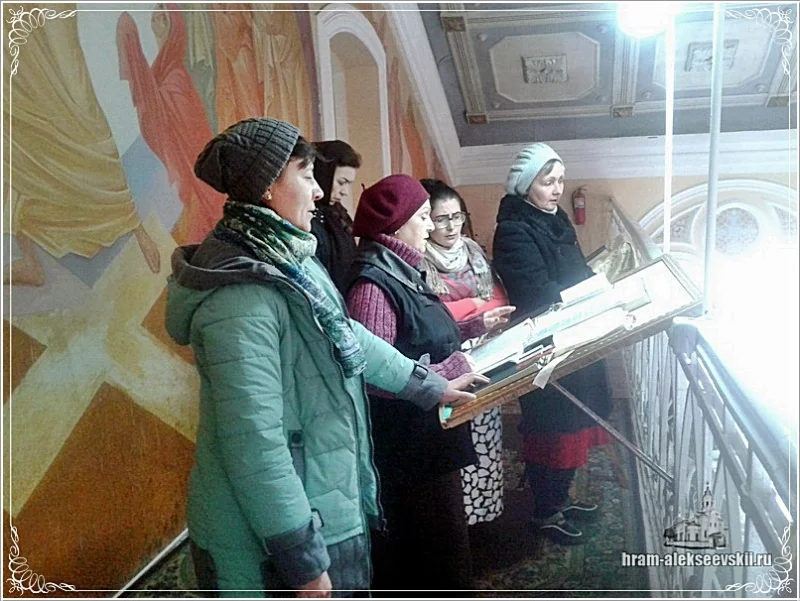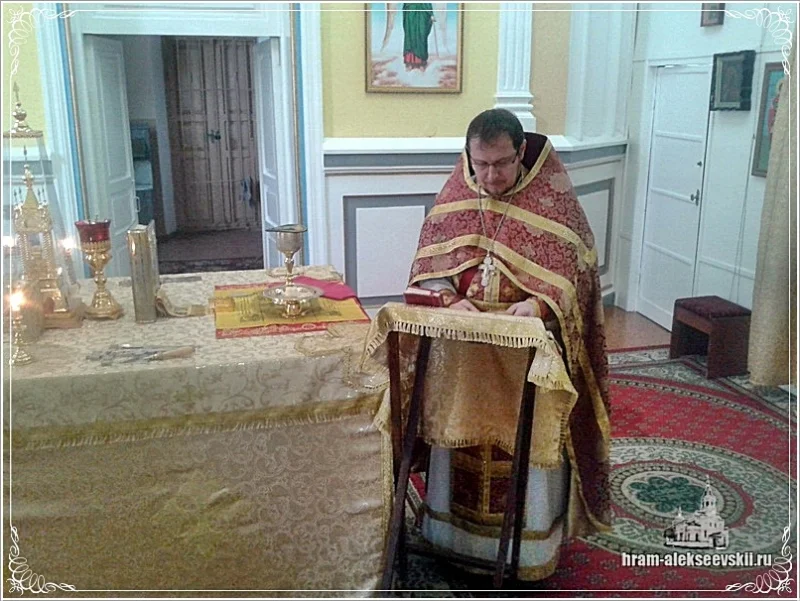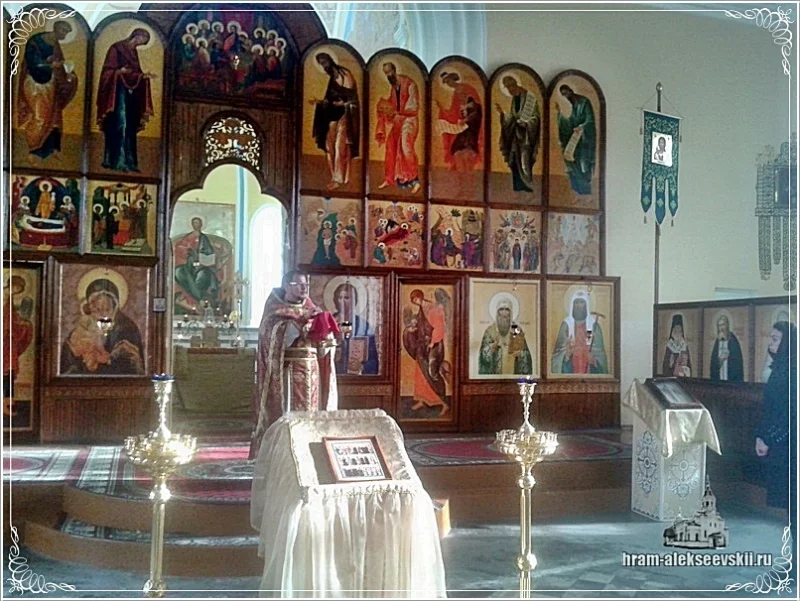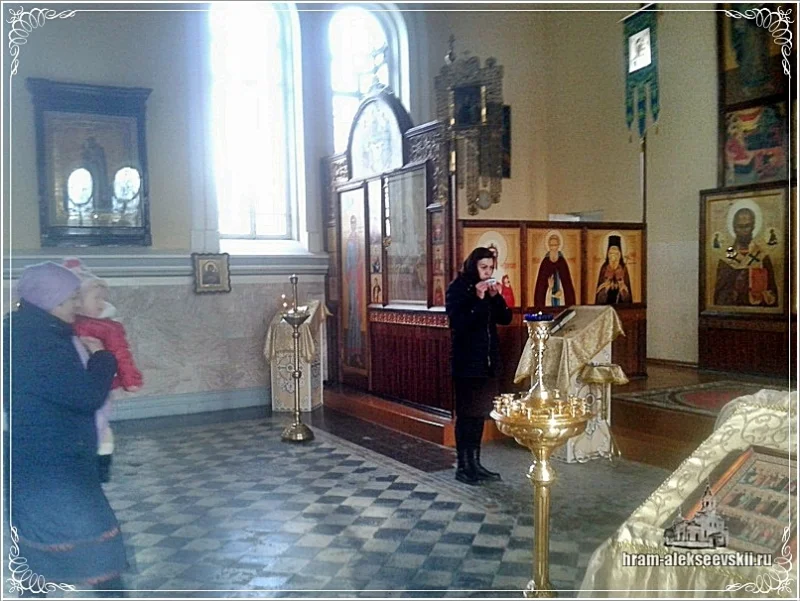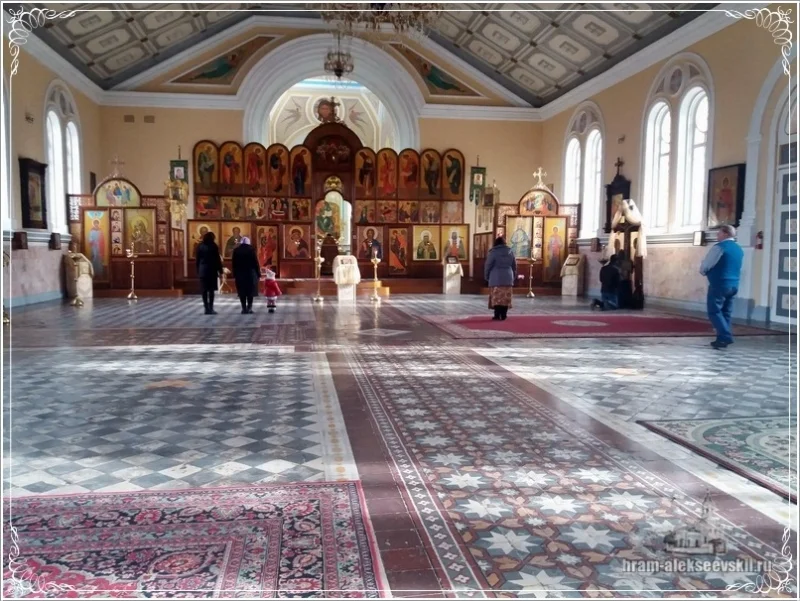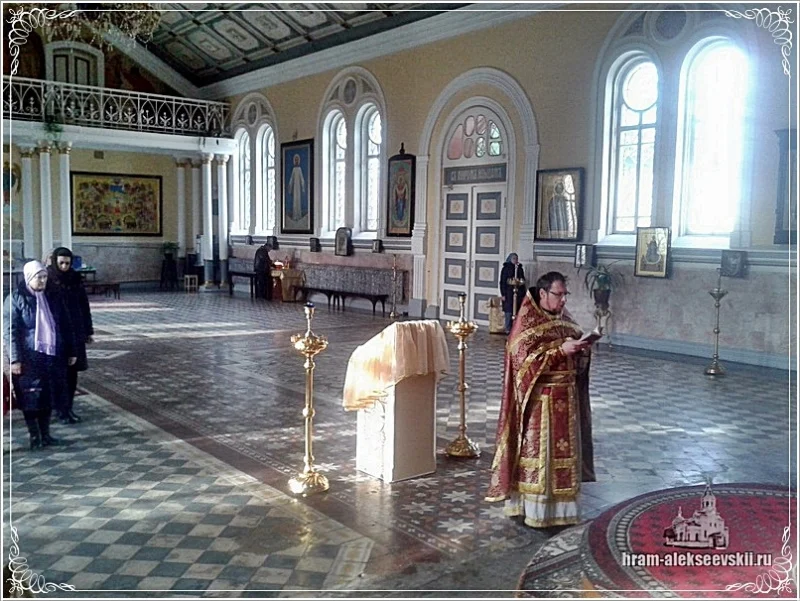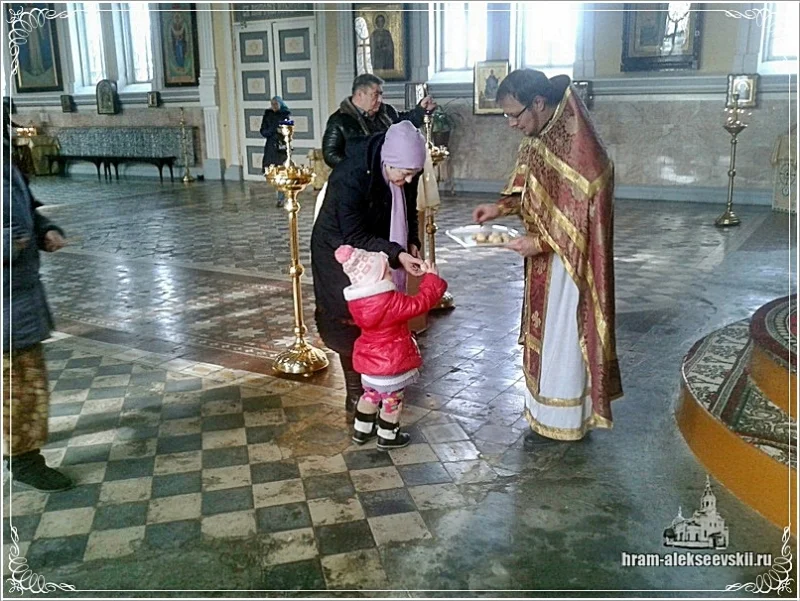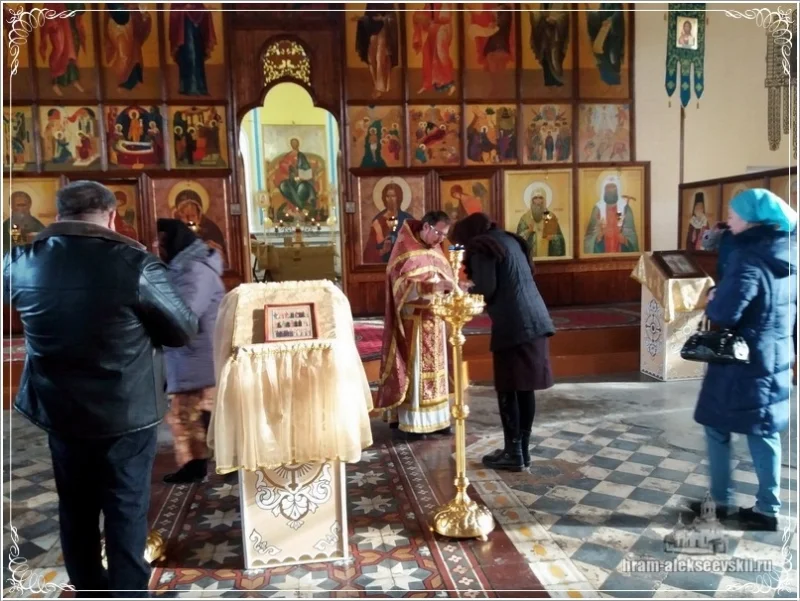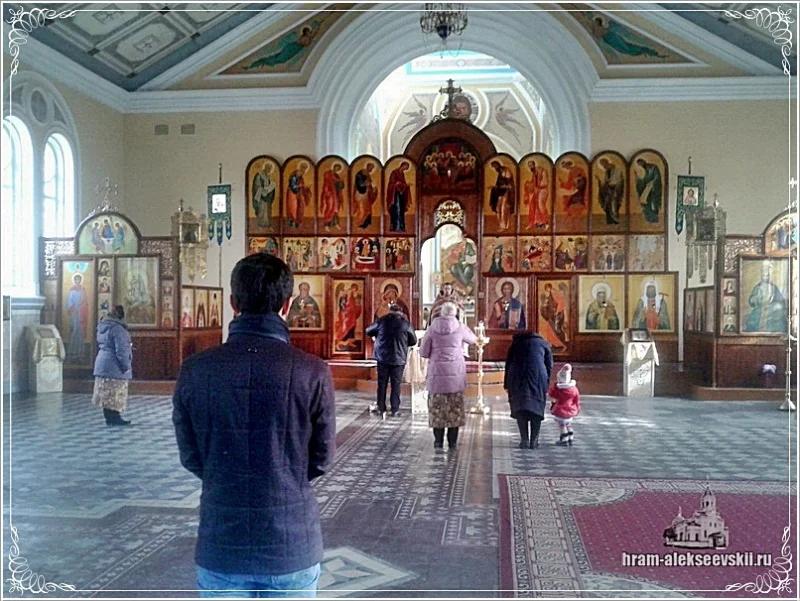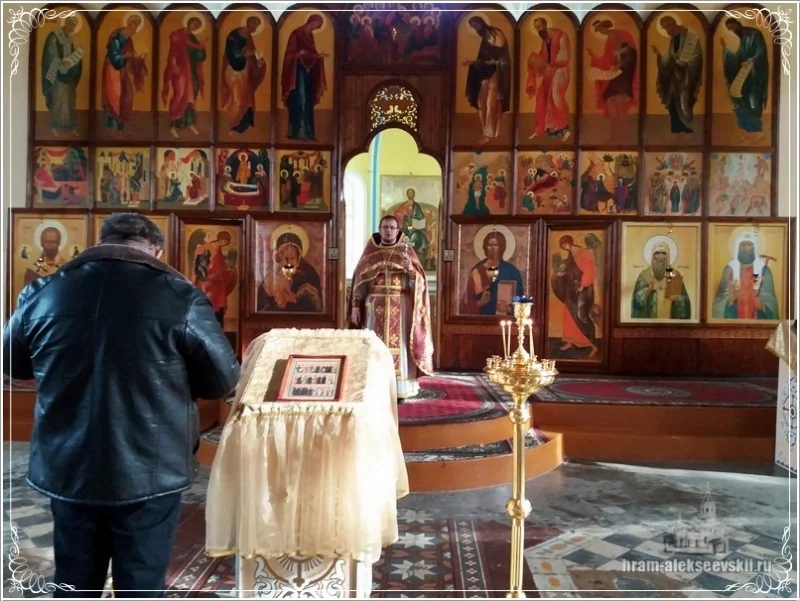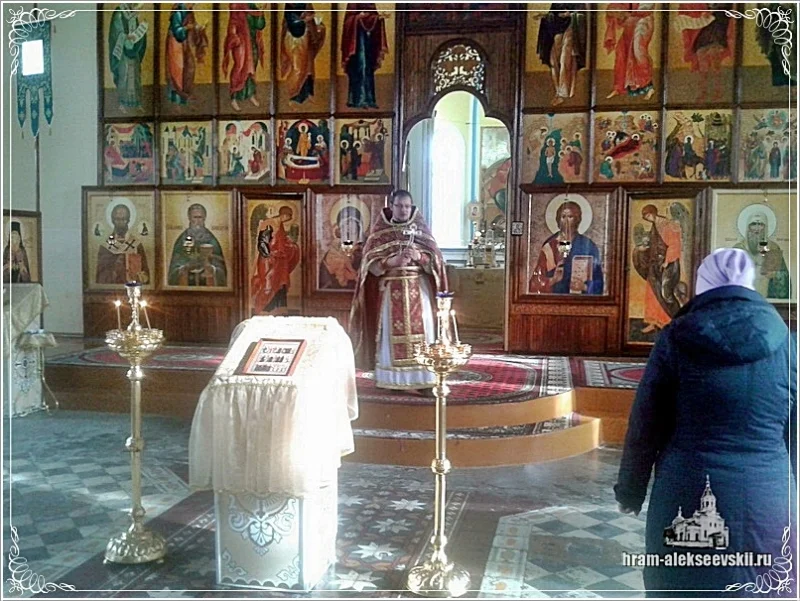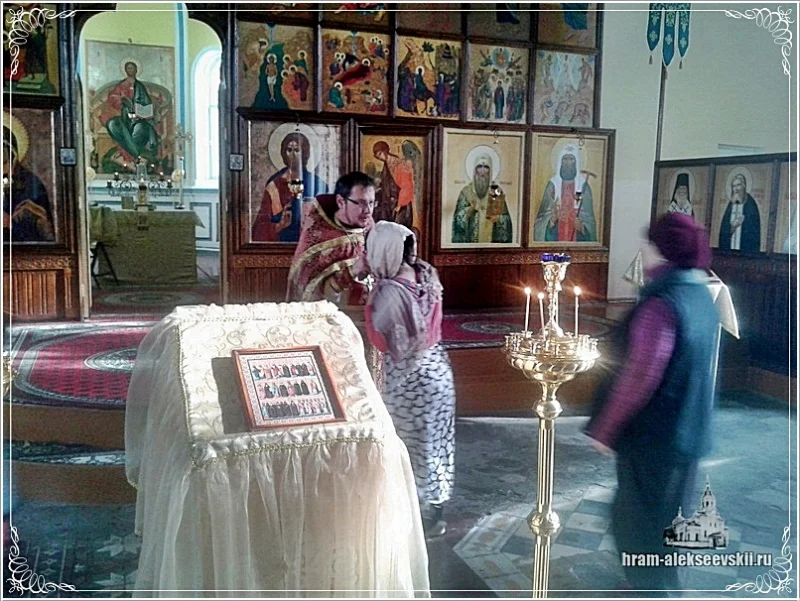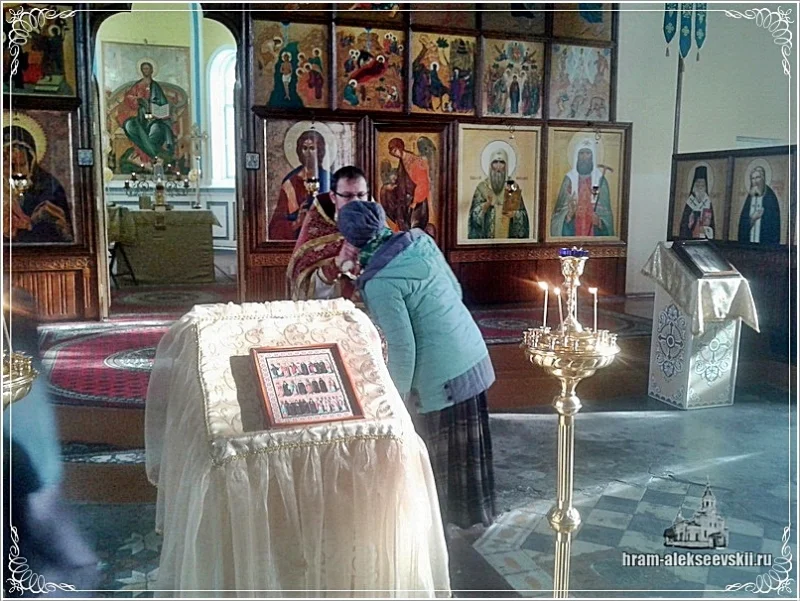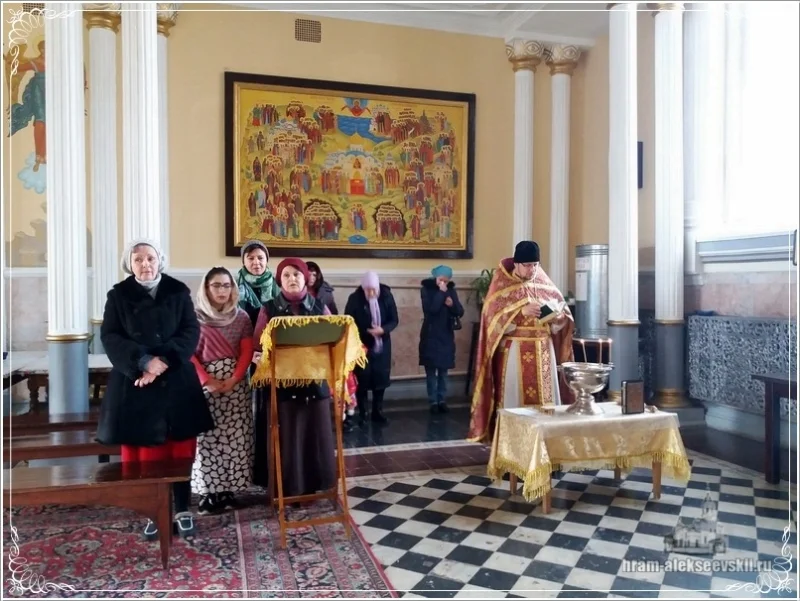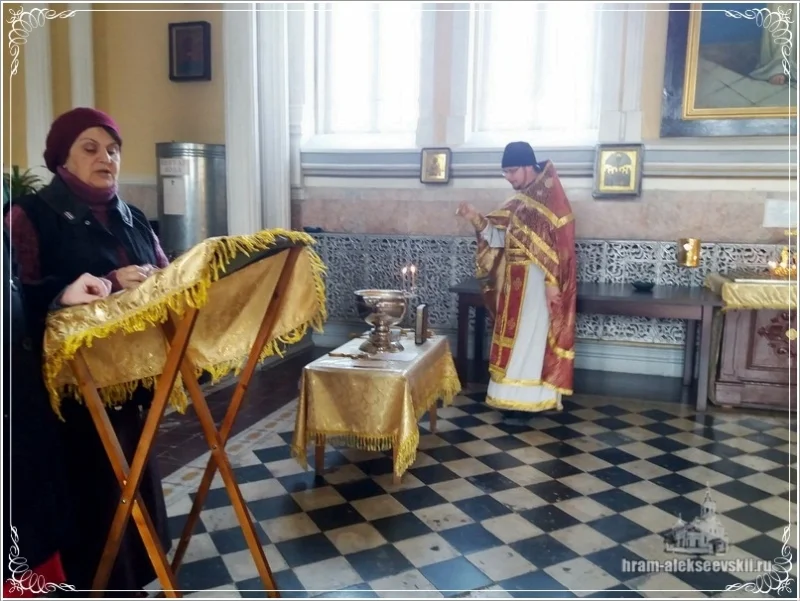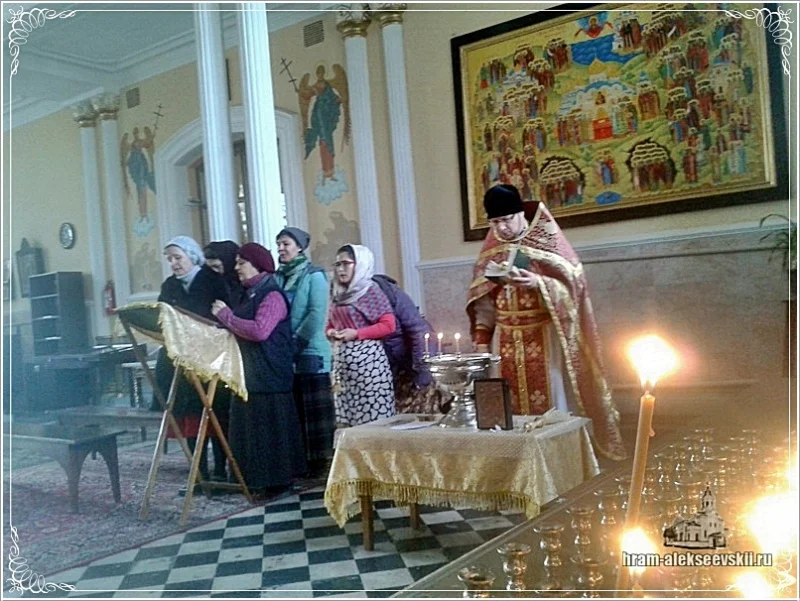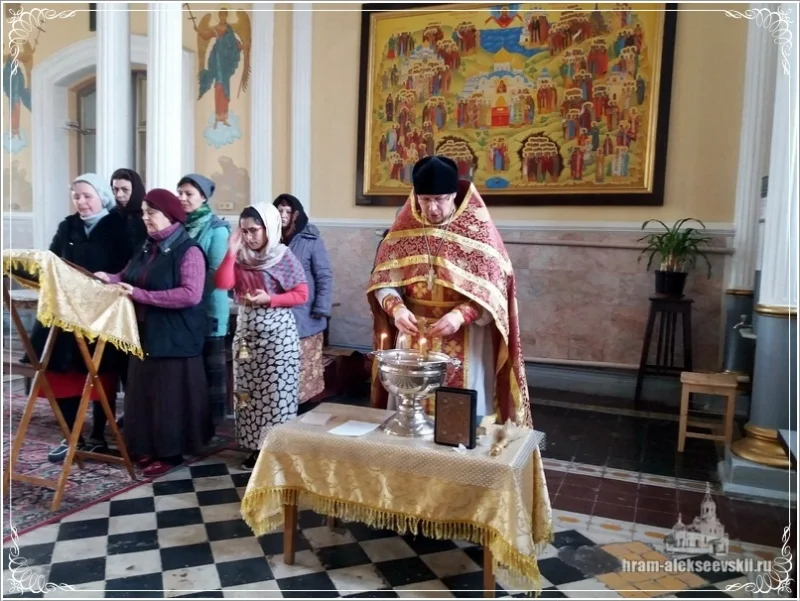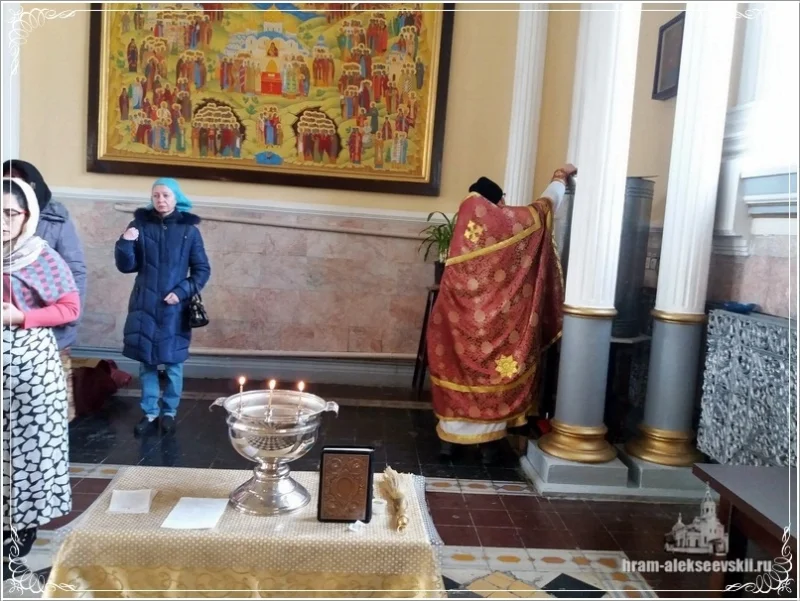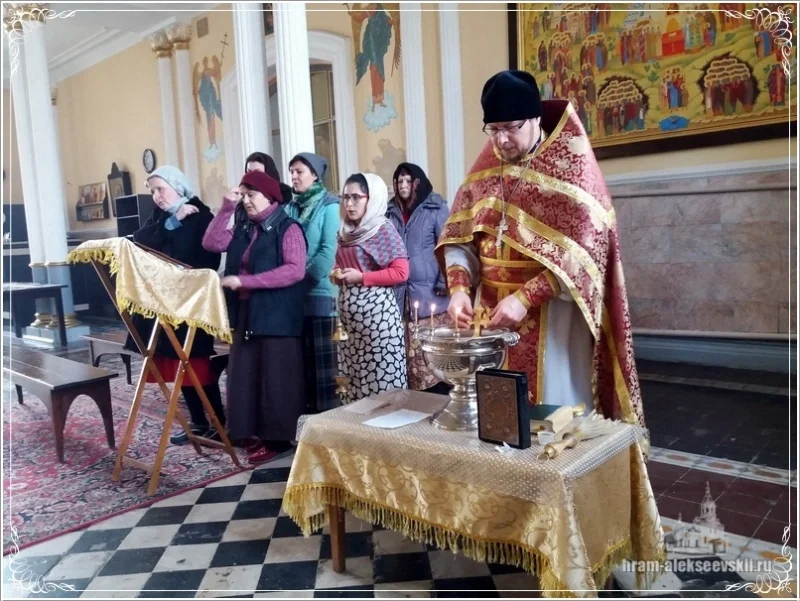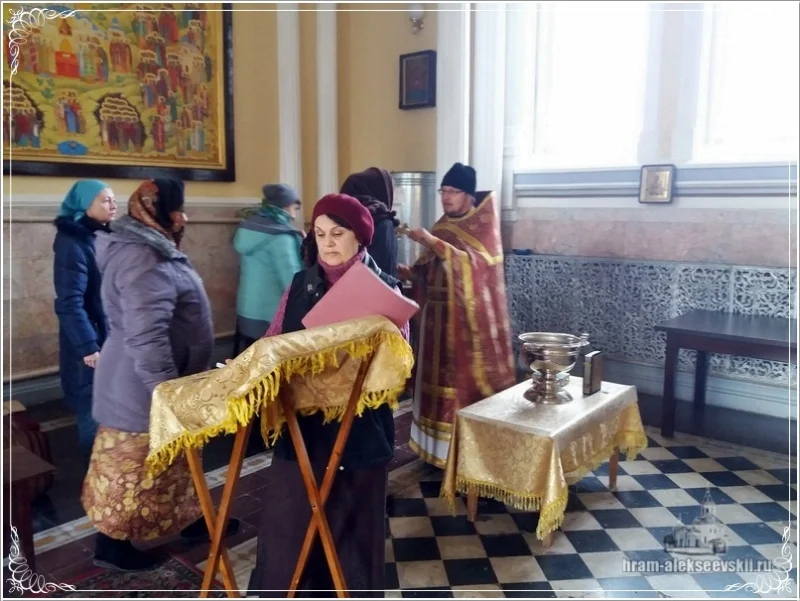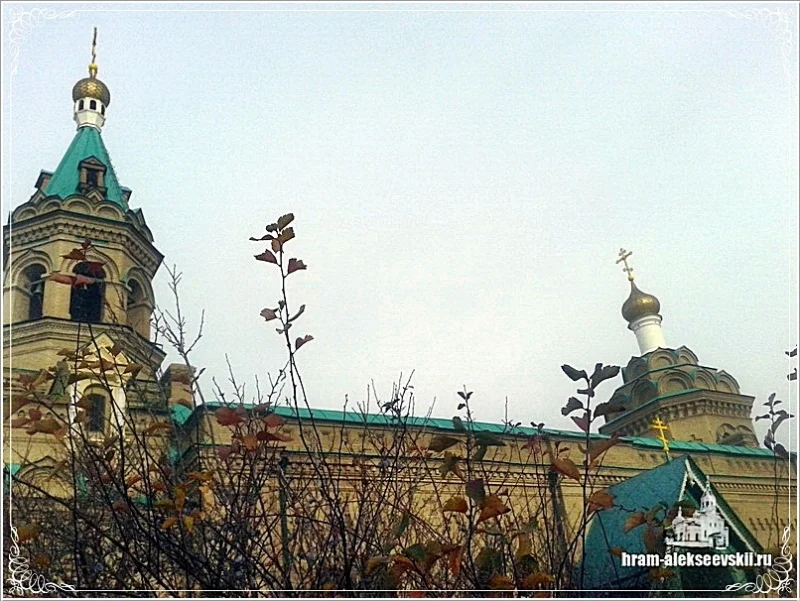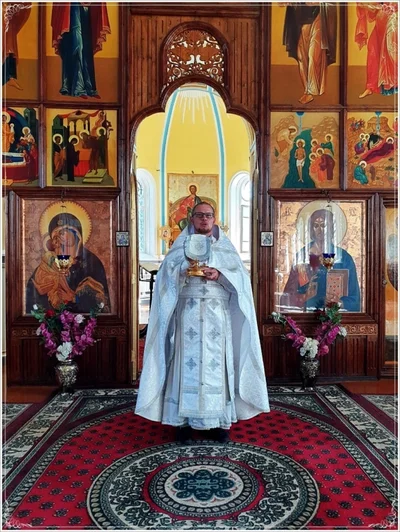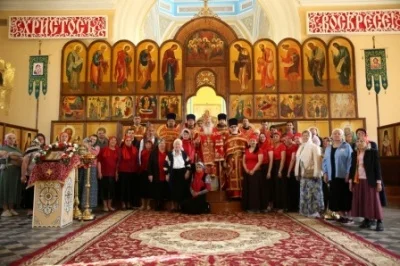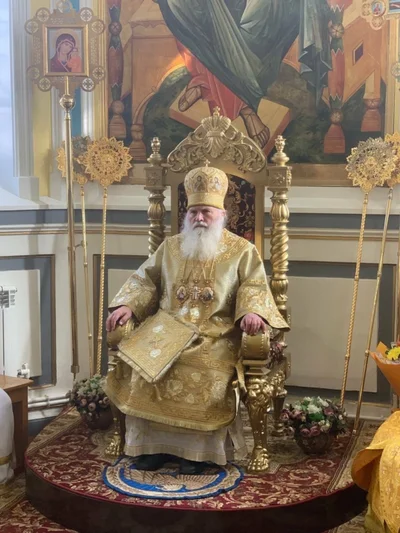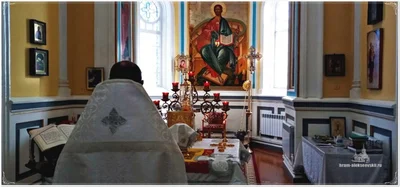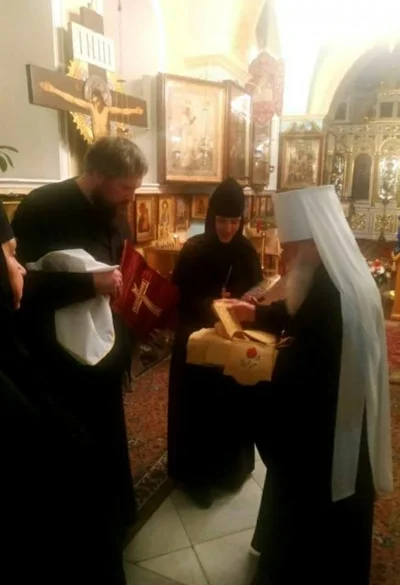
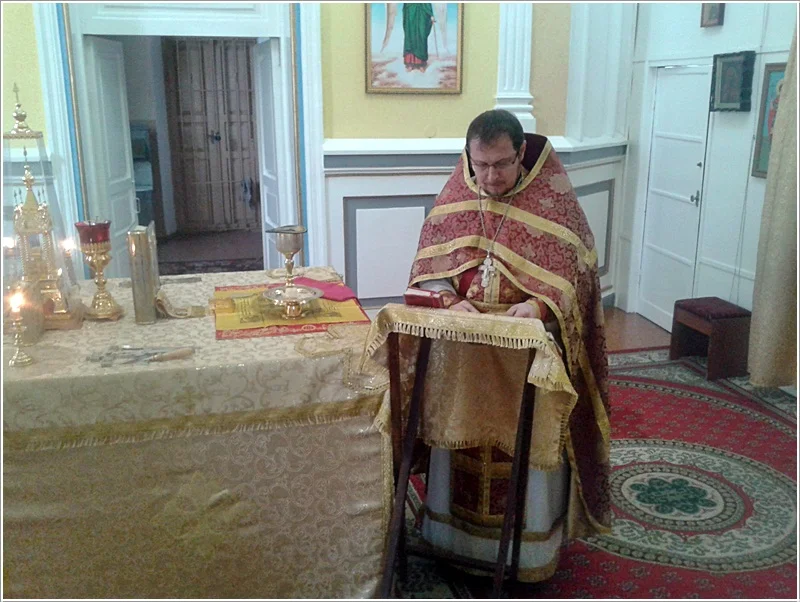
On 17 December, the feast of the Holy Great Martyr Barbara, Priest Igor Babakov, rector of Saint Alexius Cathedral, celebrated a festive Divine Liturgy!
The All-Night Vigil was served in the church the evening before.
The Holy Great Martyr Barbara was the daughter of the noble pagan Dioscorus and lived with her father in the city of Heliopolis in Phoenicia during the reign of Maximian Galerius (305-311). She lost her mother at an early age. Left a widower, Dioscorus devoted all his attention to raising his only daughter. Barbara delighted him with her gifts and her beauty. He settled his daughter in a tower, hiding her from outsiders' eyes. Only her pagan teachers and maidservants had access to her.
In her seclusion Barbara observed the life of nature, whose beauty brought inexpressible consolation to her soul. She began to wonder Who had created all this beauty. The soulless idols made by human hands, which her father worshipped, could not be the source of life. Guided by the Holy Spirit, Barbara came to the thought of the One, Life-giving God, the Creator of the universe.
Many noble and wealthy young men, hearing of Barbara's beauty and chastity, sought her hand. Dioscorus invited his daughter to choose a bridegroom, but Barbara firmly refused. Dioscorus was grieved by his daughter's persistence and left Heliopolis, expecting that in his absence Barbara would grow bored and change her mind. He gave her complete freedom, hoping that conversations with various people and new acquaintances would influence his daughter and that she would agree to marry.
Soon after her father's departure, Barbara came to know some Christian maidens, who told her about the Incarnation of Jesus Christ and His redeeming sacrifice, about the general resurrection and the future judgment of the living and the dead, about the eternal torments of sinners and idolaters and the blessedness of the righteous. In Barbara's heart, which had long thirsted to hear the word of truth, love for the Lord Jesus Christ and the desire to become a Christian were kindled. By God's providence, a presbyter from Alexandria was in Heliopolis at that time. From him Barbara learned the foundations of the Christian faith and received holy Baptism.
Before his departure, Dioscorus had ordered a bathhouse to be built with two windows in honour of the sun and the moon. Barbara, however, persuaded the workmen to make three windows, in the image of the Light of the Trinity. Next to the bathhouse was a font surrounded by a marble railing. On the eastern side of the railing Barbara traced a cross with her finger, and it was imprinted on the stone as if cut with iron. The print of the saint's foot was left on a stone step, and a spring of healing water gushed forth from it.
Dioscorus soon returned and, learning of Barbara's instructions, was displeased. When he spoke with her, he learned with horror that his daughter was a Christian. In a rage Dioscorus drew his sword and was about to strike Barbara, but she ran away. As Dioscorus was catching up with her, a mountain blocked Barbara's path. The saint turned to God for help. The mountain parted, and she entered a cleft through which she came out onto the summit. There Barbara hid in a cave.
Dioscorus found his daughter with the help of a shepherd, beat her cruelly, and then shut her in a small dark room and began to starve her of food and water to force her to renounce the Christian faith. Failing in this, he handed his daughter over to the governor Martian, a persecutor of Christians.
For a long time Martian tried to persuade St. Barbara to bow down to the idols. He promised her all kinds of earthly blessings, and then, seeing her steadfastness, handed her over to torture: St. Barbara was beaten with ox sinews until the ground around her was red with blood. After the beating, her wounds were rubbed with a hair shirt. Barely alive, Barbara was thrown into prison. At midnight an ineffable Light shone in the prison, and the Lord Jesus Christ Himself appeared to the suffering Great Martyr, healed her wounds, sent joy into her soul and consoled her with the hope of blessedness in the Heavenly Kingdom.
The next day the Great Martyr Barbara again stood before Martian's tribunal. Seeing her healed of her wounds, the governor did not come to his senses and again told her to offer sacrifice to the idols, insisting that it was they who had healed her. But St. Barbara glorified the Lord Jesus Christ, the true Healer of souls and bodies. She was subjected to even greater torments.
In the crowd stood a Christian woman, Juliana (died c. 306), who indignantly began to denounce Martian's cruelty and declared before all that she too was a Christian. She was seized and tortured just like the Great Martyr Barbara. The martyrs were hung up and beaten with ox sinews and scraped with iron hooks. Then the Great Martyr Barbara's breasts were cut off, and she was led naked through the city. But an Angel of the Lord covered the Great Martyr, and those who watched this torment did not see her nakedness.
The governor sentenced both martyrs to be beheaded with the sword. The execution of the holy Great Martyr Barbara was carried out by her own father. This took place around 306. Martian and Dioscorus received retribution from God immediately after the execution: they were killed by a stroke of lightning.
In her prayer before death, the holy Great Martyr Barbara asked the Lord to deliver all who would seek her help from unforeseen misfortunes and from sudden death without repentance, and to pour out His grace upon them. In response she heard a voice from Heaven promising to grant what she had asked. The bodies of the holy martyrs were buried by Galentian, who later built a church over their grave.
In the 6th century the relics of the holy Great Martyr Barbara were transferred to Constantinople.
By God's providence, Princess Barbara, daughter of the Byzantine Emperor Alexios I Komnenos (1081-1118), upon marrying the Russian Prince Svyatopolk Izyaslavich (Michael in holy Baptism), brought the relics of the holy Great Martyr Barbara with her to Kiev in 1108, where they rest to this day in the Cathedral of St. Vladimir.
At the end of the Liturgy, Fr. Igor thanked the parishioners for their common prayer and greeted them on the feast.
A moleben with the blessing of water was then served in the church.