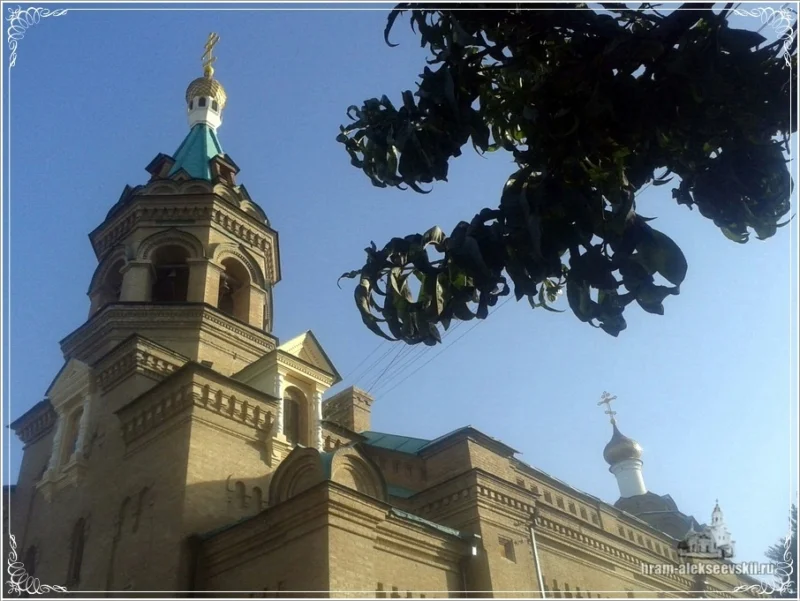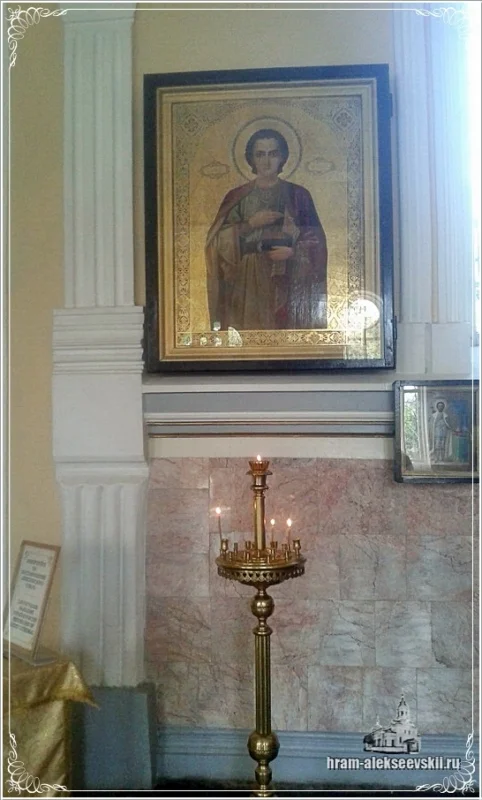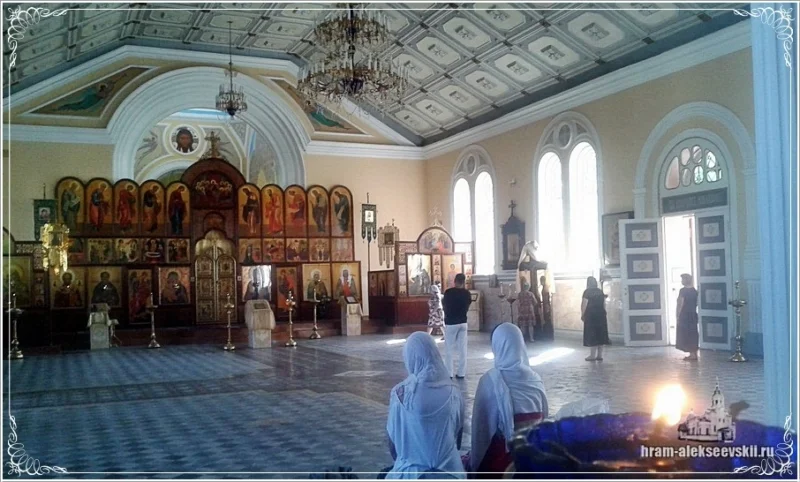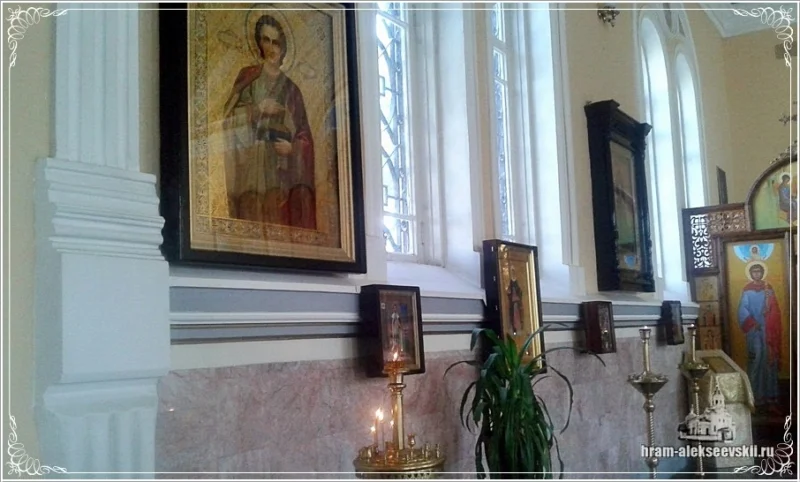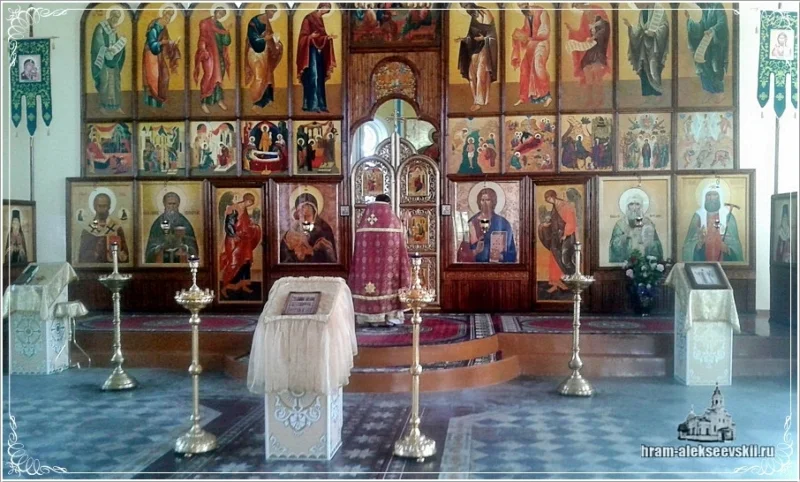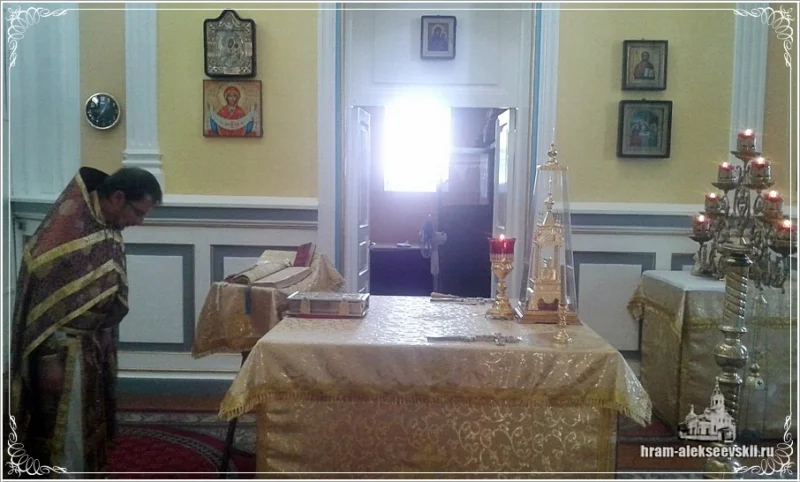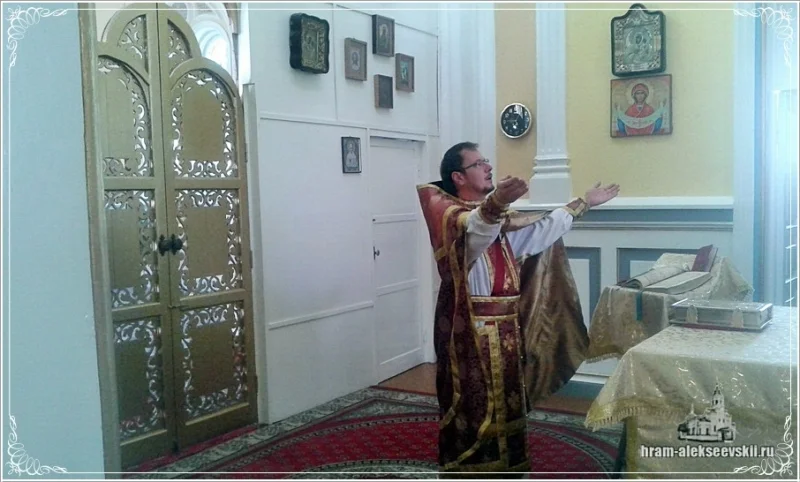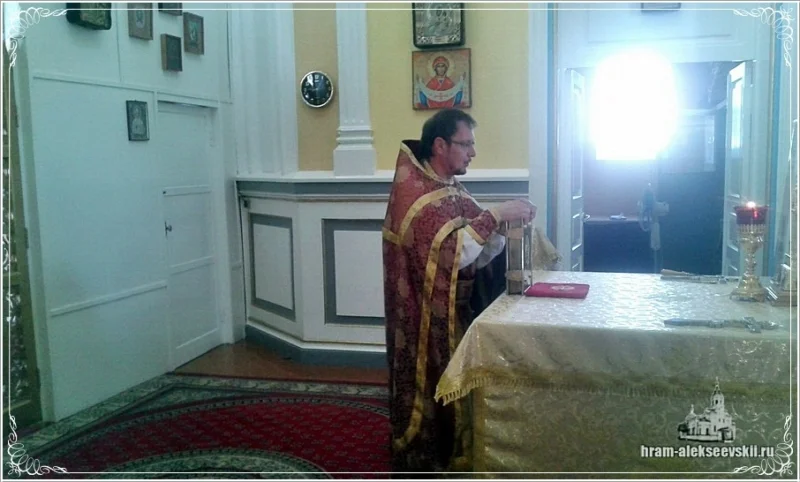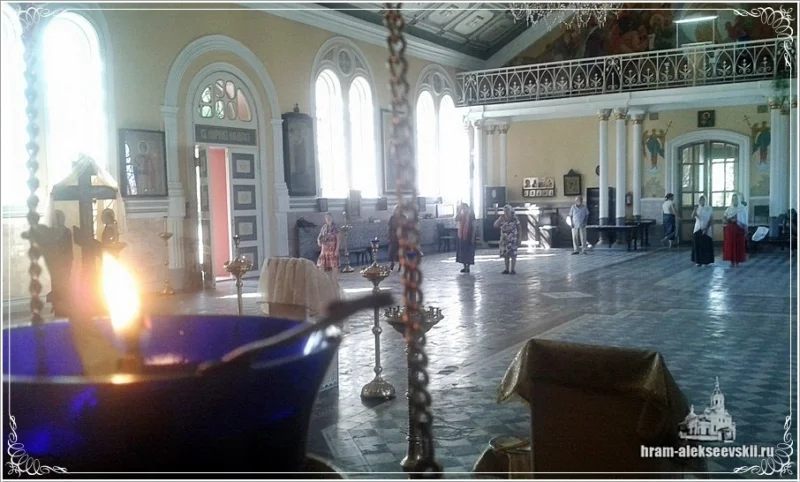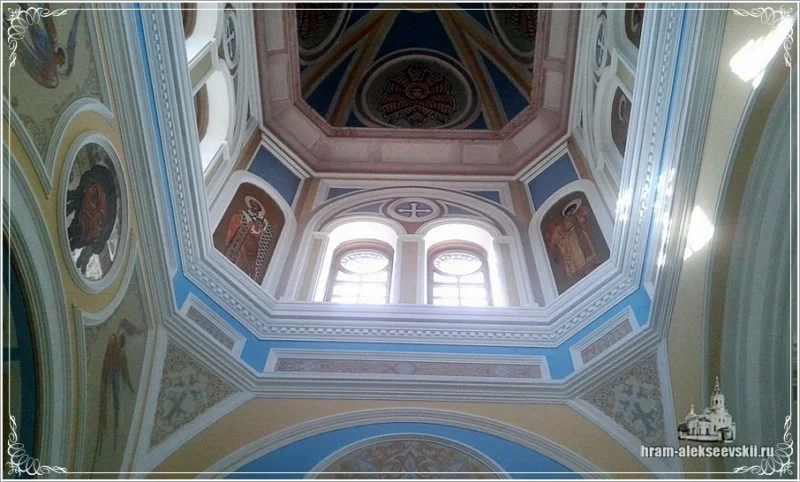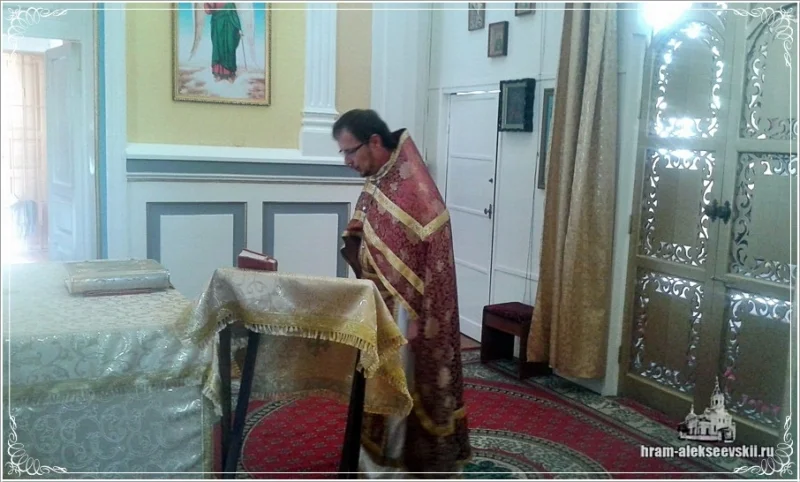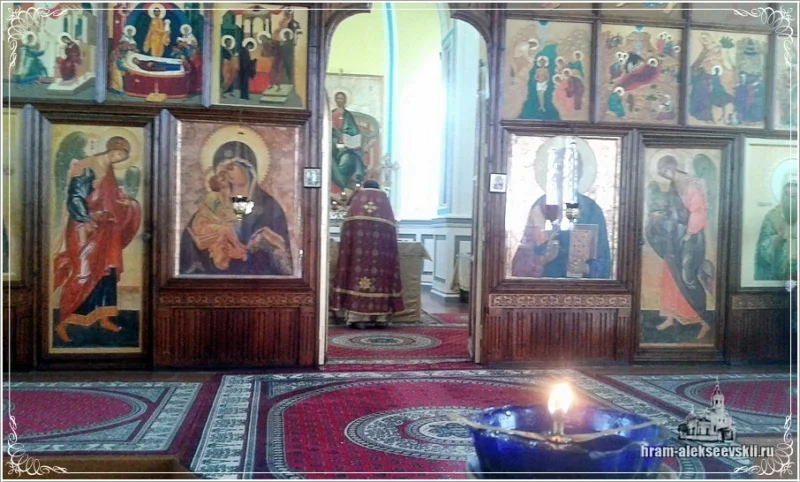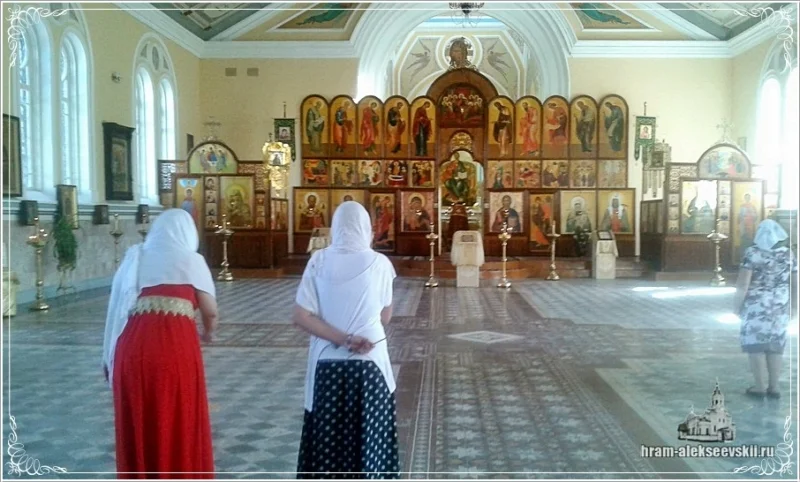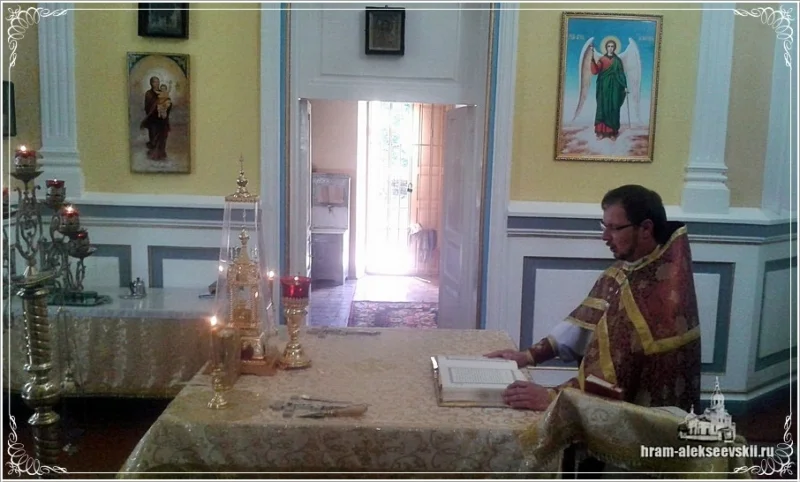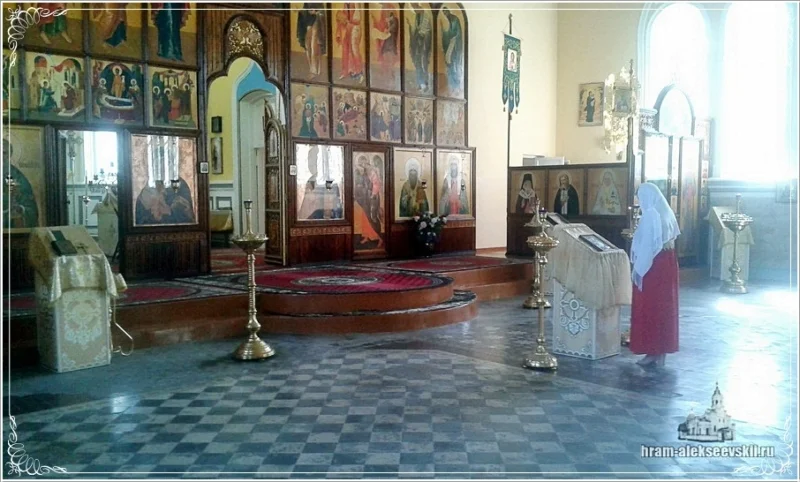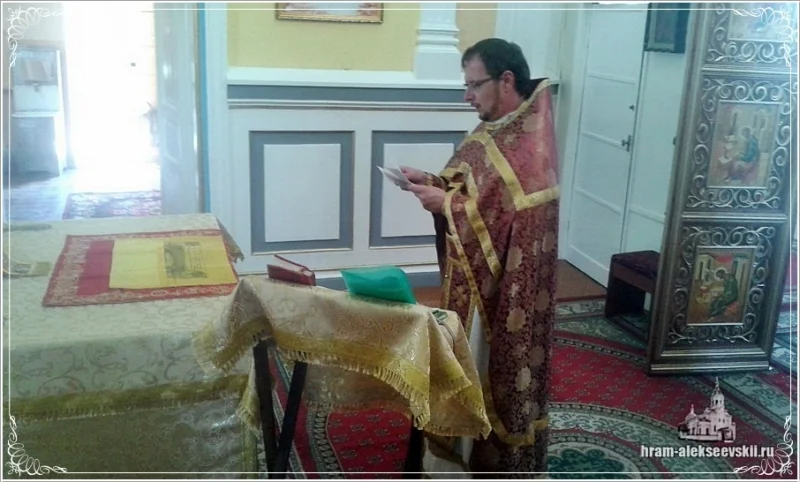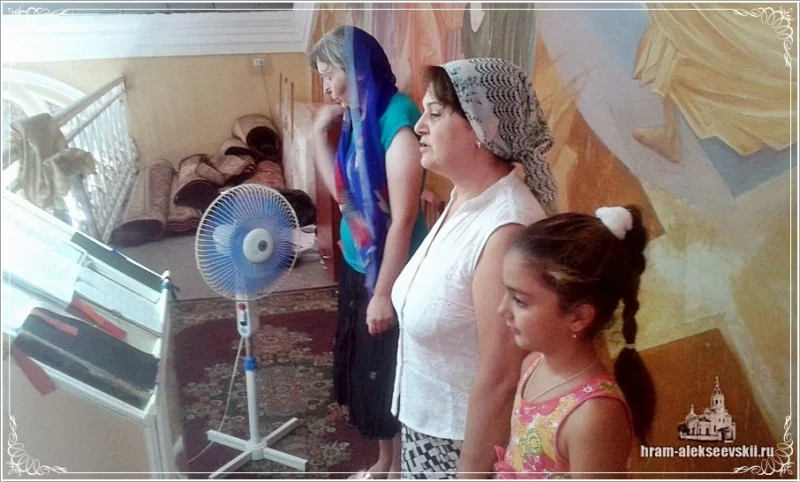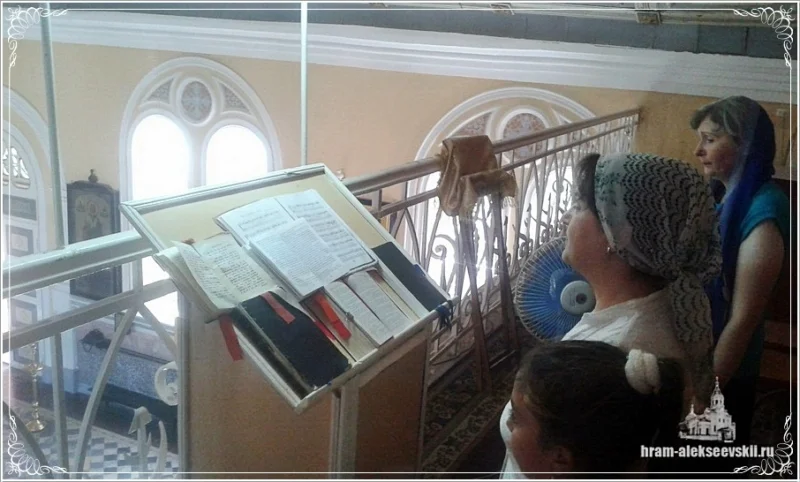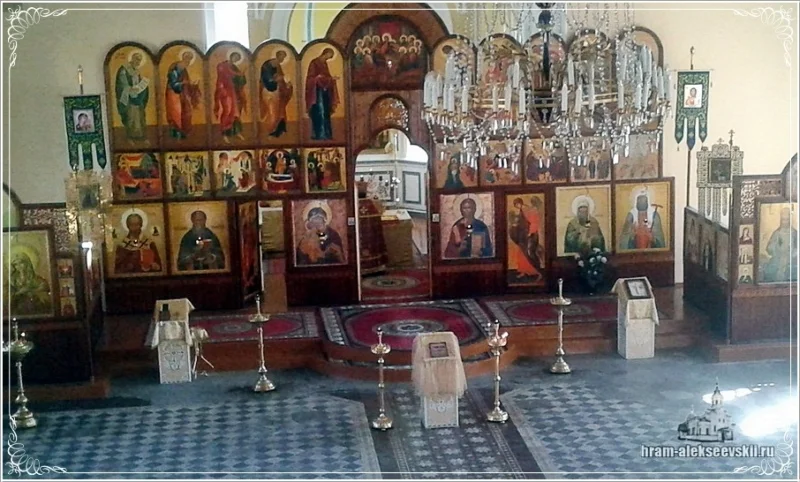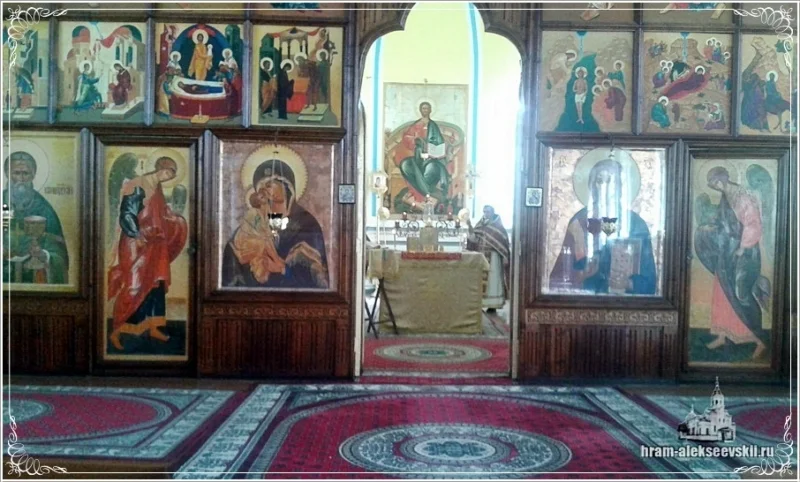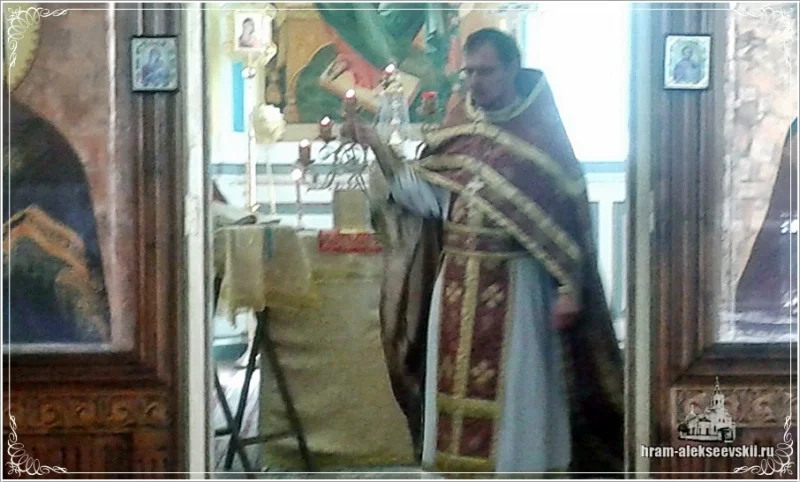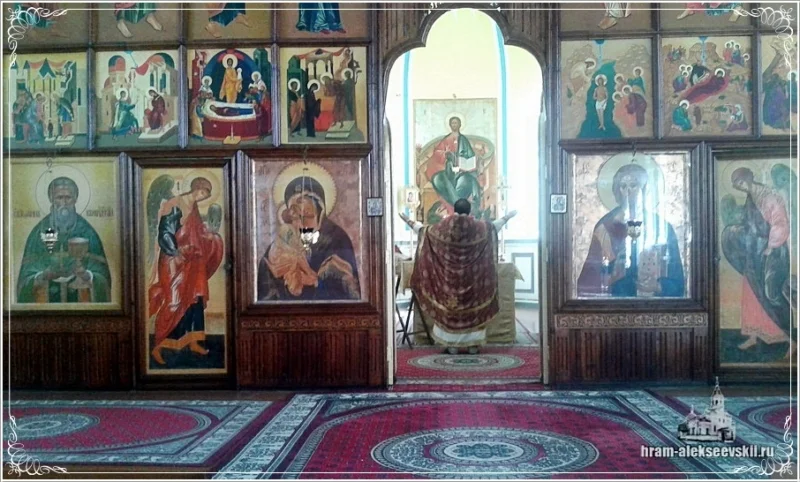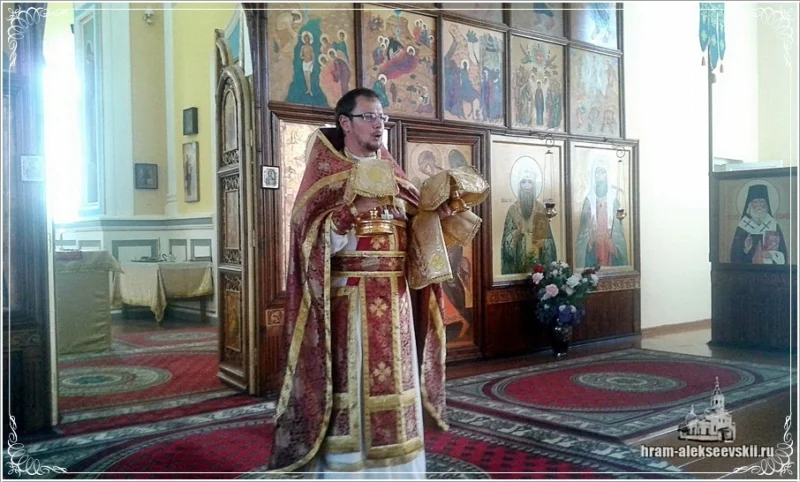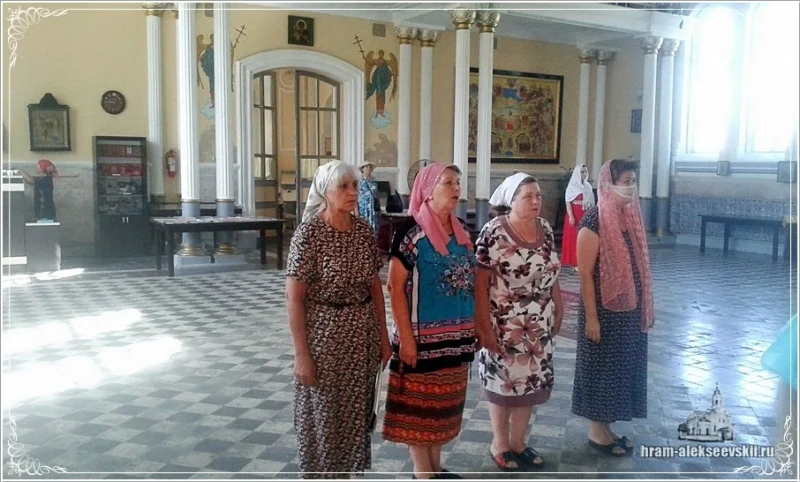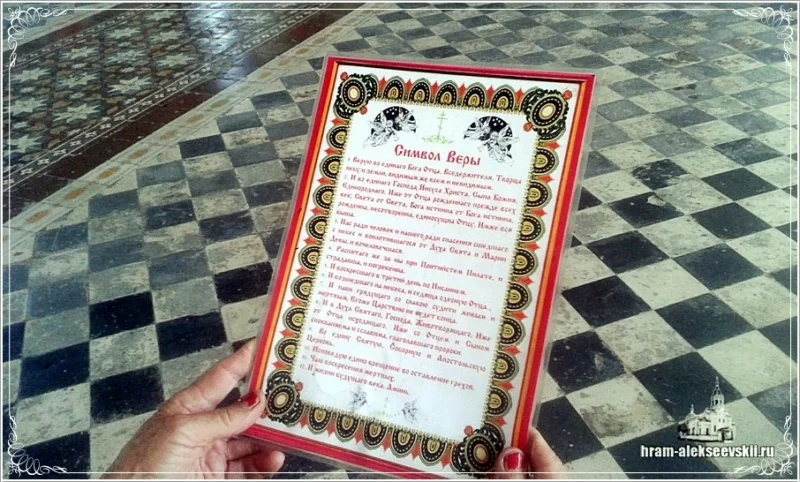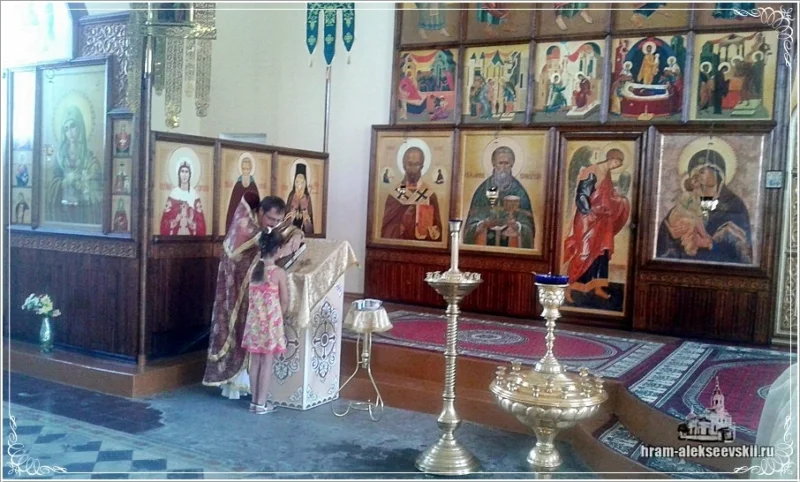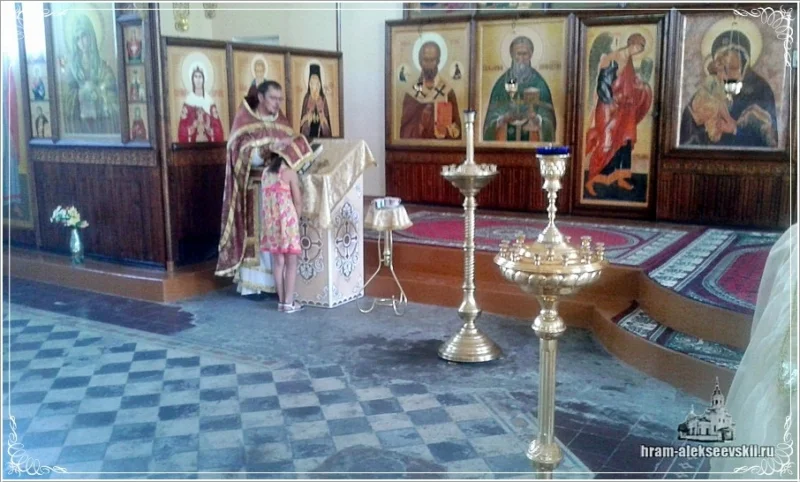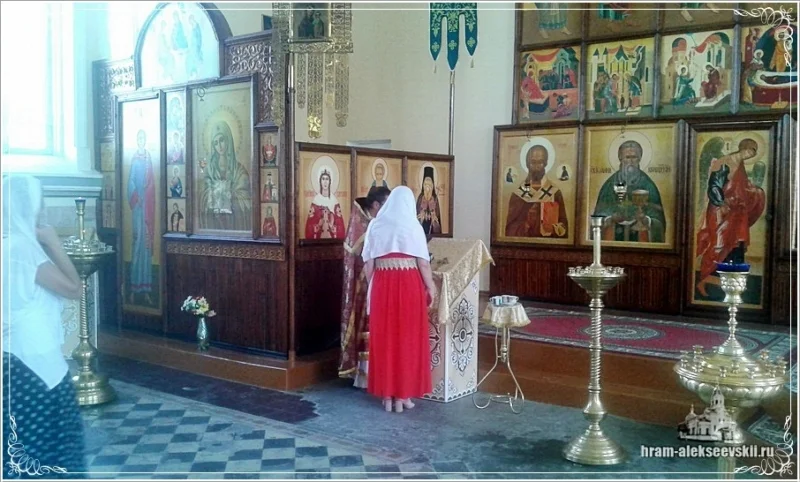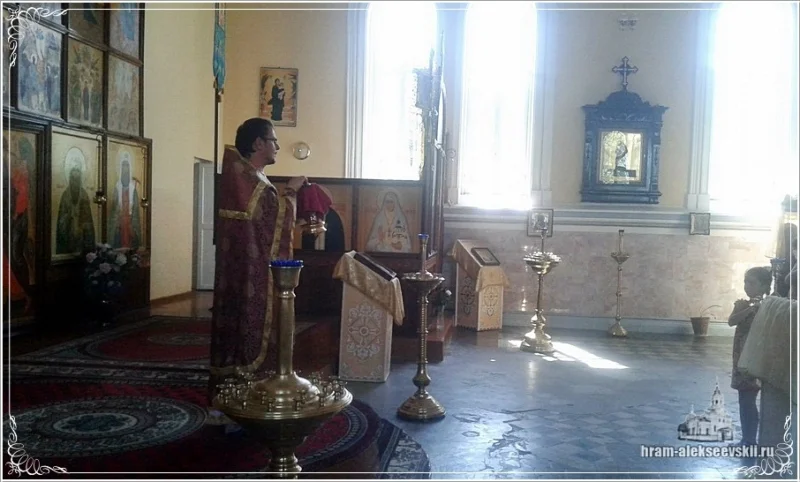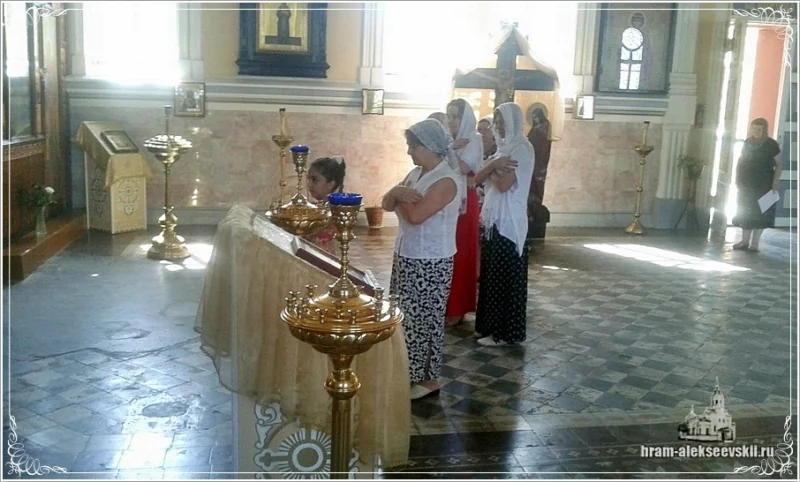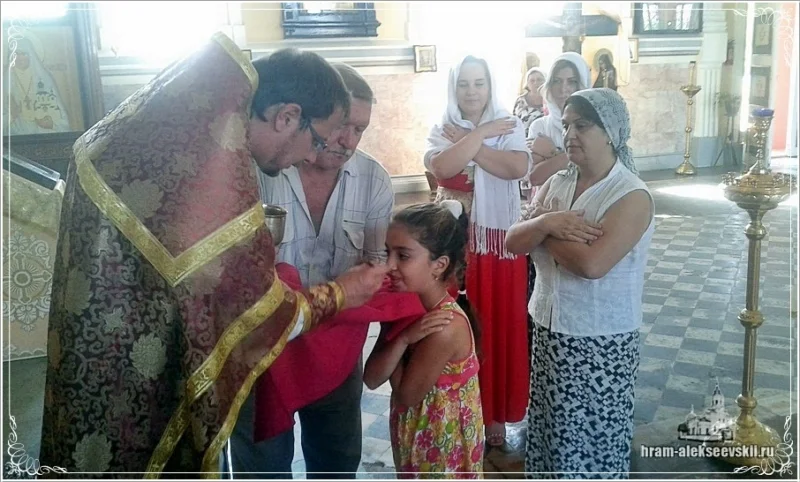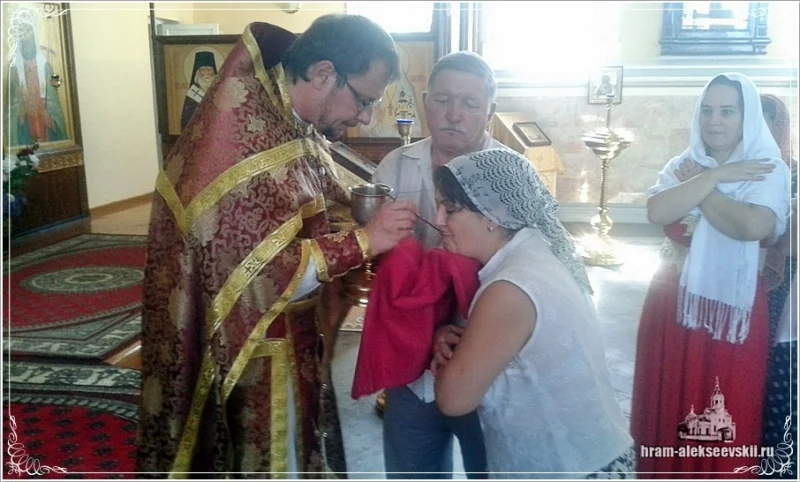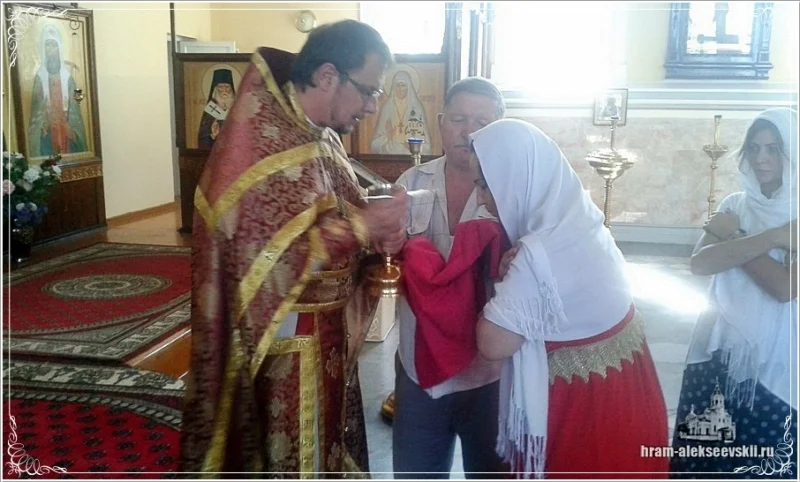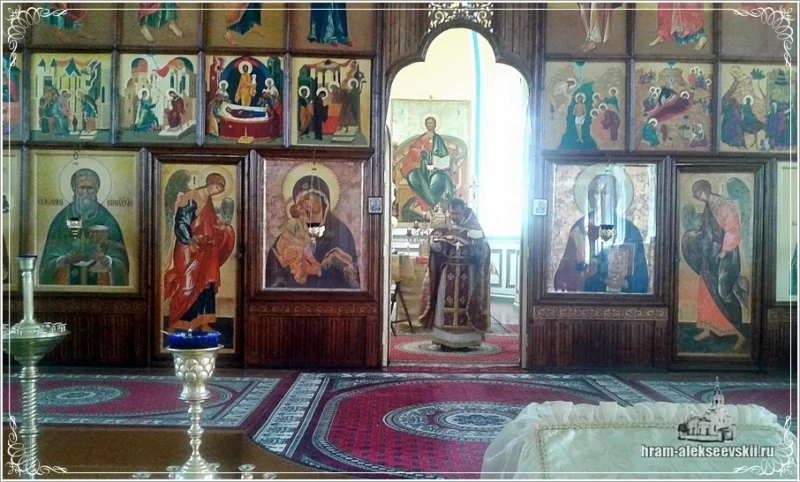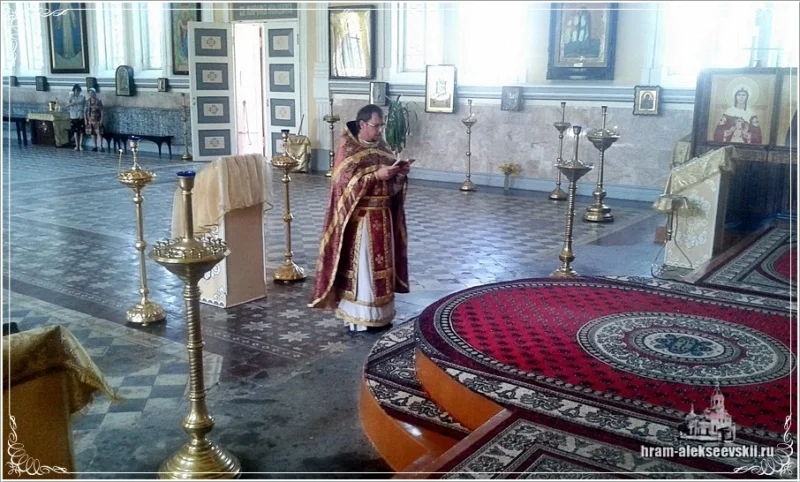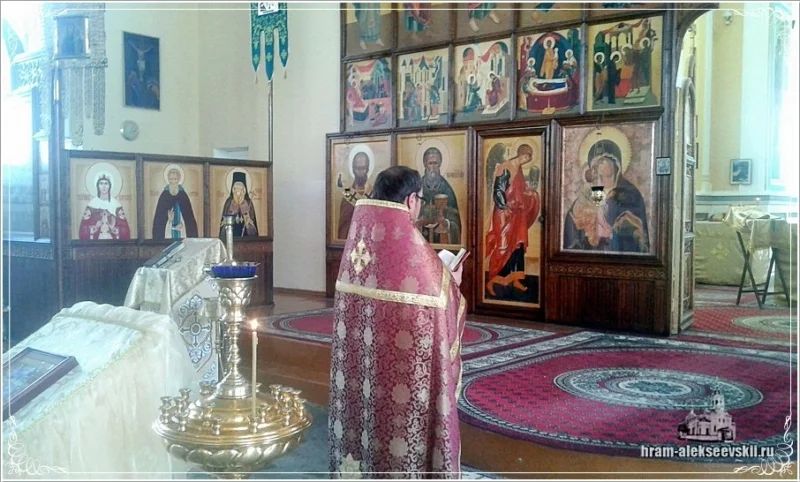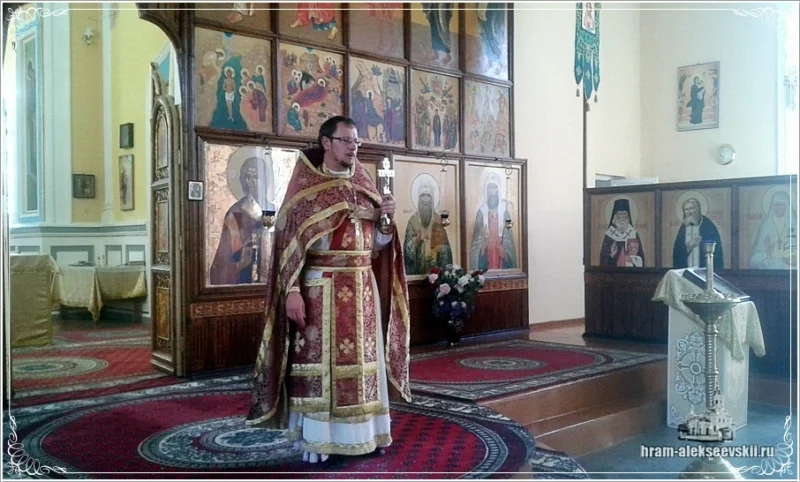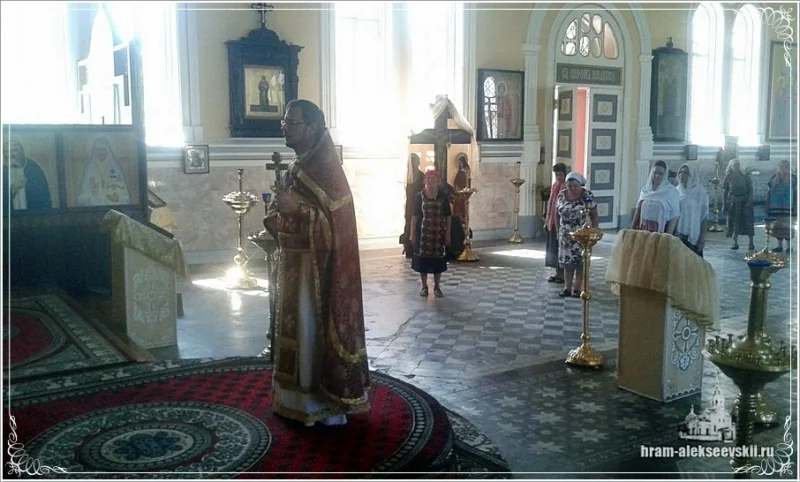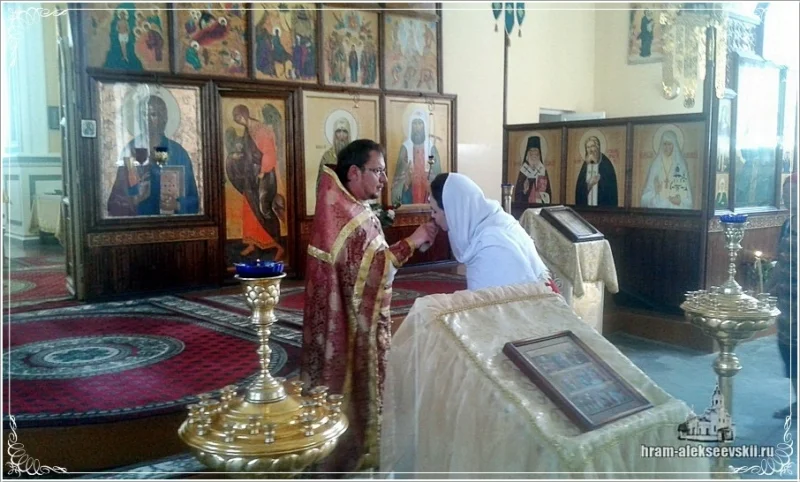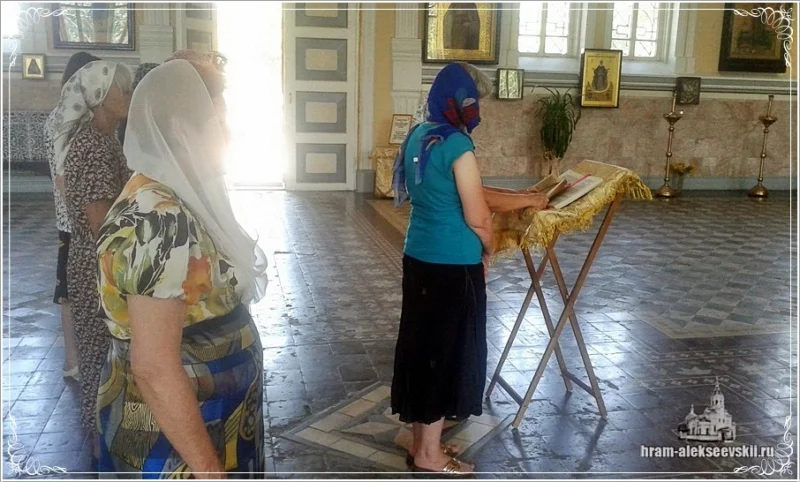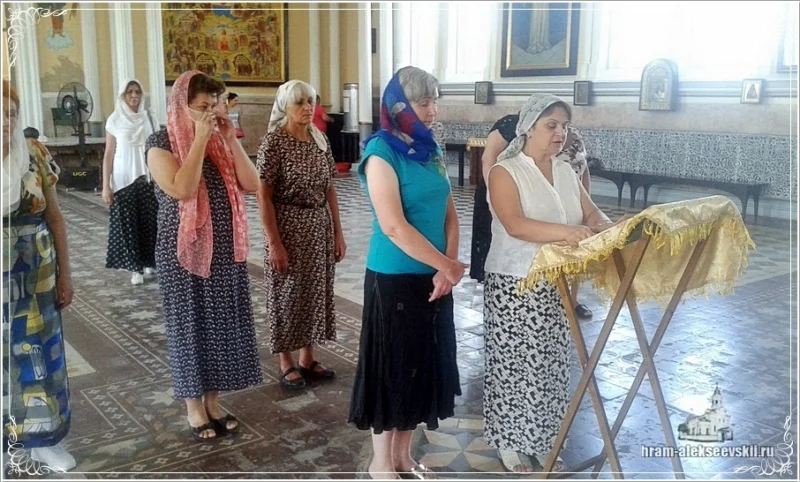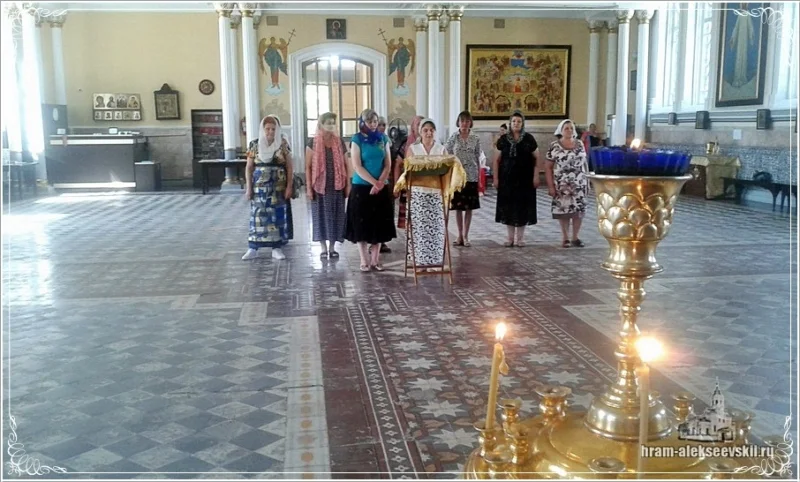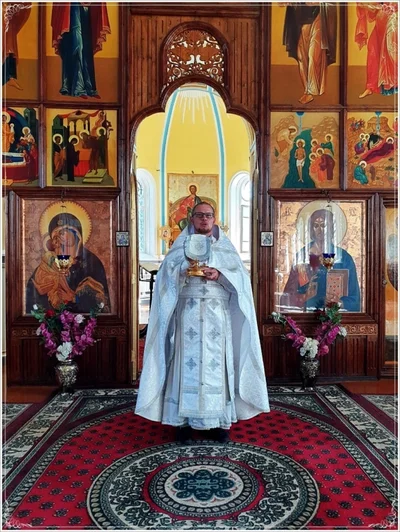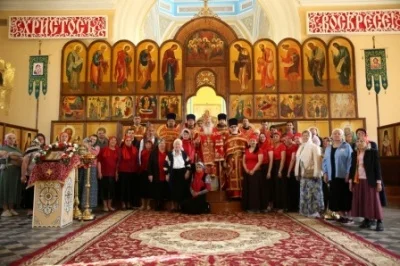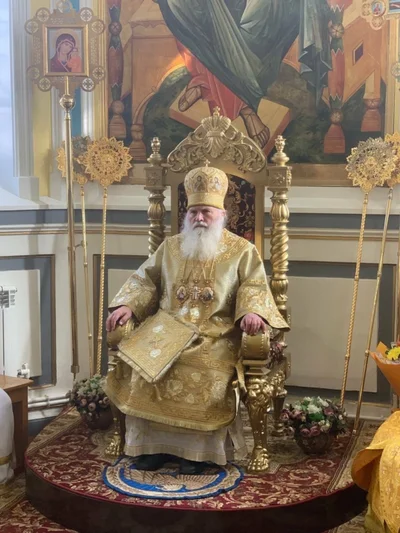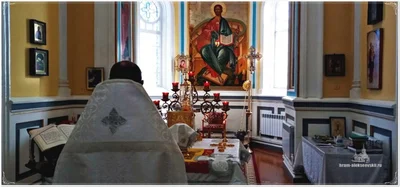
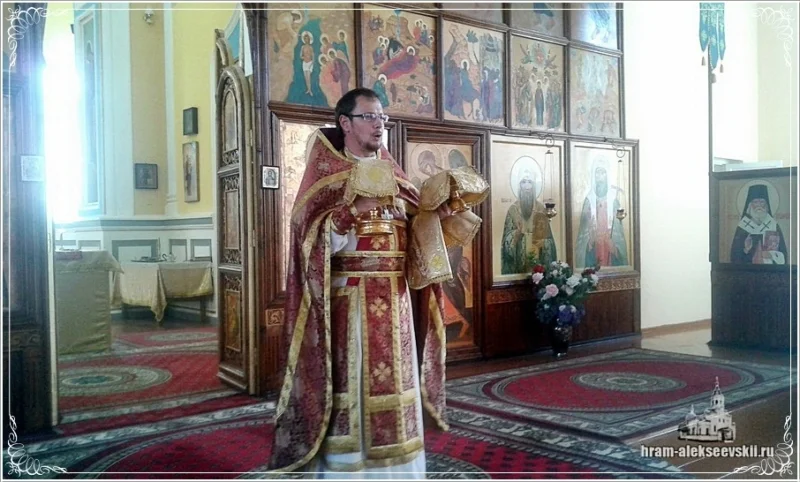
On the feast of the Great Martyr and Healer Panteleimon, 9 August 2018, the festal Divine Liturgy was celebrated at Saint Alexius Cathedral!
The Liturgy was celebrated by the rector of the church, Priest Igor Babakov.
After the service, the Akathist to the Great Martyr and Healer Panteleimon was read.
According to his Life, the Great Martyr and Healer Panteleimon was born in the city of Nicomedia into the family of Eustorgius, a noble pagan, and was named Pantoleon. His mother Eubula was a Christian. She wanted to raise her son in the Christian faith, but she died when the future great martyr was still a young boy. His father sent Pantoleon to an elementary pagan school, after which the young man began to study the art of medicine under Euphrosynus, a renowned physician in Nicomedia, and came to the attention of Emperor Maximian, who wished to have him at his court.
At that time the Priest-Martyrs Hermolaus, Hermippus and Hermocrates, presbyters who had survived the burning of 20,000 Christians in the church of Nicomedia in 303, were living secretly in Nicomedia. St. Hermolaus repeatedly saw Pantoleon walking past their hiding place. One day the presbyter invited the young man into his dwelling and told him about the Christian faith. After this Pantoleon visited the Priest-Martyr Hermolaus every day.
Once the young man saw in the street a dead child who had been bitten by a snake, which was still nearby. Pantoleon began to pray to the Lord Jesus Christ to raise the dead child and to kill the venomous serpent. He firmly resolved that if his prayer was fulfilled he would become a follower of Christ and receive Baptism. The child came back to life, and the viper burst into pieces before Pantoleon's eyes.
After this miracle Pantoleon was baptized by St. Hermolaus with the name Panteleimon ("all-merciful"). Soon he was able to convince his father too of the truth of the Christian teaching, and his father also received holy Baptism.
After his father's death, St. Panteleimon devoted his life to the suffering, the sick, the destitute and the poor. He treated without payment all who came to him, healing them in the Name of Jesus Christ. He visited prisoners in the dungeons, especially Christians, with whom all the prisons were overflowing, and treated their wounds. Soon word of the merciful physician spread throughout the city. Leaving the other physicians, the inhabitants began to turn only to St. Panteleimon.
Out of envy, the physicians denounced St. Panteleimon to the emperor for treating Christian prisoners. Maximian urged the saint to refute the accusation and to offer sacrifice to the idols, but St. Panteleimon confessed himself a Christian and, before the emperor's eyes, healed a paralytic in the Name of Jesus Christ. The enraged Maximian executed the healed man, who had glorified Christ, and gave St. Panteleimon over to the cruelest tortures.
The Lord appeared to the saint and strengthened him before his sufferings. The Great Martyr Panteleimon was hung on a tree and torn with iron claws, burned with candles, then stretched on a wheel, thrown into boiling tin, and cast into the sea with a stone around his neck. Through all these torments the great martyr remained unharmed and boldly denounced the emperor.
The furious Maximian ordered the soldiers to cut off Panteleimon's head. The saint was led to the place of execution and tied to an olive tree. While the great martyr was praying, one of the soldiers struck him with a sword, but the sword became soft as wax and inflicted no wound. The saint finished his prayer, and a Voice was heard calling the passion-bearer by name and summoning him to the Heavenly Kingdom. Hearing the Voice from Heaven, the soldiers fell on their knees before the holy martyr and asked his forgiveness. The executioners refused to continue, but the Great Martyr Panteleimon commanded them to carry out the emperor's order, saying that otherwise they would have no part with him in the life to come. With tears the soldiers bade farewell to the saint, kissing him.
When the martyr was beheaded, milk flowed from the wound. At the moment of his death the olive tree to which the saint had been tied became covered with fruit. Many of those present at the execution came to believe in Christ. The saint's body, thrown into a fire, remained unharmed and was buried by Christians.