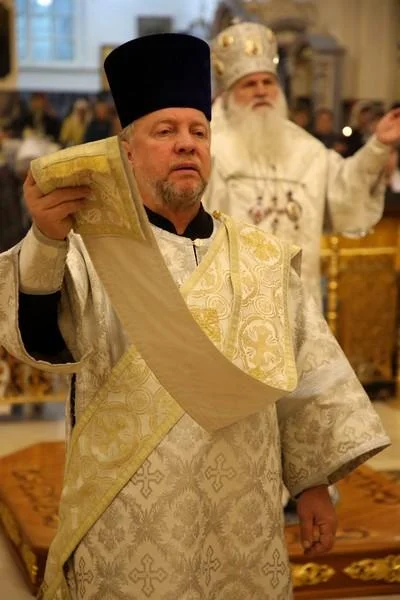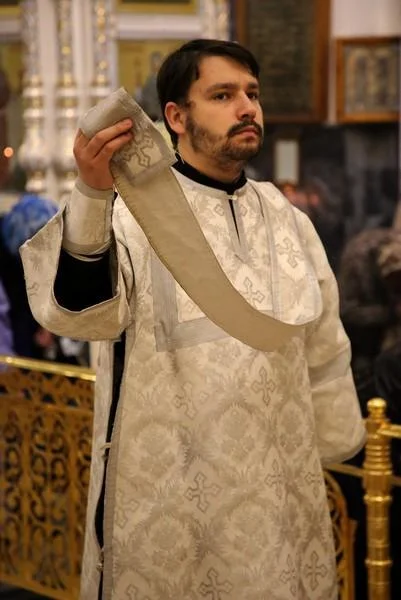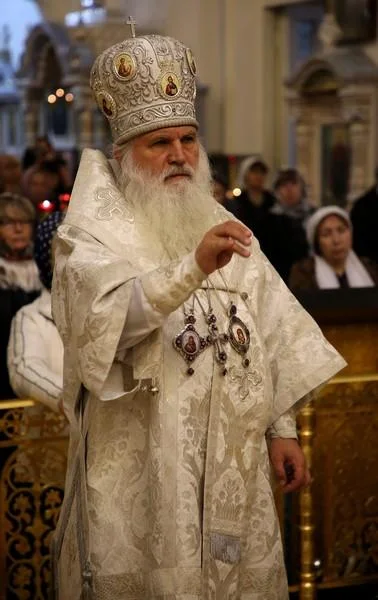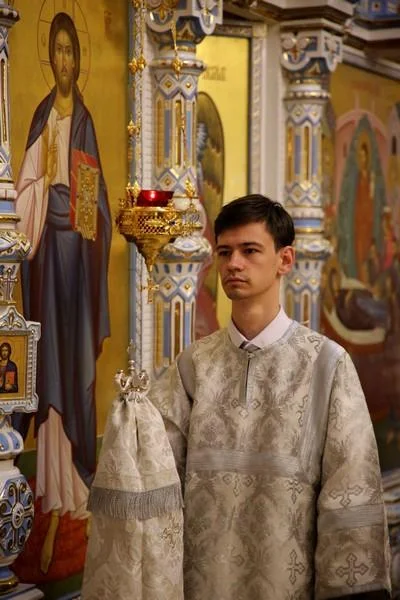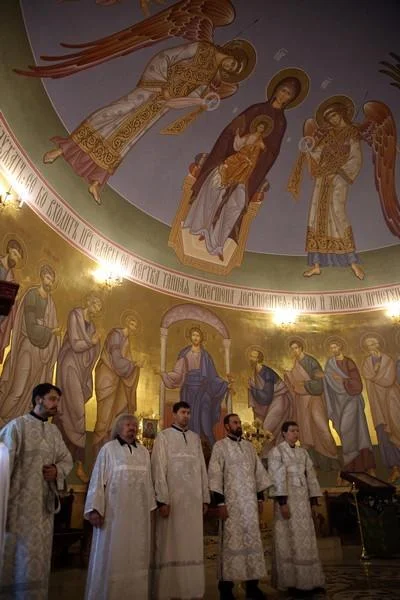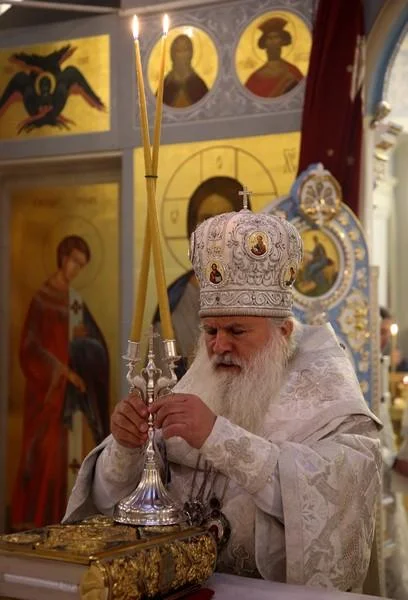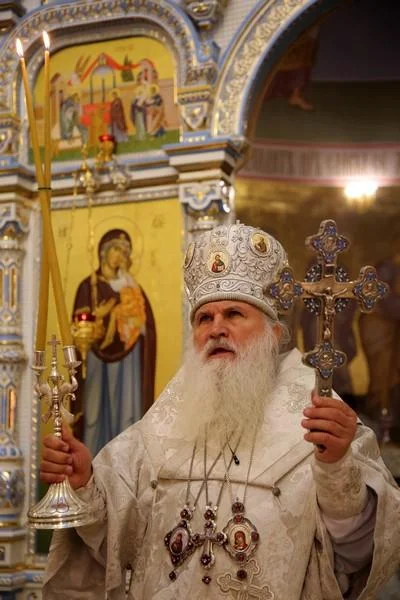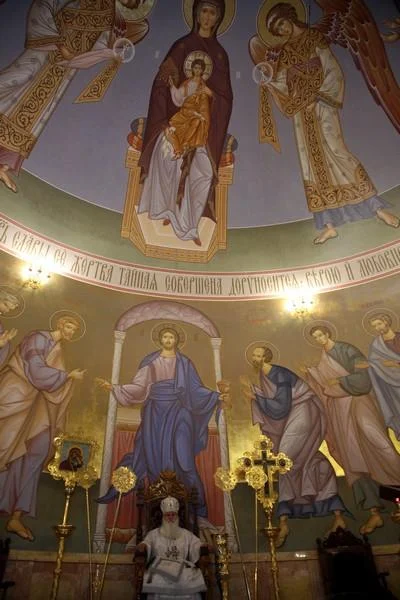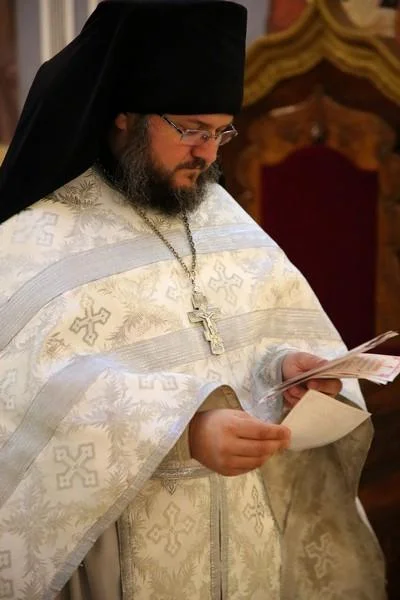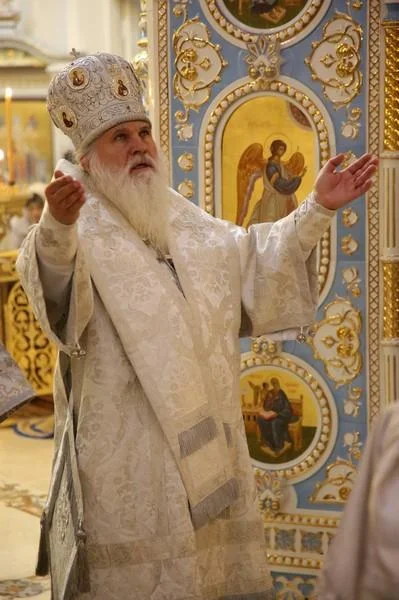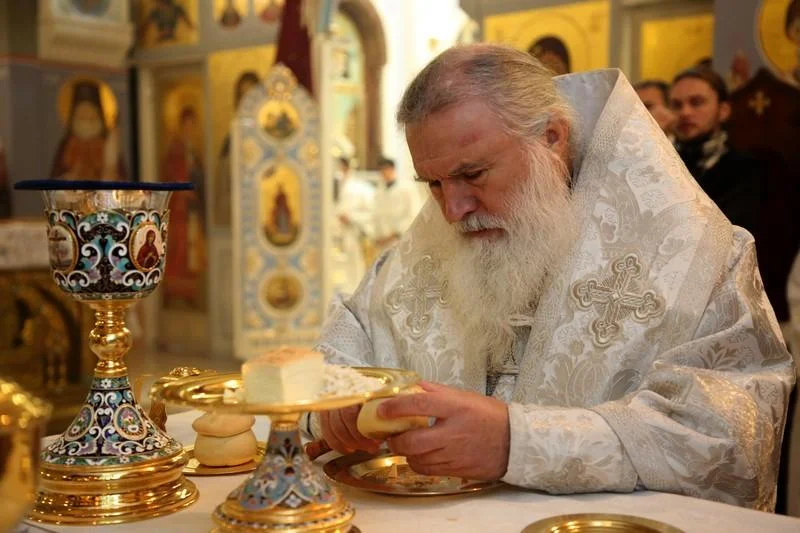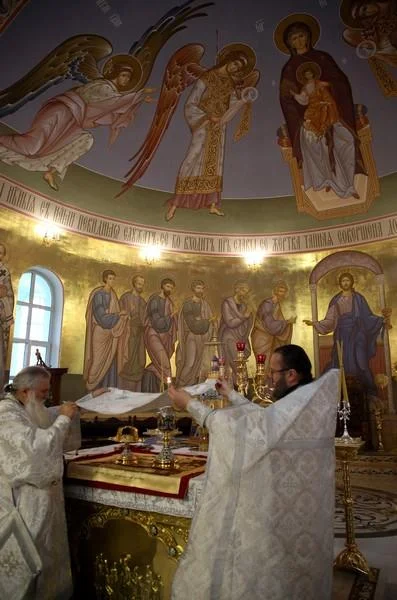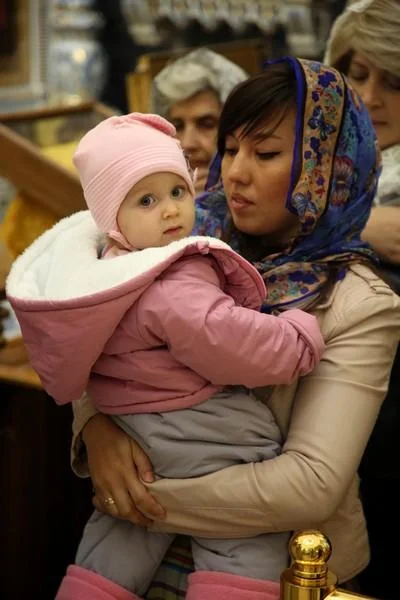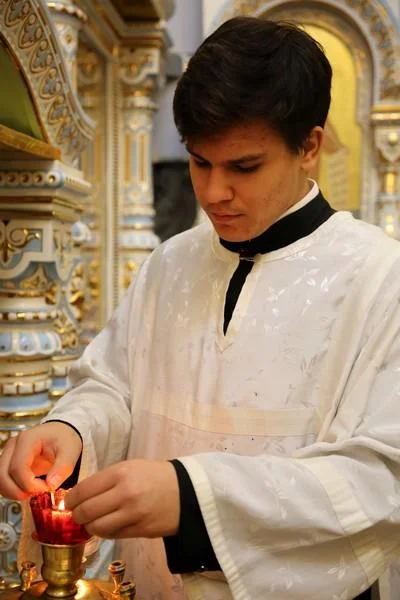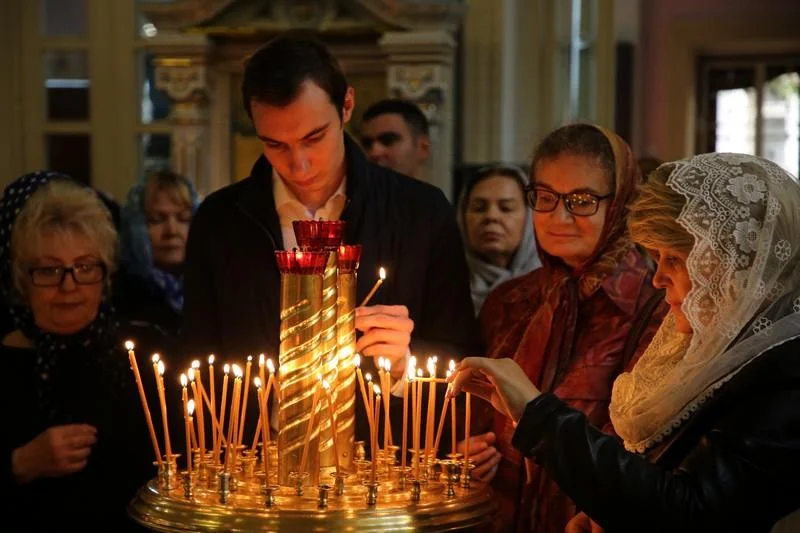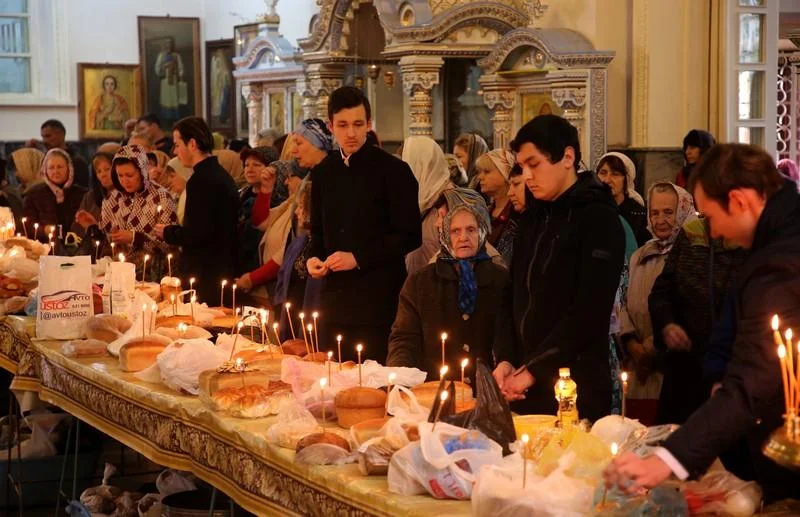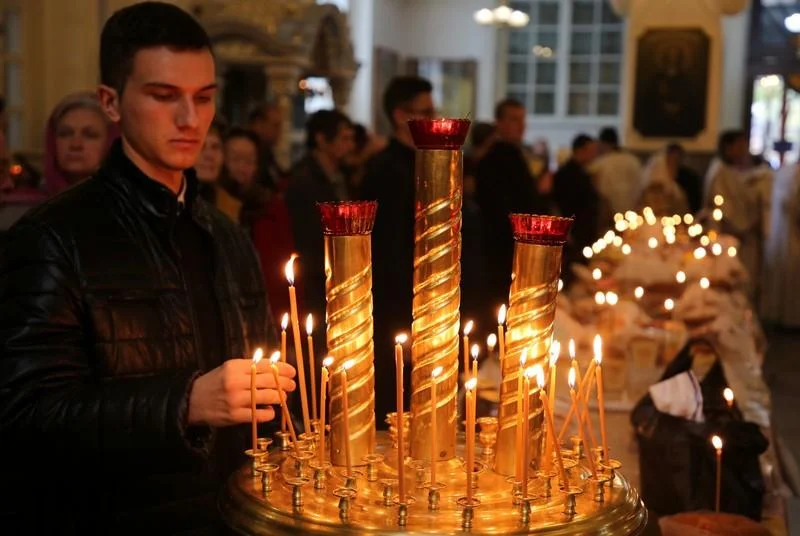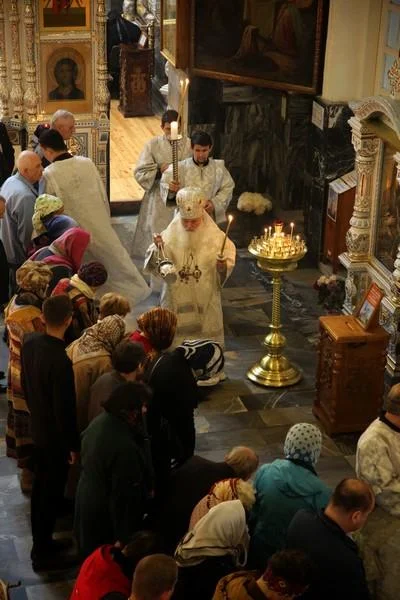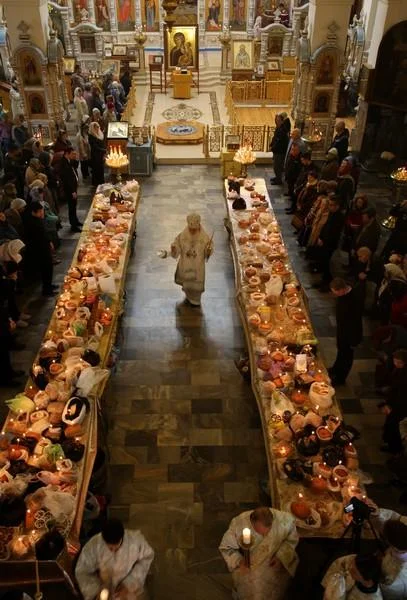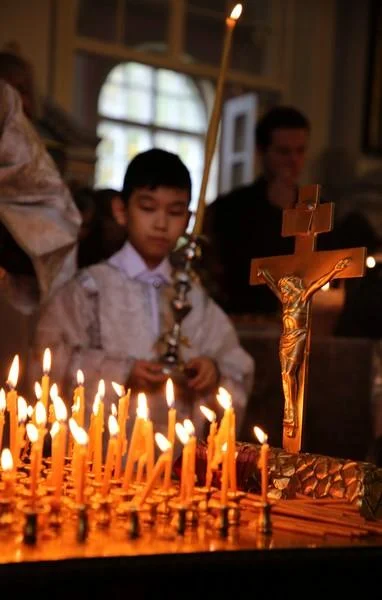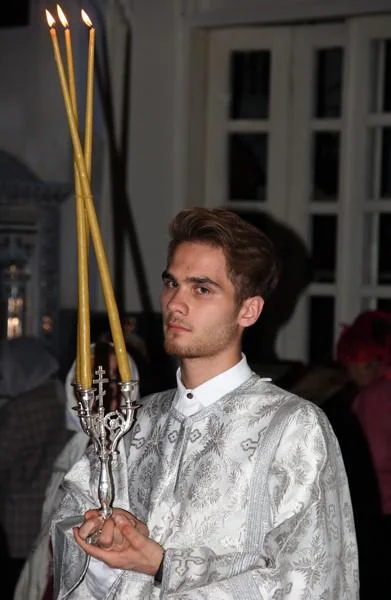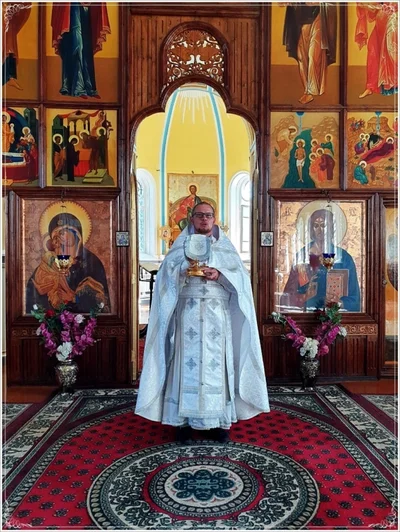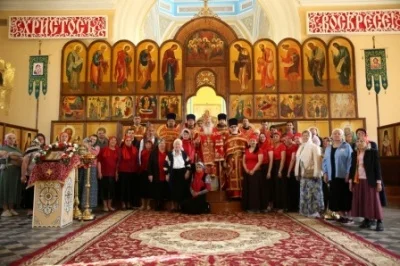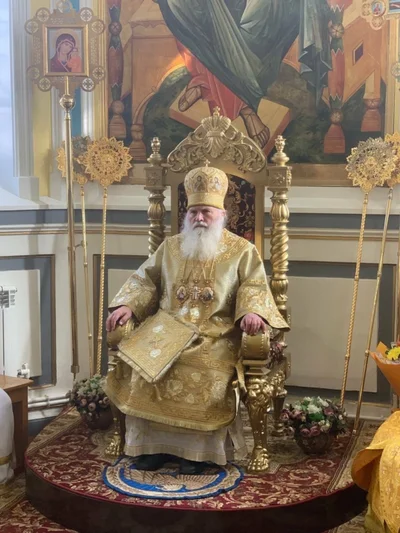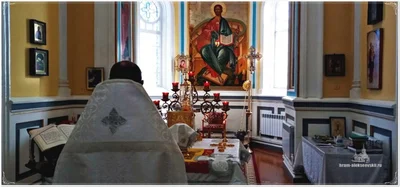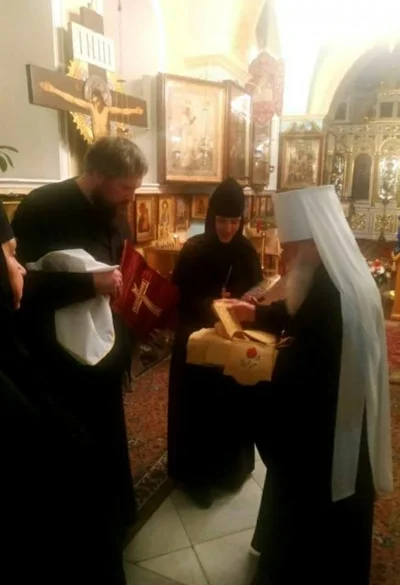
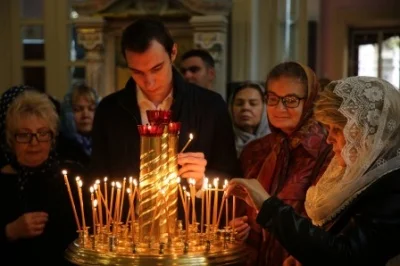
Demetrius Memorial Saturday, a parental Saturday of prayer for the departed, was observed today, 2 November 2019, in the main church of the Diocese of Tashkent, the Cathedral of the Dormition of the Most Holy Mother of God. On this day Metropolitan Vikenty of Tashkent and Uzbekistan, head of the Central Asian Metropolitan District, celebrated the Divine Liturgy, and on the evening before he led the service prescribed by the Typikon, the Parastas.
Parastas, from the Greek, means “intercession”. It is an evening service for the departed which differs from the ordinary memorial service in that the “Blameless” are sung at it (Psalm 118, “Blessed are the blameless”, named after its second word, which expresses the essence of the whole 17th Kathisma).
The Parastas is usually served on the eve of the memorial parental Saturdays. This service for the departed consists of Vespers and Matins. At Matins, instead of the Polyeleos, the clergy go out to the centre of the church, where the 17th Kathisma is read, divided into two parts (stasis); after the sixth ode of the canon and at the end of the service litiyas are served.
In the early Christian Church, because of persecution, the prayer gatherings of the faithful and the burial of the dead took place at night. The service that accompanied a burial was in the proper sense an all-night one. Christians gathered at the tombs of the martyrs and spent the night in vigil, glorifying the martyrs and offering prayers for those who had died in faith and piety. When the funeral service became separate from the All-Night Vigil, which happened after the age of persecution had ended, both retained equivalent names in the Orthodox Church.
All the hymns and readings of the Parastas are devoted to prayer for the departed. Its main content is the 17th Kathisma, also called the Kathisma for the departed. This Kathisma depicts the blessedness of those who walked in the law of the Lord, that is, the blessedness of the righteous who strove to live according to God’s commandments.
The sense and meaning of Psalm 118, “Blessed are the blameless”, are revealed in its 19th verse: “I am a stranger (a sojourner) in the earth; do not hide Your commandments from me.” The Explanatory Bible edited by A. P. Lopukhin explains this verse as follows: “Life on earth is a sojourn, a journey made by man in order to reach his homeland and his permanent, eternal dwelling place. Clearly, the latter is not on earth but beyond the grave. If so, then earthly life must be a preparation for the life beyond the grave, and only a path unerringly chosen on earth can lead to it. How and where is that path to be found? It is shown in the commandments of the Law. Whoever does not follow them goes astray and will not reach the abode beyond the grave, that is, rest beyond the grave as a reward for the labours undertaken to attain it. Here is a fairly clear teaching on the purpose of earthly existence, the immortality of the human soul, and retribution beyond the grave.”
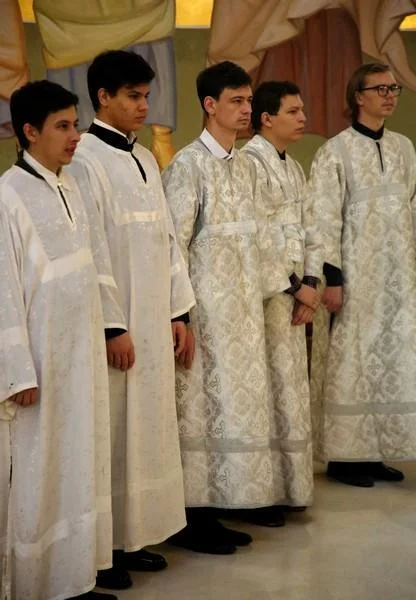
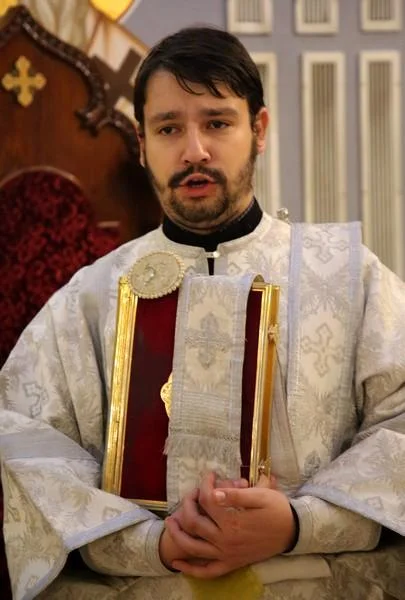
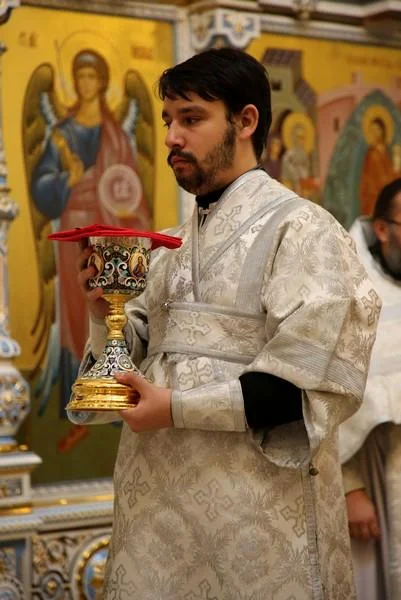
At the Liturgy His Eminence was assisted by Hieromonk Mikhail (Stolyarov), Protodeacon Alexander Nesin and Deacon Mikhail Mezhovikov.
After the Liturgy a panikhida (memorial service) was served.