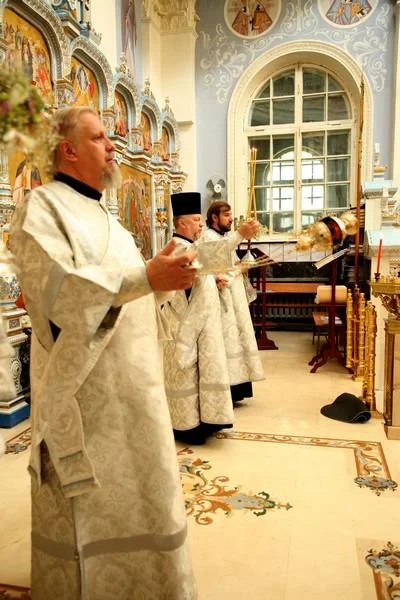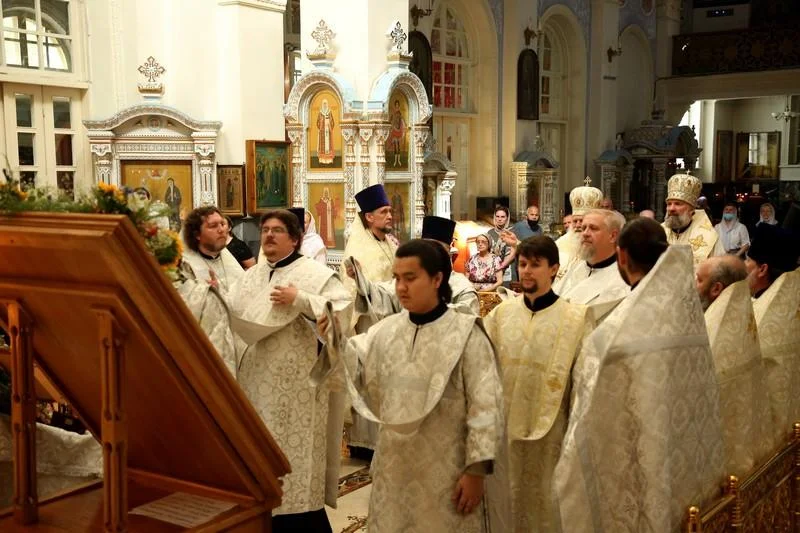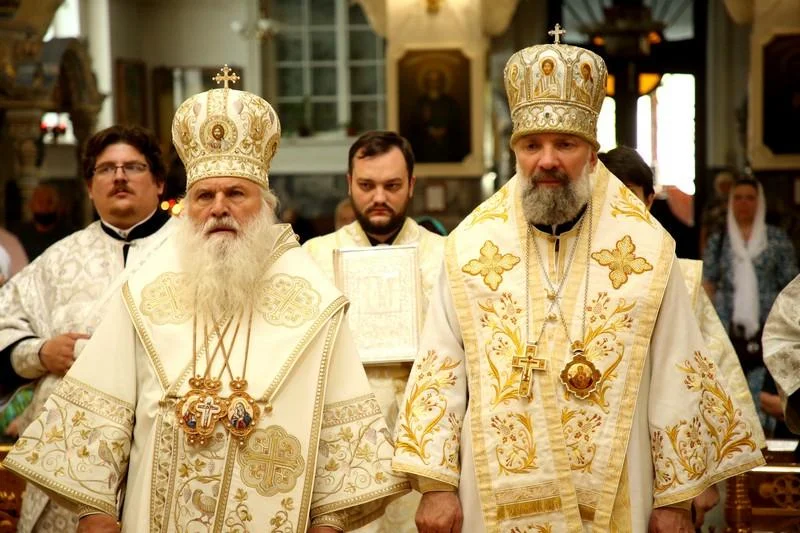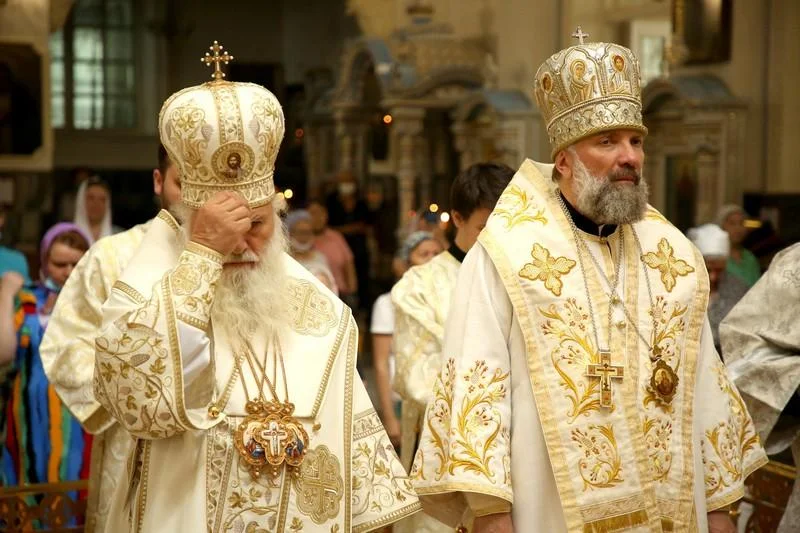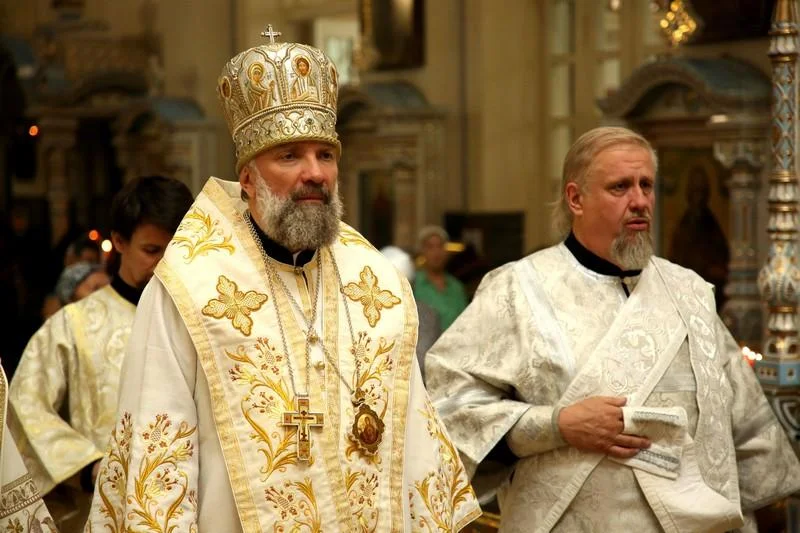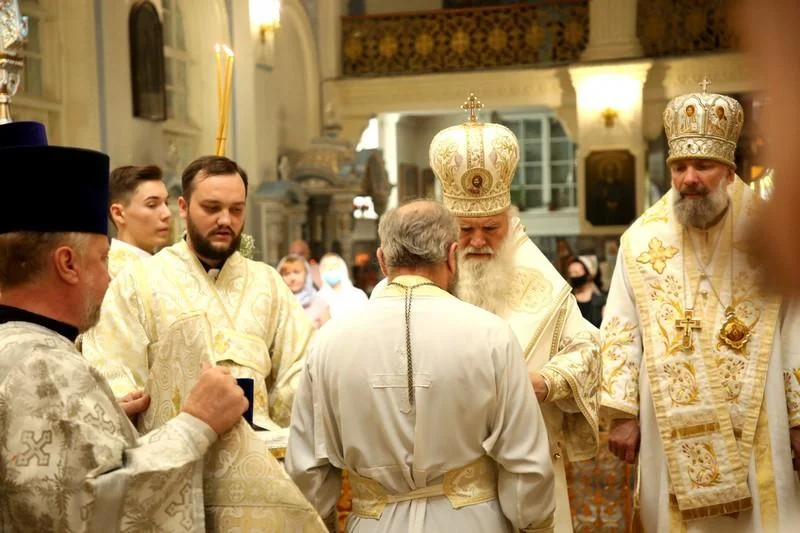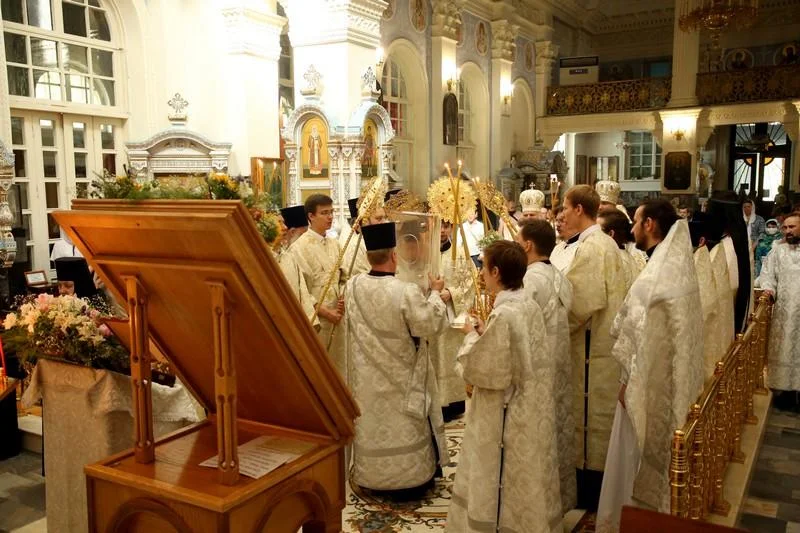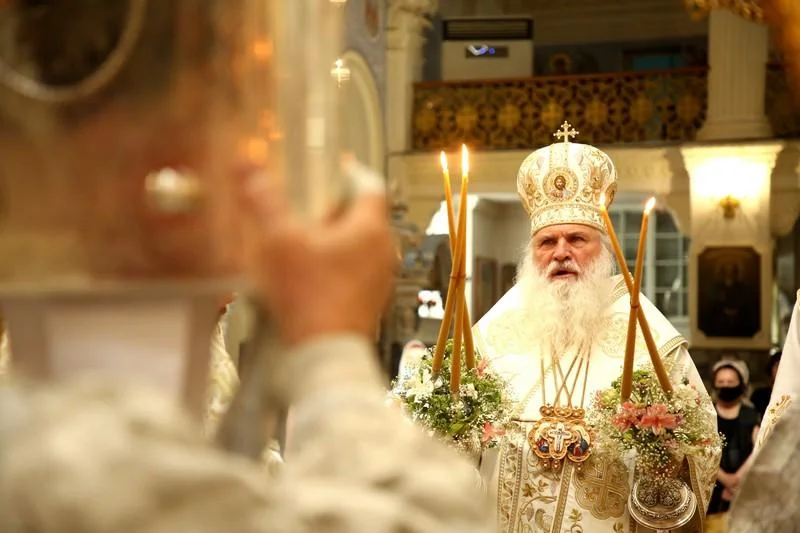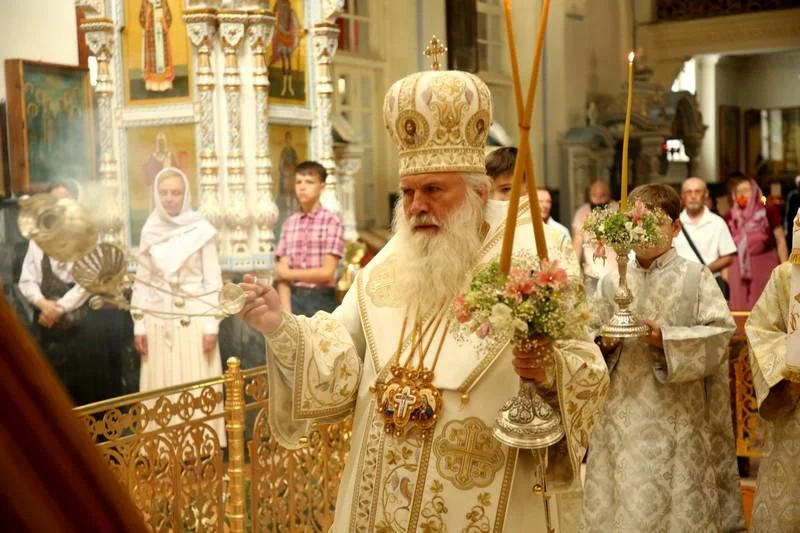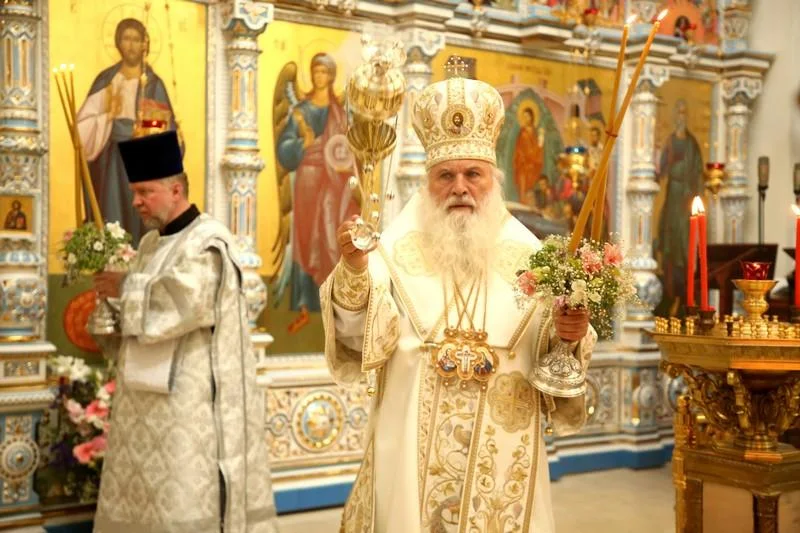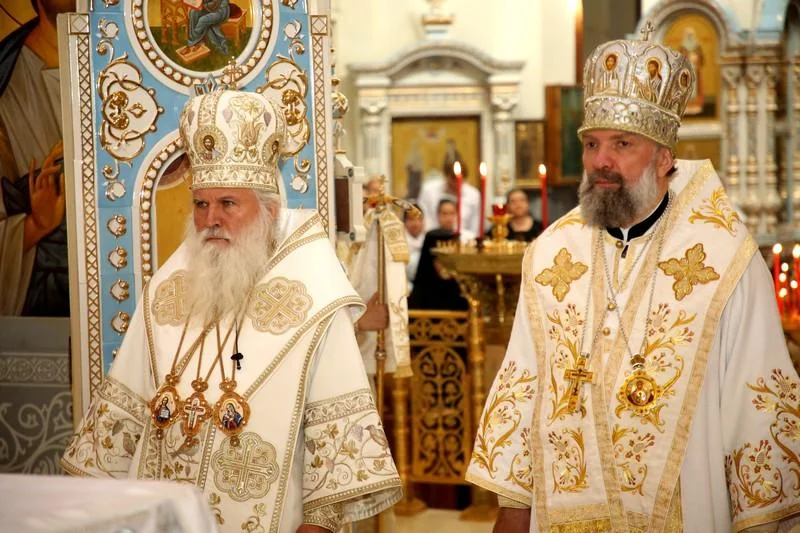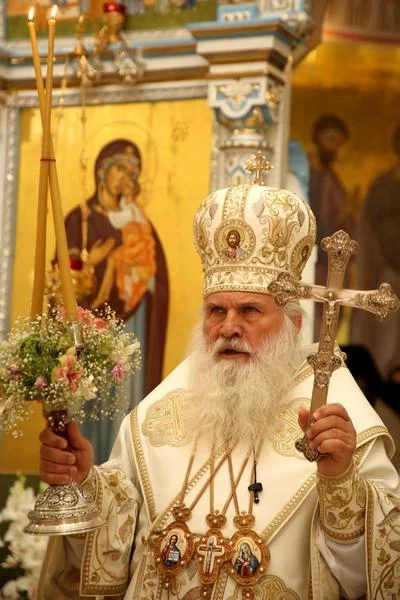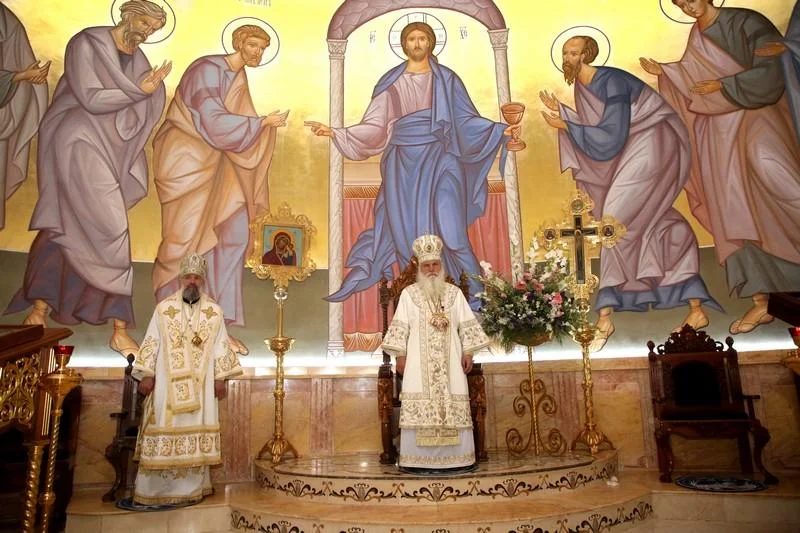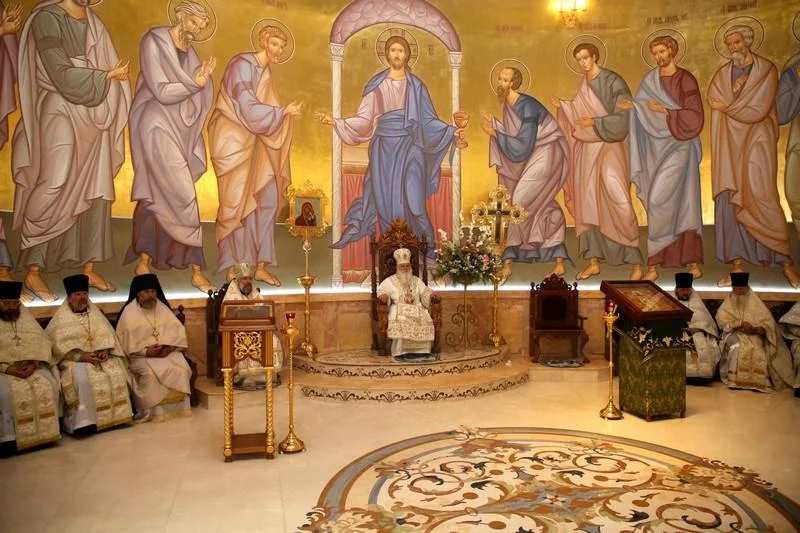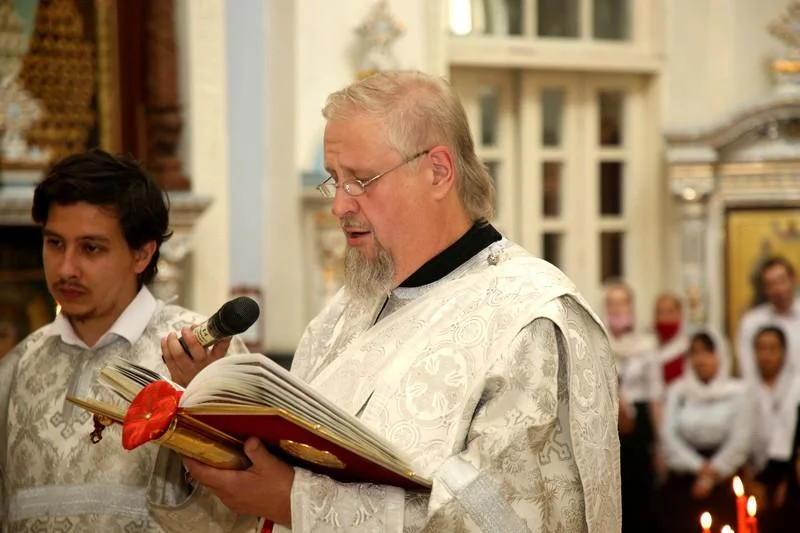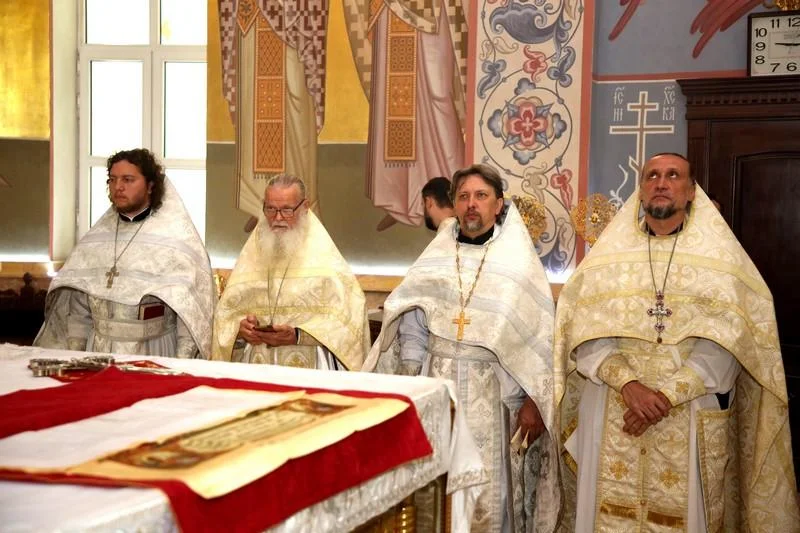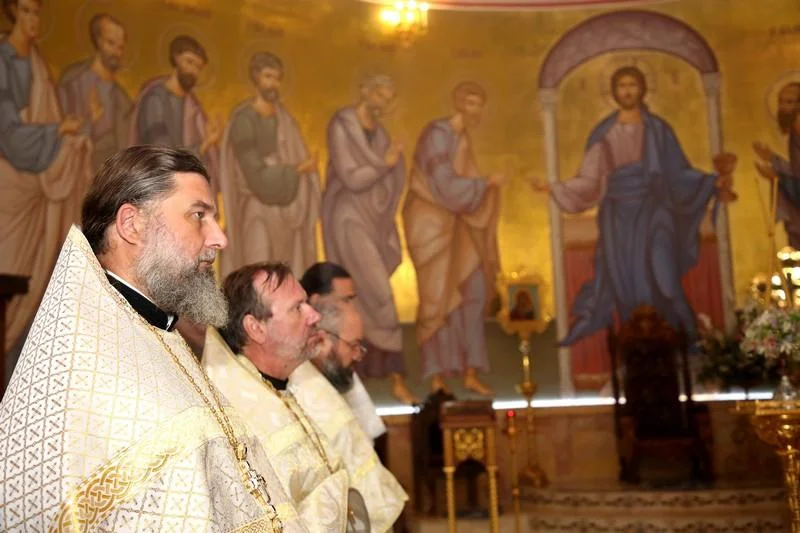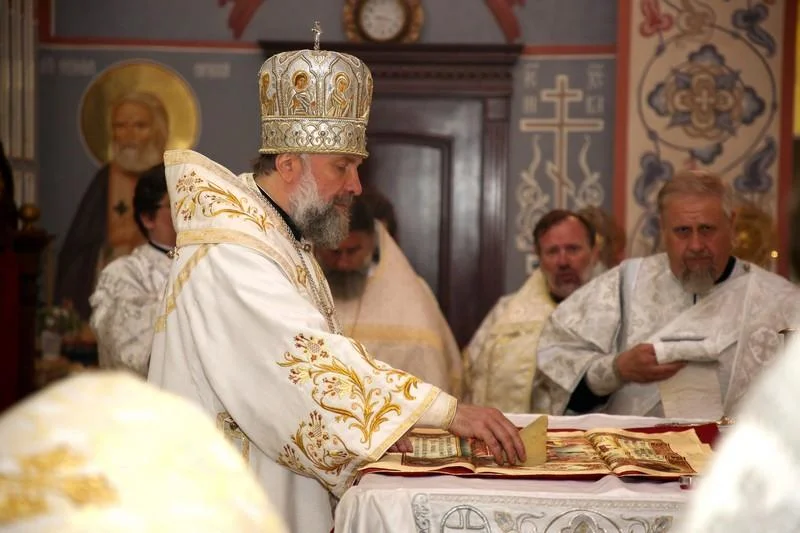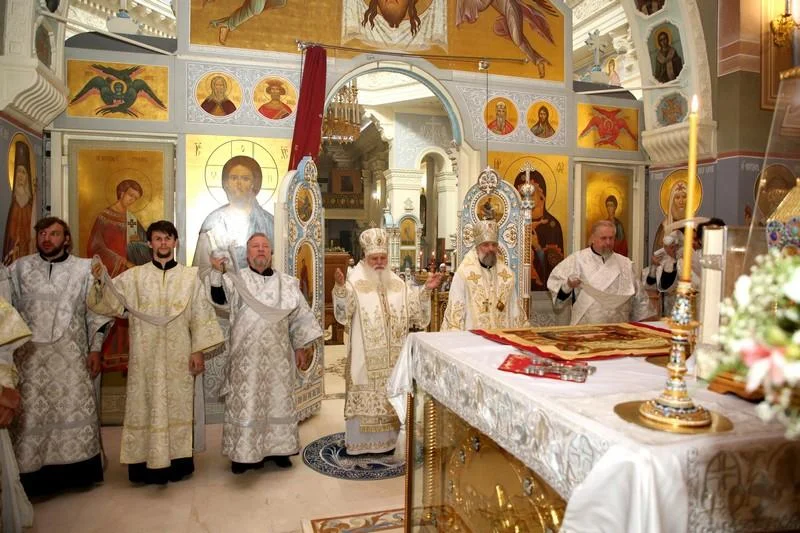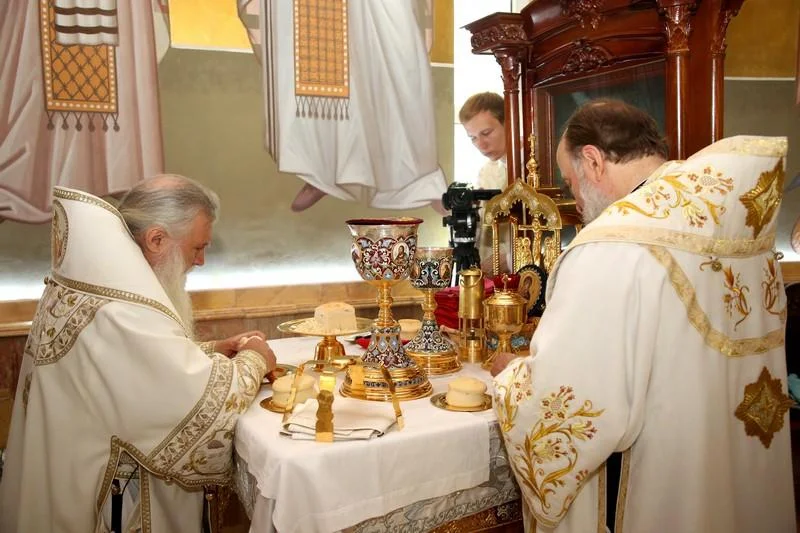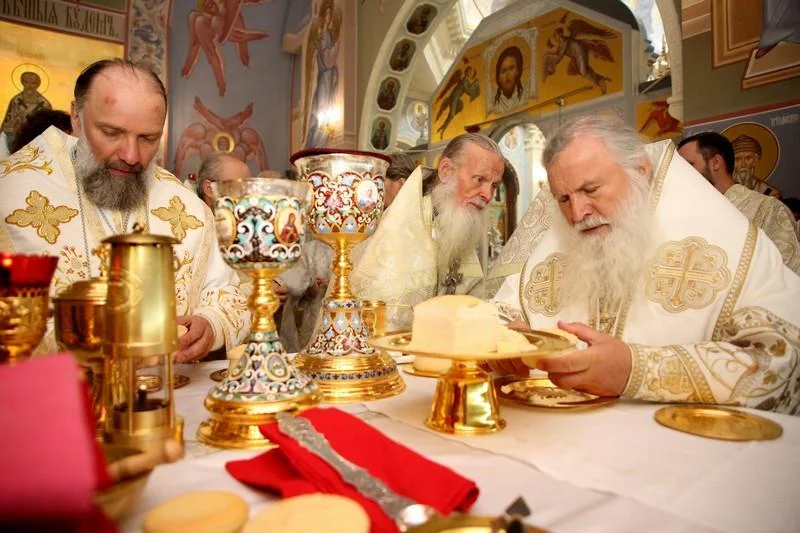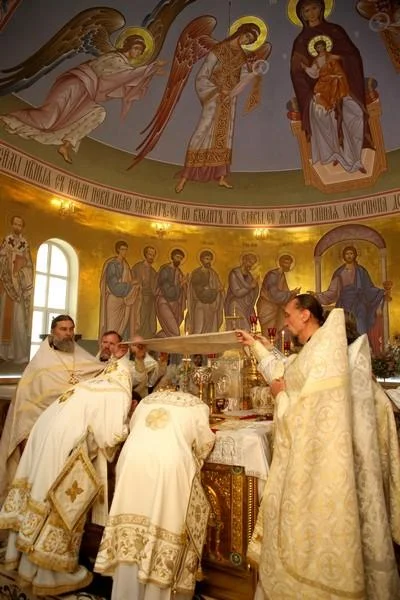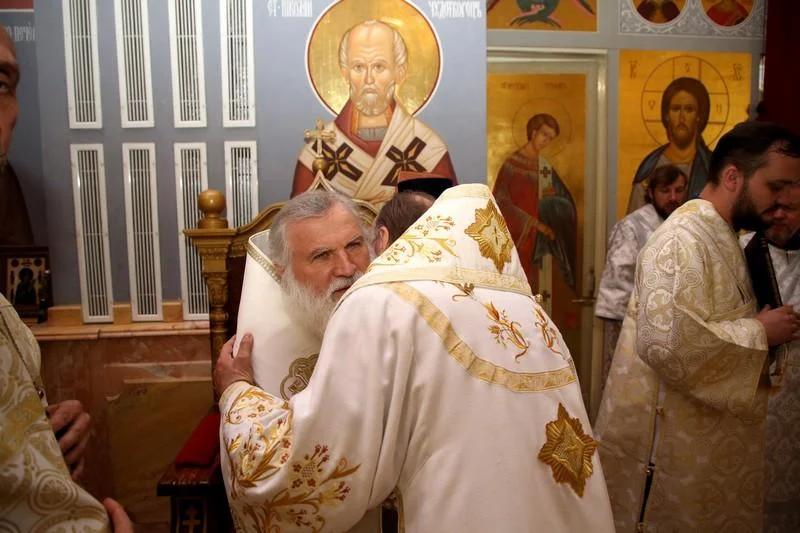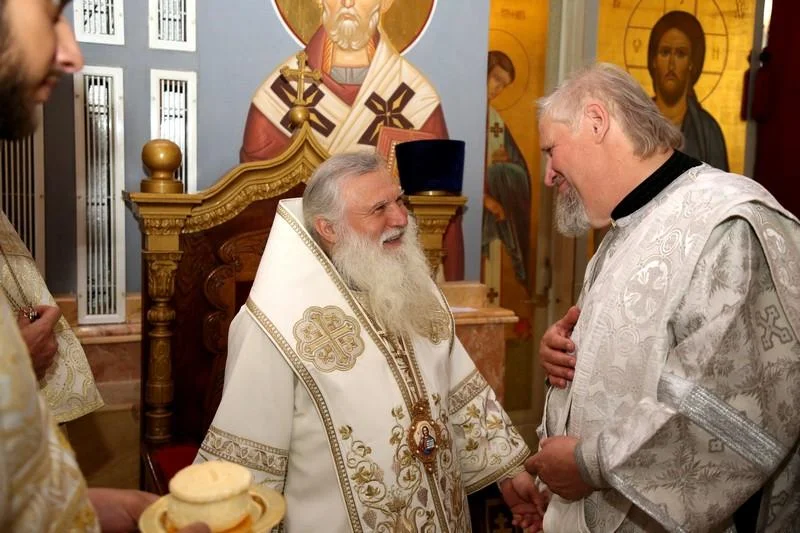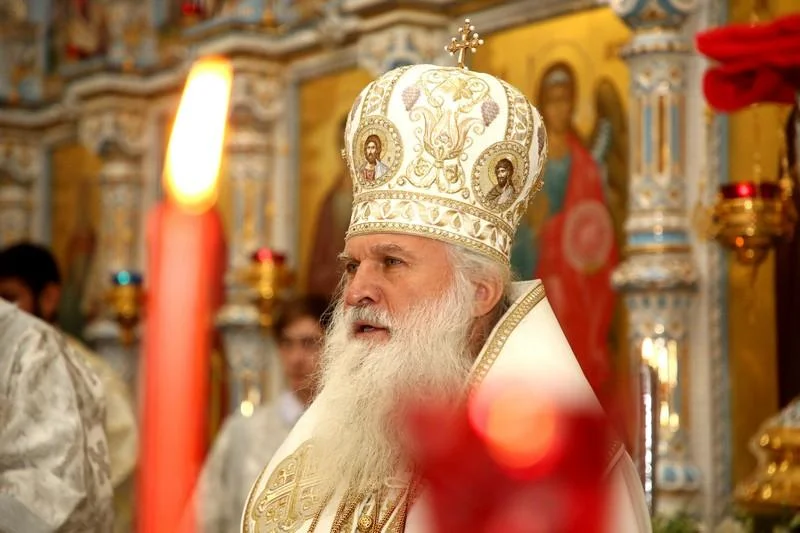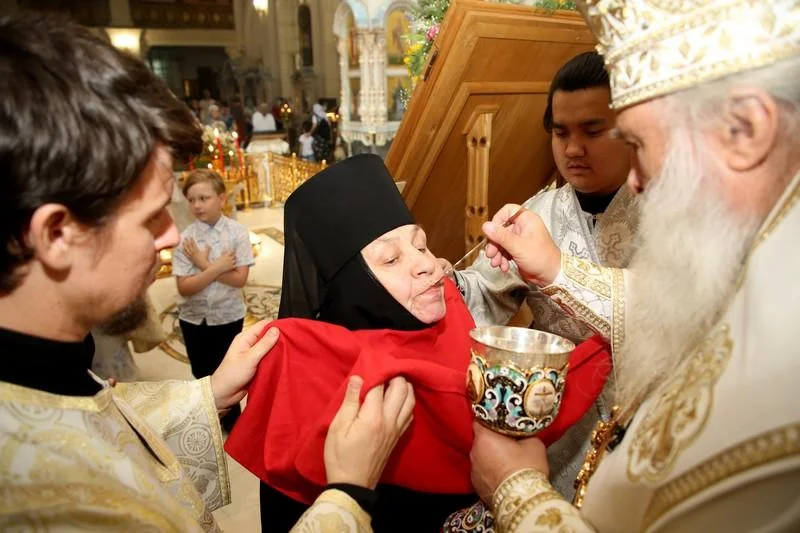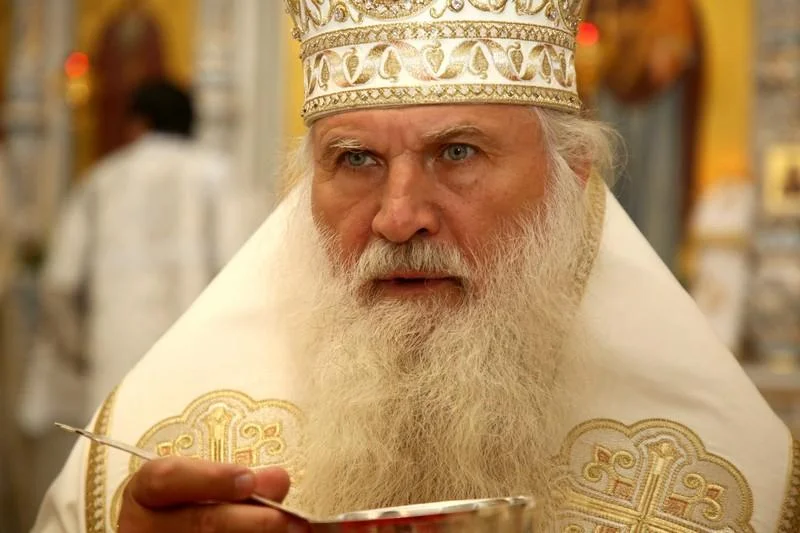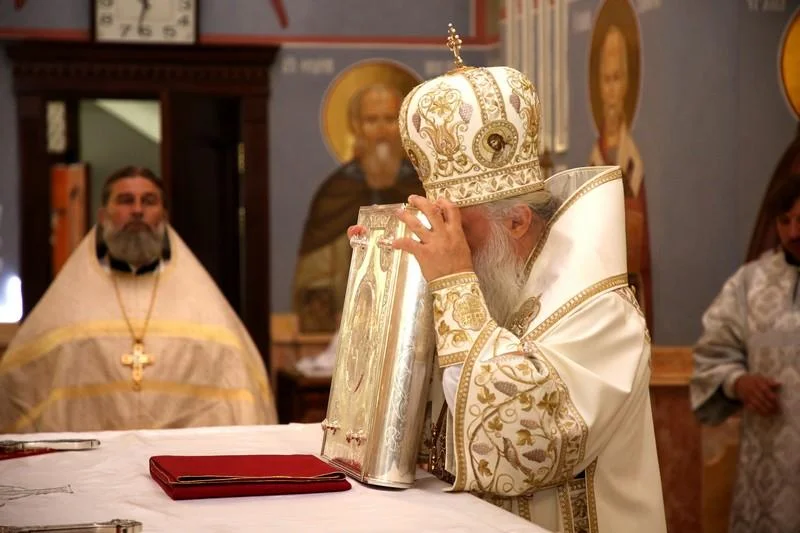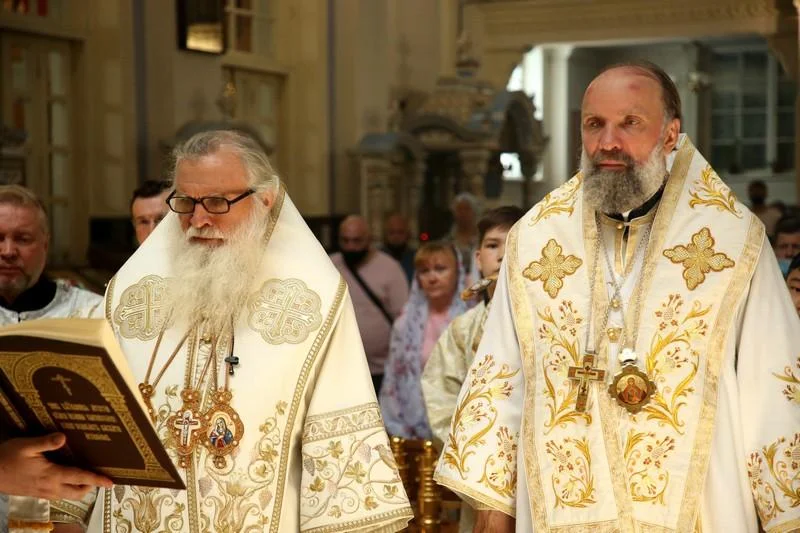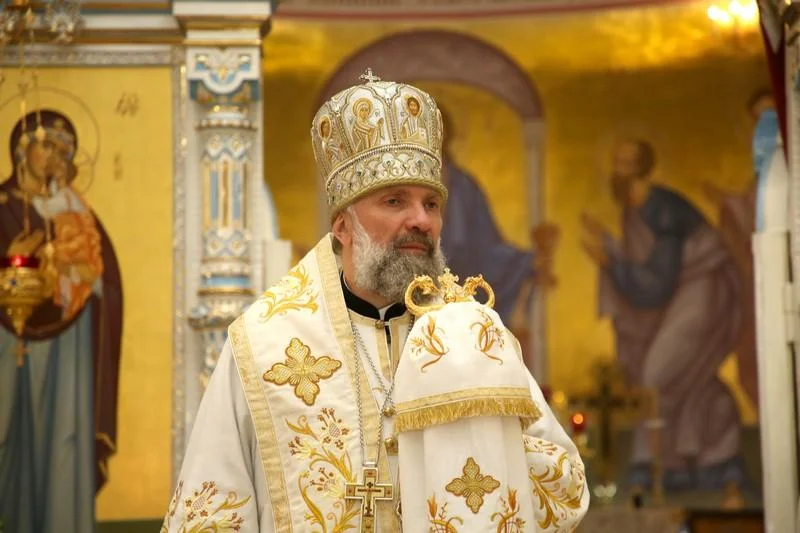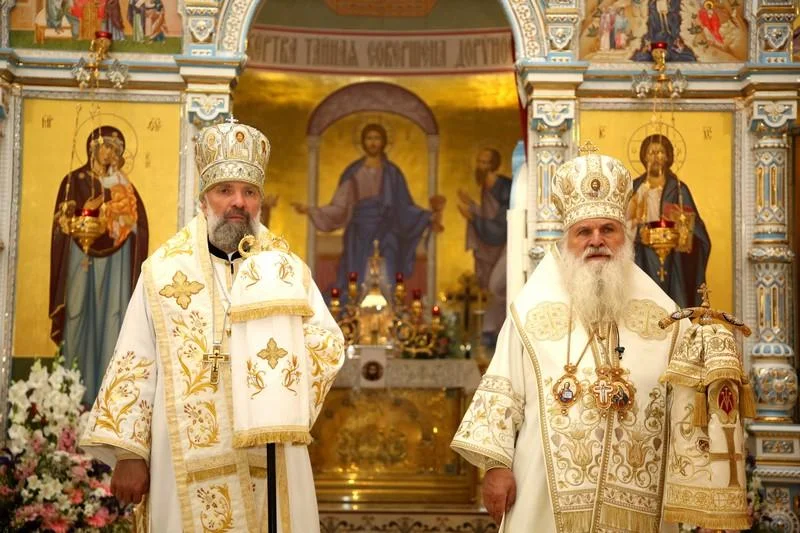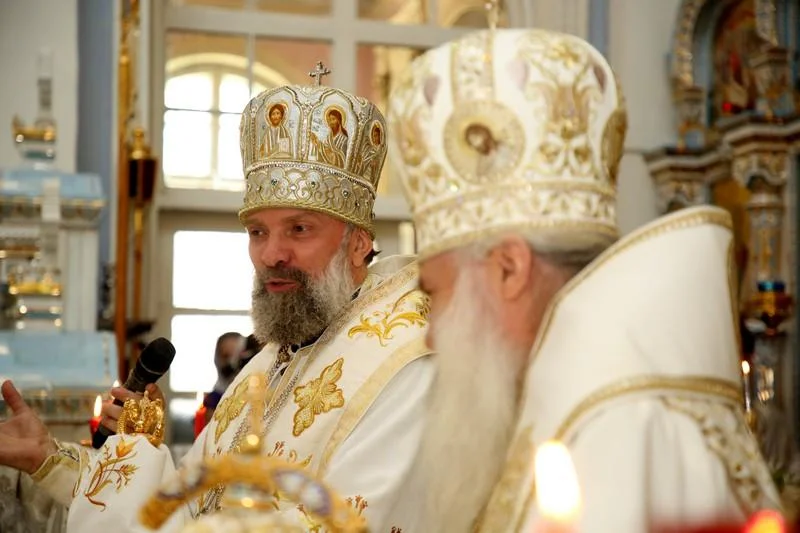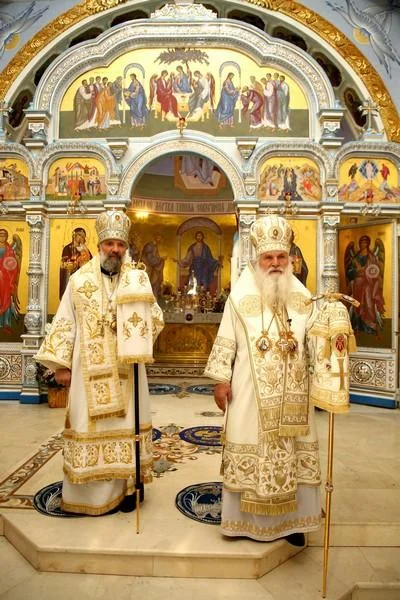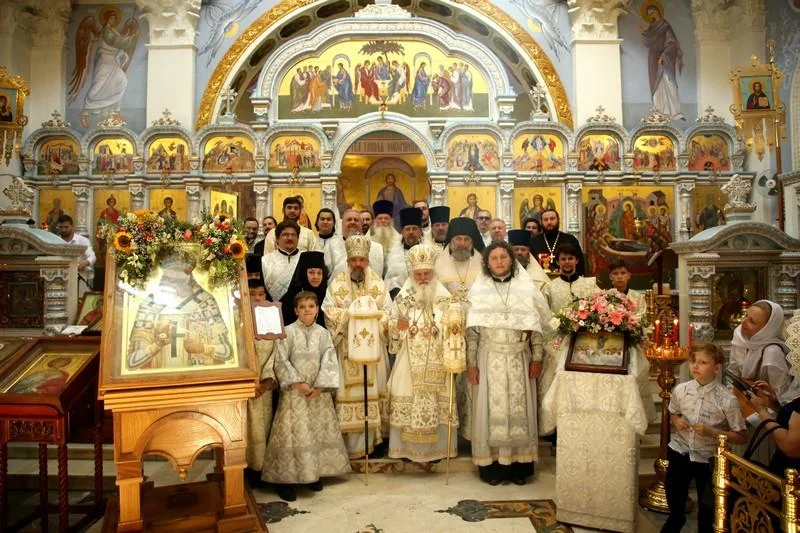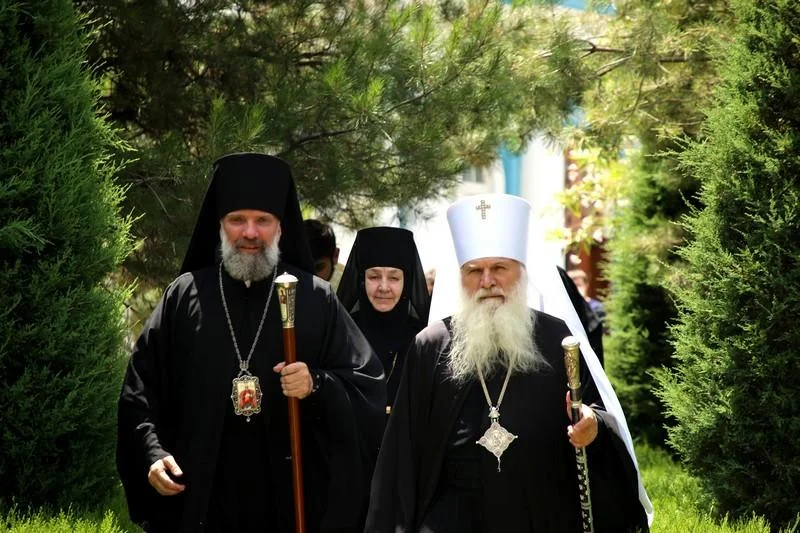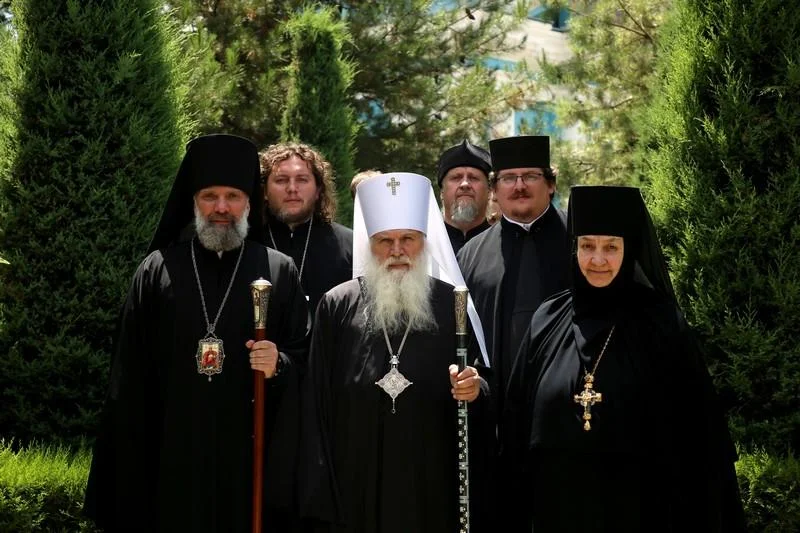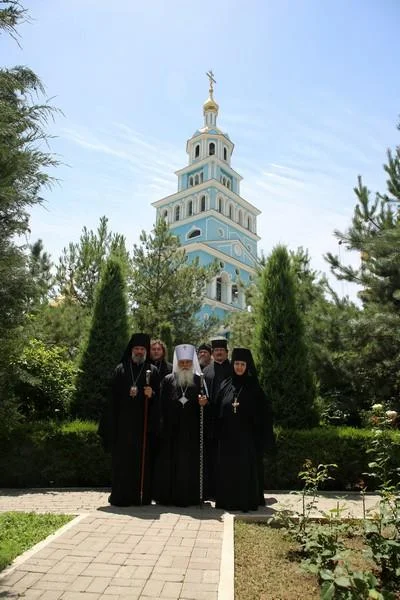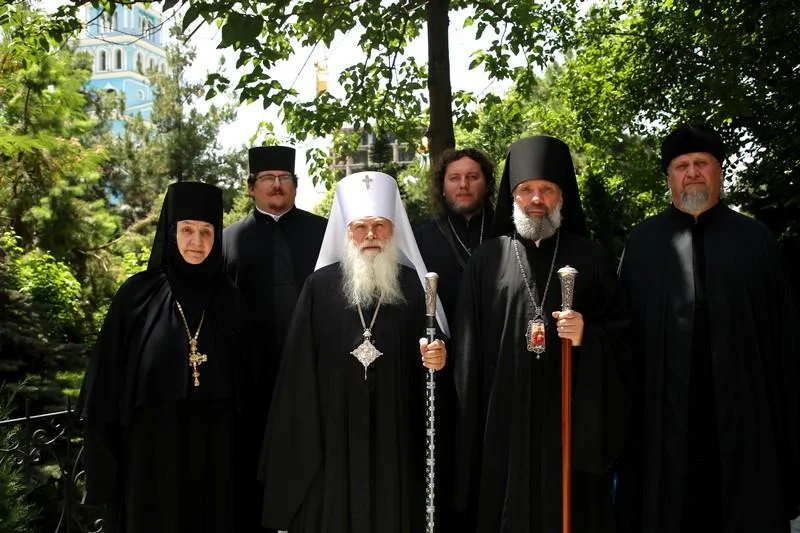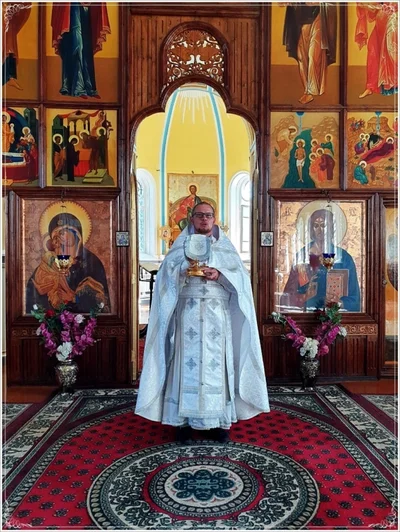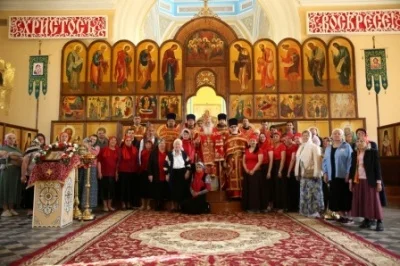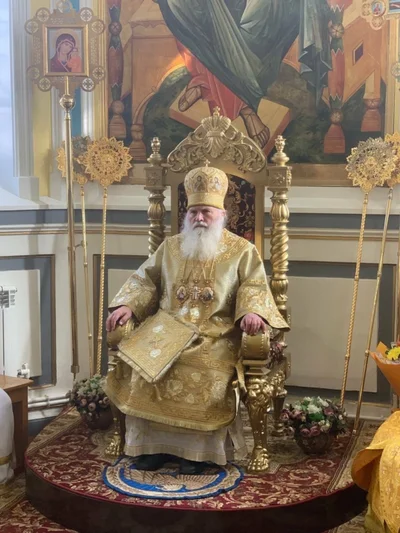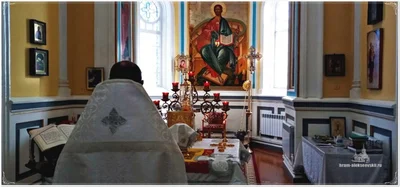
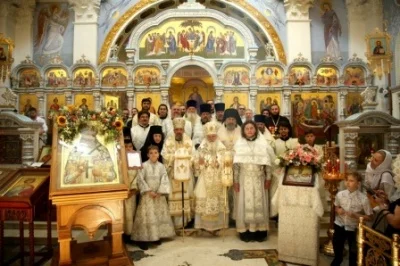
On 11 June 2021 the head of the Central Asian Metropolitan District, Metropolitan Vikenty of Tashkent and Uzbekistan, concelebrating with Bishop Pitirim of Skopin and Shatsk, celebrated a solemn festal service in honor of St. Luke, Archbishop of Simferopol and Crimea, at the Dormition Cathedral in Tashkent. This year marks 60 years since the repose of St. Luke, 25 years since his glorification and the uncovering of his relics, and 100 years since the future St. Luke was ordained to the priesthood.
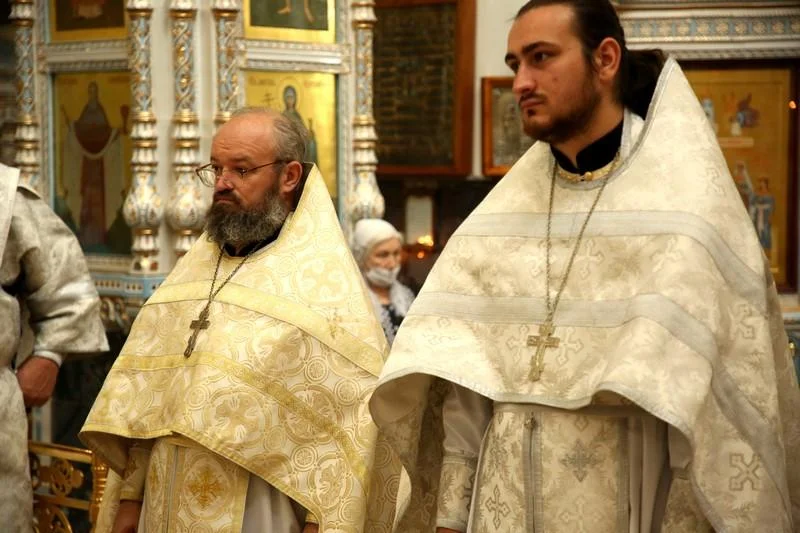
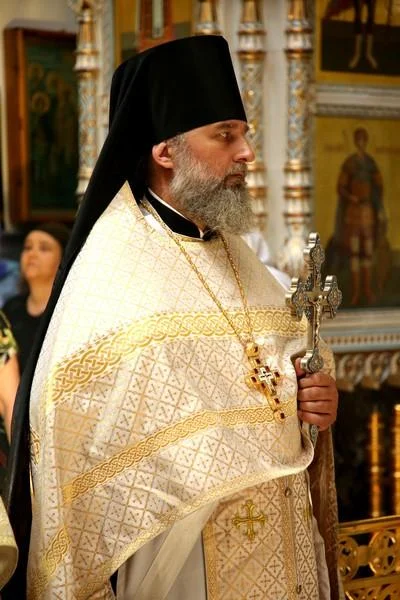
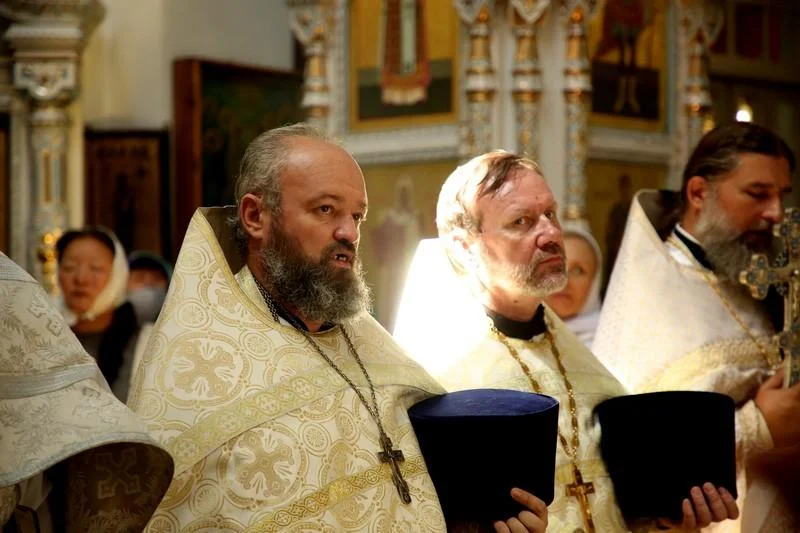
Concelebrating with the archpastors were the vice-rector for academic affairs of the Tashkent Theological Seminary, Archpriest Sergiy Statsenko; Hegumen Nektary (Blinov); Archpriest Pavel Sergeev; Archpriest Andrei Tugushev; Priest Vladimir Polyak; Priest Andrei Lin; a cleric of the Diocese of Crimea, Priest Kirill Ivanisov; Priest Grigory Khimonidi; Protodeacon Alexander Nesin; a cleric of the Diocese of Crimea, Protodeacon Vasily Marushchak; a cleric of the Diocese of Skopin, Deacon Nikita Vedernikov; Deacon Pyotr Gnatik; Deacon Dimitry Zemtsov; and Deacon Luka Irgashev.
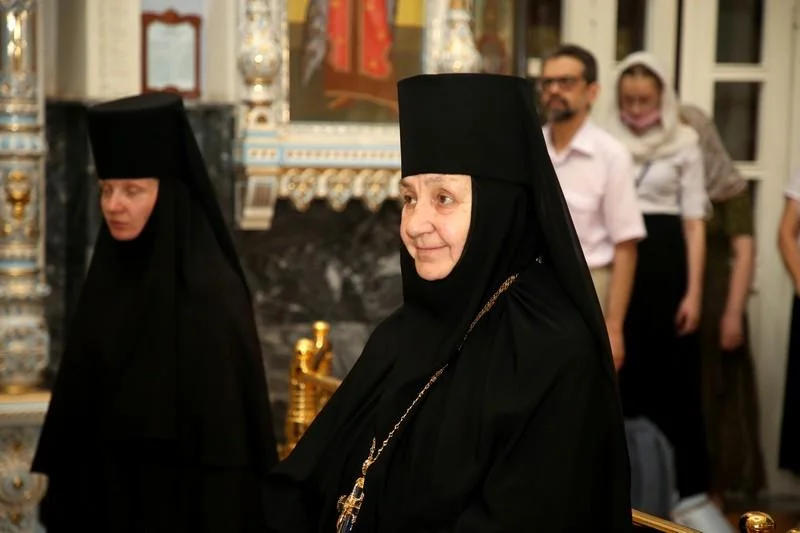
Also praying at the service was the abbess of the Holy Trinity St. Nicholas Convent, Hegumenia Ekaterina (Malgina).
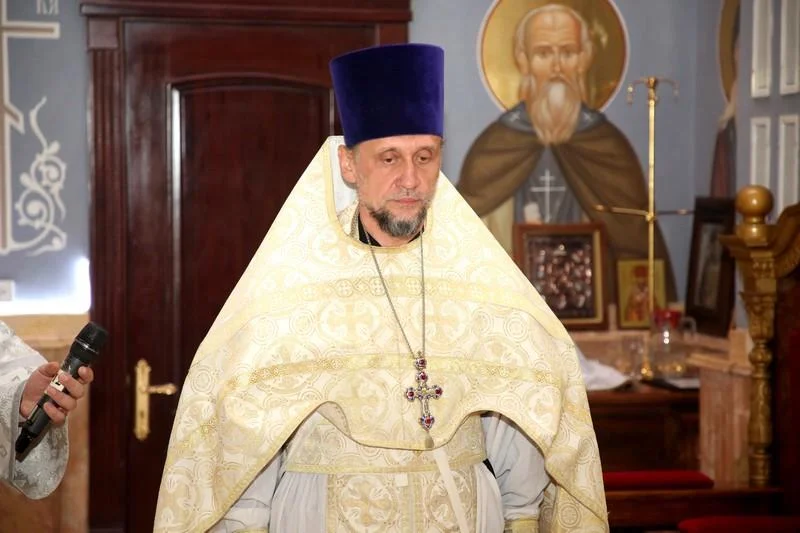
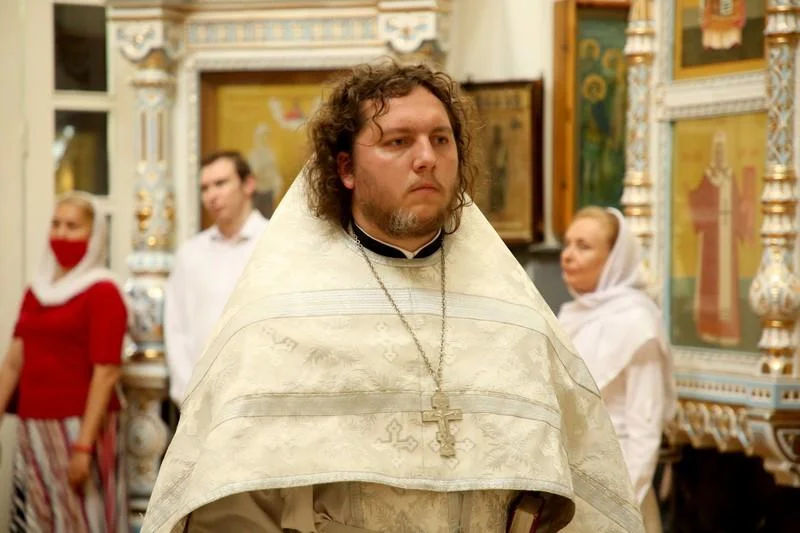
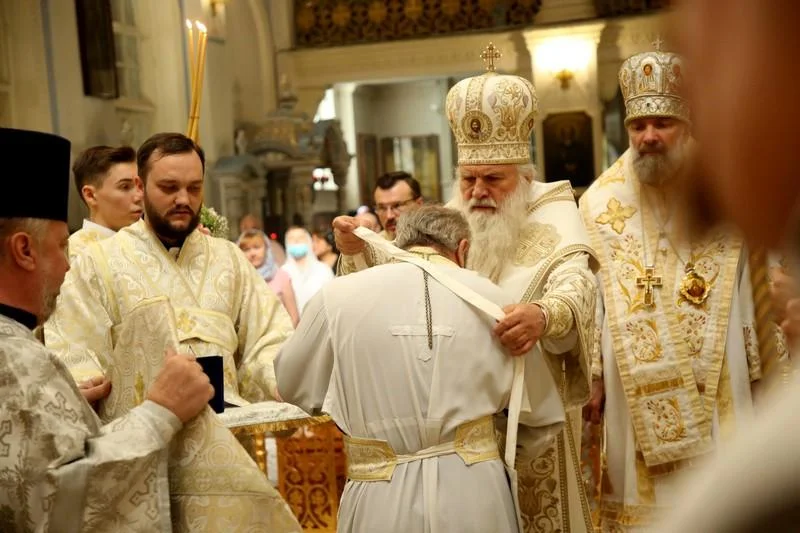
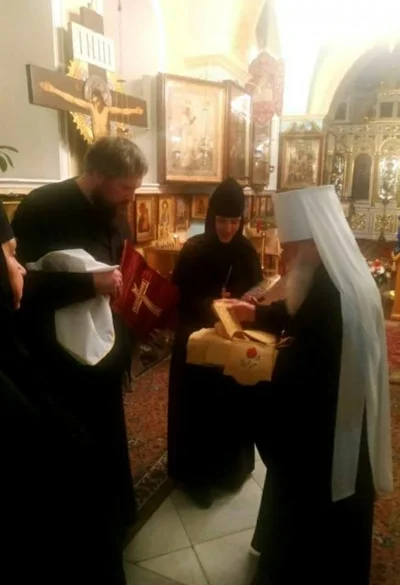
At the Little Entrance Metropolitan Vikenty presented a cleric of the cathedral, Priest Andrei Lin, with two church awards at once: the nabedrennik and the kamilavka.
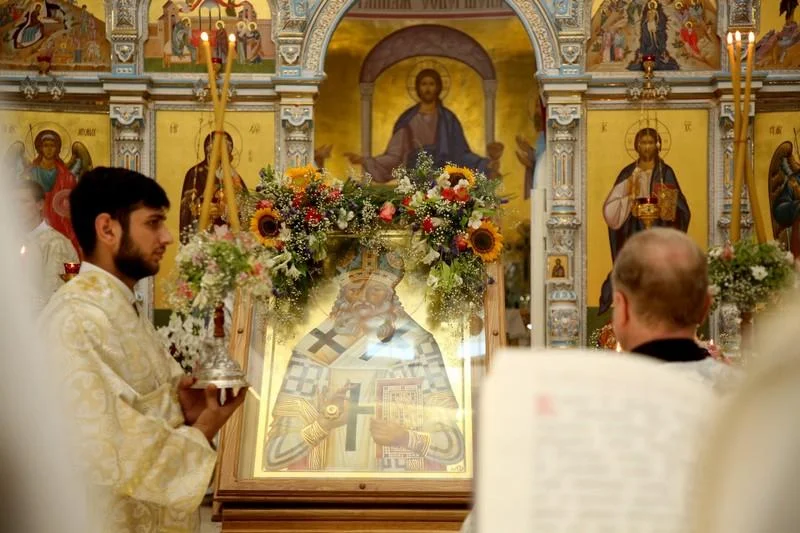
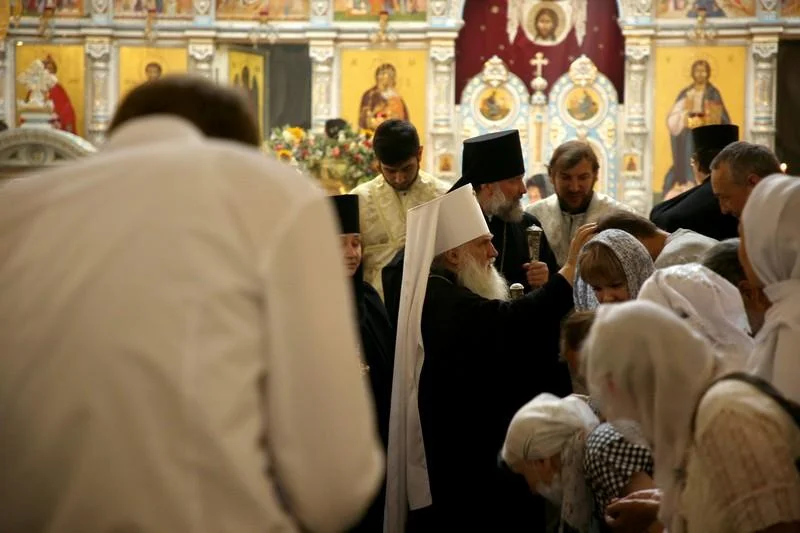
After the Sacrament of Communion, the prayer before the ambo and the dismissal, Metropolitan Vikenty offered a prayer to St. Luke of Crimea before his venerable icon containing a portion of his relics, and then addressed the worshippers with an archpastoral word:
"In these days, when we glorify the Lord who ascended into heaven, we celebrate the memory of a great pillar of our Church, St. Luke (Voino-Yasenetsky), who began his direct service to the Church of Christ precisely here, in Tashkent. The situation in our city and our diocese was very dangerous for the Orthodox faith. The atheist state had set a course for completely destroying the true Orthodox Church. And it did this very cunningly, through schismatics. At first they were supported in order to destroy our Church from within.
St. Luke saw this and understood what was being done to our Church, of which he was a member. He was an active layman here in Tashkent. He took an active part in church life. He spoke at various events and conferences. Even Archbishop Innokenty of Tashkent noticed his gifts. He told him to become a priest, and he replied, 'If it is necessary, I will.' He did not, as the saying goes, confer with flesh and blood. He was an educated man of great authority among the intelligentsia of Tashkent and all of Central Asia, for he was a professor of medicine, a surgeon and a renowned scientist. At the same time he was a truly, deeply believing man. He sacrificed himself on this earth to defend our Orthodox faith.
Having such authority among all the people around him, he decided to become a clergyman, a monk and even a bishop. This was a heavy blow to the ideology of the Soviet atheist state, because the country's leadership told us all that a believer is an uneducated person: it is out of ignorance that he believes in God, and if he were educated he would not be a believer. That was the notion. And here was Bishop Luke: a believer and a scientist, a man of knowledge and understanding. The atheists' postulates do not hold here; they shatter against a rock. And so for them he was a very inconvenient man. They tried in every way to force him to renounce his faith. And this is where his faith shows itself: whatever hardships were inflicted on him, he did not renounce his faith. This too is an example for us."
In his address Metropolitan Vikenty also welcomed Bishop Pitirim, noting that his invitation to the celebrations of the feast of St. Luke was no accident. Some time ago Bishop Pitirim was the bishop of the Diocese of Dushanbe and Tajikistan. While heading that see he put a great deal of effort into teaching the Orthodox flock about St. Luke.
His Grace Pitirim made the striking observation that wherever he goes, St. Luke accompanies him:
"Exactly two years ago I served here with you in honor of St. Luke. I was in Kursk, and there it was the feast of St. Luke. And where do you think my last service with a bishop was? In Tambov. Recently Bishop Feodosy and I carried the Vysha Kazan Icon of the Mother of God there (this is a revived procession of the cross that existed before the revolution, when these icons delivered Tambov from cholera). This procession was revived 20 years ago. But the most remarkable thing is that at the very height of the pandemic, when it would seem the icon most needed to be brought again from Vysha to Tambov, that was exactly when it was cancelled. This year Bishop Feodosy and I took the icon and carried it there. We served there with Bishop Feodosy, and the icon remained there for a week. And Tambov was also a see of St. Luke; a great deal there is also connected with his name. St. Luke, of course, links Tashkent and Penjikent, Uzbekistan and Tajikistan.
His episcopal ordination took place in Tajikistan, he also practiced medicine there, and there are testimonies of how he saved people. I am very glad to be here. It is a very unusual feeling."
Metropolitan Vikenty also thanked the clerics of the Diocese of Crimea for coming to Tashkent to share their knowledge and views on the labors and feats of St. Luke.