Great Martyr
Great Martyr Eustathius (Placidas), Theopistia, Agapius and Theopistus, Martyrs
†ок. 118
Also known as: Плакида
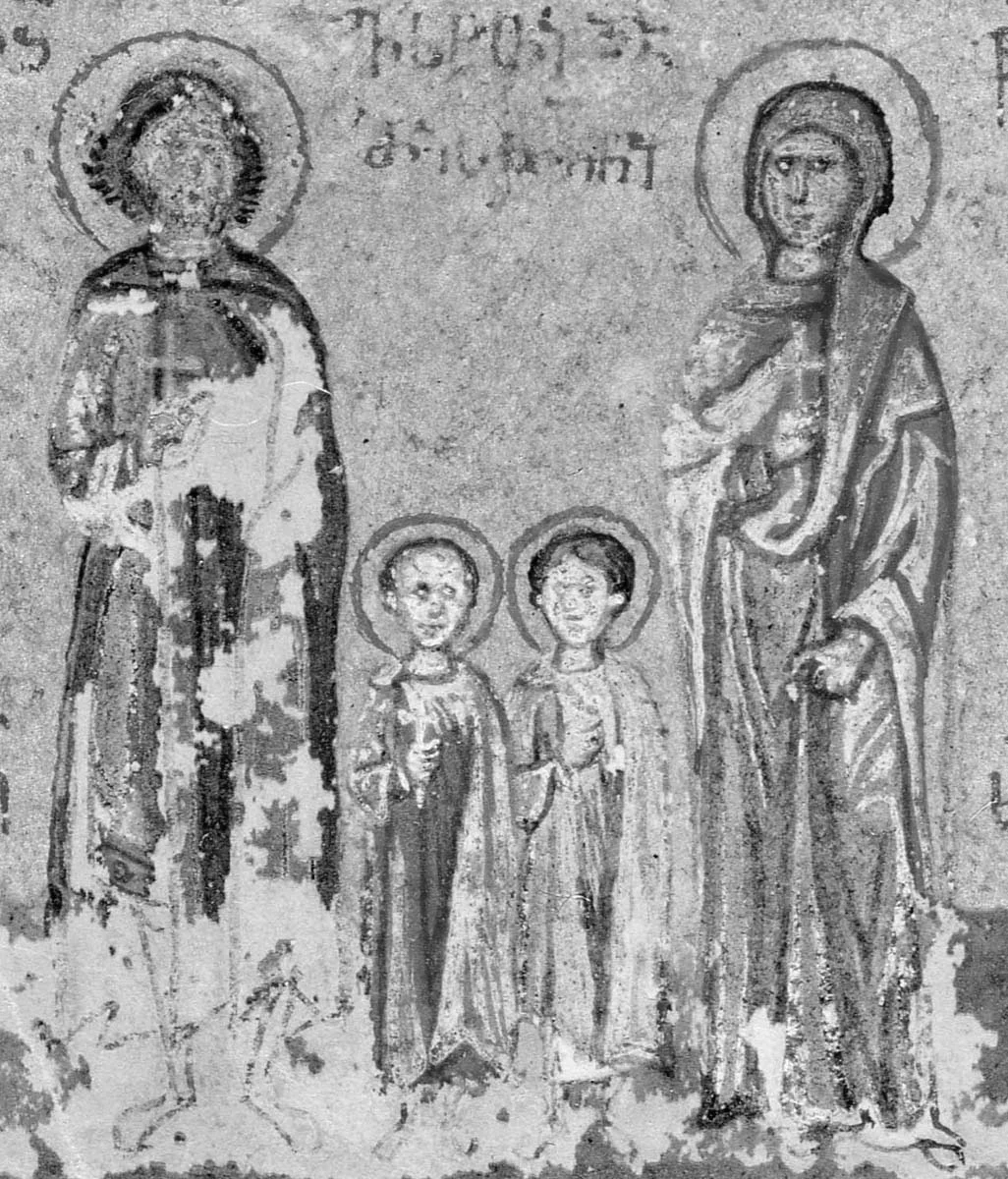
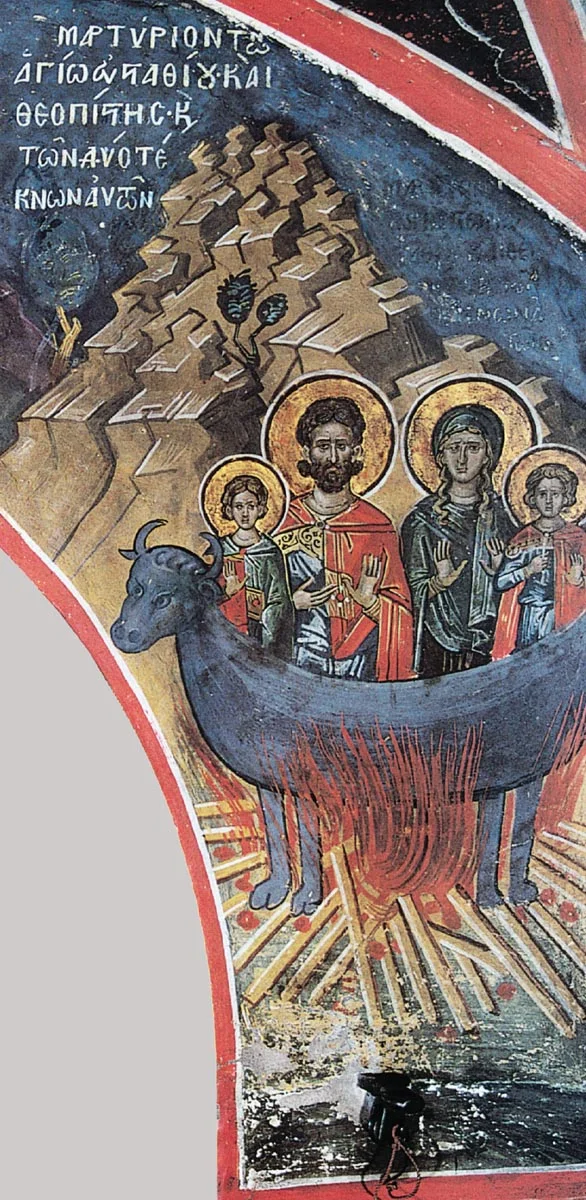
Great Martyr Eustathius (Placidas) — a Roman general converted to Christ by a vision of a stag with a glowing cross between its antlers; together with his wife Theopistia and sons Agapius and Theopistus, after many trials and a long separation, he refused to sacrifice to idols under Emperor Hadrian and was burned alive in a heated bronze bull around 118.
St. Eustathius, before baptism named Placidas, was a distinguished Roman general under Emperor Trajan, known for his mercy toward the poor though still a pagan. While hunting one day, he saw a stag with a radiant cross bearing an image of Christ shining between its antlers, and heard a voice calling him to believe. Placidas was baptized together with his wife (who received the name Theopistia at baptism) and their two sons, taking the name Eustathius. Soon the family suffered severe trials: their property was ruined, their servants perished, and they were forced to flee to Egypt, during which his wife was abducted by a ship's captain and both young sons were carried off by wild beasts (but miraculously preserved alive). Many years later, under Emperor Hadrian, Eustathius was recalled to military service as a renowned commander and, after winning a victory, was miraculously reunited with his wife and now-grown sons, whom he did not recognize for some time. When, after the triumph, Hadrian demanded that Eustathius offer a thanksgiving sacrifice to the pagan gods, he refused as a Christian. For this the entire family — Eustathius, Theopistia, Agapius, and Theopistus — was cast into a heated bronze bull, where they gave up their souls to God; tradition holds their bodies were found incorrupt three days later. Their memory is kept on September 20/October 3.
Icons and images