Martyr
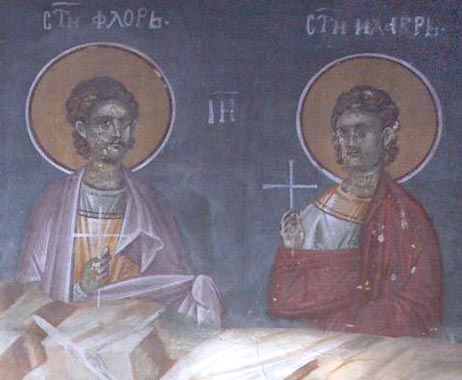
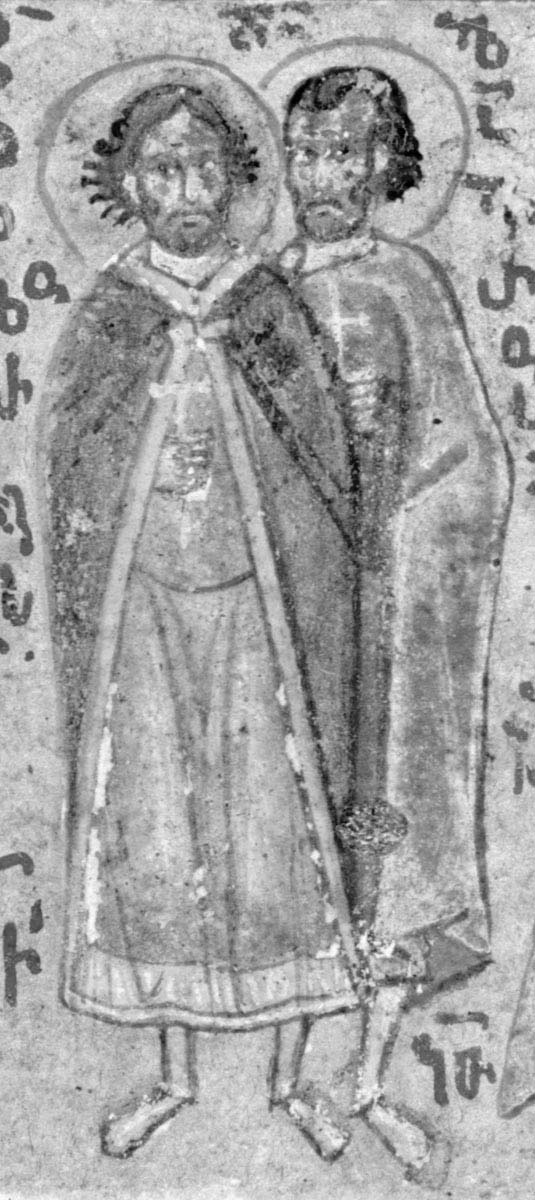
Martyr Florus of Illyria (Florus and Laurus)
II век
Also known as: Флор и Лавр
Martyr Florus — together with his brother Laurus, a stonecutter/builder from Byzantium who relocated to Illyricum; having built a pagan temple by the ruler's order, the brothers converted the priest's sons to Christ and consecrated the building as a church, for which they were thrown into an empty well and buried with earth; one of the most venerated saints in Slavic tradition, patron of livestock and horses.
Martyrs Florus and Laurus were brothers, natives of Byzantium who relocated to Illyricum; they learned the craft of stonecutting and building from the Christian teachers Proclus and Maximus. The ruler of the region, Lycaon, commissioned them to build a pagan temple, but the brothers, receiving payment for their labor, distributed it to the poor and preached Christ. During the construction work, the son of the local pagan priest, named Mamertinus, was struck in the eye by a flying stone splinter; Florus and Laurus healed him after his baptism, thereby converting both the youth and his priest father to Christ. The brothers then smashed the idols in the building they had erected, set up a cross, and consecrated it as a Christian church. For this, Mamertinus, his son, and about 300 other converted Christians were burned alive, while Florus and Laurus themselves were thrown into an empty (per another version, dried-up) well and buried with earth; per one version of the vita, they were first bound to cart wheels and scourged. The martyrs' relics were later translated to Constantinople, to the Pantokrator Monastery (seen there by the Russian pilgrims Anthony of Novgorod in 1200 and Stephen of Novgorod c. 1350). Florus and Laurus are among the most venerated saints in Slavic tradition: their feast day (August 18/31) is popularly known as the "horse festival," when horses were freed from work and decorated, and a special prayer service for livestock was held; in 2011 Patriarch Kirill blessed their feast as the official Day of the Veterinary Worker in Russia. They are often depicted in icons together with the Archangel Michael, holding two horses by the bridle.
Icons and images