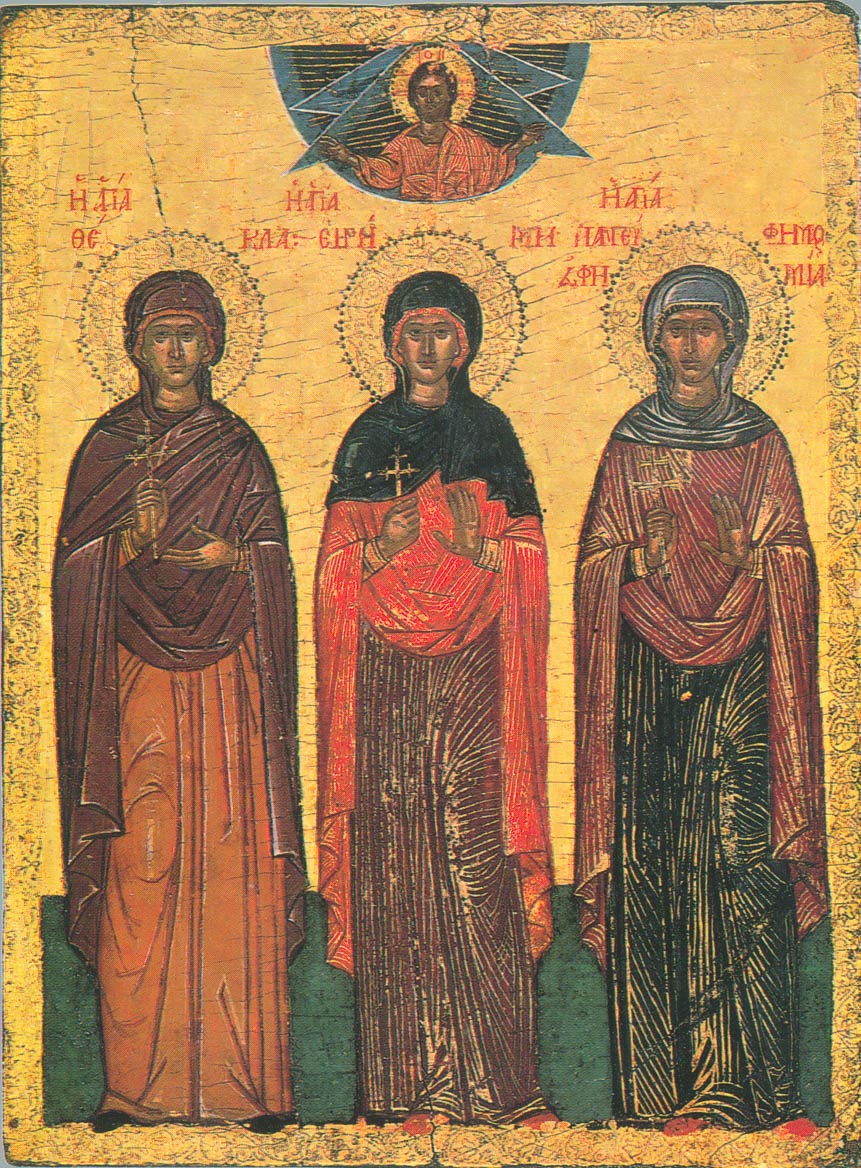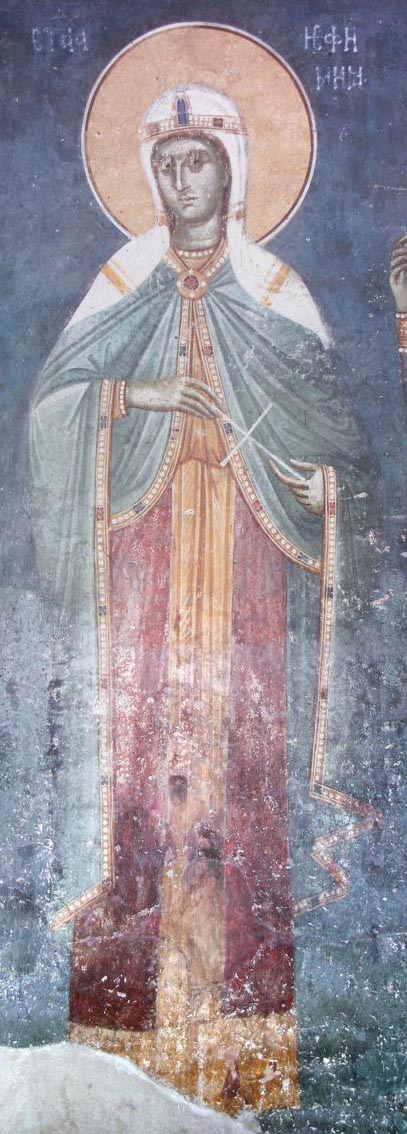
Great Martyr
Great Martyr Euphemia the All-Praised, of Chalcedon
†303/304 (при имп. Диоклетиане)
Also known as: Евфимия Халкидонская
Great Martyr Euphemia the All-Praised of Chalcedon — daughter of a senator, martyred at Chalcedon under Emperor Diocletian (303/304); also glorified for a miracle at the Fourth Ecumenical (Chalcedonian) Council of 451, when her incorrupt relics miraculously bore witness to the Orthodox confession of faith against the Monophysite heresy. This card merges two previously separate entries about the same saint ("the All-Praised" and "of Chalcedon" are two epithets of one person).
The Great Martyr Euphemia was the daughter of a senator from the city of Chalcedon. During the persecution of Emperor Diocletian she was seized together with other Christians for refusing to sacrifice to the idol Ares and was subjected to brutal torture, including a spiked wheel which, tradition holds, miraculously broke apart without harming her. The saint was then thrown to wild beasts in an arena: lions left her unharmed, but a bear inflicted a fatal wound — at the moment of her death an earthquake occurred, allowing her parents to recover the body for burial. Her commemoration acquired special significance a century and a half later: in 451, in the church built over her tomb at Chalcedon, the Fourth Ecumenical Council convened, defining the Orthodox teaching on the two natures in Christ against the Monophysite heresy. At the close of the debates, the Orthodox and the Monophysites placed scrolls with their respective confessions in the reliquary of St. Euphemia — after three days the body was found holding the Orthodox scroll in its hands, while the Monophysite scroll lay at her feet, which was taken as a miraculous divine testimony in favor of the Orthodox confession. Her relics were later translated to Constantinople, survived the Iconoclast period (cast into the sea and miraculously recovered), and were restored under Empress Irene; today the principal relics rest in the Patriarchal Cathedral of St. George in Istanbul.
MERGE NOTE: the database contained two separate placeholder cards — "Euphemia the All-Praised" and "Euphemia of Chalcedon" — with identical broken template text, identical feast_days, and the same (incorrect) masculine gender. Research confirmed this is ONE saint ("the All-Praised" is an honorific epithet, "of Chalcedon" a toponymic one) — the cards have been merged. The third original date, June 2, is not confirmed by any source (including pravenc.ru, which lists only Sept 16 and Jul 11) — removed as likely contamination.
Icons and images