Great Martyr
Great Martyr George the Trophy-Bearer
ок. 275/280 — †303
Also known as: Георгий Каппадокийский, Георгий Лиддский
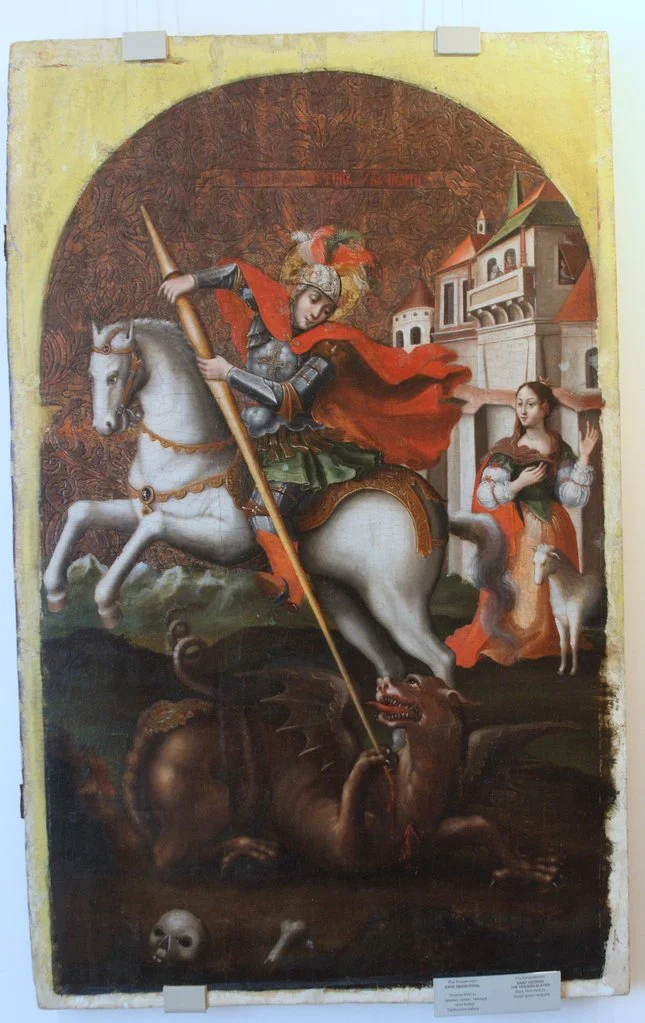
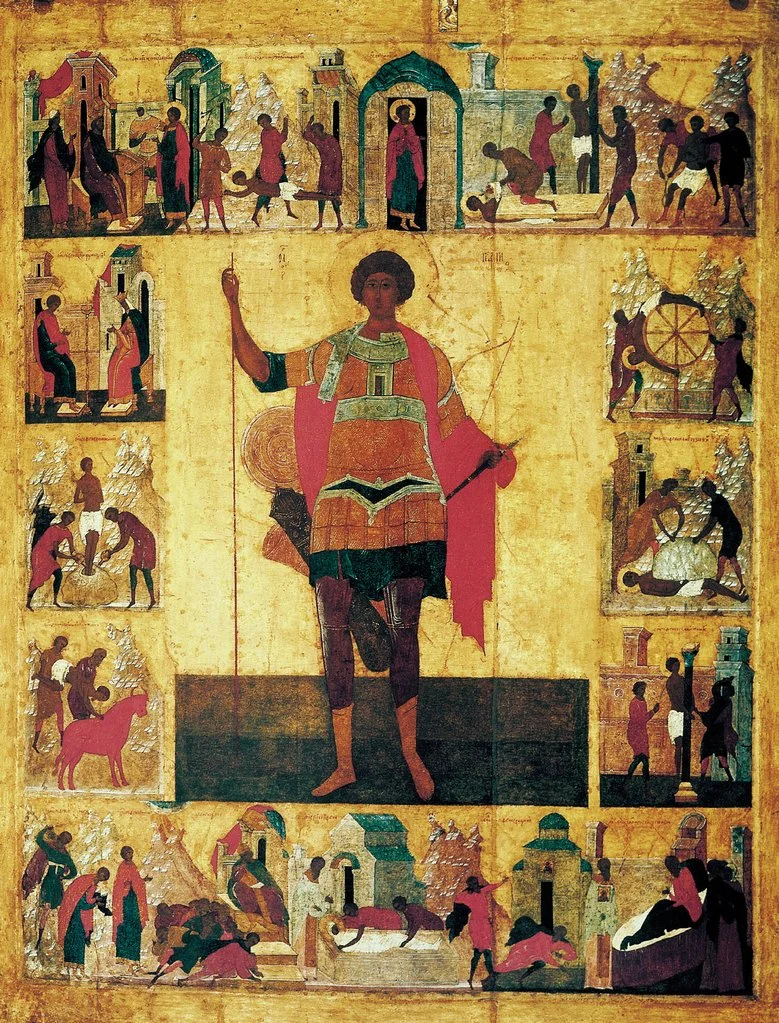
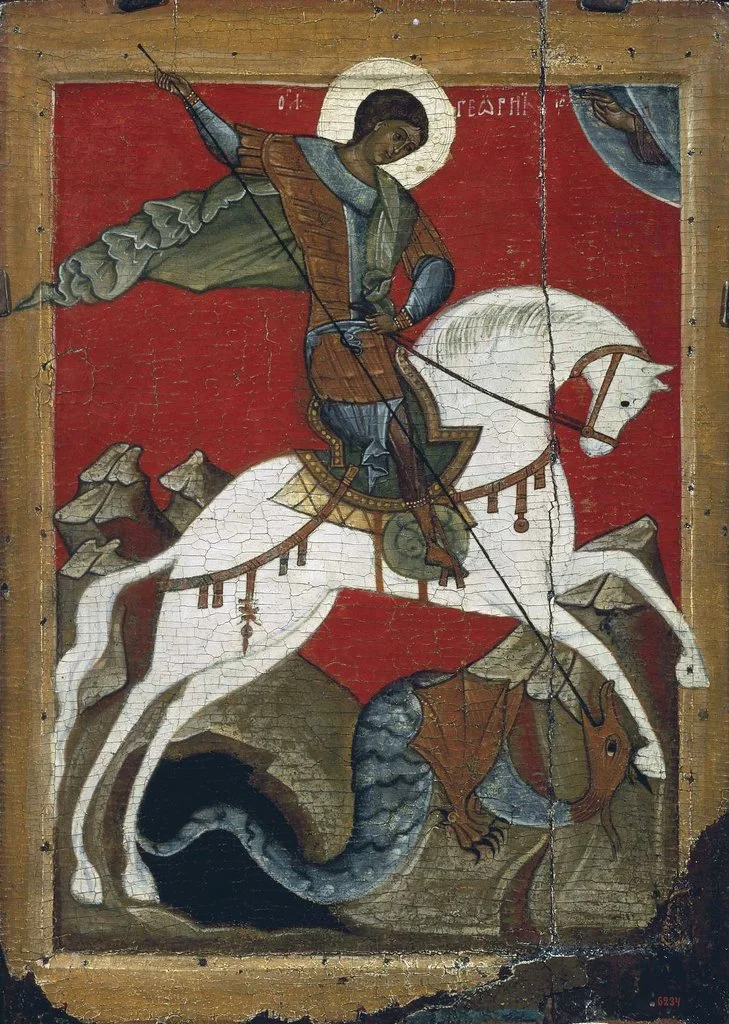
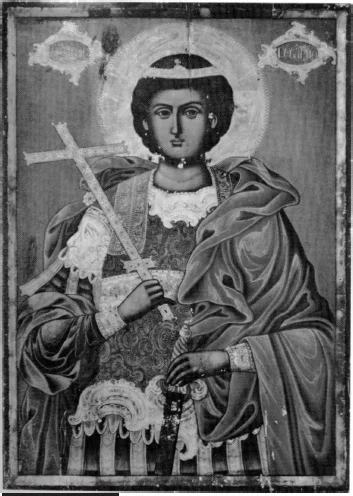
Great Martyr George the Trophy-Bearer — one of the most venerated warrior-saints of the entire Christian world, a Roman military officer who publicly tore up Emperor Diocletian's edict of persecution against Christians, endured days of the most brutal torture, and was beheaded at Nicomedia in 303; widely known through the later symbolic "Miracle of the Dragon" (his victory over a dragon), which is not part of the original martyrdom account. This card merges two previously separate entries about the same saint ("George" and "George the Trophy-Bearer").
The Great Martyr George was born, according to some accounts, in Cappadocia, and according to others in Lydda in Palestine (both traditions are attested), to a noble and pious Christian family. He rose to a high military rank (tribune, comes) under Emperor Diocletian. When the emperor issued an edict of general persecution against Christians, George distributed his possessions to the poor, appeared before the emperor and his council, and openly tore up the edict, confessing faith in Christ. For this he was subjected to days of inhuman torture: he was beaten with ox-sinew whips, broken on a wheel fitted with blades, thrown into a pit of quicklime, and forced to run in red-hot iron boots studded with nails inside — and, according to the Life, he was miraculously healed several times and appeared before his torturers unharmed, converting many witnesses to Christ, including the Empress Alexandra. He was ultimately beheaded at Nicomedia in 303.
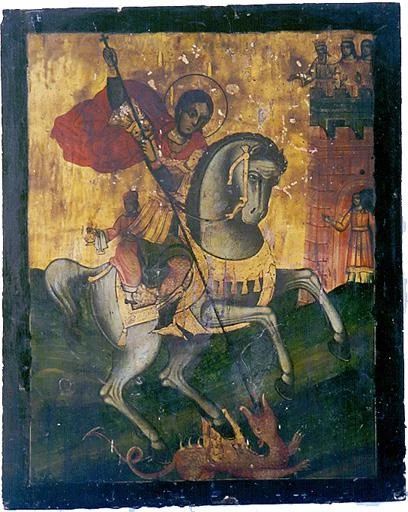
THE MIRACLE OF THE DRAGON: the widely known story of George defeating a dragon and rescuing a king's daughter (tradition places the setting near Beirut) is a LATER, symbolic miracle, attested only after the saint's death and not part of the original martyrdom account; it received its fullest literary form in the Western Golden Legend (13th c.). The Church's own reading of the story is allegorical: the maiden represents the Church, the dragon represents paganism/the devil. The subject becomes established in iconography from the 11th-12th centuries onward, with most surviving icons dating to the 14th-16th centuries.
MERGE NOTE: both original cards ("George" and "George the Trophy-Bearer") had identical structural birth/death dates (275-303) — this is the very "source record" whose dating was erroneously copied onto a number of unrelated "George of X" entries in the database (george_of_athos, george_of_maysky, george_of_remtea, george_of_sinai — see the respective cards). The entries have been merged into one; the full set of feast days has been restored from all sources.
Icons and images