Great Martyr
Great Martyr Theodore the Recruit
†ок. 306 (при имп. Максимиане/Галерии)
Also known as: Феодор Амасийский
Great Martyr Theodore Tyro ("the Recruit") — a young recruit in the Roman army at Amasea in Pontus, who burned down a pagan temple of the goddess Cybele (Rhea), for which he was tortured and burned at the stake around 306; also renowned for a posthumous miracle involving kolyva, when he appeared in a dream to Archbishop Eudoxius of Constantinople and protected Christians from food defiled by the apostate Emperor Julian, instructing them to eat kolyva instead — hence the general church commemoration on the first Saturday of Great Lent.
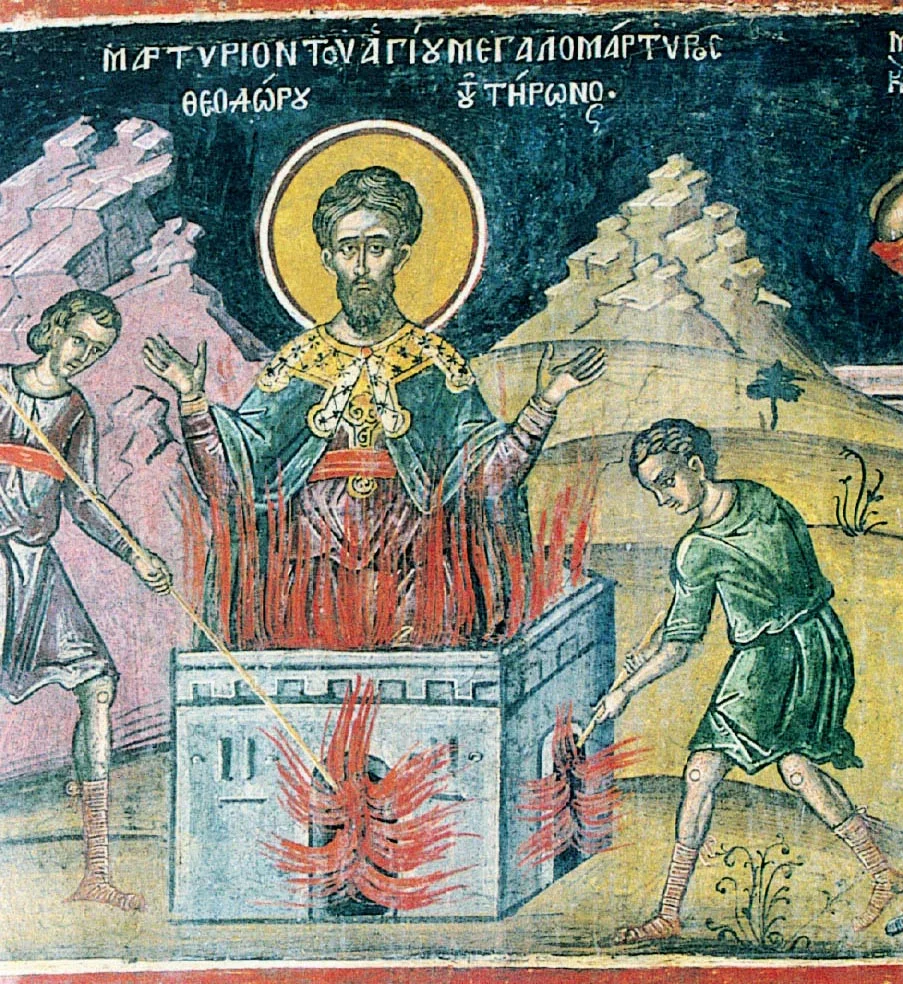
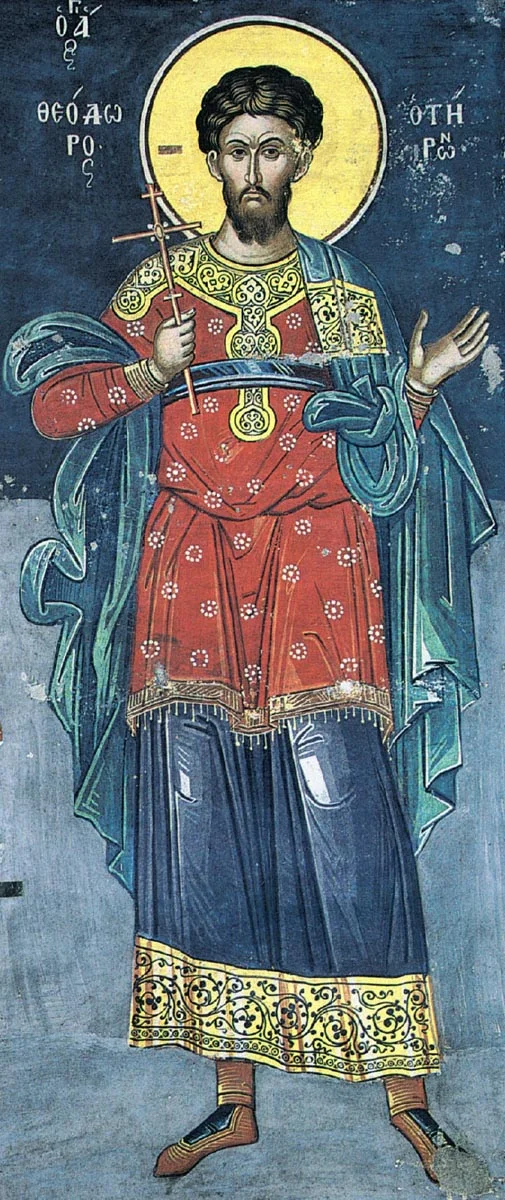
The Great Martyr Theodore, surnamed Tyro ("the recruit," from Latin tiro), came from Cappadocia and served as a young soldier in a Roman legion stationed at Amasea in Pontus (modern Turkey). When his commander learned of his Christian faith, Theodore was given the choice of sacrificing to the pagan gods or leaving the service — the saint openly refused idol worship and, alone, burned down a pagan temple of the goddess Cybele (Rhea). For this he was seized, imprisoned without food (where, tradition holds, he was strengthened by an appearance of Christ), and, after refusing to recant, was burned at the stake around 306 under Emperors Maximian and Galerius. He is also renowned for a posthumous miracle: half a century later, when the apostate Emperor Julian ordered the food in Constantinople's markets secretly defiled with the blood of idol-sacrifices during the first week of Great Lent, St. Theodore appeared in a dream to Archbishop Eudoxius, warned him of the defilement, and instructed that boiled wheat with honey (kolyva) be eaten instead of the market food — in memory of this miracle the Church keeps a special commemoration of the Great Martyr Theodore Tyro on the Saturday of the first week of Great Lent, blessing kolyva. He should not be confused with the Great Martyr Theodore Stratelates ("of Heraclea") — a different, separate soldier-martyr of the same name, whose feast is Feb 8 (the two are sometimes depicted together as "the two Theodores").
Icons and images