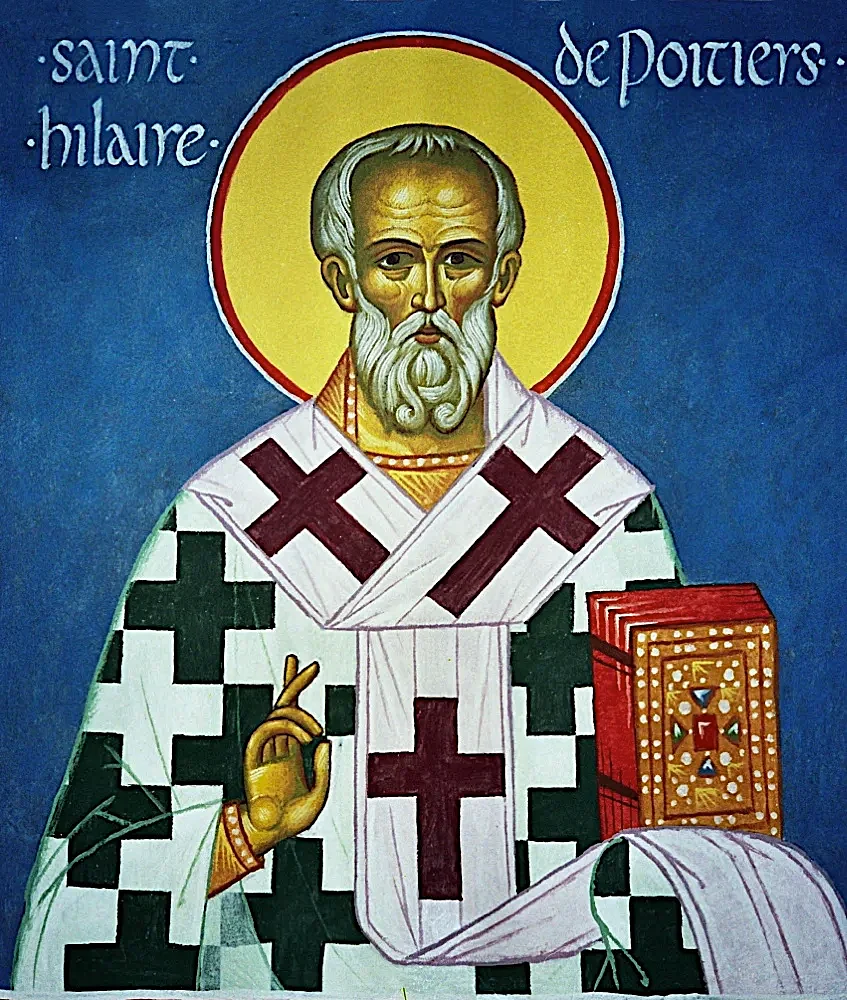
Hierarch
Hierarch Hilary, Bishop of Poitiers
ок. 315 — †367
Also known as: Иларий Пиктавийский, Иларий Пуатьесский
Holy Hierarch Hilary, Bishop of Poitiers — the "Athanasius of the West," a resolute opponent of Arianism, author of the monumental work "On the Trinity" (De Trinitate), exiled by Emperor Constantius II to Phrygia (c. 356-360) for refusing to condemn St. Athanasius the Great.
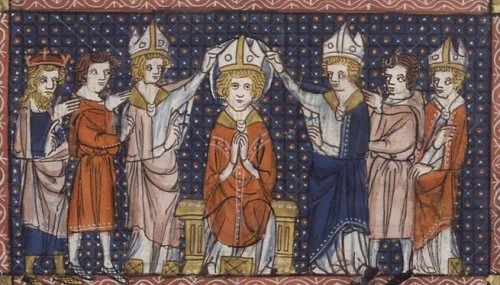
Holy Hierarch Hilary was born around 315 into a noble pagan family in Pictavium (Poitiers, Gaul), receiving a classical Neoplatonist education. He converted to Christianity in mid-life together with his wife and daughter (Abra). Around 350-353 he was elected Bishop of Poitiers despite being married (which did not preclude the episcopate under the Western custom of the era).
He became the most resolute opponent of Arianism in the West, later earning the epithet "Athanasius of the West." At the Council of Béziers (356) he refused to condemn St. Athanasius of Alexandria and the Nicene faith, for which Emperor Constantius II exiled him to Phrygia (Asia Minor), where the hierarch spent roughly 356-360. It was during this exile that he wrote the principal work of his life — "On the Trinity" (De Trinitate) in 12 books (the first three books had been begun before the exile) — the first major systematic exposition of Trinitarian theology in Latin. He continued to govern his diocese even from exile; according to tradition, he proved so effective at stirring anti-Arian sentiment among Eastern bishops that they themselves asked the emperor to send him home.
After the Council of Seleucia (359) he returned to Gaul, convened the Council of Paris (361) to continue combating Arianism, mentored St. Martin of Tours, and wrote some of the earliest Latin church hymns. He died in 367.
Icons and images