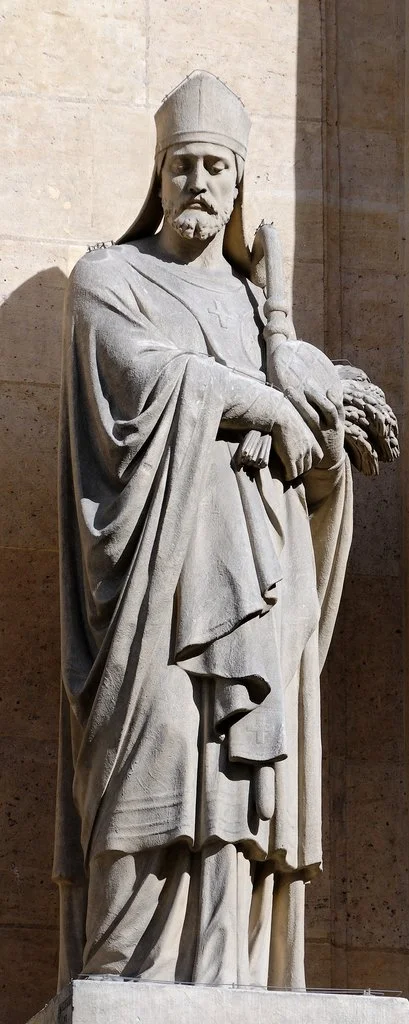
Hierarch
Hierarch Honoratus, Bishop of Amiens
VI век — †ок. 600
Also known as: Гонорат Амьенский, св. Оноре
Holy Hierarch Honoratus, 7th Bishop of Amiens (St. Honoré) — discovered the relics of Sts. Victoricus, Fuscian, and Gentian; according to tradition, the baker's peel of his former wet-nurse, who doubted his episcopate, was planted in the ground and miraculously sprouted into a mulberry tree; he is venerated as patron of bakers and pastry chefs (Paris's Rue Saint-Honoré and the "gâteau Saint-Honoré" pastry are named for him).
Holy Hierarch Honoratus was born into a noble family in the locality of Port-le-Grand (Ponthieu region, Picardy). He was raised and educated under the guidance of Bishop Beatus of Amiens, whom he later succeeded on the see, becoming the seventh Bishop of Amiens, accepting the office not without hesitation.
During his episcopate he discovered (translated) the long-hidden relics of Saints Victoricus, Fuscian, and Gentian. A famous legend is connected with his name: when news of Honoratus's election as bishop reached his old wet-nurse, who was baking bread at the time, she doubted it, declaring she would believe it only if her wooden baker's peel, planted in the ground, took root and grew into a tree. According to tradition, the peel indeed sprouted into a mulberry tree, which flowered and bore fruit (according to some accounts, the tree was shown to pilgrims as late as the 16th century).
The hierarch's relics, uncovered in 1060, became renowned for further miracles, and his veneration spread throughout France; he became the patron of bakers, millers, and pastry chefs — the Paris bakers' guild was founded in 1400 at the Chapel of St-Honoré, and the Rue Saint-Honoré and the "gâteau Saint-Honoré" pastry in Paris bear his name.
Icons and images