Venerable
Venerable Irene of Chrysovalantou (of Cappadocia)
ок. 840 — ок. 921/924
Also known as: Ирина Хрисоволантская, Ирина Каппадокийская
Venerable Irene of Chrysovalantou, a native of Cappadocia, was brought to Constantinople as a candidate bride for Emperor Michael III but, the marriage not taking place, chose monastic life instead; spiritually guided by Venerable Ioannikios the Great, she became abbess of the Chrysovalantou Monastery, renowned for the gift of foresight, the miracle of fragrant apples sent by the Apostle John the Theologian, and encounters with demonic opposition overcome by the sign of the cross.
Venerable Irene was born around 840 into a noble Cappadocian family; her sister is said to have married Prince Bardas, brother of Empress Theodora. Empress Theodora, seeking a bride for her young son, Emperor Michael III, summoned Irene among the candidates for a "bride-show" in Constantinople. The marriage did not take place, however — Michael was by then already secretly married; Irene gave thanks to God and, declining further marriage proposals, chose the monastic path instead.
Before entering the convent she visited Venerable Ioannikios the Great, a hermit of Mount Olympus in Bithynia (see the separate entry ioannikiy_velikiy), who prophesied to her: "The convent of Chrysovalantou needs you." Patriarch Methodios the Confessor later confirmed her as abbess and ordained her a deaconess.
She was noted for strict fasting (bread and water, occasionally vegetables), prolonged all-night vigils (reportedly sometimes lasting a week without interruption), and wearing a single garment a year. She received the gift of foresight, counseling nuns and visitors from every walk of life; she appeared to the Emperor in a dream, demanding the release of an unjustly condemned prisoner.
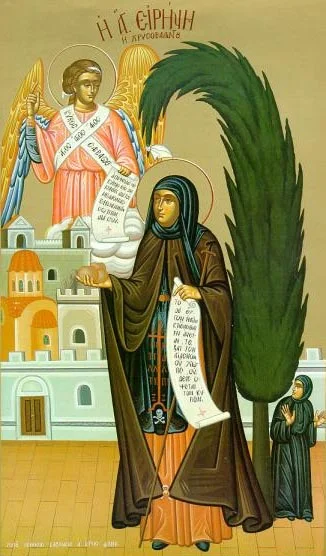
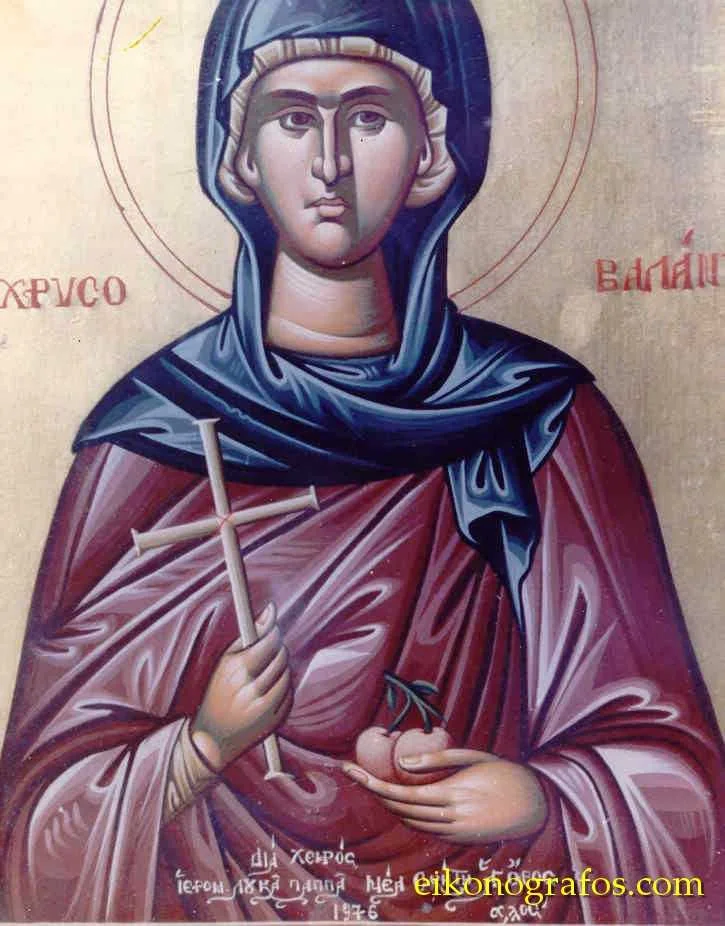
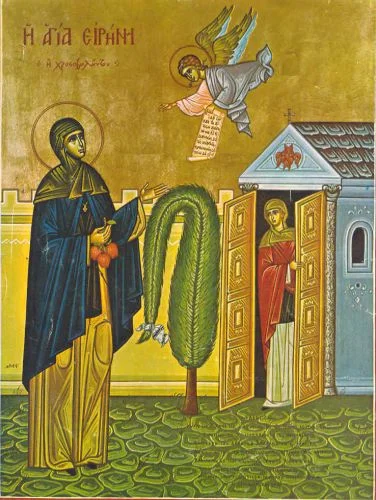
THE MIRACLE OF THE APPLES: a monk from the island of Patmos delivered to her three fragrant, myrrh-streaming apples sent by the holy Apostle and Evangelist John the Theologian; tradition holds that one of these apples sustained her for 40 days. This miracle is a gracious, divine gift — not a demonic one; in iconography she is traditionally depicted holding these three apples.
She also withstood demonic temptations: there are separate accounts of a demon appearing to her in the form of a hideous black man who reviled her from a distance, and, according to the Akathist, of a demon who tried to turn her from the path of salvation but was defeated by the sign of the cross and prayer. During night vigils she was seen levitating; two cypress trees miraculously bent to the ground before her and straightened only at her sign of the cross.
IMPORTANT NAME CLARIFICATION AND MERGE: the separate stub "Irene of Cappadocia" (slug irene_of_cappadocia) did not describe a different, unidentified saint, but was merely an alternate epithet (by birthplace) for this same Venerable Irene of Chrysovalantou. This is confirmed by two independent sources: drevo-info.ru publishes a biographical article under the title "IRENE OF CAPPADOCIA" (article 13459), while a separate page "IRENE OF CHRYSOVALANTOU" (article 13461) carries the same text, the same dates, and the same feast day (July 28) — effectively the same person; the Orthodox Encyclopedia (pravenc.ru) likewise contains only one detailed biography — the 9th-10th century abbess of Chrysovalantou — treating her Cappadocian origin as biographical background rather than a separate saint. The irene_of_cappadocia entry has been merged into this one; its sole image (labeled "Η ΑΓΙΑ ΕΙΡΗΝΗ Η ΧΡΥΣΟΒΑΛΑΝΤΟΥ" — "Saint Irene of Chrysovalantou," not "of Cappadocia") further confirms the identity.
She is NOT the Great Martyr Irene of Thessaloniki/Magedon (baptismal name Penelope, daughter of the pagan King Licinius, who suffered in the first half of the 4th century, feast May 5) — that is a separate, unrelated saint.
BIOGRAPHICAL DETAIL CORRECTED: the original stub erroneously named "St. Gregory" as the spiritual guide who directed Irene toward the office of abbess — no source confirms any "Gregory's" involvement in her path to becoming abbess; according to every source found, her spiritual guide was Venerable Ioannikios the Great.
Icons and images