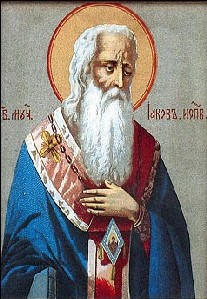
Great Martyr
Great Martyr James the Persian, Intercisus (Cut-to-Pieces)
IV век — †ок. 421
Also known as: Иаков Рассечённый
Great Martyr James the Persian, Intercisus — a noble courtier of King Yazdegerd I who apostatized from Christ to preserve his position, but repented after a reproachful letter from his mother and wife; for his return to the faith he was sentenced by King Bahram V to execution by having his body cut apart joint by joint.
Great Martyr James was a noble Christian of high rank from the region of Bet-Lapat (Gundishapur) in Khuzestan, a favorite courtier of the Persian King Yazdegerd I (r. 399-420). Under pressure from his successor, King Bahram (Vahram) V (r. 420-438), James apostatized from Christ and offered sacrifice to idols to preserve his position and wealth.
James's mother and wife wrote him a letter renouncing communion with him because of his apostasy; deeply shamed, he repented, returned to Christian practice, and immersed himself in the study of Scripture. When King Bahram learned of this, he ordered James arrested and executed by having his body cut apart joint by joint — his fingers, hands, feet, arms, and legs were severed one by one — while the martyr continued praying and reciting Scripture, encouraging onlookers, until only his head and torso remained, at which point he was beheaded.
This is one of the most fully documented Persian martyrdoms, preserved in the Syriac Acts. Particles of his relics were later distributed across many lands of the Christian world (Greece, Cyprus, Egypt, Iraq, Russia; the martyr's head is venerated at the Vatican).
His feast is November 27/December 10.
Icons and images