Martyr
Martyrs Nine Martyrs of Cyzicus
† ок. III века (по преданию, 286–299)
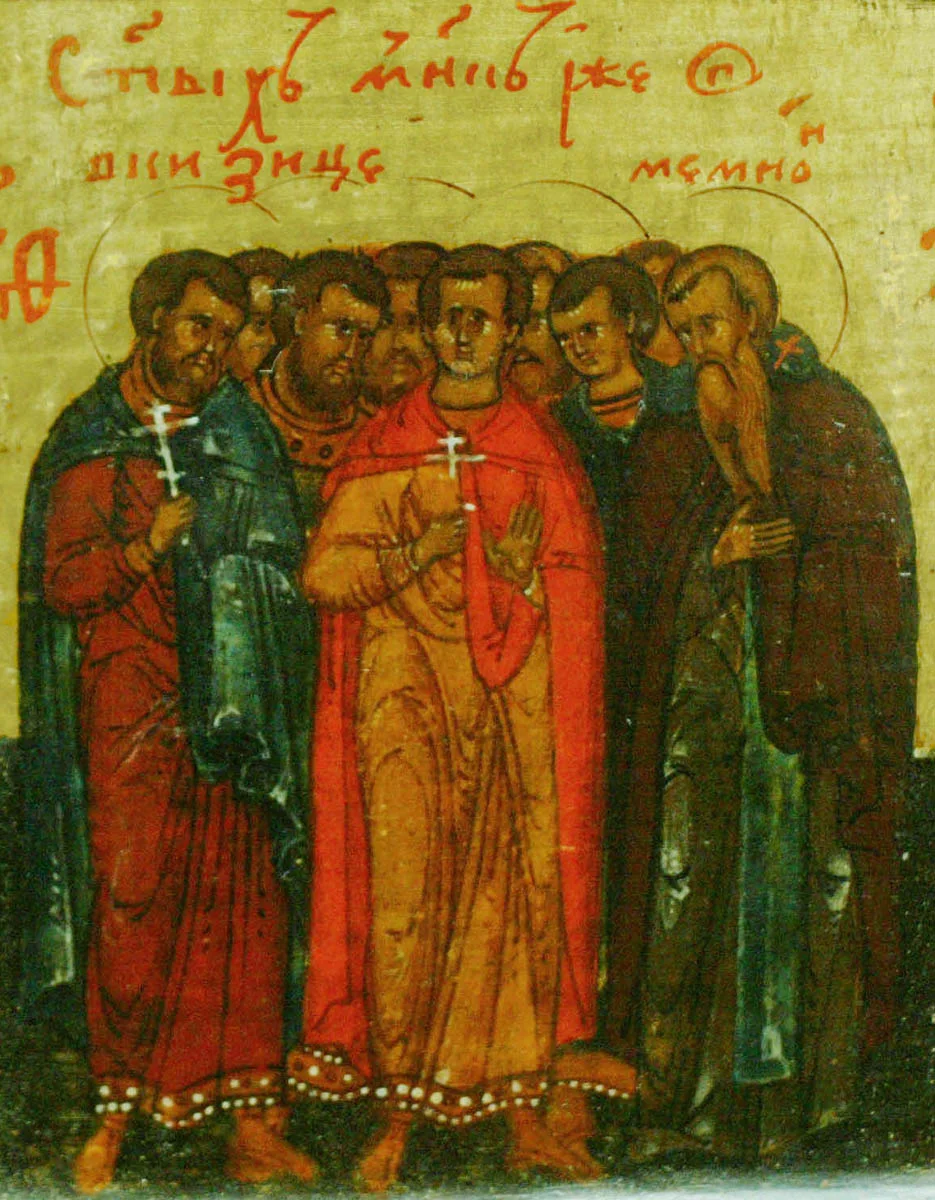
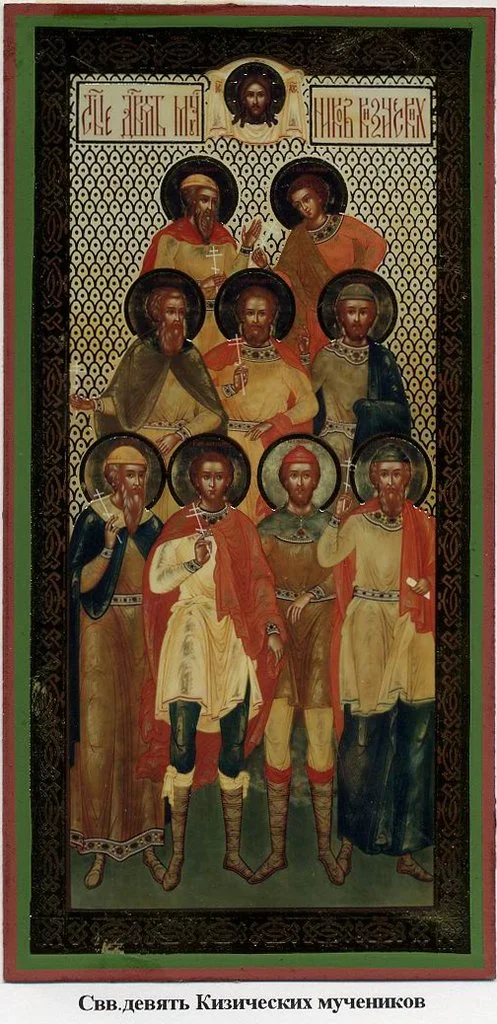
Nine Martyrs of Cyzicus — Theognis, Rufus, Antipater, Theostichus, Artemas, Magnus, Theodotus, Thaumasius, and Philemon, who came to the city of Cyzicus (Mysia) from various places to preach the Christian faith, were seized by the city's governor, tortured, and beheaded for refusing to sacrifice to idols.
The nine martyrs — Theognis, Rufus, Antipater, Theostichus, Artemas, Magnus, Theodotus, Thaumasius, and Philemon — who had come from various cities to Cyzicus (a city in the region of Mysia on the shore of the Sea of Marmara, Asia Minor) to preach the Christian faith, were seized by the city's governor and pressed to sacrifice to idols. For refusing and openly denouncing idolatry, they were subjected to cruel torture: hung up, scraped with iron, burned with candles. After seven days' imprisonment, brought before the judge again and again refusing, they were dragged through thorns and finally beheaded.
The martyrs' bodies were buried near the city; after the accession of St. Constantine the Great, the Christians of Cyzicus recovered their incorrupt relics and built a church over them, from which numerous healings and miracles were reported.
IMPORTANT NOTE ON DATING: the exact time of their martyrdom is not attested by any ancient source. St. Dimitry of Rostov speculatively placed it a few years before Constantine's accession; the Church calendar conditionally dates it to 286-299, the era of the persecutions of Diocletian and Maximian — this dating is traditionally accepted but remains a tradition, not a documented fact.
Veneration of the Nine Martyrs spread especially in Russia in the late 17th century: during a plague epidemic in Kazan (1687), Metropolitan Adrian (later Patriarch) proposed building them a church as protectors from disease — a wooden church was completed by July 1688, after which the epidemic subsided, giving rise to the Kizichesky Monastery in Kazan. In Moscow a wooden church to the Nine Martyrs was built c. 1697-1698, according to tradition in fulfillment of a vow by Patriarch Adrian after his healing from paralysis in 1696; rebuilt in stone in 1732-1735.
Their feast is kept on April 29/May 12.
Icons and images