Martyr
Martyr Manuel, Sabel and Ismail of Chalcedon
† 362
Martyrs Manuel, Sabel, and Ismail of Chalcedon — three blood brothers from a noble Persian family (a pagan father, a Christian mother), sent by the Persian king as envoys to Constantinople to negotiate with Emperor Julian the Apostate; for refusing to take part in a pagan sacrifice and openly confessing Christ, they were cruelly tortured and beheaded near Chalcedon in 362.
Martyrs Manuel, Sabel, and Ismail were blood brothers from a noble Persian family: their father was a pagan, and their mother a Christian who baptized and raised her sons in the faith through the presbyter Eunicus. As adults, the brothers served the Persian king.
In 362 they were sent by the king as envoys to Constantinople to negotiate peace with Emperor Julian the Apostate. While in the capital, Julian invited them to a pagan sacrificial festival; the brothers refused to take part in the idolatrous sacrifice and openly confessed Christ, calling the pagan gods demons.
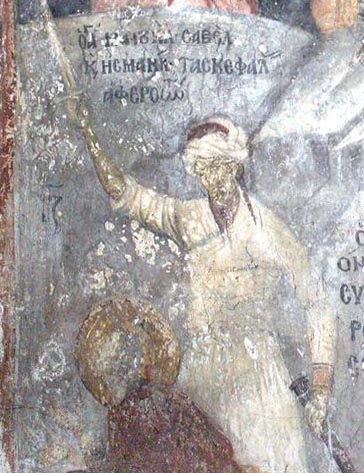
The enraged Julian subjected them to cruel torture: beating, suspension, tearing with iron hooks, burning with torches, driving nails into their heads, and thrusting needles under their fingernails. The brothers were beheaded at the wall of Constantine, near Chalcedon (on the Asian shore of the Bosphorus, the source of their epithet "of Chalcedon").
About thirty years later, under Emperor Theodosius the Great, a church was built in their honor on the site of their execution.
The feast is kept on June 17/30.
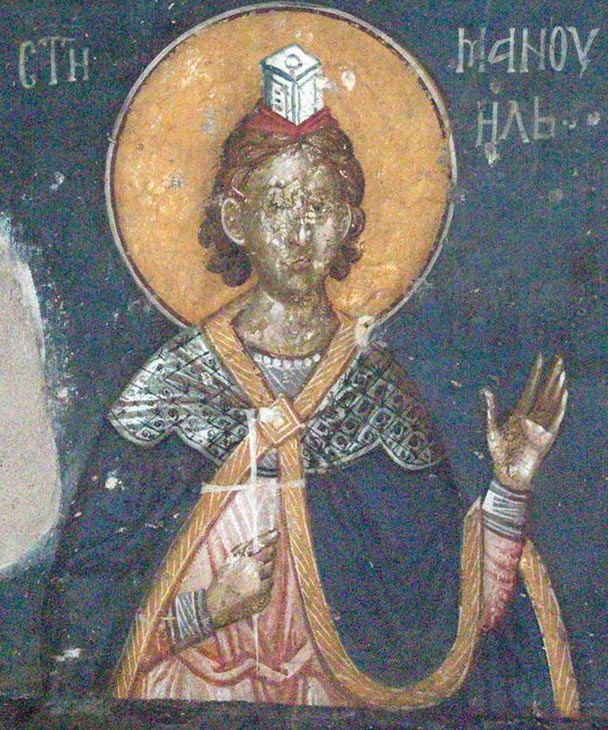
NOTE ON THE IMAGES: the fresco of the Protaton Cathedral on Mount Athos (c. 1290), depicting all three brothers, is the work of the celebrated Cretan master Manuel Panselinos — the coincidence of the iconographer's name with that of the chief martyr is a namesake, not the same person.
Icons and images