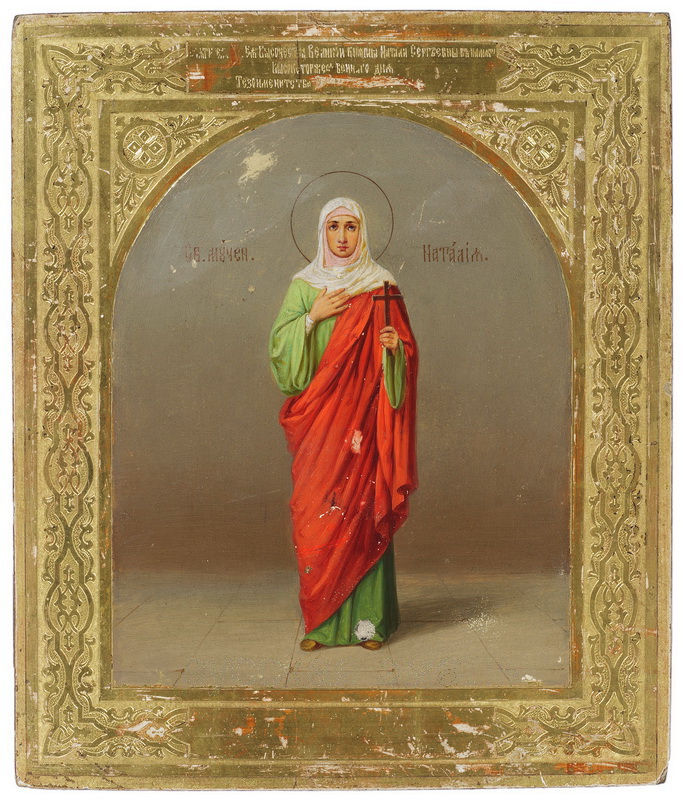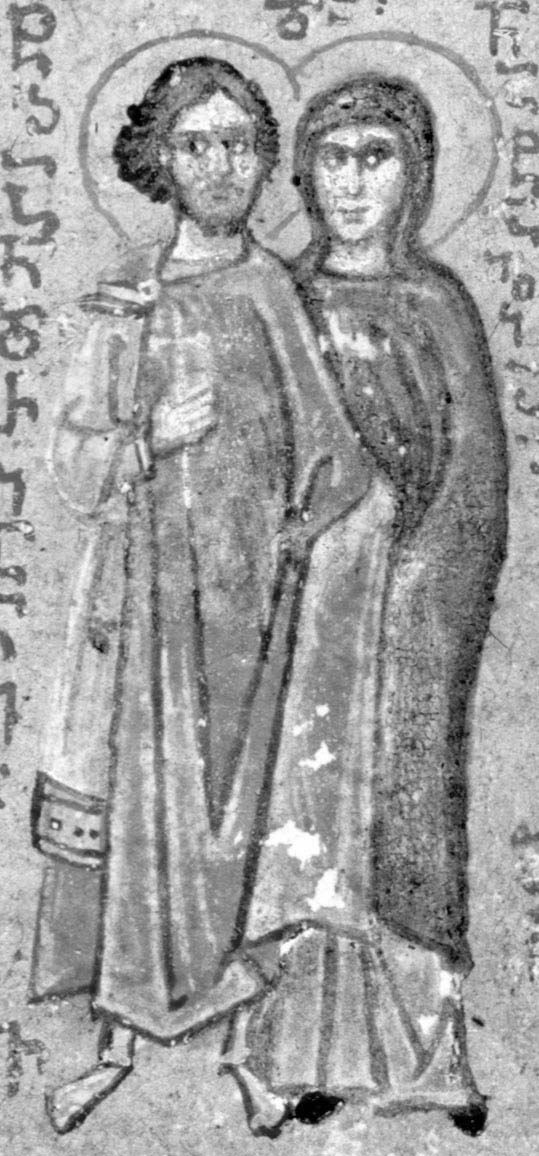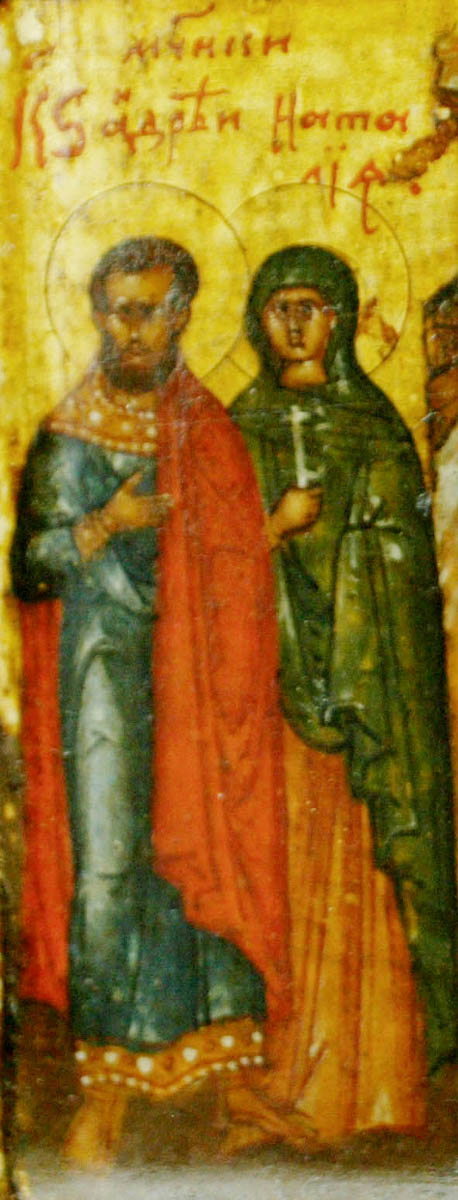
Martyr
Martyr Natalia of Nicomedia
† ок. 305–311 (Адриан); Наталия скончалась вскоре после
Also known as: Наталья
Martyr Natalia of Nicomedia — a secret Christian, wife of Martyr Adrian, who strengthened him and other prisoners before their execution and died shortly after his martyrdom by his tomb.
Saint Natalia was a secret Christian who had married Adrian — a young pagan official, chief of the record-office under Emperor Maximian Galerius in Nicomedia — only shortly before the events described. When 23 Christians who had been secretly praying in a cave were arrested, Adrian was assigned to record their names and testimonies at interrogation; moved by their steadfastness, he asked that his own name be added to the list and openly confessed Christ.
Far from despairing at her husband's arrest, Natalia rejoiced and actively ministered to the prisoners, encouraging Adrian: "Blessed are you, my lord, that you have believed in Christ; you have gained a great treasure." Learning that some prisoners were released through bribery, leading their wives to persuade them to flee and thus apostatize, she disguised herself as a young man to gain access to the prison and prevent any such weakness in Adrian.
During the execution, the martyrs' limbs were crushed on an anvil with a hammer; Natalia herself held Adrian's hands and feet in place so that pain would not shake his resolve, and he died together with the other 23 martyrs. Omens (a storm, a fire) prevented the executioners from burning the bodies, and a Christian named Eusebius gathered the relics and carried them to Argyropolis near Byzantium.
Natalia took a bone of her husband's hand as a keepsake, fled to Argyropolis to escape a Roman commander who wished to marry her for her wealth, and settled by her husband's tomb. Tradition holds Adrian appeared to her in a dream announcing her approaching rest; soon after, worn out by her sufferings, she died peacefully and was buried beside him. In the 4th century Bishop Mitrophanes of Byzantium built a church over their relics; they were later translated to Rome, where Pope Honorius I enshrined them in a church built within the former Roman Senate building.
Her feast is kept on August 26/September 8.
Icons and images