Venerable
Venerable Moses the Ethiopian (the Black)
ок. 330 — ок. 400/405
Also known as: Моисей Скитский, Моисей Мурин, Moses the Black
Venerable Moses the Black — a 4th-century Egyptian ascetic, a former robber chieftain who became one of the most venerated fathers of Scetis monasticism, renowned for his profound repentance and humility.
IMPORTANT CORRECTION: the category has been corrected from "righteous" to "venerable" — Moses was an ascetic hieromonk. The date "September 4/17" previously shared as a contamination has been identified as belonging to the Old Testament Prophet Moses the God-seer, not to St. Moses the Black, and removed from this card.
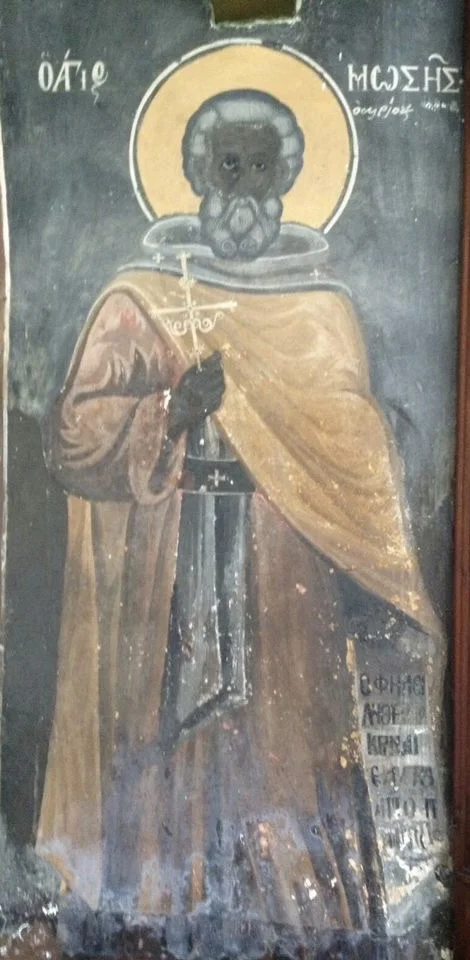
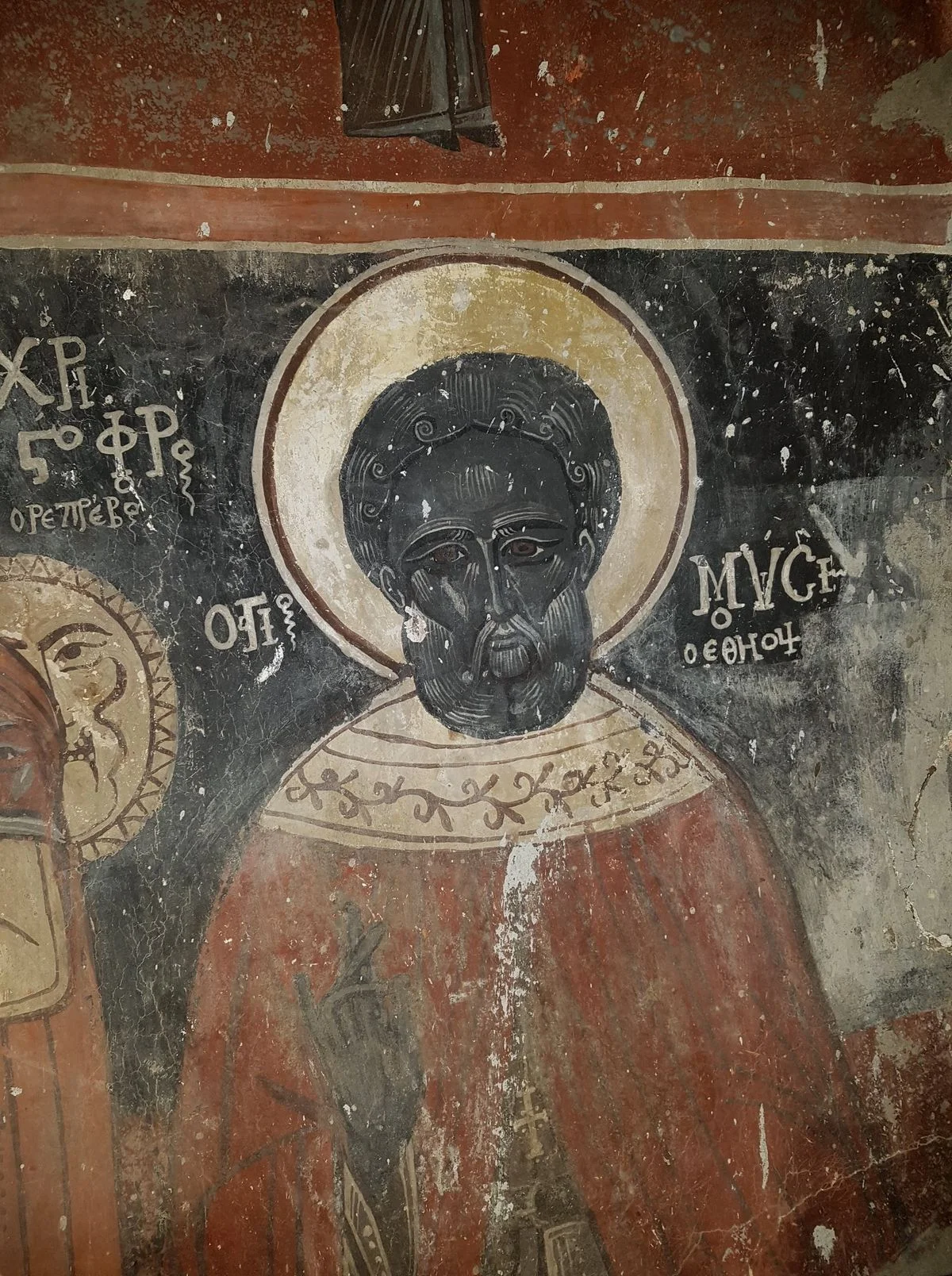
Visually confirmed: the image contains a partial Greek inscription "...ΑΙΘΙΟΨ" (Ethiopian) and depicts a dark-skinned elder monk — direct confirmation of the saint's Ethiopian origin.
St. Moses, of Ethiopian origin, was a slave in his youth; after committing a murder he was cast out by his master and joined a robber band, soon leading it through his physical strength and ferocity, terrorizing the region. Repenting, he came to a monastic community in Scetis; the brothers initially doubted the sincerity of his conversion but accepted him. Under the guidance of the elder Isidore he undertook extreme asceticism — fasting, night vigils, carrying water for elderly monks. He endured a severe, year-long demonic assault of carnal passion, after which he was consoled with news of its conquest. He was ordained deacon, then priest; he gathered 75 disciples around him.
Foreseeing, at age 75, a barbarian raid on the monastery, he refused to flee or let his monks take up arms, sending the others away and remaining with seven brothers, all of whom were killed by the raiders — according to church tradition, this nonviolent death crowned his path from violence to sanctity.
The main sources for his Life are Palladius's Lausiac History (personal acquaintance) and the Apophthegmata Patrum (18 sayings attributed to him). His date of death is disputed by scholars (after 400, possibly 407/408).
His feast is kept on August 28/September 10.
Icons and images