Venerable
Venerable Moses the Hungarian
нач. XI в. — ок. 1043
Also known as: Моисей Угрин Печерский
Venerable Moses the Hungarian of the Kiev Caves — of Hungarian origin, brother of Martyr George the Hungarian, who for years preserved his chastity in Polish captivity despite torture, and later became a monk of the Kiev Caves Monastery.
CORRECTION: the date "July 26", previously listed without a style, is actually Old Style; the New Style equivalent is August 8 (previously either unlisted or mistakenly equated with the Old Style date).
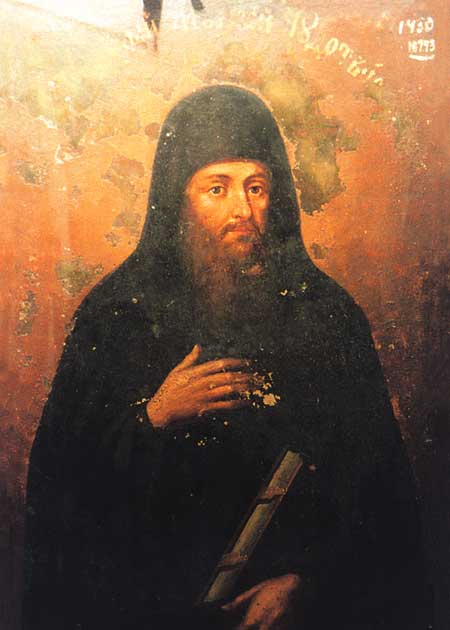
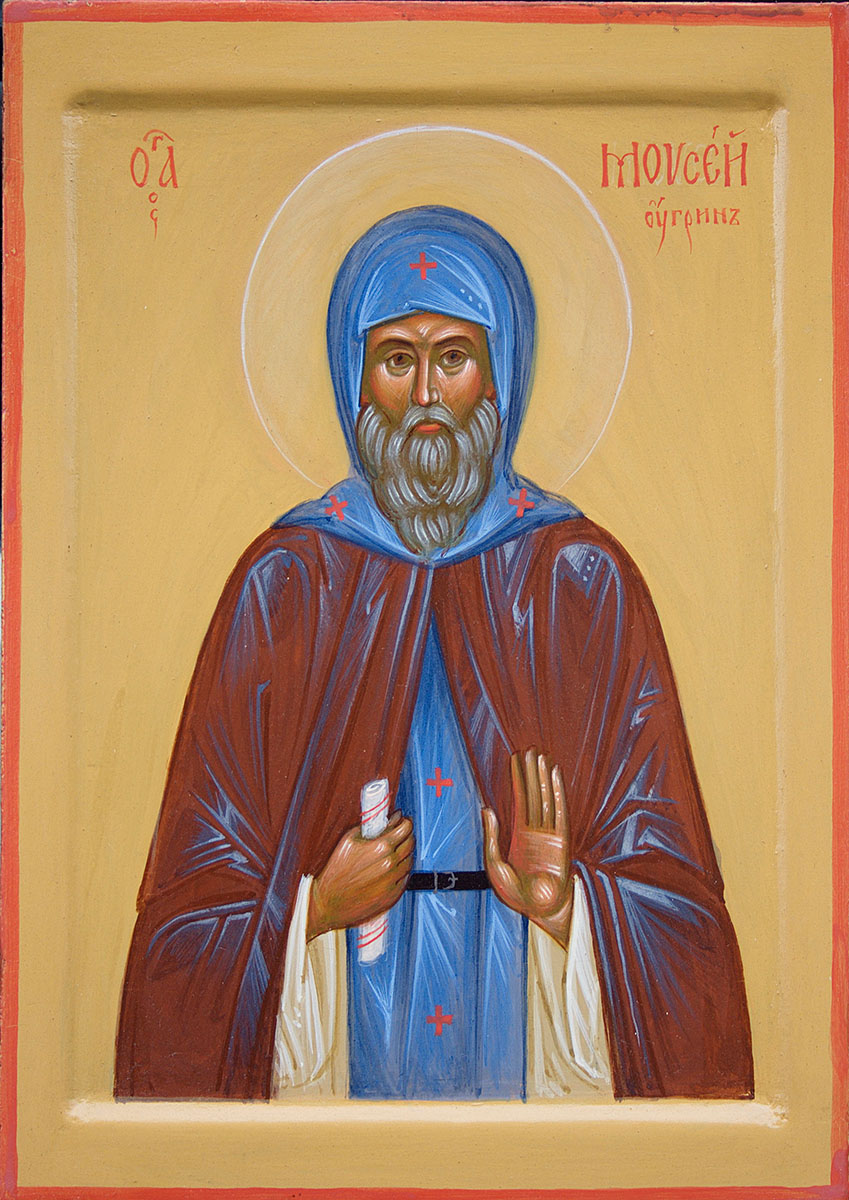
Visually confirmed: the image is inscribed "Holy Moses the Hungarian", the saint holds lilies — a symbol of chastity, the key virtue of his Life.
St. Moses, Hungarian by birth, brother of Martyr George the Hungarian and Venerable Ephraim of Novy Torg, served Prince Boris Vladimirovich. After Boris's murder (1015) he took refuge with his sister Predislava; during the Polish capture of Kiev (1018) he was taken captive to Poland. A wealthy Polish noblewoman who bought him tried for about five years to force him into marriage; secretly tonsured by an Athonite monk during his captivity, once the tonsure was discovered he was tortured and castrated. King Bolesław I's expulsion of monks from Poland allowed him to escape; he returned to Kiev and entered the Caves Monastery under Venerable Anthony, where for about ten years he became known as a healer and counselor of monks struggling with carnal temptations — a model of chastity in the Kiev Caves Patericon.
NOTE ON CHRONOLOGY: the scholarly accuracy of the traditional death year (1043) is disputed — the Orthodox Encyclopedia notes that the traditional chronology "cannot be regarded as an independent source," allowing for a later date of his return to Rus'.
He is buried and rests in the Near (Antonian) Caves of the Kiev Caves Lavra. His feast is kept on July 26/August 8 (day of repose), September 28 (Synaxis of the Fathers of the Near Caves), and the 2nd Sunday of Great Lent (Synaxis of the Kiev Caves Fathers).
Icons and images