Venerable
Venerable Neophytos the Recluse of Cyprus
1134 — после 1214/1219
Also known as: Неофит Пафосский, Неофит Затворник (получившая слитую карточку neophytos_the_enclosed)
Venerable Neophytos the Recluse of Cyprus — founder of the famous Enkleistra cave-hermitage near Paphos, a notable writer of his era, and a witness to Richard the Lionheart's conquest of Cyprus in 1191.
IMPORTANT CORRECTION: the category has been corrected from "righteous" to "venerable" — a hermit-monk and ascetic. IMPORTANT MERGE NOTE: the card neophytos_the_enclosed ("Neophytos the Recluse" without the qualifier "of Cyprus") has been merged into this one — investigation showed this is the SAME person: the epithet "Recluse/Enclosed" is literally a translation of the name of his cave-hermitage, "Enkleistra" ("enclosure"), and does not indicate a separate saint. The merged card's single image turned out to be unrelated to the saint at all — an old photograph of a Gothic cathedral (apparently in Dublin) — and was not carried over into this card, as a clear contamination.
Visually confirmed: the image contains a fresco inscribed "Ο ΑΓΙΟΣ ΝΕΟΦΥΤΟΣ" ("Saint Neophytos"), the saint holds a scroll bearing an edifying maxim.
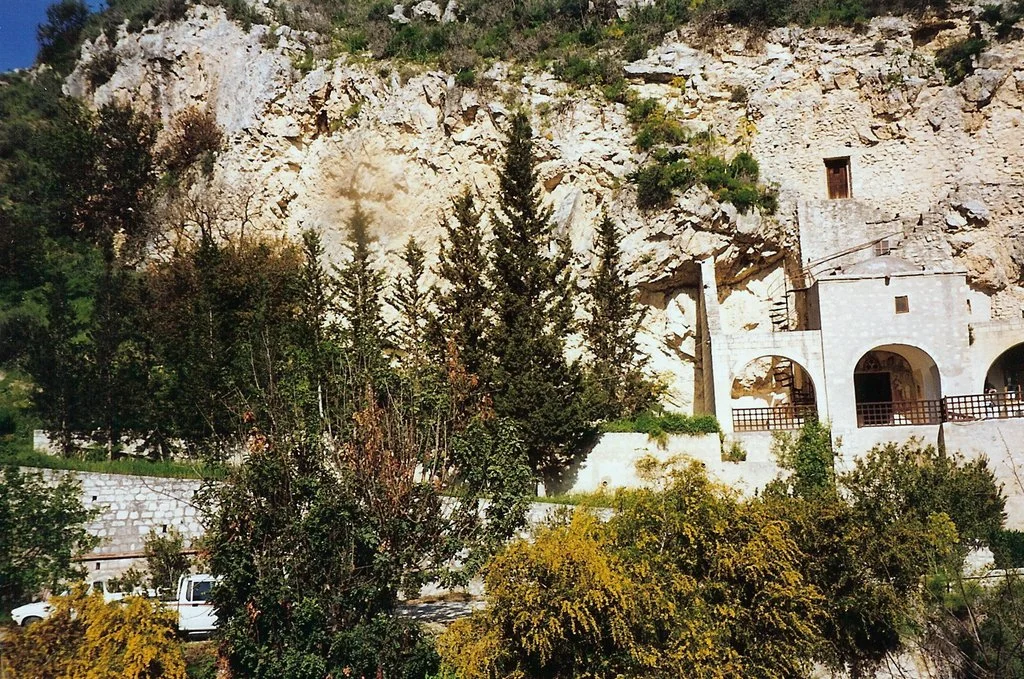
St. Neophytos was born in 1134 in Kato Drys near Lefkara, Cyprus, to farmers Athanasios and Eudoxia. To escape an arranged marriage, at 18 he entered the monastery of St. John Chrysostom at Koutsovendis. After a pilgrimage to the Holy Land around 1158 he returned to Cyprus and on June 24, 1159, settled in a cave near Paphos, which he enlarged over the course of a year — thus arose the "Enkleistra" ("enclosure"), dedicated to the Holy Cross. He lived there as a hermit for about ten years before Bishop Basil Kinnamos ordained him presbyter (c. 1170) and encouraged him to take disciples, who gradually formed a monastic community around the hermitage (his own Typikon/rule was written c. 1187–1214).
He became known as a prolific writer — some 30 to 40 works are attributed to him: biblical commentaries, saints' lives, monastic rules, liturgical hymns, and historical chronicles, including a valuable near-eyewitness account of Richard the Lionheart's conquest of Cyprus in 1191. He died sometime after 1214/1219. The Enkleistra remains to this day a significant monument of Byzantine fresco painting and a pilgrimage site near Paphos.
NOTE ON THE CALENDAR: the saint is not in the main menologion of the Russian Orthodox Church; the date January 24 is given per the Cypriot-Greek (New/Revised Julian) calendar without an official ROC Julian equivalent.
Icons and images