Hierarch
Hierarch Nicholas the Wonderworker, Archbishop of Myra in Lycia
ок. 260/270 — ок. 334/335
Also known as: Николай Мирликийский, Николай Угодник
Hierarch Nicholas, Archbishop of Myra in Lycia, the Wonderworker — one of the most venerated saints of the Orthodox and the whole Christian world, patron of sailors, travelers, and the destitute, whose relics rest in Bari, Italy.
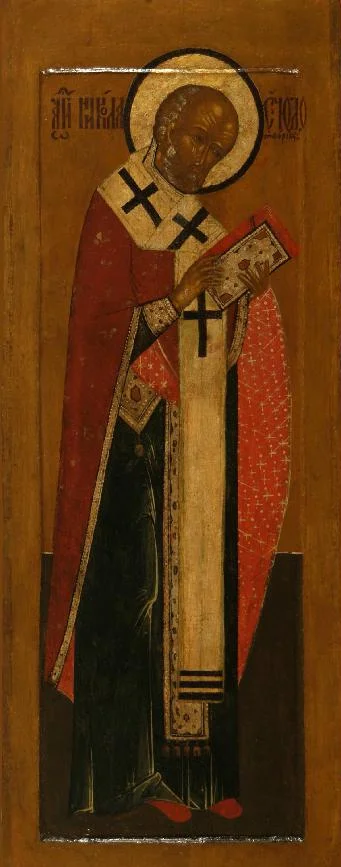
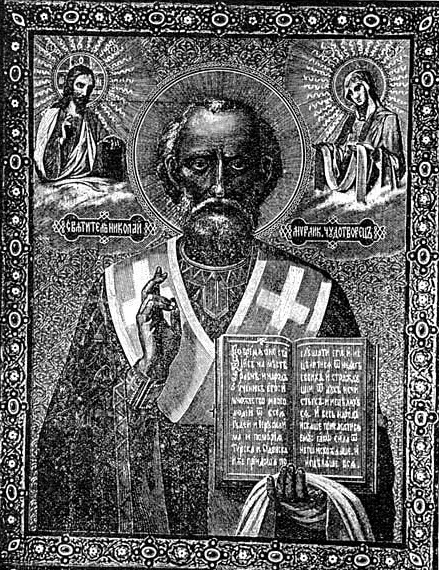
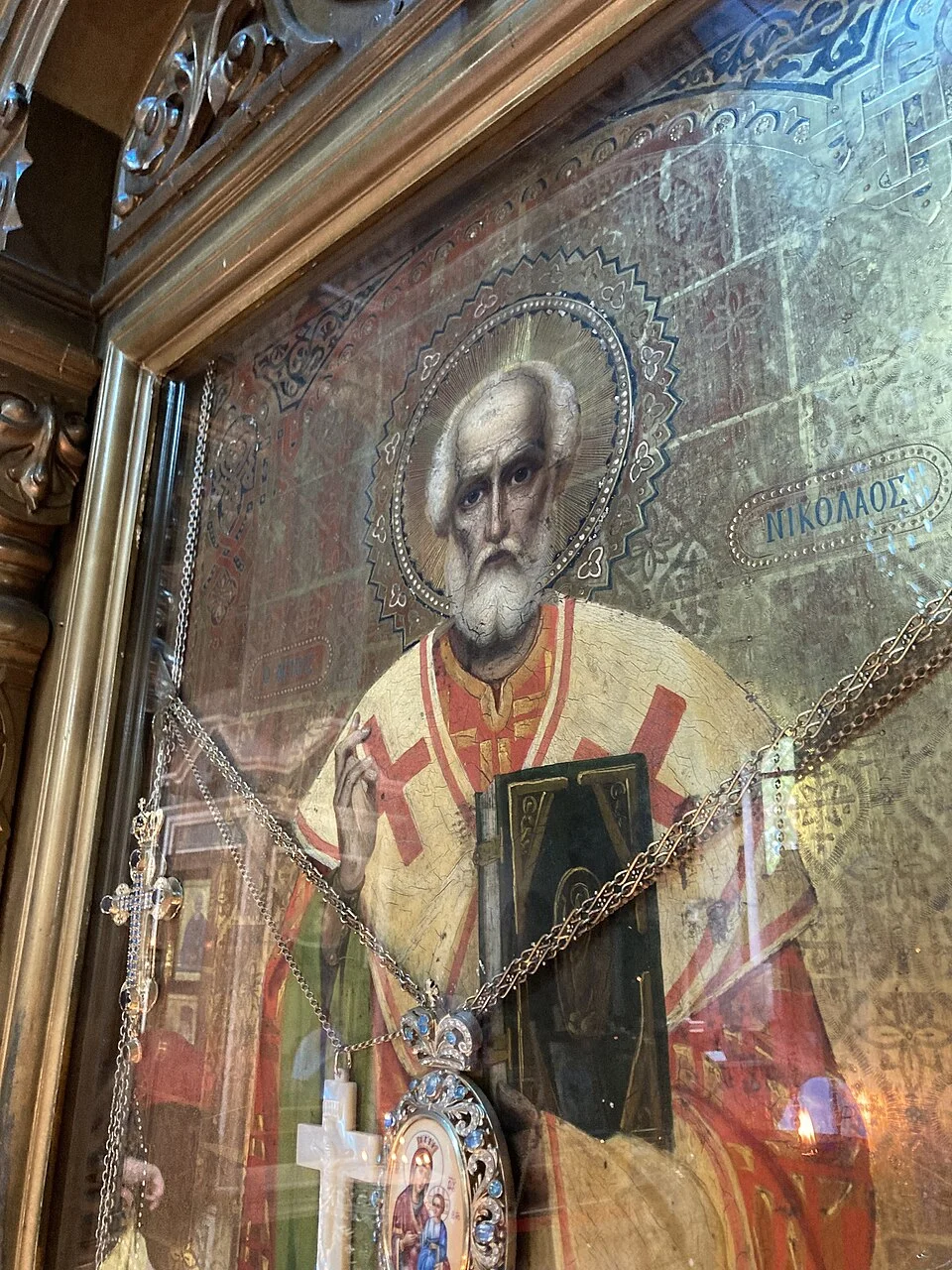
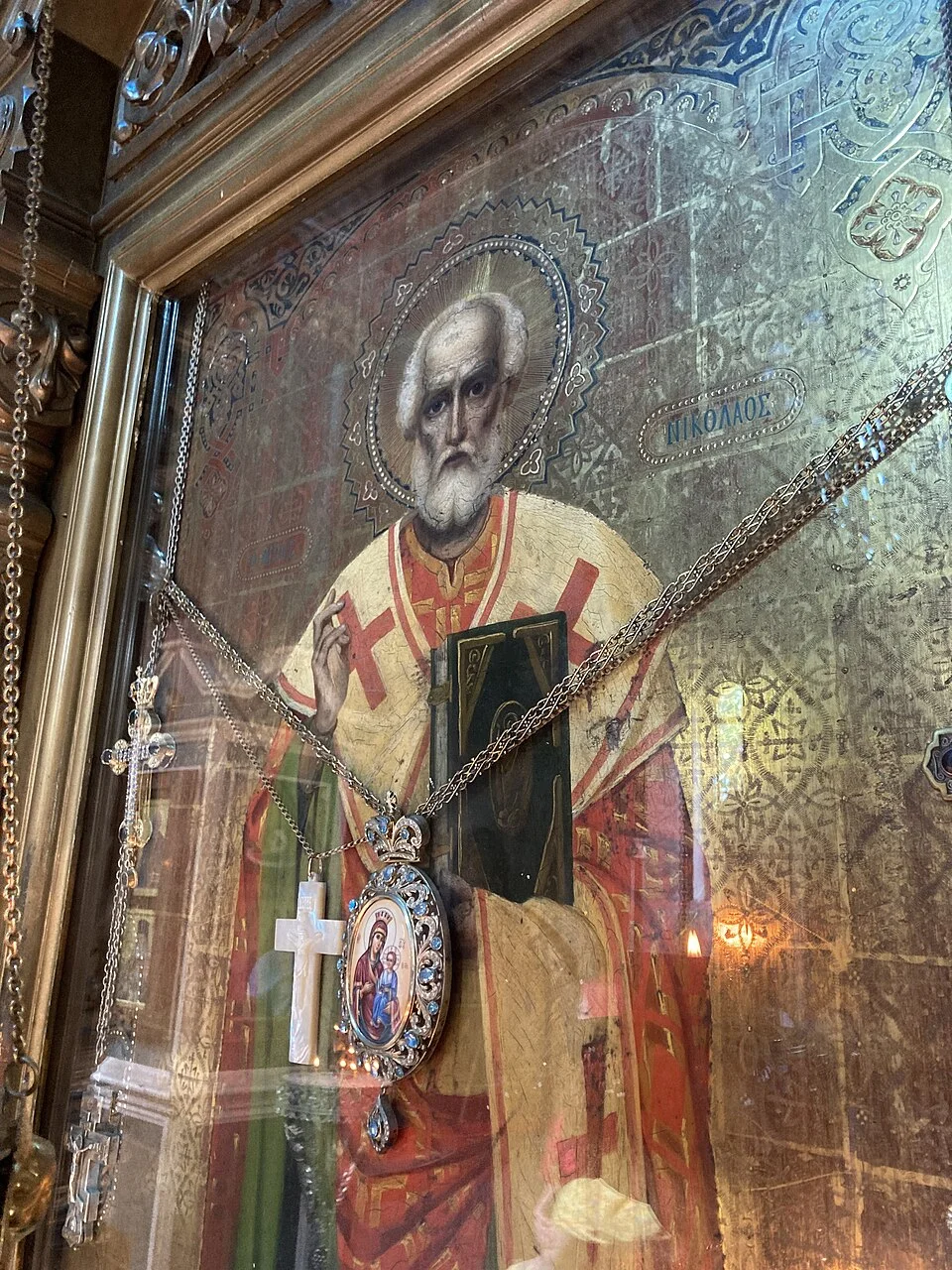
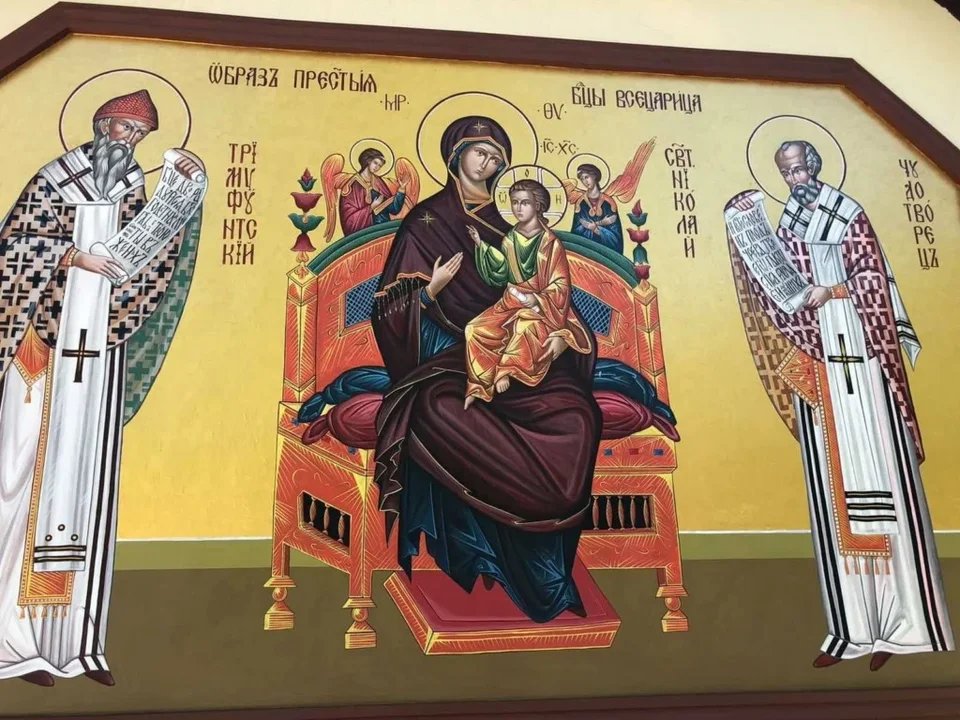
IMPORTANT CORRECTION: the category has been corrected from "righteous" to "hierarch". VERIFICATION OF THREE DATES: research confirmed all three previously listed dates (December 6, May 9, July 29) genuinely belong to this one saint and are not contamination: December 6/19 — day of repose ("Nicholas the Winter One"); May 9/22 — translation of relics to Bari in 1087 ("Nicholas the Spring One"); July 29/August 11 — the feast of St. Nicholas's Nativity ("Nicholas the Autumn One"), suppressed under Catherine II and officially restored to parish practice in 2004 with the blessing of Patriarch Alexy II. Along with John the Baptist, Nicholas the Wonderworker is one of very few saints (besides Christ and the Theotokos) for whom the Church keeps a separate Nativity feast — evidence of the exceptional degree of his veneration in Russian tradition. Visually confirmed: the image is a classic icon of the hierarch with images of the Savior and the Mother of God at the sides, referencing the tradition of his miraculous vindication after the Council of Nicaea.
St. Nicholas was born in Patara, Lycia (Asia Minor), the only son of the wealthy Christians Theophanes and Nonna. Orphaned young, he devoted his inherited fortune to acts of charity — the most famous episode: he secretly (through a window, tradition says throwing gold into stockings by the fireplace, the origin of the Western Christmas-gift tradition) provided dowries for three poor sisters, saving them from being sold into prostitution. He was miraculously elevated to Bishop of Myra, becoming renowned for zealous opposition to paganism (destroying the temple of Artemis in Myra) and the Arian heresy.
HONEST NOTE ON HISTORICITY: the tradition of him striking Arius at the First Ecumenical Council in Nicaea (325) was first recorded only in the 16th century (Damaskinos Stoudites), not in the earliest 10th-century Life by Symeon Metaphrastes; modern church historians (e.g., V. V. Bolotov) note his presence at the Council is not attested in the earliest conciliar lists — the episode remains pious tradition rather than an established historical fact.
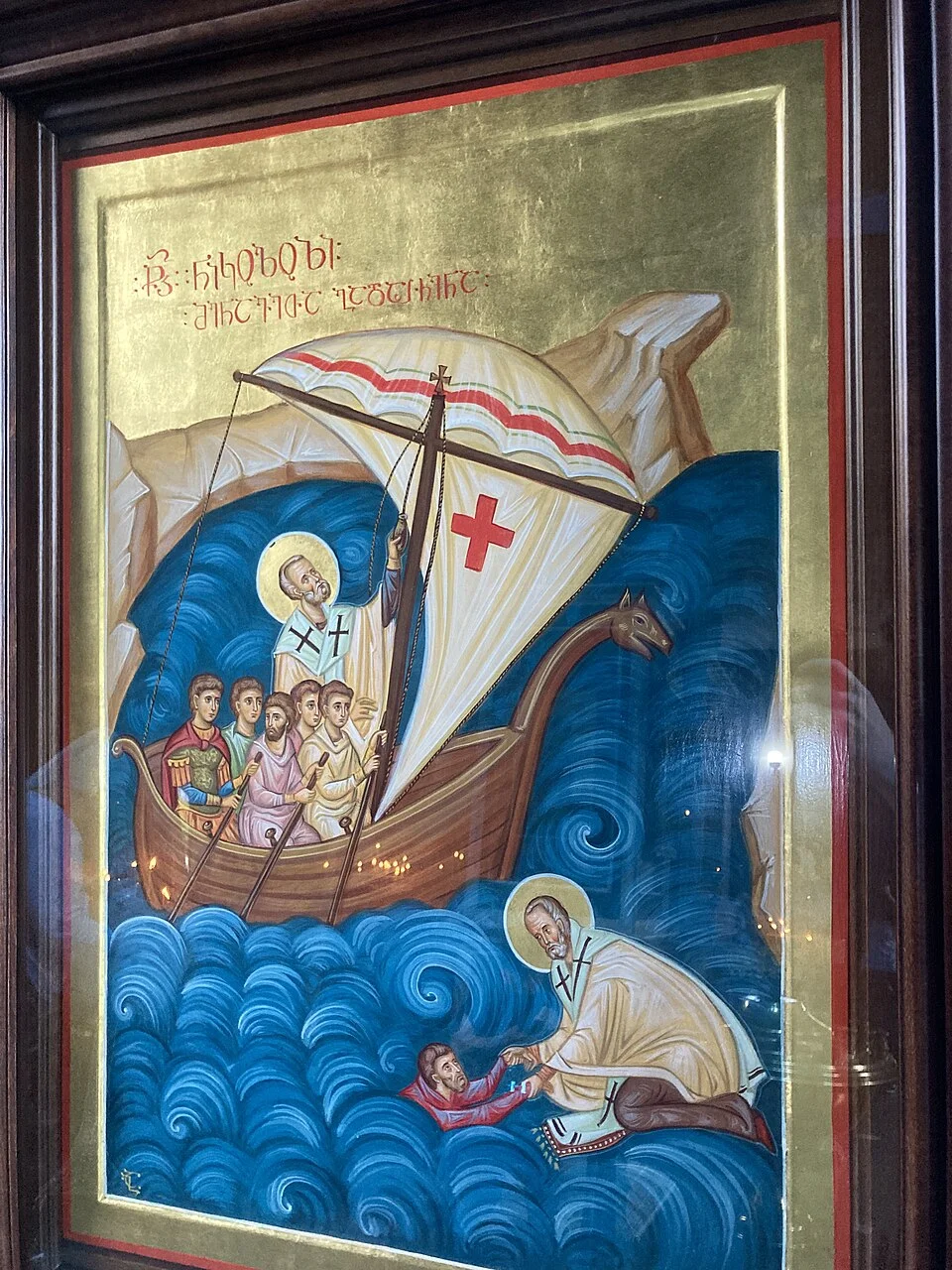
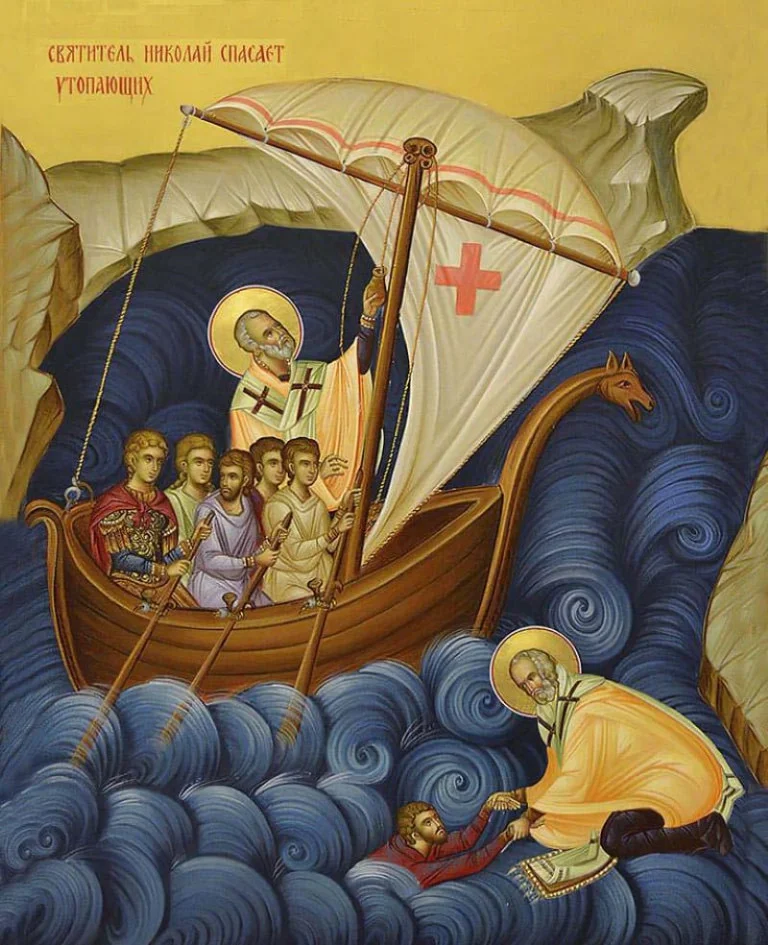
He is especially venerated as patron of sailors and travelers — numerous accounts describe him calming storms and rescuing drowning sailors, as well as miraculously supplying grain to famine-stricken Myra by diverting cargo from Alexandria-bound ships (the cargo remaining undiminished on arrival). He saved three innocent men from execution and appeared in dreams to Emperor Constantine and military officers to exonerate falsely condemned generals.
Veneration of the hierarch grew enormously after the translation of his relics — found incorrupt and exuding fragrant myrrh — to Bari, Italy, in 1087, following Seljuk raids on Byzantine Asia Minor (a basilica was built there, consecrated in 1103); Venetian sailors also carried off a portion of the relics to the Church of San Nicolò al Lido (1101). Modern anthropological-forensic studies (1953, 1992–93) confirm the authenticity of partial remains in both cities. St. Nicholas remains one of the most universally venerated saints in both East and West, where he became the direct historical prototype of Santa Claus/Sinterklaas; in Russia his veneration reaches exceptional intensity — more churches and icons are dedicated to him than to almost any other saint besides the Mother of God.
His feast is kept on December 6/19, May 9/22, and July 29/August 11.
Icons and images