Venerable
Venerable Nilus the Ascetic (the Faster) of Sinai
сер. IV в. — ок. 430/451
Also known as: Нил Аскет, Нил Анкирский (по научной гипотезе об авторстве)
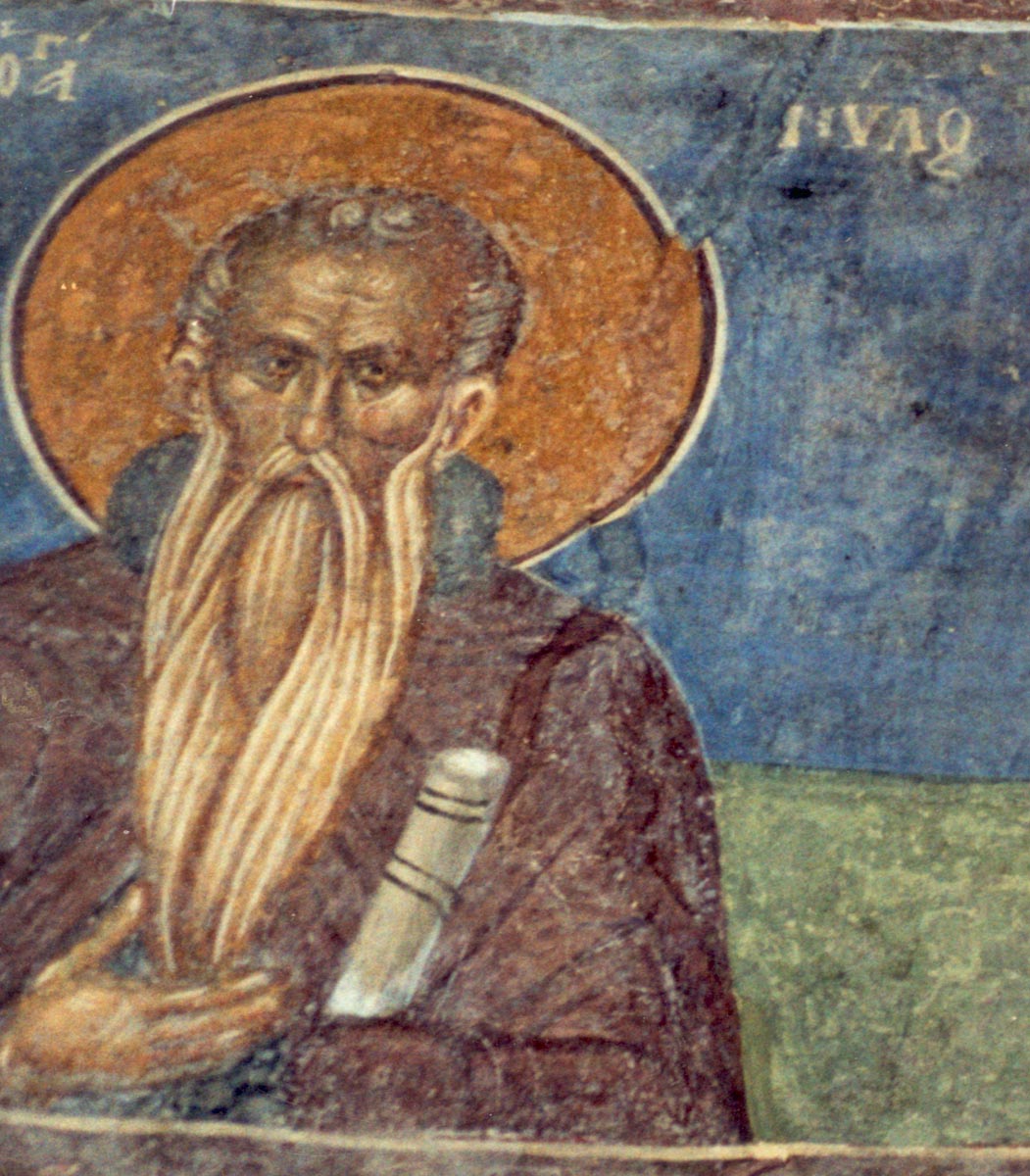
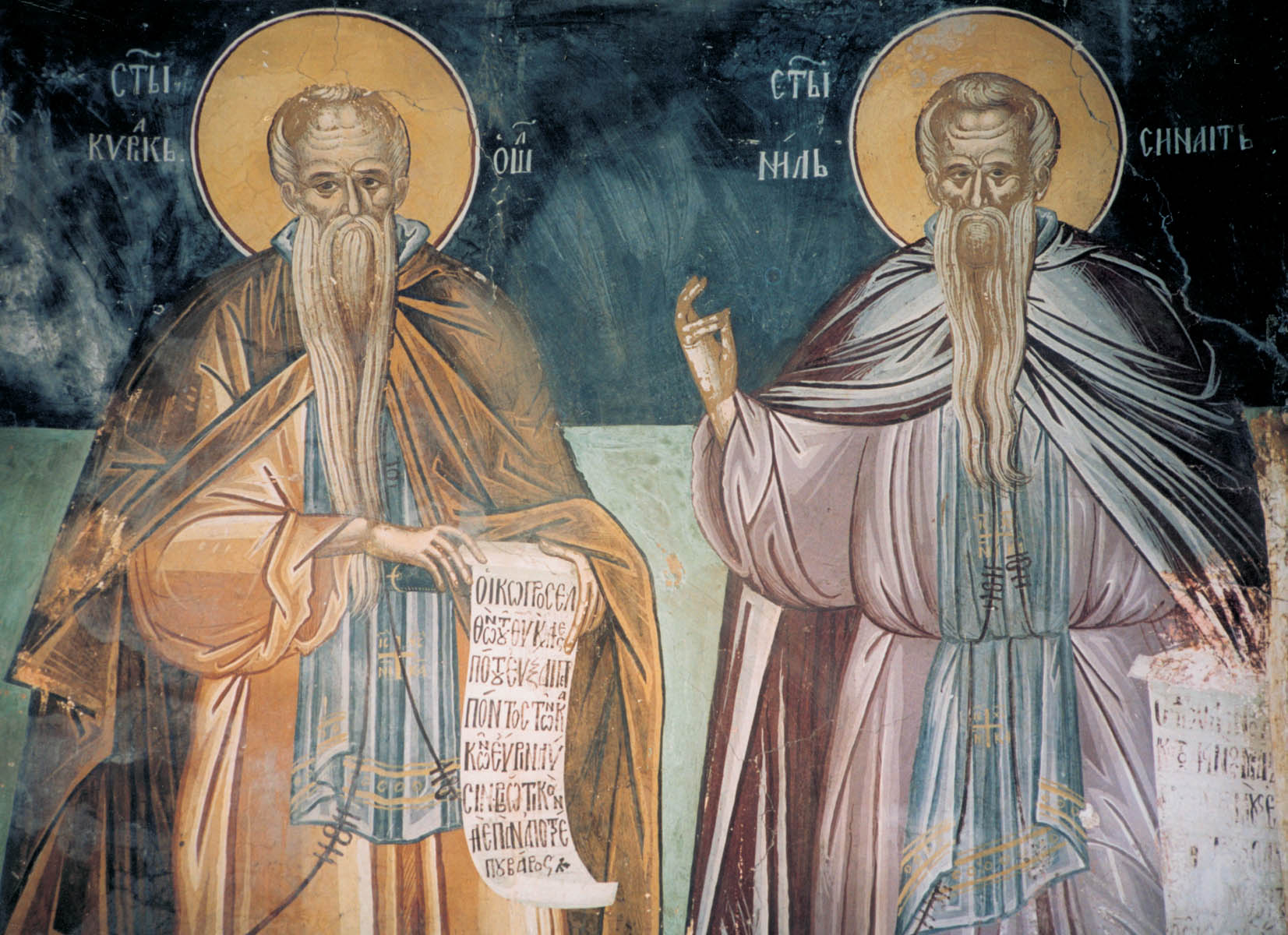
Venerable Nilus the Ascetic of Sinai — a former eparch (prefect) of Constantinople, a disciple of St. John Chrysostom, who left high office for monastic solitude on Mount Sinai together with his son Theodulus, and the author of an extensive body of ascetical writings.
MERGED CARD RECEIVED: the card nilus_the_ascetic ("Nilus the Ascetic") has been merged into this one — investigation confirmed that "Nilus the Faster" and "Nilus the Ascetic" are two names (Russian and English respectively) for the same saint. All 5 images of the merged card, on visual inspection, turned out to be entirely unrelated contamination (covers of unrelated books — including "Hymns and Poetry of the Eastern Church" by Bernhard Pick — and an unrelated icon of the Theotokos "of the Sign") and were NOT carried over.
HONEST NOTE ON SCHOLARLY DEBATE: there is an unresolved scholarly authorship question (the "Nilus Question") — the extensive ascetical corpus traditionally attributed to "Nilus of Sinai" is often attributed in modern patristic scholarship to a separate figure, Nilus of Ancyra (an abbot in Galatia, d. c. 430), while the "Narrative on the Slaughter of the Monks on Mount Sinai," with the episode of his son Theodulus, is regarded by some scholars (starting with K. Heussi, 1916) as a separate, possibly pseudonymous work. This uncertainty concerns the identity of the historical author of the text corpus, but not liturgical veneration — the Church honors one Saint Nilus the Faster under a single feast regardless of this debate.
Venerable Nilus, who received an excellent education in Constantinople, rose to the office of eparch (city prefect) of the capital under Emperor Theodosius I; he was married, with a son, Theodulus, and a daughter. Deeply influenced by St. John Chrysostom, the couple agreed to separate for monastic life: his wife and daughter entered an Egyptian convent, while Nilus and Theodulus withdrew to a cave they dug themselves on Mount Sinai. There he composed an extensive ascetical corpus — letters and treatises still read today as classics of Orthodox spirituality.
The best-known episode of his Life is the Bedouin raid on the Sinai hermits: several monks were killed and Theodulus was carried off into captivity; Nilus later found him (or learned of his ransom) through the Bishop of Elusa/Emesa; both father and son were later ordained.
His feast is kept on November 12/25; also January 14/27 (Synaxis of the Fathers of Sinai).
Icons and images