Synaxis of saints
Synaxis Synaxis of All Saints of Novgorod
установлен 10 июля 1981 года
Synaxis of All Saints of Novgorod — a church-wide commemoration of over 100 saints connected to the Novgorod land: hierarchs, princes, monastics, and fools-for-Christ, established in 1981 and kept on the 3rd Sunday after Pentecost.
IMPORTANT CONTENT CORRECTION: the previous "bio_ru" field contained not a biographical text but a fragment of an icon-catalog caption ("[Russia. 1728.] Synaxis of the Novgorod Wonderworkers. Priest Georgy. Icon..."), clearly mistakenly copied from an external image catalog (pravicon.com) — replaced with an honest description of the feast's history and scope, matching the card's collective nature.
The Synaxis of All Saints of Novgorod, as a church-wide feast, was established on July 10, 1981, on the initiative of Metropolitan Anthony (Melnikov) of Leningrad and Novgorod, set on the movable 3rd Sunday after Pentecost. Several sources mention an earlier, local Novgorod tradition, known "from around 1831," but who exactly established it and in what scope could not honestly be determined — this is a separate, less documented layer of veneration preceding the church-wide establishment of 1981.
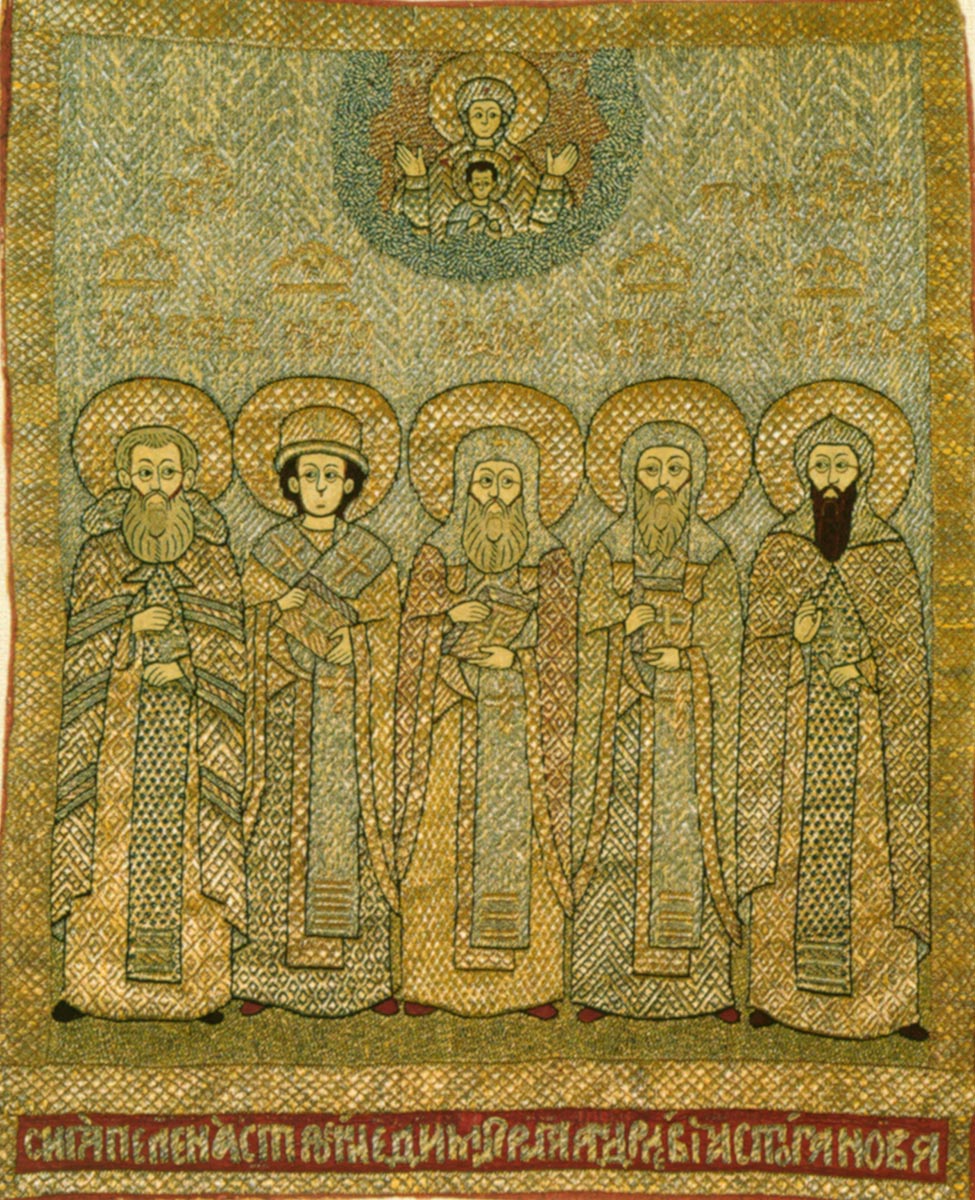
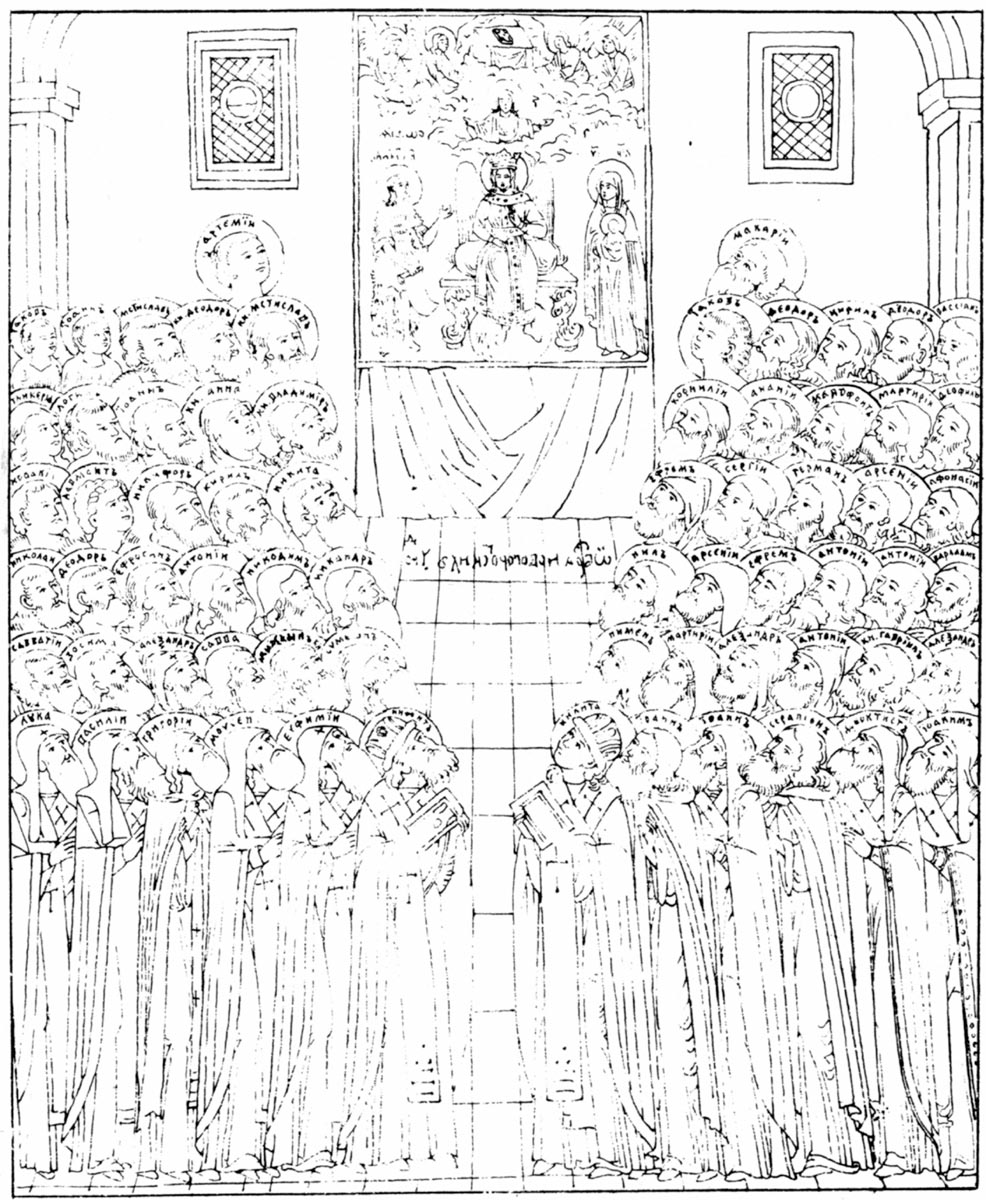
This feast should NOT be confused with the narrower and older Synaxis of Novgorod Hierarchs (bishops resting in the martyrion portico of St. Sophia Cathedral), tracing back to a vision received by St. Evfimy II of Novgorod in 1439 and kept on February 10 (together with Right-believing Princess Anna) and October 4 (together with Right-believing Prince Vladimir Yaroslavich).
The Synaxis of All Saints of Novgorod includes over 100 saints connected to the Novgorod land across seven centuries: hierarchs (of the 30 bishops who headed the Novgorod see before 1478, 17 are canonized), right-believing princes, monastic ascetics, and fools-for-Christ — many of whom are already represented individually in this database (e.g., St. Nicetas of Novgorod, Blessed Nicholas of Kochanov).
The feast is movable, kept on the 3rd Sunday after Pentecost.
Icons and images