Right-Believing
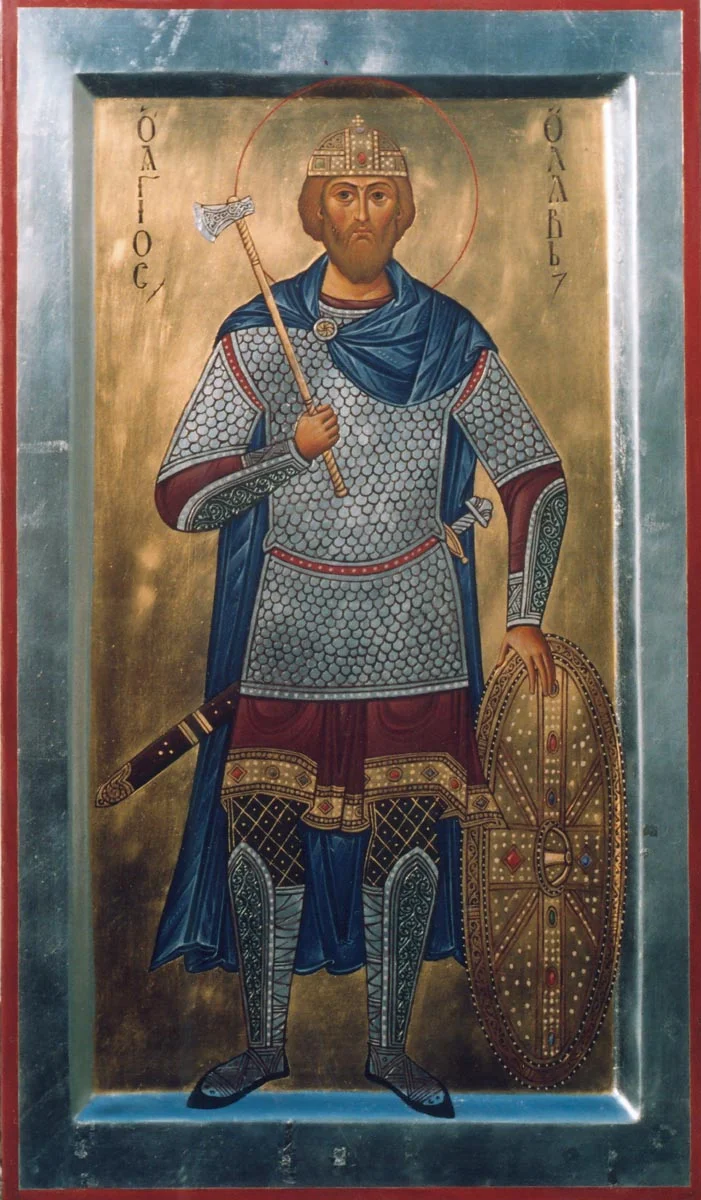
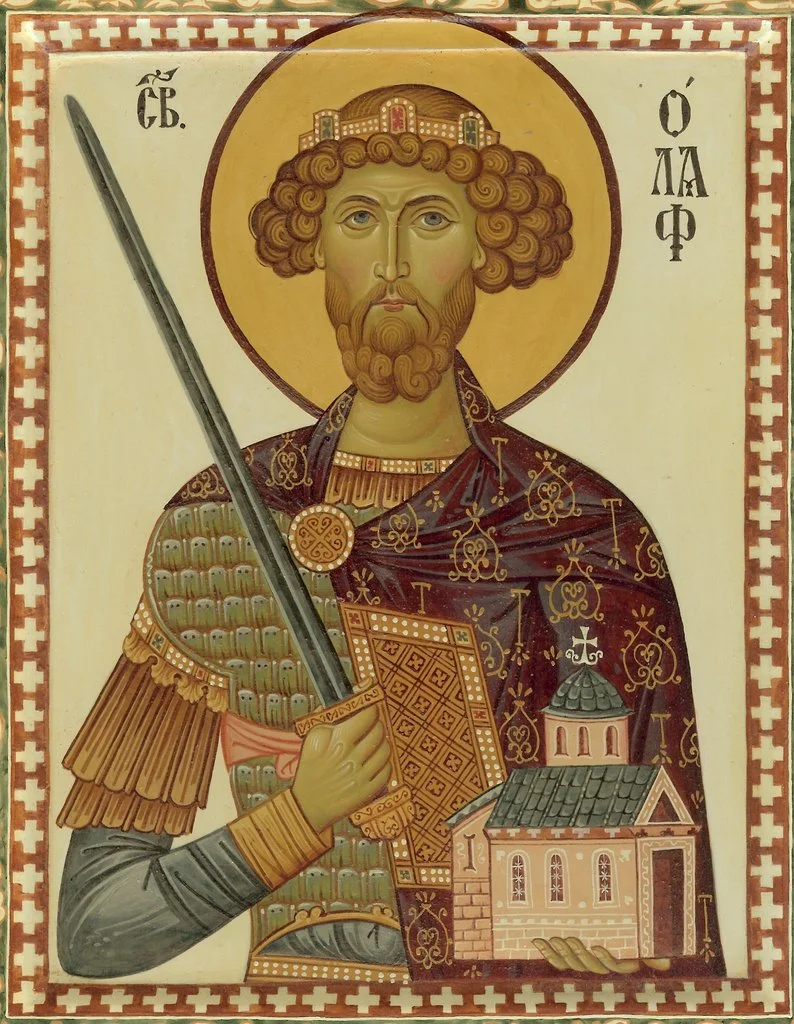
Right-believing King Olaf (Olav) II of Norway
ок. 995 — 1030
Also known as: Олав II Харальдссон, Rex perpetuus Norvegiae
Right-believing King Olaf II Haraldsson of Norway — who completed the Christianization of Norway, killed in battle at Stiklestad in 1030, venerated as the "eternal king of Norway," connected with Rus' through the refuge he found with Grand Prince Yaroslav the Wise.
Olaf, son of Harald Grenske, was a Viking warrior from his youth, campaigning in England against both the Anglo-Saxons and the Danes (1009–1013). During this period he was baptized (tradition says at Rouen, 1013/1014). Returning to Norway in 1015–1016, he defeated Jarl Sweyn and became king, pursuing the country's Christianization decisively — founding Norway's first churches, including one dedicated to Hieromartyr Clement of Rome in Nidaros (modern Trondheim). His methods provoked opposition among the nobility, who allied with Cnut the Great of Denmark/England against him.
In 1028 Olaf was driven into exile and fled with his young son Magnus to Rus', finding refuge with Grand Prince Yaroslav the Wise in Novgorod. He returned in 1029/1030 to reclaim his throne but was killed in battle at Stiklestad on July 29, 1030, fighting a coalition of rebellious nobles and pagan/Danish-backed forces.
After his death he was quickly venerated as a wonderworker and martyr-king; his relics (enshrined at Nidaros/Trondheim) became the center of a major medieval cult, and he was formally canonized in 1164. He is venerated as the "eternal king of Norway" (rex perpetuus Norvegiae) in both the Catholic and Orthodox traditions — Orthodox veneration is especially tied to his connection with Rus' through Yaroslav the Wise and his cult in Novgorod.
His feast is kept on July 29/August 11.
Icons and images