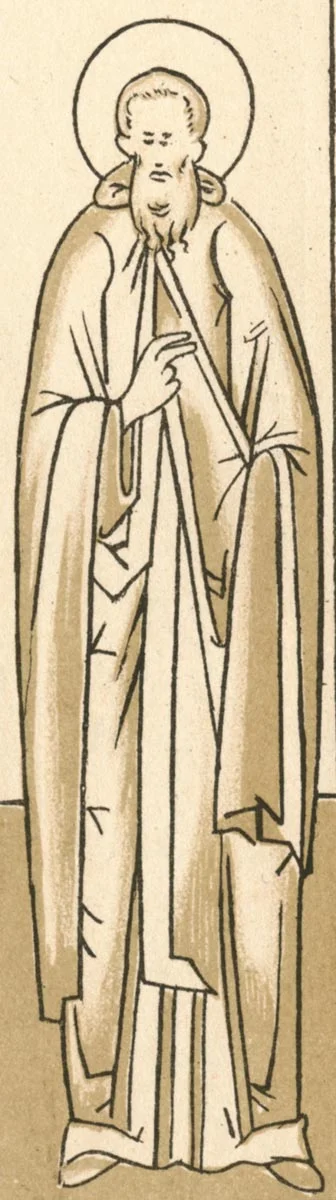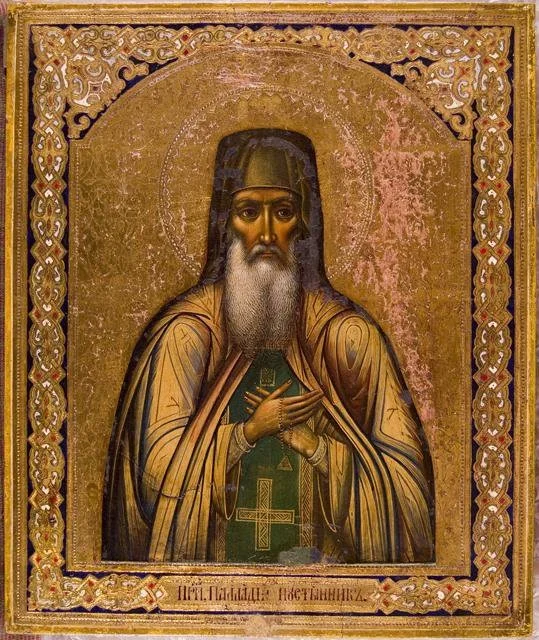
Venerable
Venerable Palladius of Alexandria (of Thessalonica)
кон. VI — нач. VII в.
Also known as: Палладий Солунский
Venerable Palladius of Alexandria — a monk originally from Thessalonica who pursued asceticism in Alexandria at the turn of the 6th–7th centuries; not identical to the much better-known Palladius of Helenopolis, author of the "Lausiac History."
IMPORTANT IDENTITY CLARIFICATION: this saint is NOT identical to Palladius of Helenopolis (of Galatia) — the famous author of the "Lausiac History" (c. 363–431), with whom he is easily confused by name. Several independent liturgical sources (ortox.ru, days.pravoslavie.ru, obitel-minsk.ru) consistently identify him specifically as "Palladius of Thessalonica" — a native of Thessalonica who practiced asceticism in Alexandria considerably later, at the turn of the 6th–7th centuries — a much more modest and obscure figure than the celebrated historian-bishop. The Byzantine synaxarion tradition does not give absolute certainty of complete independence from the Helenopolis figure (cases of conflation of namesakes are known from this period), but the consistent modern Orthodox liturgical description (Thessalonican origin, Alexandrian asceticism, 6th–7th centuries) clearly points to a separate, lesser-known person.
HONEST ACKNOWLEDGMENT OF SCARCE SOURCES: no detailed Life survives beyond the liturgical texts (troparion, kontakion) of his service. It is known only that he was a monk originally from Thessalonica who undertook ascetic labors in Alexandria, Egypt, active at the turn of the 6th and 7th centuries. The troparion characterizes him in conventional hagiographic terms — as having acquired God "through prayer and fasting," becoming "a pure dwelling place of the Spirit," and "enlightening the faithful" through his virtuous example — but no narrative details (birthplace, specific monastery, miracles, circumstances of death) could be found. He is one of many Orthodox saints known essentially only by name, origin, and feast day, venerated through liturgical hymnography rather than a surviving biography.
His feast is kept on November 27/December 10.
Icons and images