Confessor
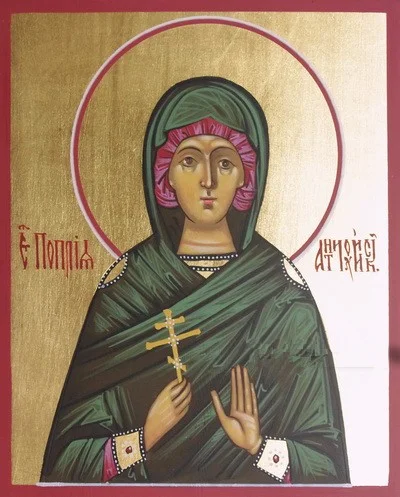
Confessor St. Publia (Poplia) the Confessor, Deaconess of Antioch
IV в. (деятельность ок. 361-363 гг., при Юлиане Отступнике)
Also known as: Поплия Антиохийская
Confessor Publia of Antioch — a deaconess who led a community of virgins and widows, who boldly rebuked Emperor Julian the Apostate by singing a psalm during his pagan procession and suffered beatings for it.
CRITICAL: category corrected from "martyr" to "confessor" — no source attests a violent execution; the saint was beaten but later died her own death. The death date "c. 303" (era of the Decian/Diocletianic persecutions) is unsupported by any source and appears to be contamination from an earlier persecution era — the correct historical context is the reign of Julian the Apostate (361–363).
Publia, widowed young, devoted herself to raising her son John in Christian piety; he later became a presbyter. For her chaste and ascetic life she was made a deaconess and gathered around her a community of virgins and widows devoted to God's service, turning her home into a kind of women's monastic community.
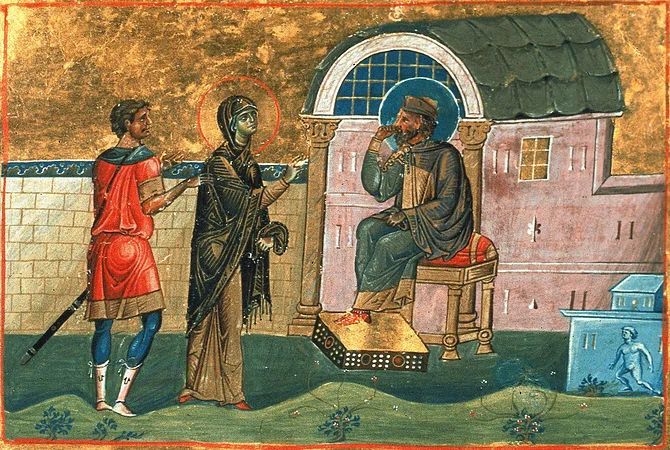
When Emperor Julian the Apostate, during his persecution of Christians (361–363), passed by her house in procession, Publia and her sisters loudly sang a psalm ("...the idols of the heathen are silver and gold, the work of men's hands..."), openly denouncing the emperor's apostasy and idol-worship. The furious ruler ordered her seized and struck in the face; soldiers beat her, but she bore the torment with patience and later again boldly rebuked the emperor with psalmody. She died shortly afterward of natural causes, for which the Church honors her not as a martyr but as a confessor. St. John Chrysostom, who knew her personally, references her boldness in his writings.
Icons and images