Prophet
Prophet Prophet Elijah
IX в. до Р.Х.
Also known as: Илия Фесвитянин
Prophet Elijah the Tishbite — one of the most venerated Old Testament prophets, who confronted the priests of Baal on Mount Carmel and was taken up alive into heaven in a fiery chariot; he is expected to return before the Second Coming.
Elijah was called "the Tishbite" after his birthplace, Tishbe, in the region of Gilead east of the Jordan; by tradition he was of the lineage of Aaron, son of a man named Sabach. His name means "The Lord is my God/strength," which defined his entire mission. From youth he devoted himself to God in the wilderness through fasting, contemplation, and prayer.
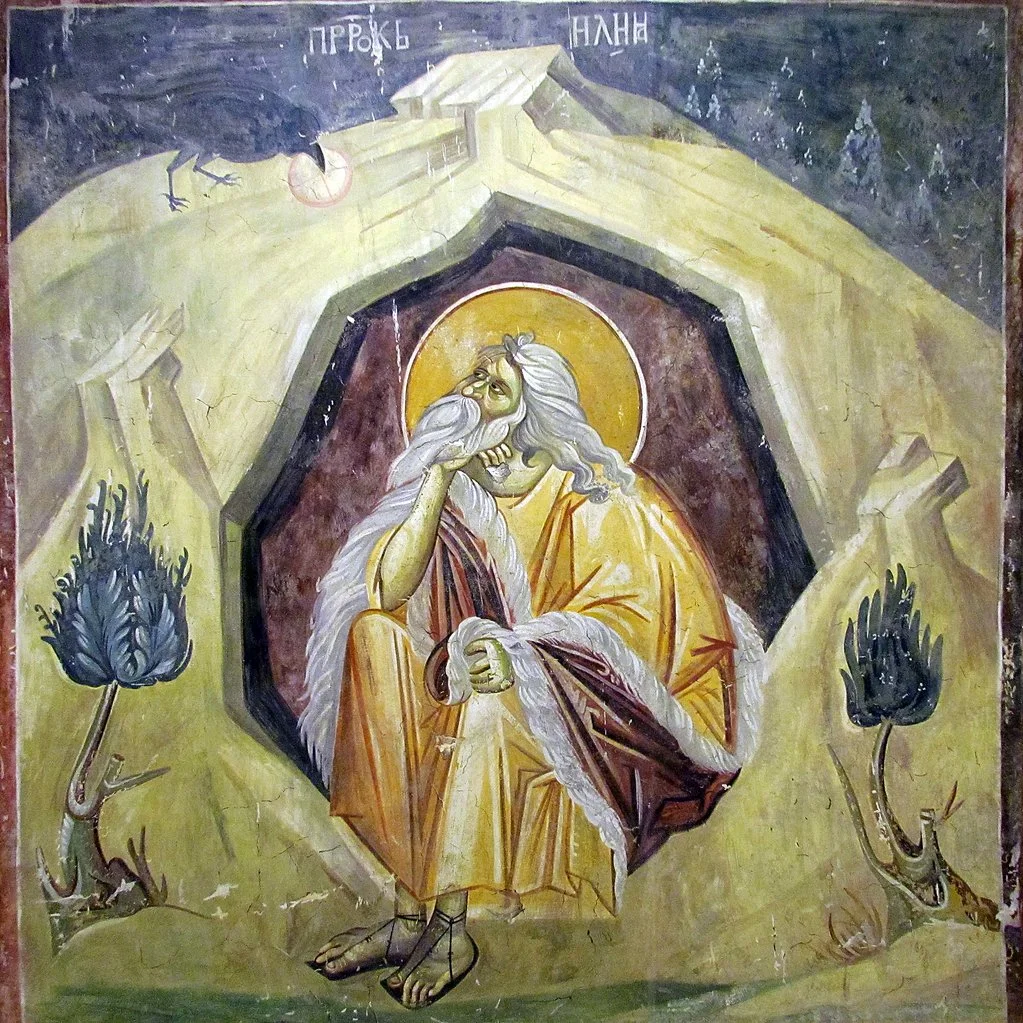
He rose to prophetic prominence during the reign of King Ahab of Israel, whose wife Jezebel promoted the worship of Baal and persecuted the true prophets. Elijah confronted this apostasy directly: he announced a drought as divine judgment, during which he was miraculously fed by ravens at the brook Cherith, and later sustained by the widow of Zarephath through an inexhaustible jar of meal and jug of oil. His most dramatic act was the contest on Mount Carmel against 450 prophets of Baal, where he called down fire from heaven onto his sacrifice, proving the Lord's power before all Israel, after which the prophets of Baal were put to death.
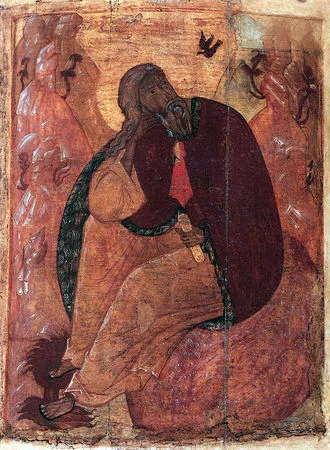
Fleeing Jezebel's wrath into the wilderness, he was strengthened by an angel and encountered God not in wind, earthquake, or fire, but in a "still small voice" at Horeb. He anointed Elisha as his successor. His earthly life ended not in death but in a fiery ascent to heaven in a whirlwind, by a chariot and horses of fire, witnessed by Elisha, who received his mantle and a double portion of his spirit (2 Kings 2). Christian eschatological tradition (based on Malachi 4:5 and Revelation 11) holds that Elijah, together with Enoch, will return before the Second Coming to prophesy and confront the Antichrist. He is the only Old Testament prophet in whose name churches are consecrated in Russia, and Ilyin Day remains one of the most beloved folk-religious feasts there.
Icons and images