Martyr
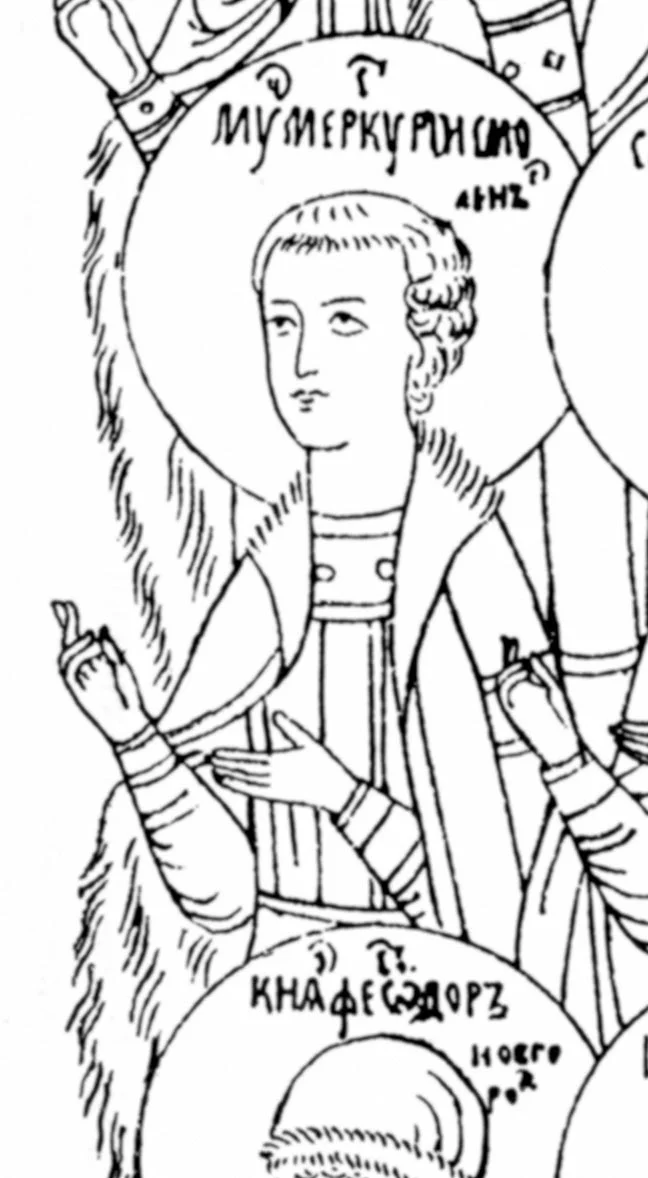
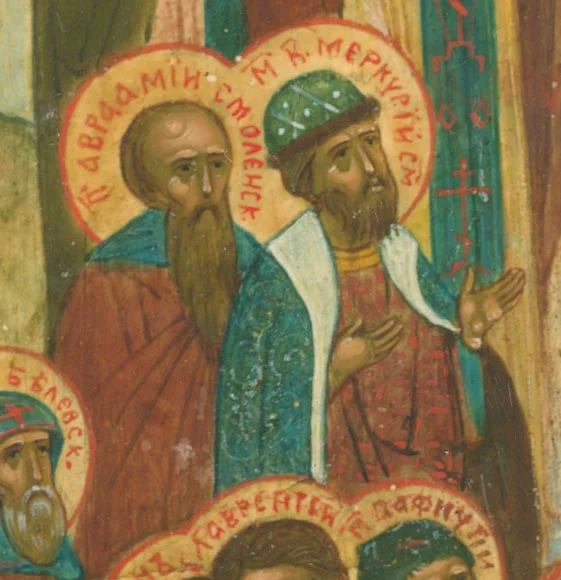
Martyr Martyr Mercury of Smolensk
† 1239
Martyr Mercury of Smolensk — a young warrior who, praying to the Mother of God, single-handedly routed part of Khan Batu's army threatening Smolensk, and was beheaded by the enemy but, by tradition, continued fighting even after.
CRITICAL: category corrected from "righteous" to "martyr" — this is how the saint is titled in every source and on the icon itself ("HOLY MARTYR MERCURY"). The template artifact in the life-years field, "XII-XVIII century," has been replaced with the correct "d. 1239."
According to the Old Russian tale "The Legend of Mercury of Smolensk," the saint was a young noble warrior, by tradition of Moravian Slavic origin, who entered the service of the Smolensk prince and was known for piety. During Khan Batu's invasion of Rus (1238-1239), as Mongol forces approached Smolensk, the Mother of God appeared to the city church's sacristan and commanded that Mercury be sent to defend the city, promising aid through the wonderworking Smolensk "Hodegetria" ("Directress") icon of the Mother of God.
Mercury went alone by night into the Tatar camp and, invoking Christ and the Mother of God, cut down many enemy warriors, including a giant champion who had terrified the city's defenders. At the height of the battle, the slain giant's son struck off Mercury's head — but, in the most famous detail of his Life, his headless body reportedly continued fighting before finally falling, and the Tatar host fled the city in terror at the sight. Smolensk's citizens recovered and buried his body in the city's Dormition Cathedral. Veneration of Mercury as the city's heavenly protector began almost immediately after his death, was well established by 1509, and formal liturgical commemoration was fixed by the late 16th century.
Icons and images