Hieromartyr
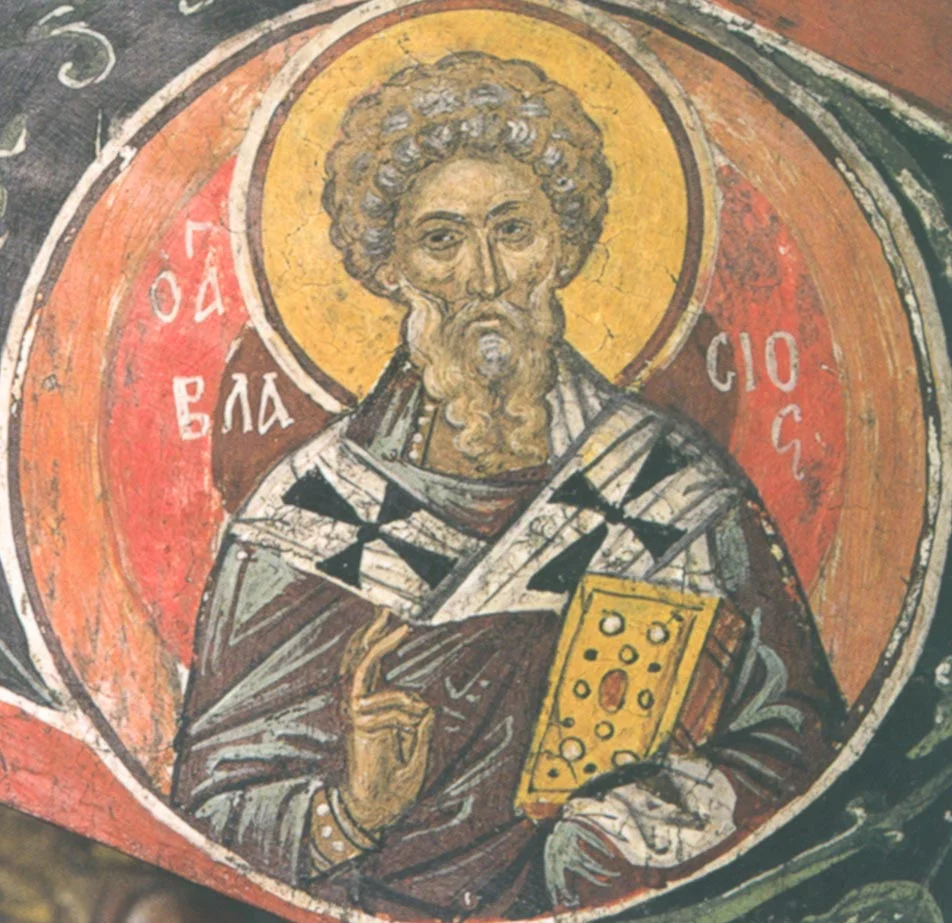
Hieromartyr Blaise of Sebaste
† ок. 316 (по другим данным ок. 284-305)
Also known as: Власий Севастийский, епископ, Blasius
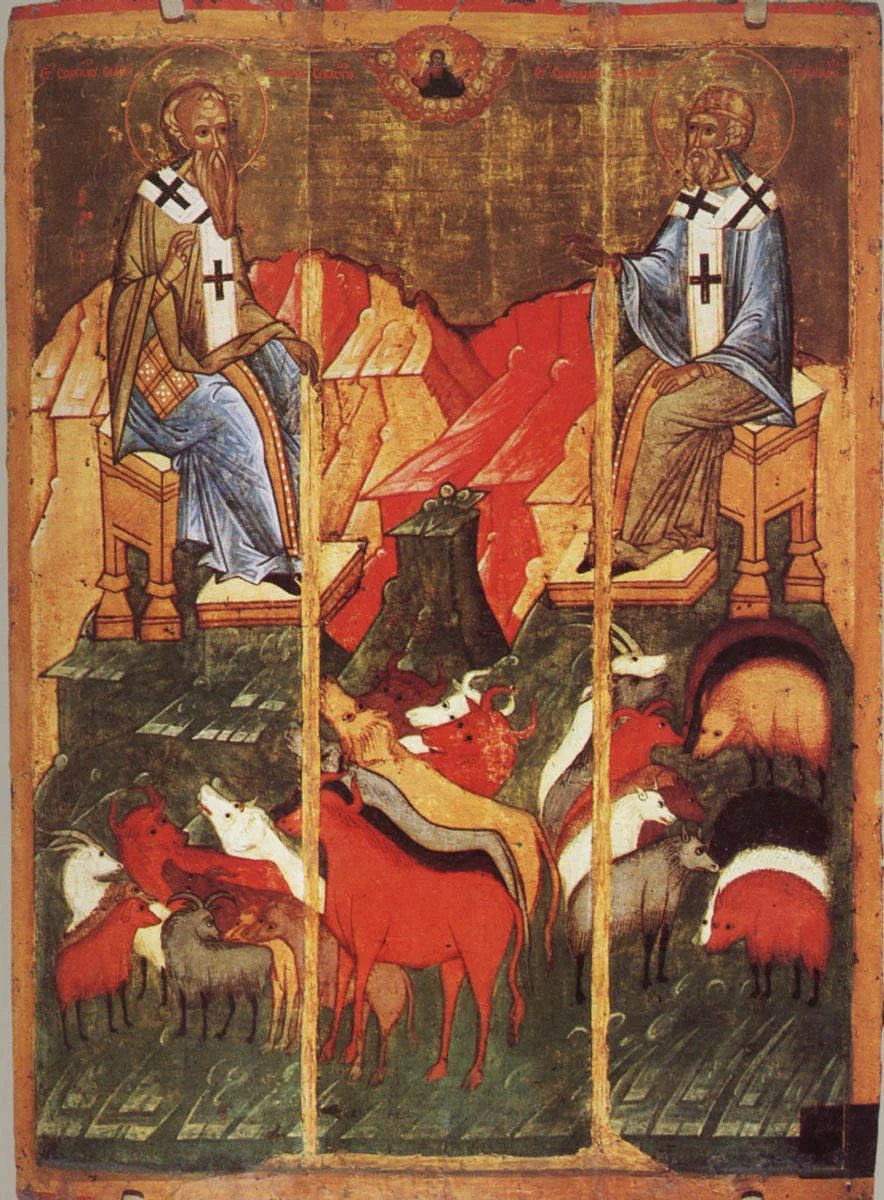
Hieromartyr Blaise, Bishop of Sebaste — a physician and archpastor of Sebaste in Armenia who, during the persecution of Emperor Licinius, hid in a cave on a mountain where, according to tradition, he healed and tamed wild animals; he was captured, cruelly tortured with iron combs (the origin of his veneration as a healer of throat ailments), and beheaded. One of the most venerated healer-saints in both the Orthodox and Catholic worlds, and a patron of livestock.
The Hieromartyr Blaise was born in Sebaste in Armenia (modern Sivas, Turkey) to a devout family. A physician by profession, he also zealously cared for the souls of his flock and was chosen bishop of his native city. During the persecution of Emperor Licinius (early 4th century), Blaise withdrew, so as not to endanger his flock, to a cave on Mount Argeos, where he led a strict ascetic life. According to tradition, wild animals gathered to him in the cave, whom he healed and blessed, and they would wait meekly for his blessing before departing; traditions also survive of his miraculously saving a boy who was choking on a fish bone, and of a poor widow whose pig had been carried off by a wolf receiving it back unharmed through the saint's prayer.
Soldiers sent by the governor Agricolaus to round up Christians for the arena found Blaise in the cave surrounded by peacefully resting animals and took this for a miracle. Brought to trial, the bishop refused to sacrifice to idols and was subjected to cruel torture: he was beaten with ox sinews and his flesh was torn with iron wool-combs — it is with this instrument of torture that his subsequent veneration as a healer of throat and throat ailments is traditionally associated. According to one tradition, before his execution he healed a boy who was dying, having choked on a fish bone — hence the custom of blessing bread or water in his memory as a remedy for sore throats. Several women who secretly collected his blood, and two young boys, suffered alongside him. The hieromartyr was beheaded around 316 (other accounts place his martyrdom under Diocletian, c. 284-305).
St. Blaise is one of the most widely venerated saints in both the Orthodox and Catholic traditions (Lat. Blasius, patron of Dubrovnik, one of the Catholic Fourteen Holy Helpers). On his feast day many churches perform a special rite of blessing candles and touching the throats of the faithful with crossed candles ("the blessing of St. Blaise") in memory of the healing of the choking boy.
Icons and images