Hierarch
Hierarch Paulinus Of Nola
ок. 353/354 — 431
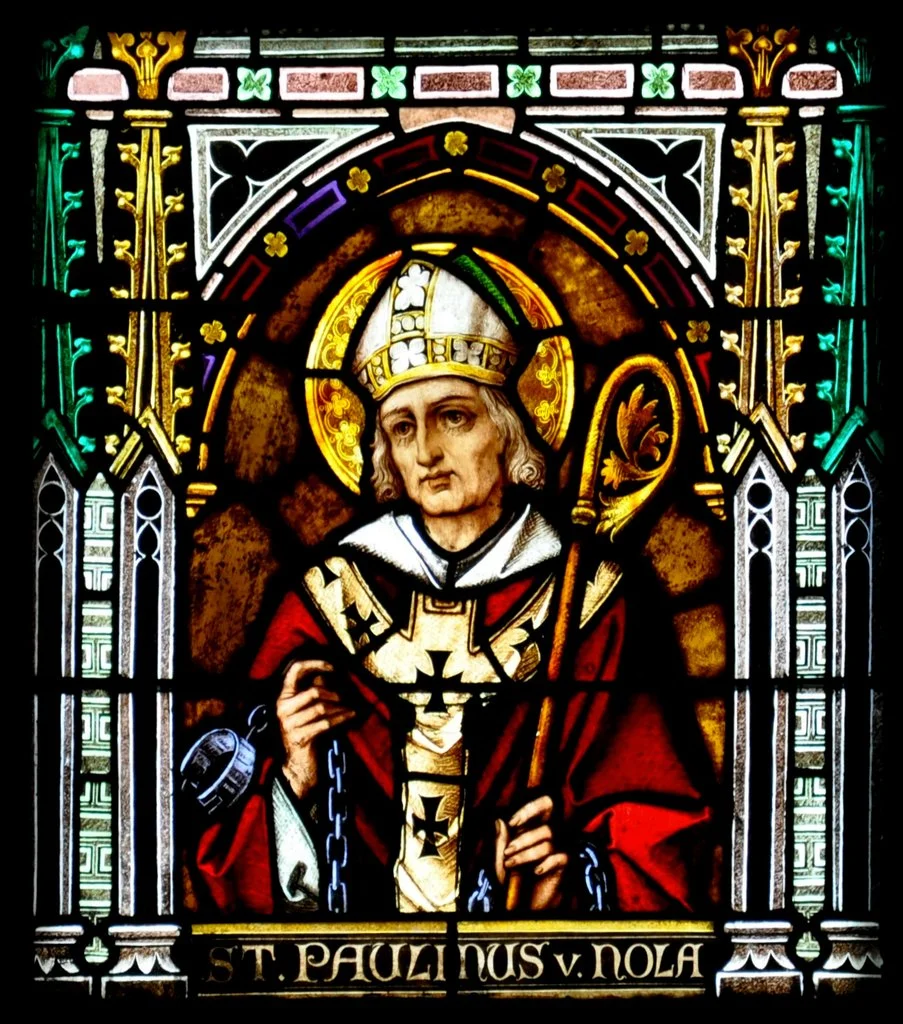
St. Paulinus the Merciful, Bishop of Nola (c. 354–431) — a noble Roman senator who gave away his estate to the poor, a prolific Latin Christian poet renowned for his exceptional charity.
Saint Paulinus of Nola (Meropius Pontius Paulinus), c. 354–431, was born near Bordeaux in Gaul to a wealthy senatorial family. Educated under the poet Ausonius, he pursued a brilliant public career, becoming a Roman senator, consul, and later governor of Campania. Around 389, at about 25, he and his wife Therasia were baptized and, deeply influenced by Saints Ambrose, Martin of Tours, and Felix of Nola, gradually renounced their considerable wealth, distributing it to the poor and freeing their slaves. He was ordained priest in Barcelona in 394 and, settling in Nola near the shrine of St. Felix, was consecrated bishop there around 409/411, serving until his death. Paulinus became one of the most prolific Latin Christian poets of his age, corresponding with Augustine, Jerome, Martin of Tours, and Sulpicius Severus, and composing hymns and epic verse (the Natalicia) in honor of St. Felix. He was renowned for his charity — tradition holds he once offered himself into slavery in Africa to ransom a widow's son. He is traditionally credited with popularizing the use of church bells. Orthodox tradition commemorates him as "Paulinus the Merciful" on January 23/February 5 — not June 22, which is only the Western/Catholic calendar date.
Icons and images