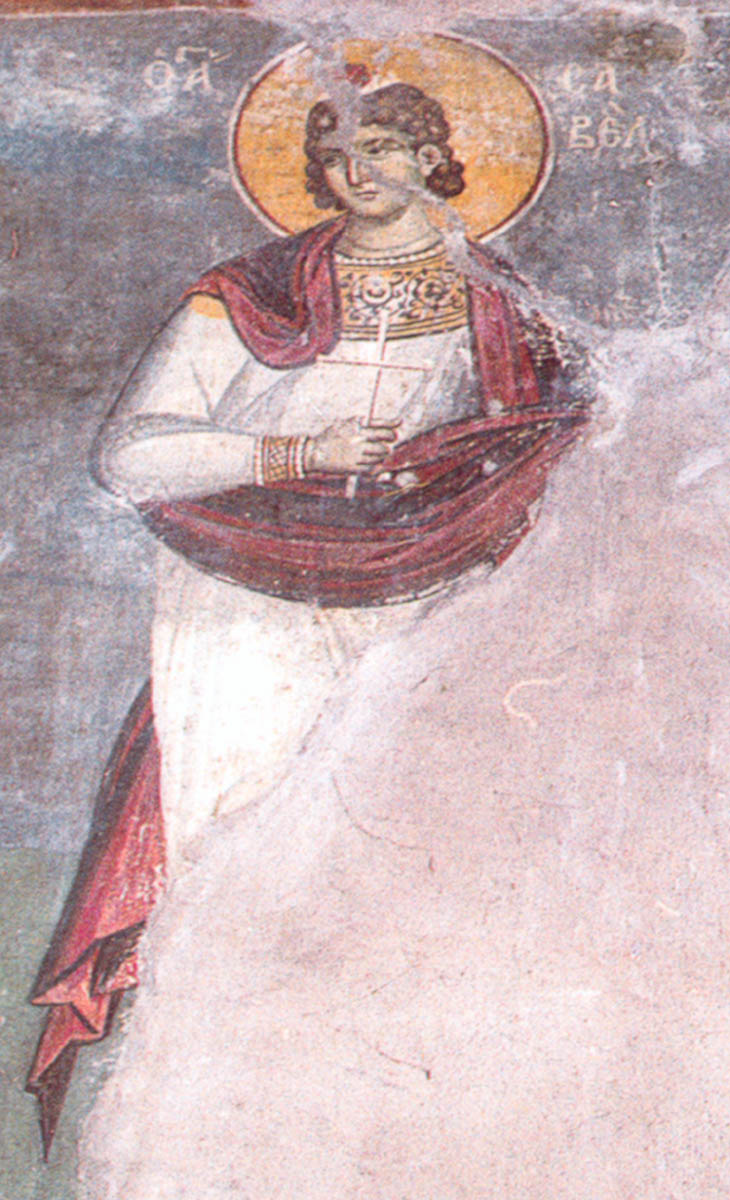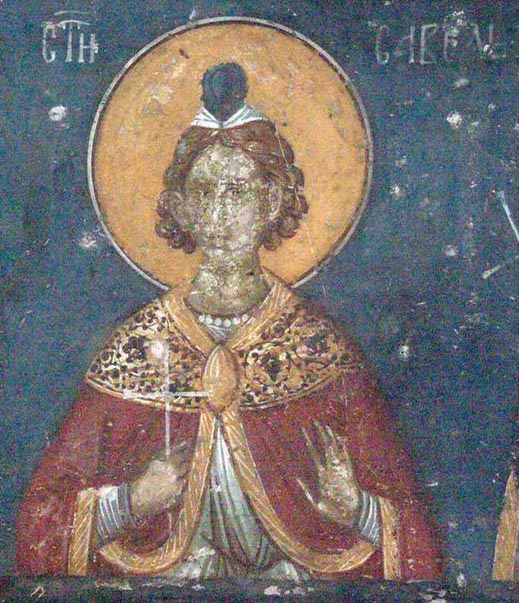
Martyr
Martyr Savel (Sabellus) the Persian, of Chalcedon
† 362
Martyr Savel (Sabellus) the Persian (d. 362) — one of three brother-martyrs, Manuel, Savel, and Ismail, Persian envoys tortured by Emperor Julian the Apostate at Chalcedon for refusing to sacrifice to idols.
The Holy Martyr Savel (Sabellus) the Persian, of Chalcedon, was one of three brothers — Manuel, Savel, and Ismail — born into a noble Persian family. Their father held to the pagan Zoroastrian faith, while their mother was a Christian; she had her sons baptized by the presbyter Eunicus and raised them in firm confession of Christ. As grown men, the brothers entered the military service of the Persian ruler Alamundar and, around 361–363, were sent as ambassadors to conclude a peace treaty with Emperor Julian the Apostate. Meeting the emperor at Chalcedon, near Constantinople, during a pagan festival, they refused his demand to offer sacrifice to idols. Julian subjected them to severe torture — scourging, crucifixion with nails driven through their hands and feet, and scraping with iron hooks — before ordering their beheading in 362. Their bodies were cast into fire, but an earthquake opened the earth and hid the martyrs' remains; two days later the relics emerged incorrupt and fragrant, converting many pagans to the Christian faith. Around 395, Emperor Theodosius I translated their relics to Constantinople. The Church commemorates the holy martyrs Manuel, Savel, and Ismail on June 17 (30).
Icons and images