
Bishop
Other names: Hierarch, Vladyka
The highest degree of priesthood: only a bishop ordains clergy and governs a diocese. Recognised by the omophorion, panagia and staff.
Reading options
The bishop holds the third and highest degree of priesthood. In his hands is what no one below him has: the right to ordain. A new priest, a new deacon, a new church and a new antimension can all come about only through a bishop. All the parishes and monasteries of the diocese are subject to his authority.
A bishop is consecrated not by one but by several hierarchs (by the rule, no fewer than two), and only from among the monastics. Another word for a bishop is hierarch, and a third, in everyday use, is Vladyka: this is how he is addressed both in conversation and in writing.
How to recognize him in church
A bishop can be seen from afar. On his shoulders is a wide band with crosses, the omophorion, without which he does not serve in the hierarchical order. On his breast, together with the cross, is the panagia, a small icon of the Mother of God. Instead of the phelonion he wears a sakkos with little bells, on his head a mitre, and in his hand a staff; a round rug with an eagle, the orlets, is spread under his feet everywhere, and he blesses with two candlesticks, the dikirion and trikirion. A priest has none of these objects.
Vicar and ruling bishop
The ruling bishop heads a diocese and is answerable for it. A vicar bishop is his assistant: they have the same degree, but a vicar has no diocese of his own. At the divine service no difference between them can be seen.
Images
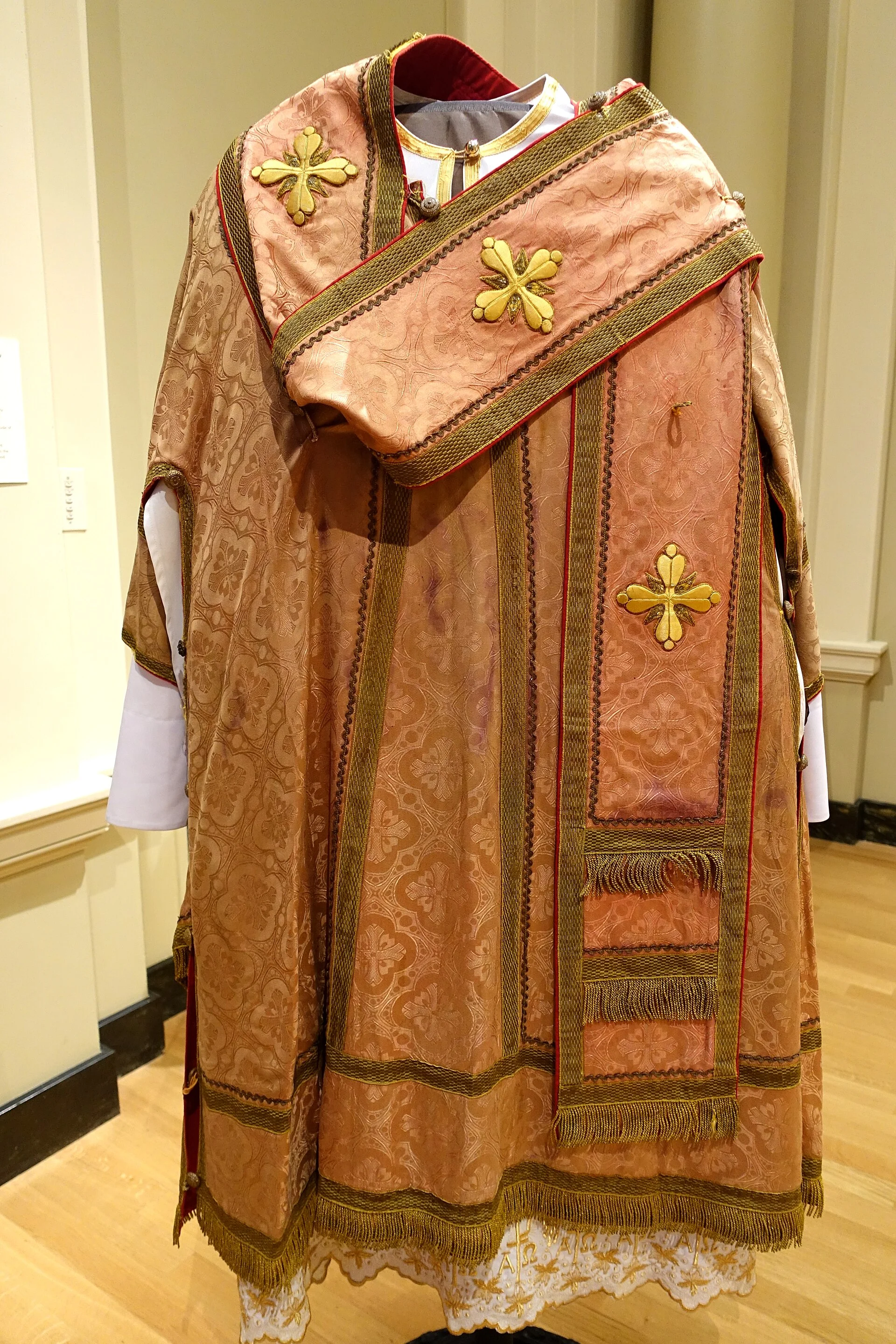
See also
Clergy and ranks
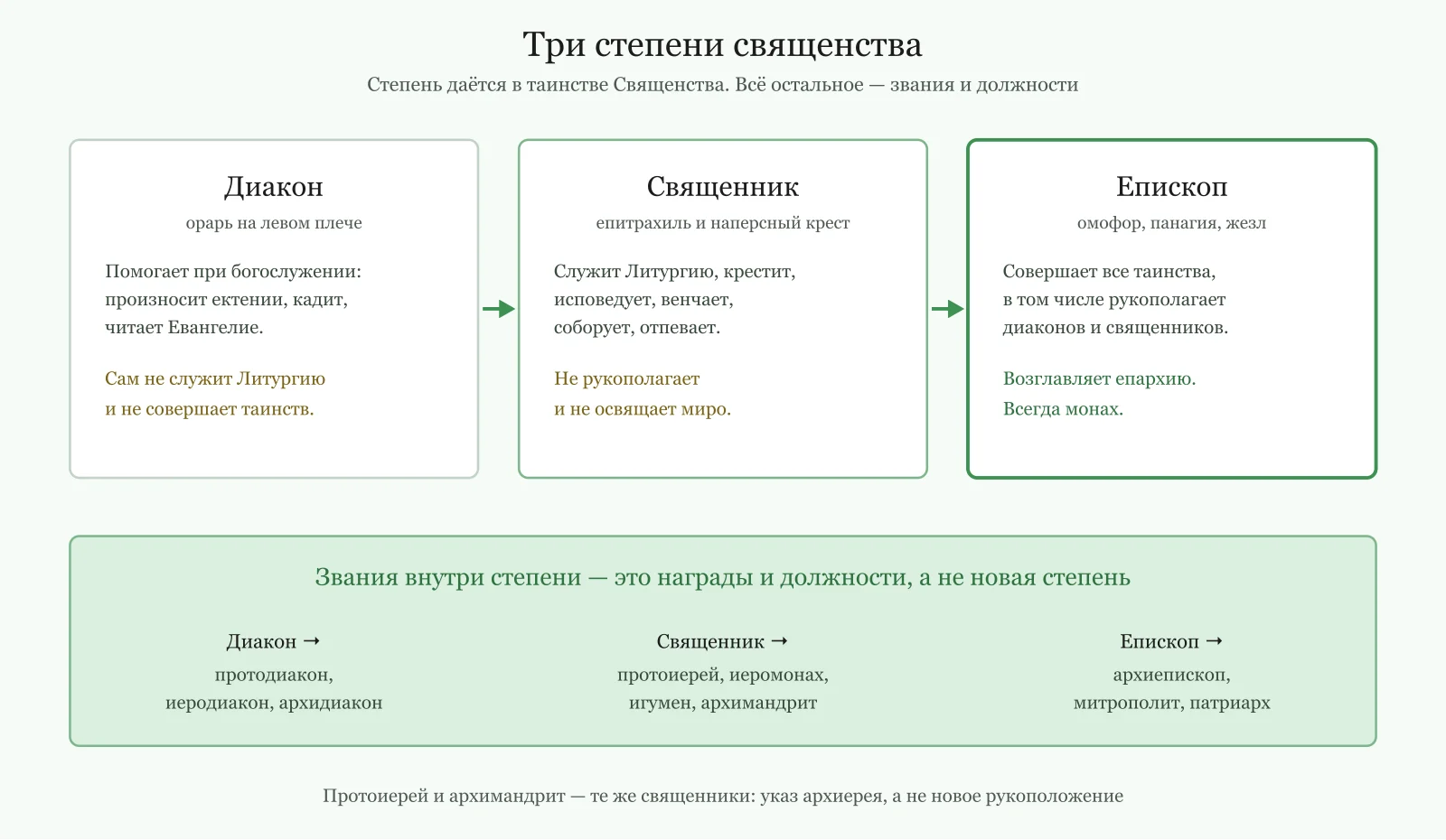
The three degrees of priesthood
Deacon, priest and bishop are the only three degrees; archpriest, hegumen and metropolitan are titles within them, not further degrees.
Vestments
Omophorion
The broad band on a bishop's shoulders — the chief sign of his rank, signifying the lost sheep carried home.
Vestments
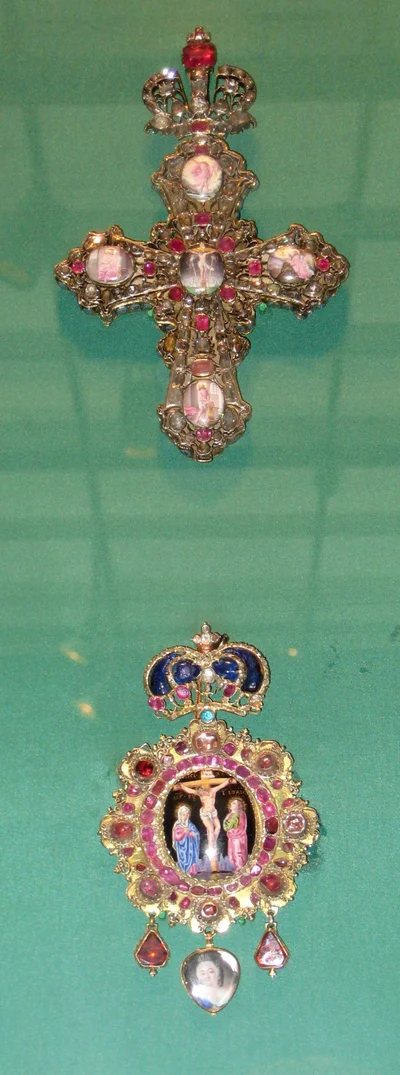
Panagia
A small icon of the Theotokos worn on a bishop's breast, paired with the pectoral cross.
Vestments
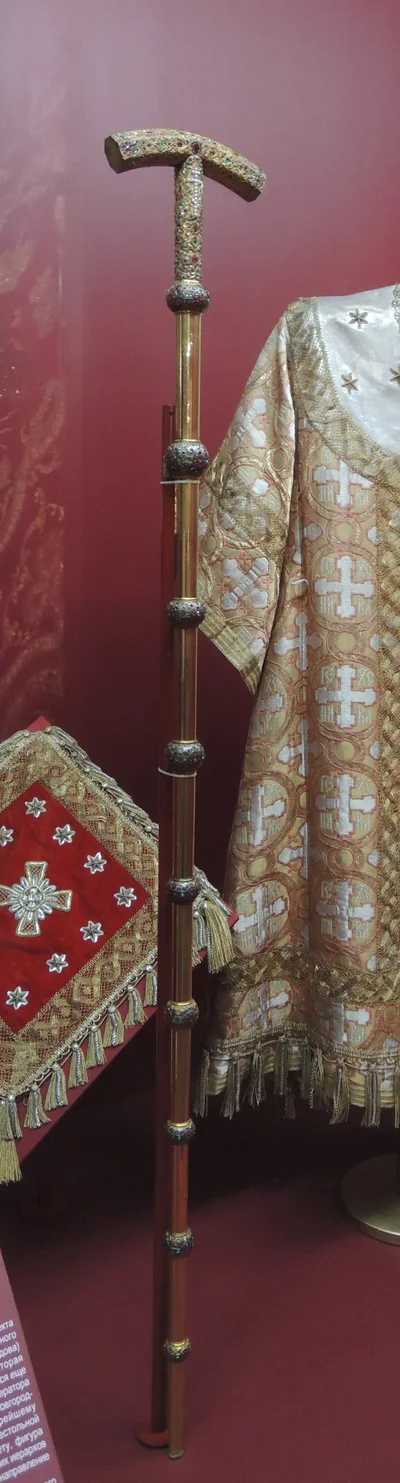
Crozier
The bishop's staff — a sign of pastoral authority, held by a subdeacon during services.
Clergy and ranks
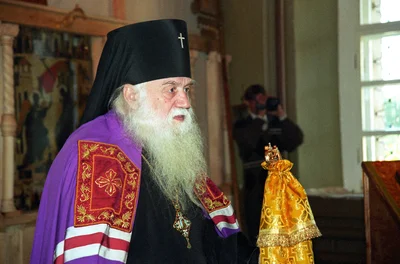
Archbishop
A bishop given an honorary senior title; it adds no new degree, and the only visible sign is a cross on the klobuk.