
Omophorion
The broad band on a bishop's shoulders — the chief sign of his rank, signifying the lost sheep carried home.
Reading options
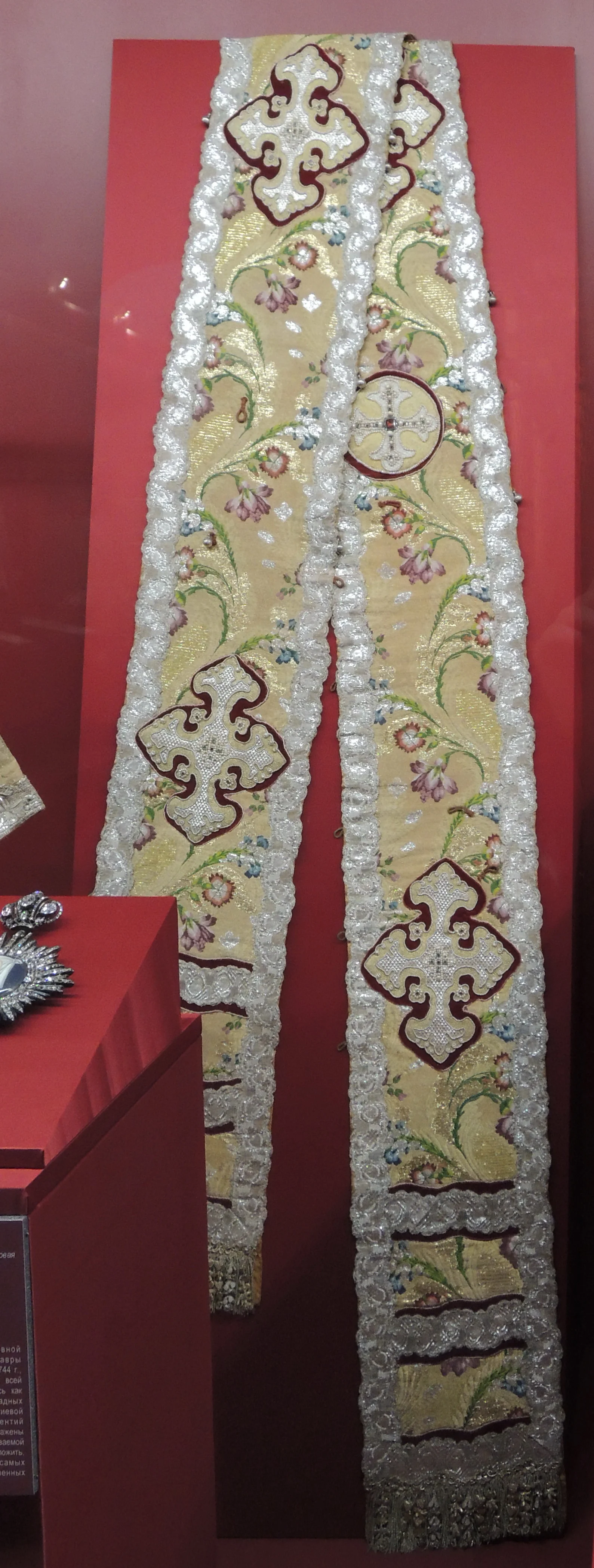
The omophorion is a wide, long strip of cloth with crosses, lying on the bishop’s shoulders over the sakkos. It is the chief distinction of a bishop: without the omophorion he does not perform an episcopal service, however complete the rest of the vestments.
The sheep on the shoulders
The meaning is direct and Gospel-based: the omophorion is an image of that very lost sheep which the shepherd, having found it, “lays on his shoulders, rejoicing.” The bishop bears on his shoulders the human race to which Christ came — and bears it literally, in cloth.
The great and the small
The great omophorion is long, with one end hanging in front and the other behind; in it the bishop serves the beginning of the Liturgy. The small omophorion is shorter, with both ends in front; it is put on from the reading of the Apostle to the end of the service. The change is not decorative: by taking off the great omophorion before the reading of the Gospel, the bishop shows that at the word of Christ Himself all human authority steps aside.
Images
See also
Vestments
Sakkos
The bishop's outer vestment in place of the phelonion, its edges hung with small bells.
Clergy and ranks
Bishop
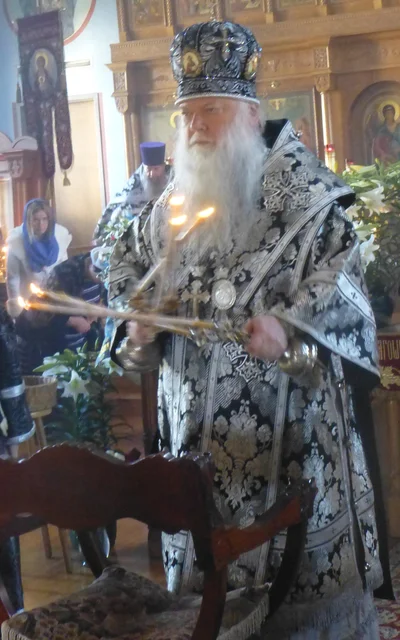
The highest degree of priesthood: only a bishop ordains clergy and governs a diocese. Recognised by the omophorion, panagia and staff.
Vestments
Panagia
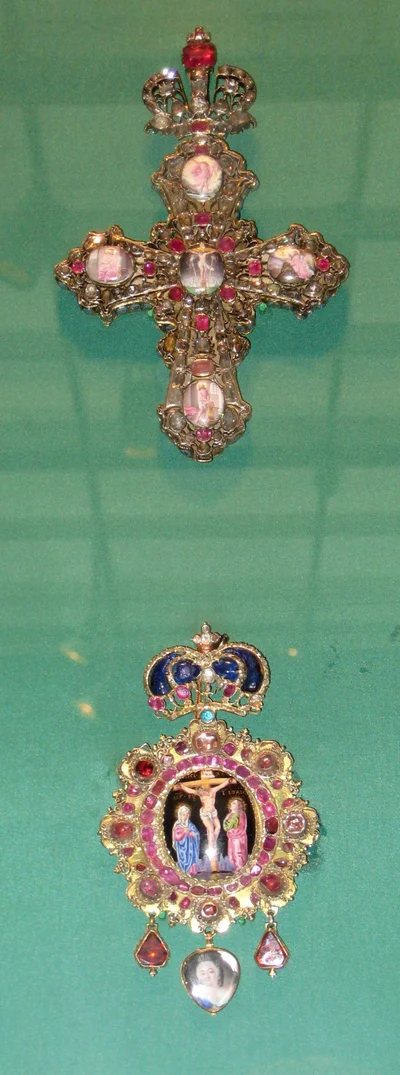
A small icon of the Theotokos worn on a bishop's breast, paired with the pectoral cross.