
Church candle
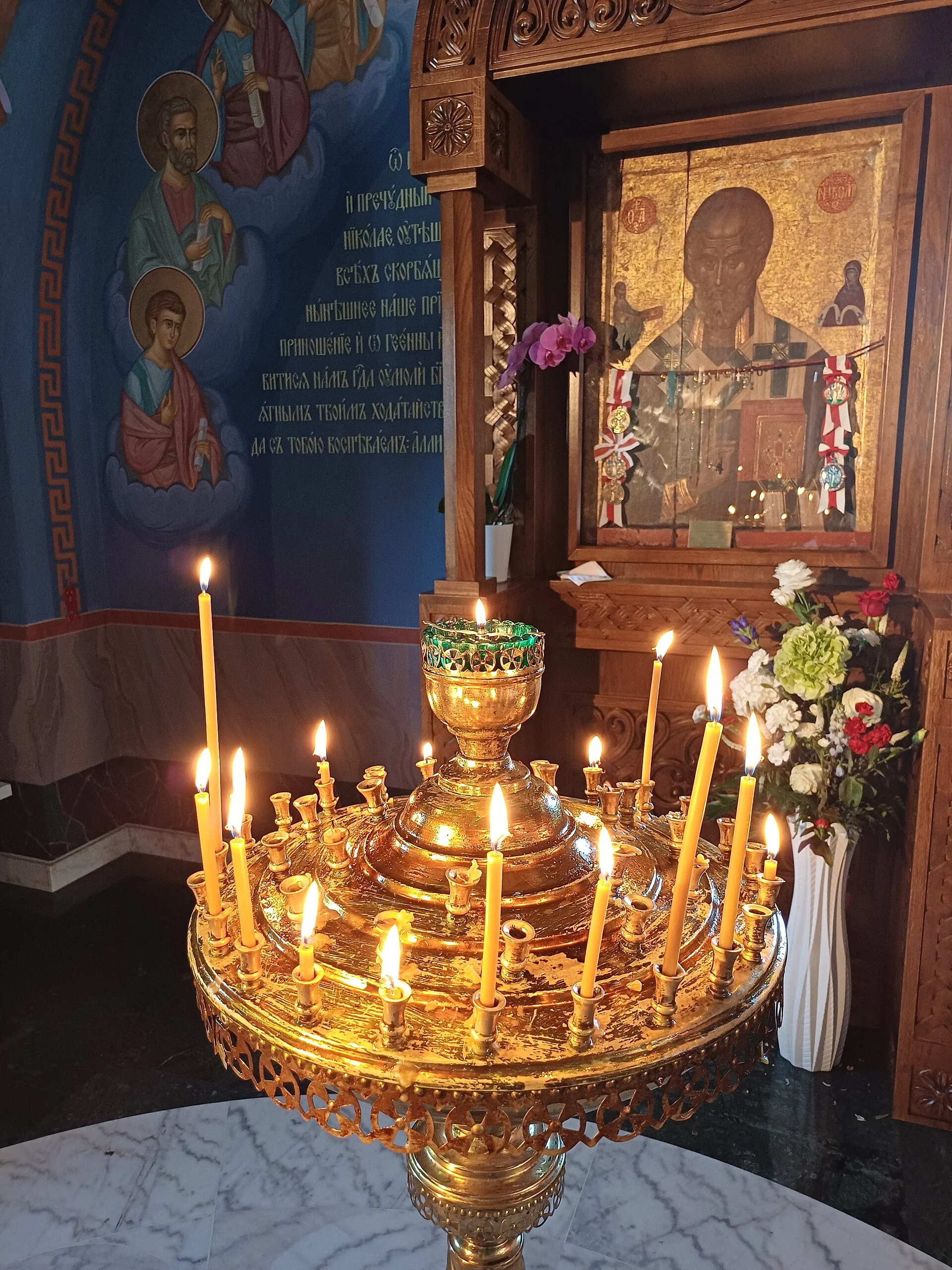
A wax candle set before an icon or on the memorial stand — a visible sign of prayer and a small offering.
Reading options
The candle is the very first thing a person does in church with his own hands, and the most simply arranged. You take it at the shop, light it from another burning candle or from a lamp, and place it in the candlestand before an icon. That is all.
The meaning of this is twofold. First, a candle is a sacrifice: small, but real, because something of one’s own has been given for it, and the church lives on this money. Second, a burning candle is a visible prayer: the person has gone, affairs have called, but a little flame is left burning before the icon in his place.
What a candle does not do
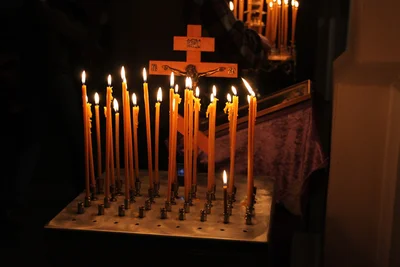
A candle decides nothing without the one praying. To place it “so that it works out” and leave without saying a word to God is the same as sending an envelope without a letter. It also makes no difference with which hand it is placed, how many are placed, and in what order. There are no candles “for the repose” and “for health” by composition — the difference is only in where they are placed: for the departed candles are placed on the kanun, the square table with a crucifix, for the living — before any icon.
If the candlestand is full, the candle can be left beside it: the attendants will place it when room is free. And it is quite normal to put out a burnt-down stub or to move someone else’s candle — this is not disrespect but ordinary work at the candlestand.
Images
See also
Parish practice
Kanun (memorial stand)
The square stand with a crucifix where candles for the departed are placed and food offerings left.
Church utensils
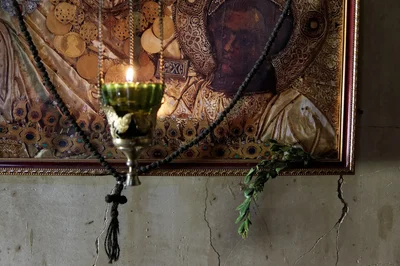
Lampada (oil lamp)
A small oil lamp with a floating wick burning before an icon — never extinguished in church, lit at home for prayer.
Parish practice
How to venerate an icon
Cross yourself twice with a bow, kiss the icon, then cross yourself once more; one kisses the hand or hem, not the face.
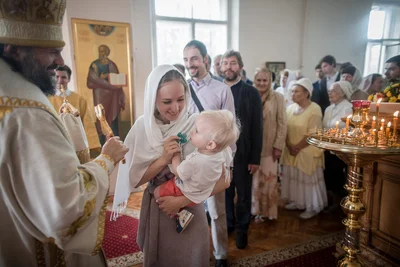
Parish practice
How to behave in church
A few simple things worth knowing in church: when not to walk about, whether one may sit, what to do with phones and children.