
Lampada (oil lamp)
Other names: Icon lamp
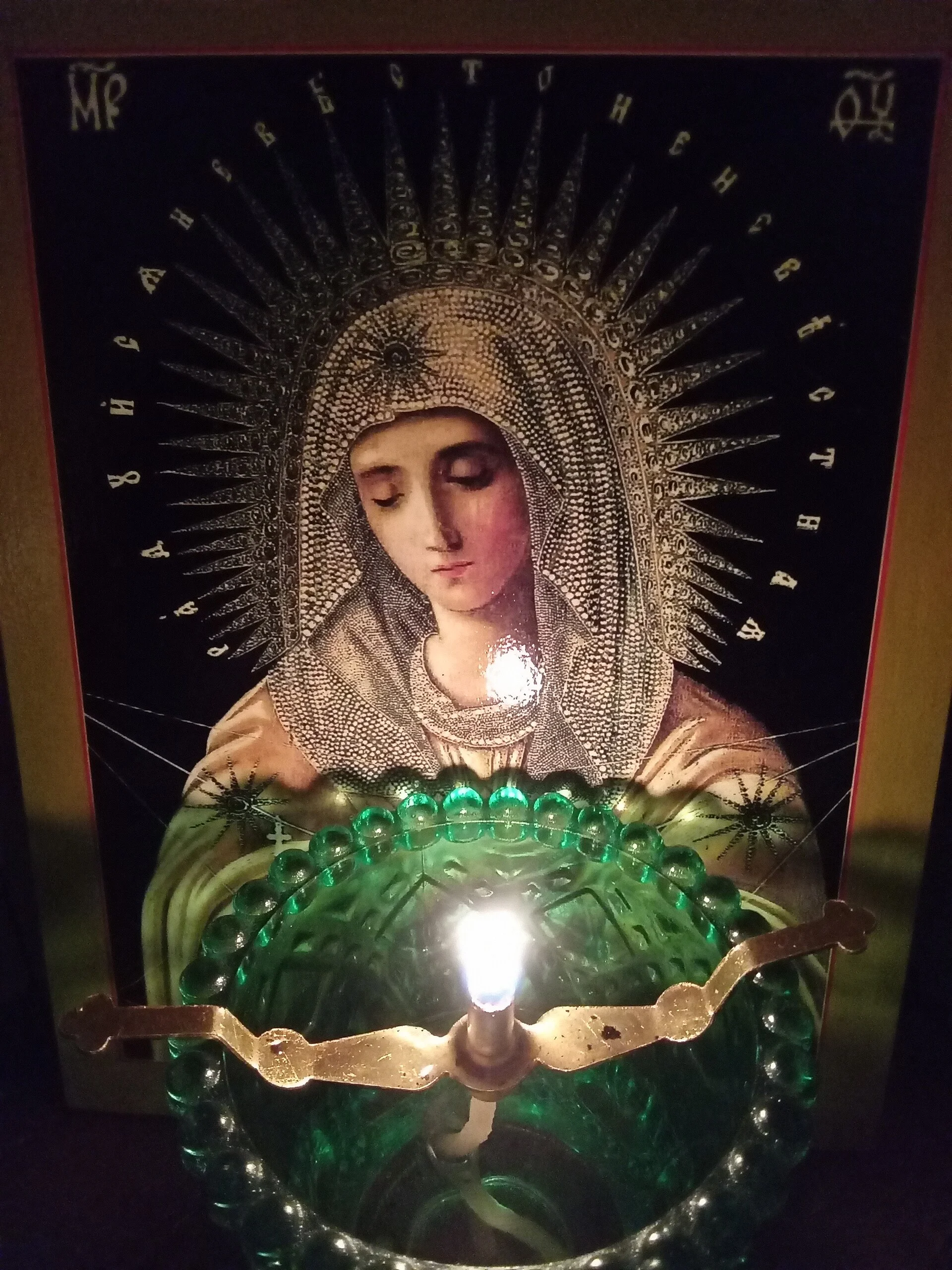
A small oil lamp with a floating wick burning before an icon — never extinguished in church, lit at home for prayer.
Reading options
The lampada is a glass cup, most often coloured, set in a metal holder and suspended on chains or placed on a stand. Water is poured inside and oil on top of it, and on the oil floats a float with a little wick. Such a lamp burns evenly, without soot and for a very long time.
Vegetable oil is used, traditionally olive oil — which in Russian is called “wooden.” Kerosene and paraffin are not used for lamps: burning oil is in itself part of the meaning, the same oil with which people are anointed and which was offered in sacrifice.
Where they burn
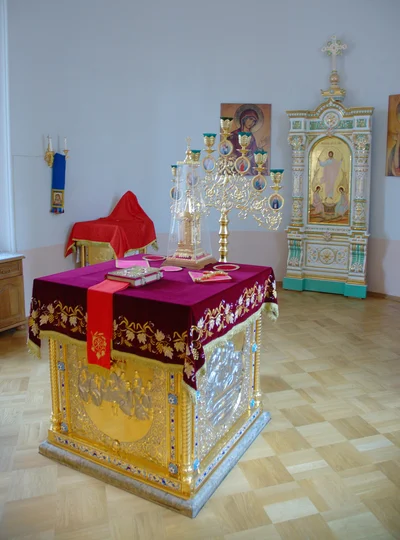
In church lamps hang before the icons of the iconostasis, stand on the altar table and the table of oblation, burn by relics and venerated images. A church is never left wholly dark: the lamp before the altar table is kept burning constantly. In the course of the service some of the lamps are lit and put out — it is darkest at the Six Psalms and at Lenten services, brightest at the polyeleos and at Pascha.
At home
In the icon corner a lamp is usually lit for the time of prayer, on Sundays and on feasts; to keep it unquenchable is a matter of piety, not a rule. There is no need to leave an open flame unattended: there is no obligation to burn a lamp at night or in an empty apartment.
Images
See also
Parish practice
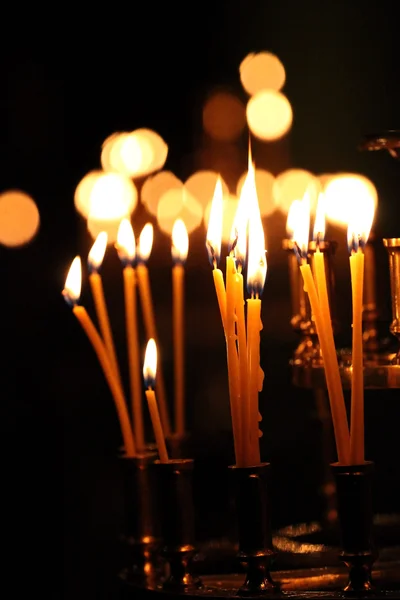
Church candle
A wax candle set before an icon or on the memorial stand — a visible sign of prayer and a small offering.
Icons
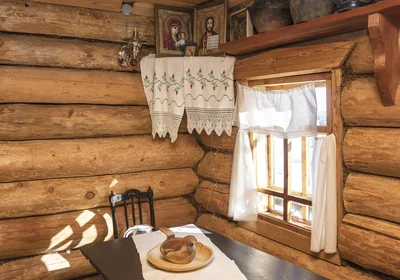
The icon corner
The place for icons at home — usually the east-facing corner with a lamp; a place to pray, not a shelf for a collection.
Church utensils
Seven-branched candlestick
A lamp-stand with seven lights standing behind the altar table, visible through the open royal doors.
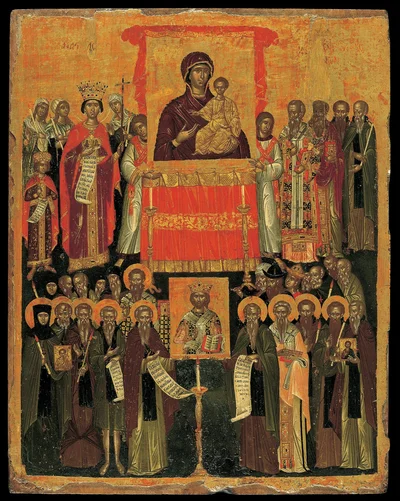
Icons
Veneration of icons
The Church honours icons but does not pray to the board: the honour given to the image passes to the one depicted. Worship as such belongs to God alone.