
Kanun (memorial stand)
Other names: Memorial table, Kanun stand
The square stand with a crucifix where candles for the departed are placed and food offerings left.
Reading options
The kanun is a low rectangular stand with many holes for candles and a crucifix at its head. It usually stands by the west or north wall, nearer the entrance, apart from the festal icons. It is the only place in the church where candles are set for the departed.
This separateness is not accidental. Prayer for the departed is not the same as prayer for the living: it has a different tone and different hymns, and the Church does not mix them even in the placing of candle stands. Over the kanun the panikhida and the litia are served; the priest also stops here when asked to commemorate someone after the service.
The crucifix above the candles
The crucifix is placed here for a very simple thought: a request for the departed makes sense not because we feel sorry for him, but because death has already been conquered by Him who is depicted on the cross. A candle set on the kanun is not a farewell but a request addressed to the Living One on behalf of one who lives.
What is placed on it
Food is brought to the kanun or to a table beside it — bread, grain, flour, oil, sugar, sweets, fruit, Cahors wine. This is alms given for the departed: the offering goes to the clergy and to those in need, and the old meaning here is direct — to feed the living in memory of the dead. Meat is not brought. On days of remembrance of the departed, kutia is also set here so that it may be blessed at the panikhida.
See also
Parish practice
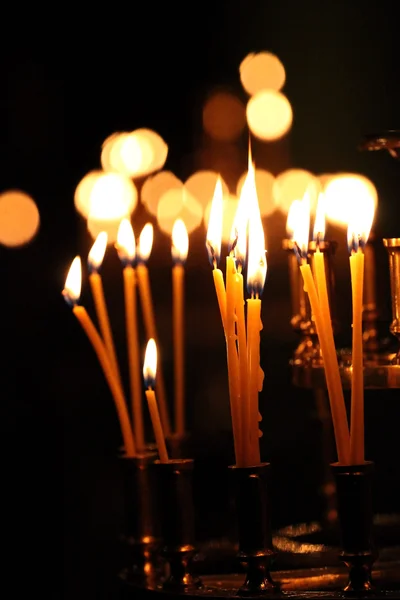
Church candle
A wax candle set before an icon or on the memorial stand — a visible sign of prayer and a small offering.
Divine services
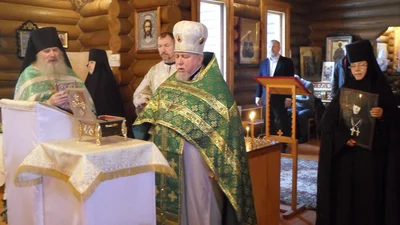
Panikhida (memorial service)
A memorial service for the departed that may be served any number of times — on the third, ninth and fortieth day, on anniversaries and memorial Saturdays.
Parish practice
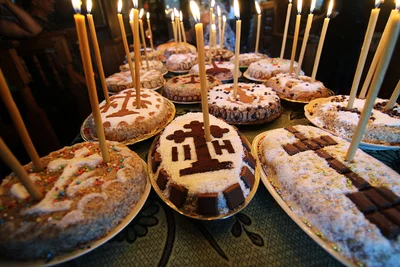
Kutia
A memorial dish of boiled grain with honey and raisins, blessed at the memorial service.
Divine services
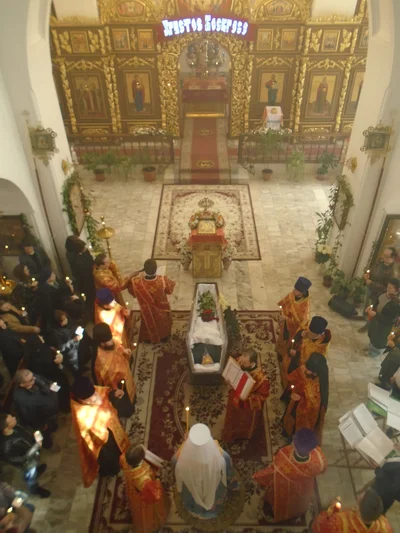
Funeral service
The order of Christian burial, served over the body of the departed once and once only. It is constantly confused with the panikhida.