
Canonization
Other names: Glorification
The Church's decision that a person may be openly venerated as a saint — it does not make anyone holy, it testifies to holiness already evident.
Reading options
Canonization is not “promotion to sainthood.” The Church does not decide a person's fate after death and cannot make anyone a saint: it bears witness to what it already sees — that this person is with God and that he can be prayed to aloud, all together. That is why in Russian one more often says not “canonization” but glorification.
How it happens
Almost always it begins from below. People themselves go to the grave, themselves ask for prayers, themselves tell of help received. When the veneration persists for years and goes beyond a single parish, the diocese gathers the materials and passes them to the Synodal Commission for the Canonization of Saints. The Commission studies the life, the documents, the evidence of miracles, the surviving writings. The decision to include him among the saints of the whole Church is taken by the Council of Bishops; a locally venerated saint is glorified within a single diocese — his memory is celebrated there.
What is looked at
- popular veneration — lasting, not a one-off;
- a righteous life or a martyr's death for the faith;
- miracles and help received through prayer;
- Orthodoxy of faith: that there be nothing alien in what was written and said;
- for those who suffered in the 20th century, separately — whether the person denounced others under interrogation.
Incorruption of the relics is not considered a decisive argument: the relics of many venerated saints are ordinary bones.
After the glorification an icon is painted, a service and a troparion are composed, and the name is entered in the menologion. From that day the saint's memory stands in the calendar — and what was formerly private becomes common.
See also
Ranks of sanctity
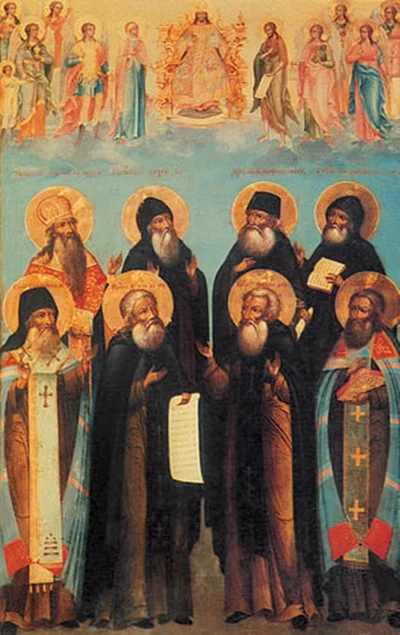
Synaxis of saints
Here 'synaxis' means neither a building nor a council of bishops but the joint commemoration of a whole group of saints.
Ranks of sanctity
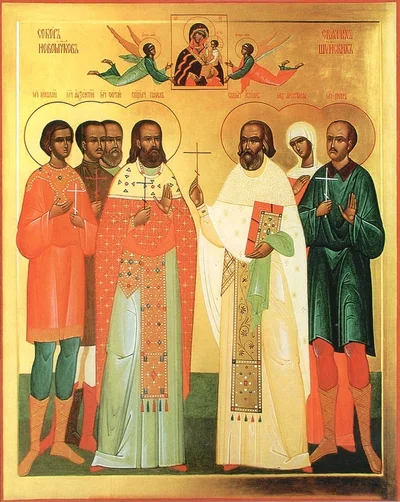
New Martyr
Those who suffered for the faith under the Soviet persecutions; their joint commemoration is the Synaxis of the New Martyrs and Confessors of the Russian Church.
Icons
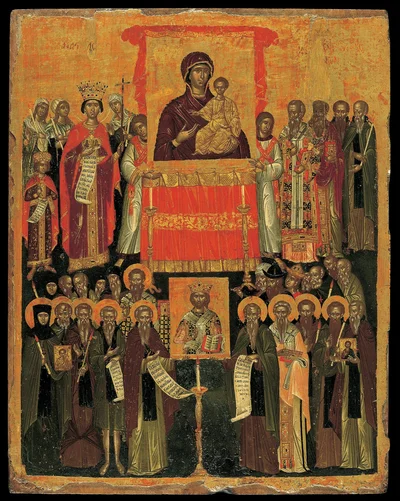
Veneration of icons
The Church honours icons but does not pray to the board: the honour given to the image passes to the one depicted. Worship as such belongs to God alone.
Parish practice
Name day
The feast of the saint whose name one bears — a personal church feast, unrelated to one's birthday.