
Synaxis of saints
Other names: Synaxis
Here 'synaxis' means neither a building nor a council of bishops but the joint commemoration of a whole group of saints.
Reading options
The word “sobor” (synaxis) is more confusing than others, because in Russian it has two more meanings: a large church (Saint Alexius Cathedral) and an assembly of bishops (the Council of Bishops). In the calendar of saints the third, oldest one operates: a sobor is a gathering, an assembly of people who have come together to honour someone. In time the day of such a common memory also came to be called so.
Two kinds of synaxes
The first is the memory of the one through whom yesterday's event was accomplished. The day after the Nativity of Christ — the Synaxis of the Most Holy Mother of God; the day after Theophany — the Synaxis of John the Forerunner; after the day of Peter and Paul — the Synaxis of the Twelve Apostles. The logic is simple: first the event is celebrated, then the one who served in it.
The second is the common memory of a group of saints linked by a place, a monastery or a common fate: the Synaxis of the Optina Elders, the Synaxis of the Saints of Radonezh, the Synaxis of the Venerable Ones of the Kiev Caves, the Synaxis of the New Martyrs and Confessors of the Russian Church. In such synaxes there are dozens and hundreds of names, and many of them are known only from lists.
In the calendar the day of a synaxis stands on a separate line, and the rank on such a card is indicated just so — “Synaxis.” One can venerate the whole synaxis at once without remembering the names: the meaning of these days is precisely that there are more saints than we know by name.
See also
Ranks of sanctity
Canonization
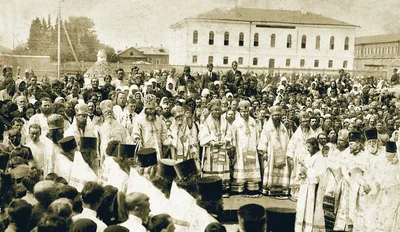
The Church's decision that a person may be openly venerated as a saint — it does not make anyone holy, it testifies to holiness already evident.
Ranks of sanctity
New Martyr
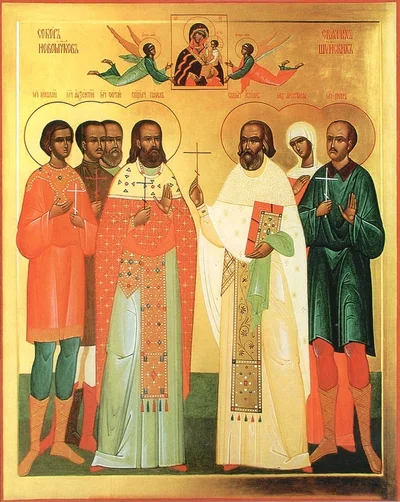
Those who suffered for the faith under the Soviet persecutions; their joint commemoration is the Synaxis of the New Martyrs and Confessors of the Russian Church.
Feasts and fasts
The Twelve Great Feasts
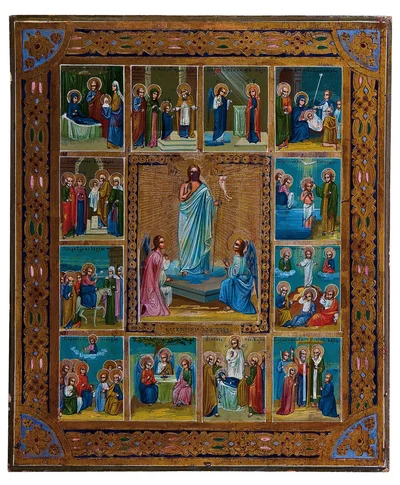
The twelve chief feasts of the year after Pascha: nine fall on fixed dates, three are counted from Pascha.
The church building
Church (temple)
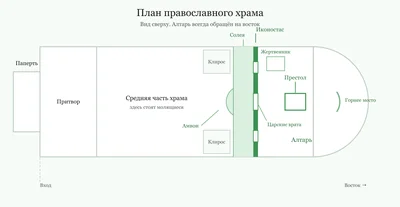
A building consecrated for divine service, divided into narthex, nave and sanctuary, with the sanctuary facing east.