
Catechumenate
Other names: Catechesis, Catechetical talks
Preparation for baptism — the talks explaining what a person is about to enter. In the Russian Church they are required before an adult is baptised.
Reading options
Catechesis is the time between the decision to be baptized and the baptism itself. A catechumen is one who has already come to the Church but is not yet baptized: he attends services, learns to pray, reads the Gospel, but does not receive communion and does not take part in the Sacraments.
How it was in antiquity
In the first centuries catechesis lasted for years. Catechumens stood in the narthex, listened to the readings and the sermon, and before the beginning of the principal part of the Liturgy the deacon proclaimed: “Catechumens, depart” — and they went out, because at the Eucharist only the baptized were present. From this order there remain the name of the first half of the service — the Liturgy of the Catechumens — and the litany for them, which can be heard in church today, although the catechumens themselves long ago ceased to leave.
How it is now
In the Russian Church catechesis has been restored as obligatory: an adult is not baptized without talks, and the godparents of an infant are also asked to take them. Usually this is no fewer than two meetings with a priest or catechist. The conversation at them is very practical: the Creed, what the Church is for, what confession and Communion are, what awaits at the baptism itself and what obligations the sponsor takes on.
The talks are not an examination, and they cannot be failed. Their purpose is that a person be baptized consciously, and not “just in case”: baptism is performed once, and it is better to understand what you are entering before, not after.
See also
Sacraments
Baptism
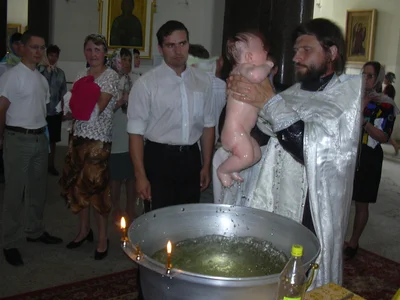
The sacrament by which a person enters the Church: threefold immersion in water in the name of the Trinity. It happens once and is never repeated.
Divine services
Liturgy of the Catechumens
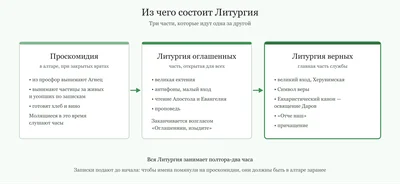
The second part of the Liturgy, from the opening exclamation to the Gospel and the sermon — the part the unbaptised were allowed to attend.
Parish practice
Godparents
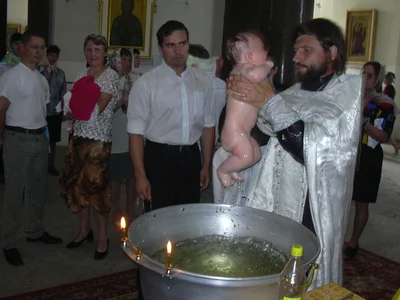
Sponsors who receive the baptised from the font and answer for their Christian upbringing.
Sacraments
Chrismation
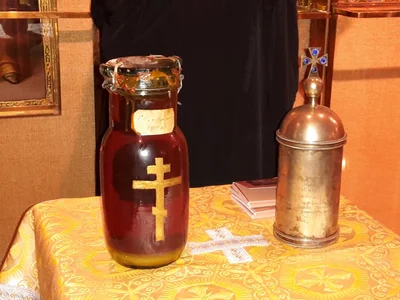
The sacrament that follows baptism at once: the priest anoints forehead, eyes, ears, breast, hands and feet with holy myrrh, saying 'The seal of the gift of the Holy Spirit'.