
Eleusa (Tenderness)
Other names: Eleousa
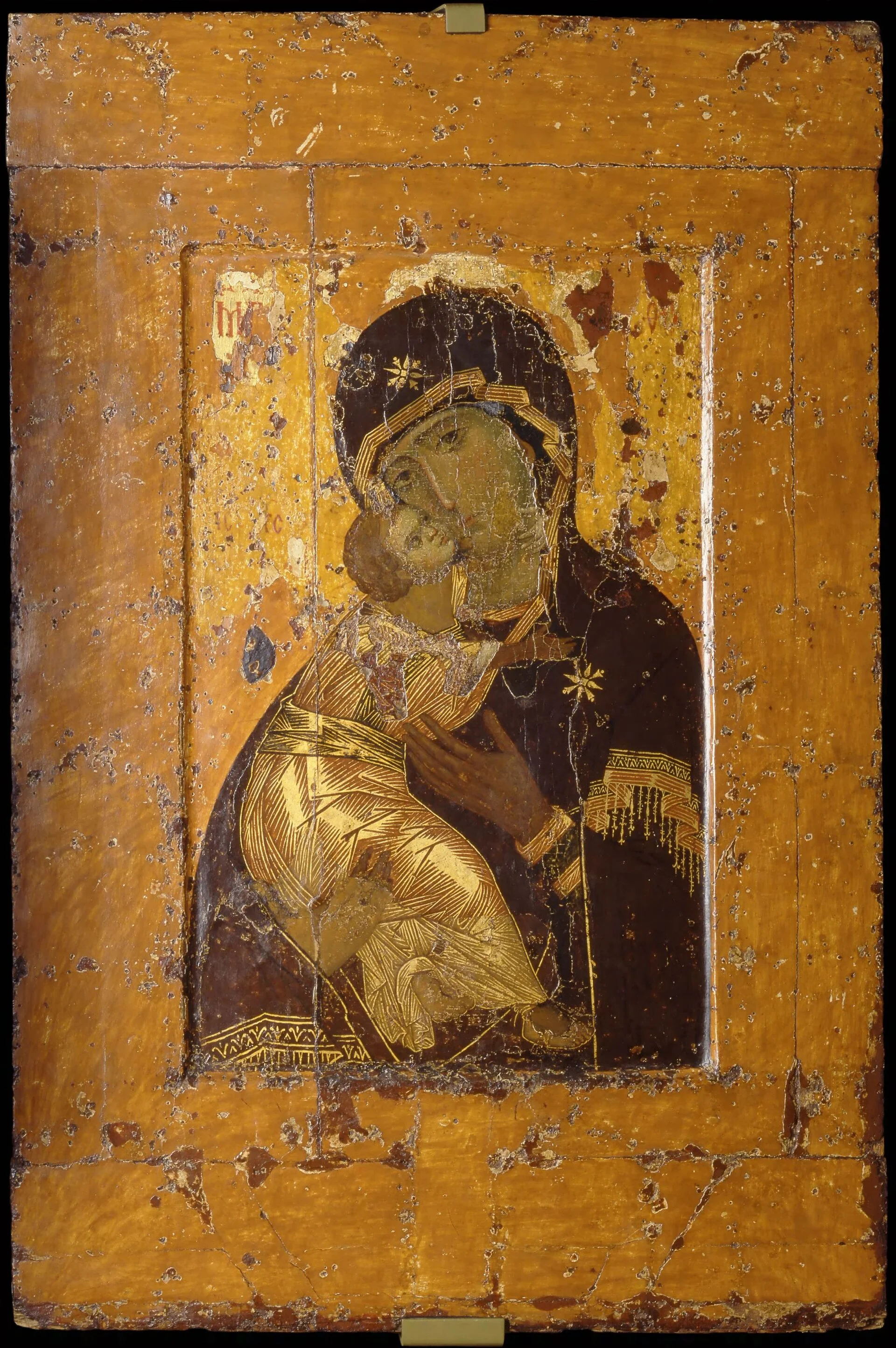
The Child presses his cheek to his Mother's — the warmest of the types, including the Vladimir, Don and Feodorov icons.
Reading options
The Greek Eleousa means She who Shows Mercy; in Russian the type is called Umileniye (Tenderness).
How to recognize it
There is one sign, and it cannot be mistaken: the faces touch. The Child embraces His Mother’s neck and presses His cheek to Her cheek; She bends Her head toward Him. There is no pointing gesture and no blessing: nothing is shown here to the beholder; here Mother and Son are occupied with each other. The gaze of the Mother of God is most often not on the Child but past Him, and in it can be read the knowledge of what will come next.
The Child’s legs are often painted so that the sole of one foot is visible, turned heel to the viewer, a small mark by which many copies of this type are identified.
Famous images
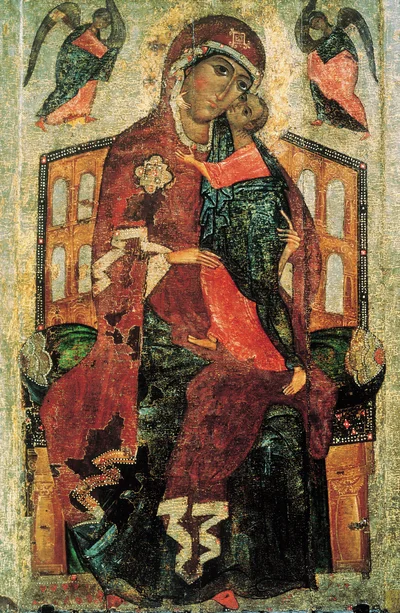
To the Eleusa type belong the Vladimir icon, a Byzantine painting of the early 12th century and one of the most venerated in Rus’, as well as the Don, Feodorov and Tolga icons.
One name for two different images
There is an icon “Tenderness” before which St. Seraphim of Sarov prayed; on it the Mother of God is depicted alone, without the Child, with hands folded on Her breast. Iconographically this is not an Eleusa at all, although the name is the same. The case is not rare: the name of an icon and its type do not always coincide.
Images
See also
Icons
Icons of the Theotokos: the main types
There are hundreds of Marian icons but only a few types — Hodegetria, Eleusa, Oranta and the enthroned Theotokos — enough to identify almost any of them.
Icons
Hodegetria
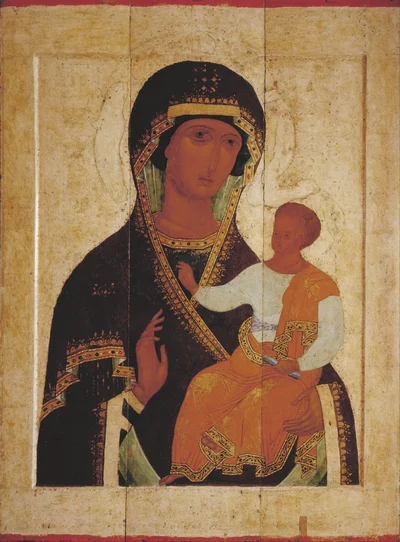
The Mother of God holds the Child and points to him with her other hand — the most widespread type, including the Smolensk, Tikhvin and Iveron icons.
Icons
Oranta
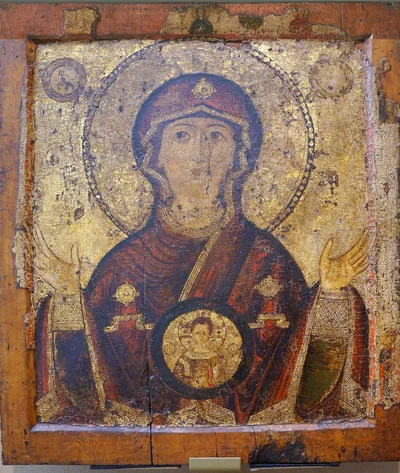
The Mother of God with hands raised in prayer; with the Child in a medallion on her breast the image is called the Sign.